
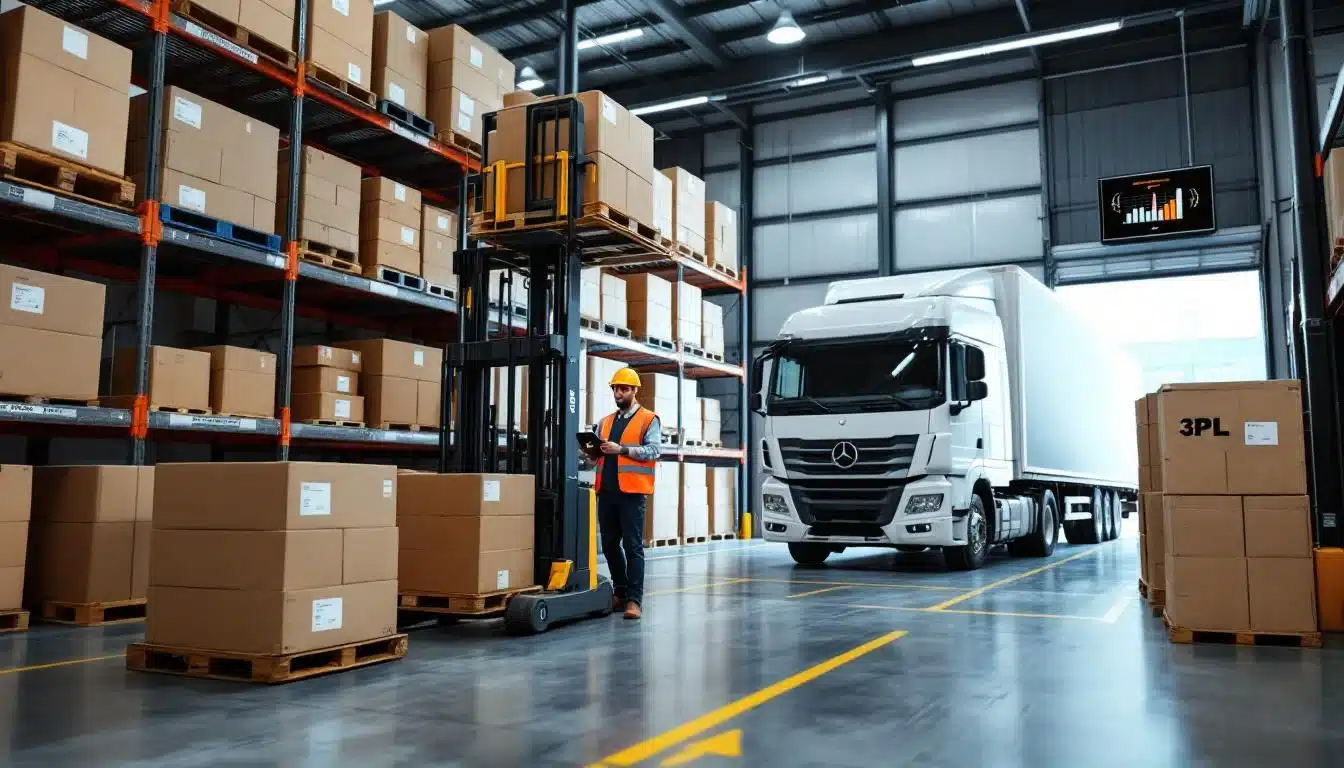
Outsourcing logistics to third party logistics providers isn’t optional anymore-it’s how competitive supply chains operate. Most logistics managers we work with at Loyalty Logistics face the same challenge: managing complexity across borders while controlling costs and meeting compliance requirements.
This guide walks you through what 3PL providers actually do, how to pick the right partner, and how to get real results from that partnership.
What Third-Party Logistics Providers Actually Do
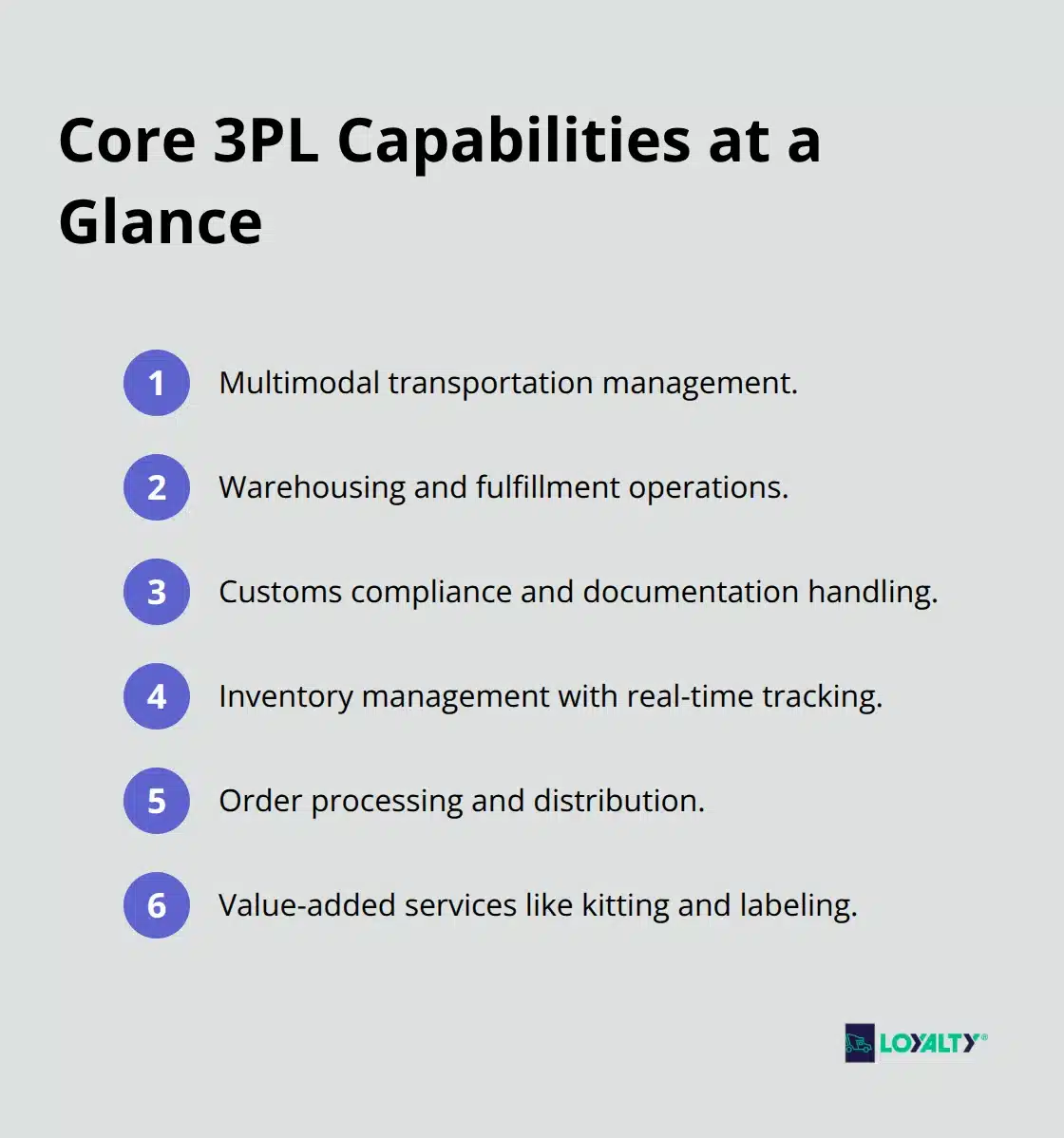
Third-party logistics providers manage far more than warehouse storage. A comprehensive 3PL handles transportation across multiple modes, warehousing and fulfillment, customs compliance and documentation, inventory management with real-time tracking, order processing and distribution, and value-added services like kitting or labeling. For cross-border operations specifically, this means managing HS code classification, preparing commercial invoices and bills of lading, coordinating with customs brokers, and navigating tariff calculations. If you’re still clarifying what a 3PL is and how it fits into your logistics operation, that overview covers the fundamentals. When you outsource these functions, you eliminate the need to maintain in-house expertise across all these areas.
A 3PL brings established carrier networks, warehouse infrastructure already in place, and staff trained on regulatory requirements that change constantly. CH Robinson handles over 2 million North American cross-border shipments annually, which shows the scale at which leading providers operate. The real advantage appears when you compare costs: building equivalent internal capacity requires capital investment in facilities, hiring specialized staff, and maintaining technology systems. Most logistics managers find that a 3PL’s economies of scale reduce per-unit transportation and warehousing costs significantly. You pay for space and services you actually use rather than maintaining idle capacity during slow periods.
How Integration Works in Practice
Integration means your 3PL connects directly to your systems through EDI, XML, or API connections. Orders flow automatically from your system to the 3PL’s warehouse management system, inventory levels sync in real time, and shipment tracking data feeds back into your visibility dashboard.
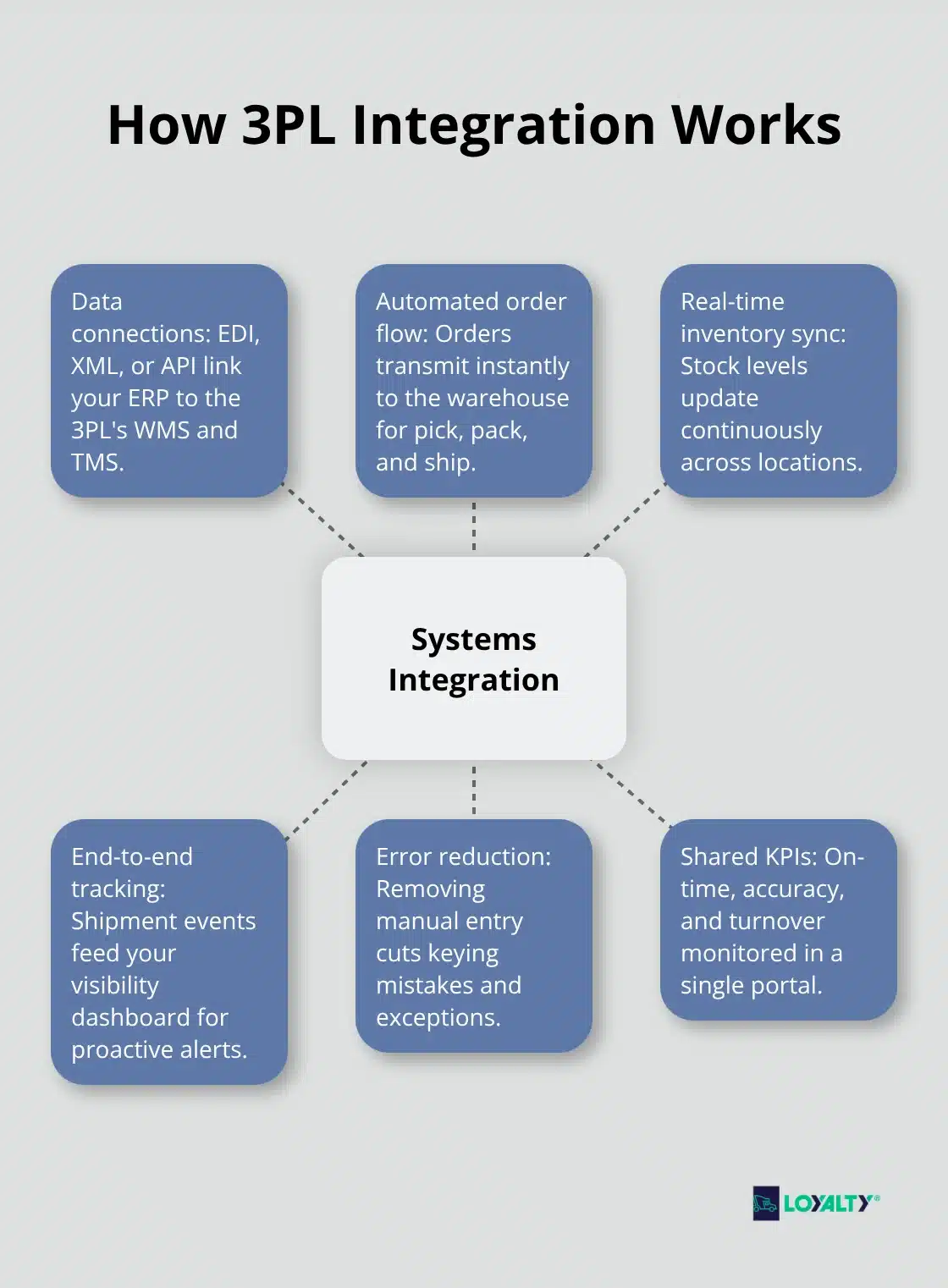
The 3PL becomes an extension of your supply chain rather than a separate contractor you communicate with via email. Real-time visibility into customs clearance status helps you plan distribution and avoid stockouts, particularly important during peak e-commerce periods when delays compound quickly. Deploying supply chain visibility tools that provide real-time tracking across carriers and warehouses ensures you maintain control even when operations run through a third party. A 3PL with strong technology infrastructure can also handle documentation automation, pre-clearing paperwork before shipments arrive at the border, which reduces clearance times significantly. Without this integration, you lose visibility and revert to reactive management instead of proactive planning.
Why In-House Operations Cost More Than They Appear
Building internal logistics capability requires capital that most companies cannot justify. You need warehouse space near ports or distribution hubs, which costs between 5 and 8 dollars per square foot annually in major markets. Staff requires ongoing training on customs regulations, tariff codes, and carrier management. Technology systems demand continuous updates and integration work. When volume fluctuates seasonally, you carry fixed costs during slow periods.
A 3PL spreads these costs across hundreds of clients, which is why their per-unit pricing typically beats in-house operations. You also avoid penalties from misclassified products or incorrect documentation, which can reach thousands of dollars per shipment. The opportunity cost matters too: your logistics team could focus on strategy and vendor management instead of executing routine tasks. Most managers find that outsourcing frees internal resources for higher-value work.
What Separates 3PLs from DIY Logistics
The gap between outsourced and in-house logistics widens when you factor in regulatory complexity. Your team must track tariff changes across multiple countries, maintain HS code accuracy for every product, and stay current on trade agreements. Staying informed on how tariffs on Canada and Mexico affect your landed costs under USMCA is just one example of the expertise a strong 3PL brings to the table. They also maintain relationships with customs brokers and border agencies, which accelerates clearance and reduces friction at crossings.
Capacity flexibility represents another critical difference. A 3PL scales up or down with your demand without requiring you to hire or lay off staff. During peak seasons, they access additional carrier capacity and warehouse space. During slow periods, you don’t pay for unused resources. This flexibility matters especially for companies with seasonal demand or those entering new markets where volume remains uncertain. Your internal team cannot match this adaptability without significant overhead.
Selecting a 3PL That Matches Your Actual Requirements
Map Your Exact Needs Before Evaluating Providers
You need to know what you actually require before contacting potential 3PL partners. Do you need cross-border expertise, temperature-controlled warehousing, customs brokerage, or all three? Many logistics managers choose based on price alone, then discover the provider lacks critical capabilities. Ask potential partners directly about their experience with your product category and similar shipment volumes. Request references from companies operating in your industry and geographic markets, not generic case studies. A provider handling automotive parts may lack expertise in pharmaceutical cross-border compliance, where documentation requirements differ significantly.
Test Capabilities Against Real Scenarios
Push potential partners on specific scenarios during evaluation. How do they handle a misclassified HS code that triggers a customs hold, and what’s their typical resolution time? Ask about their technology stack and whether they integrate with your existing systems through EDI or API. Vague answers about integration capabilities signal that you’ll face manual workarounds later. Confirm their pre-clearance procedures for customs documentation and whether they submit paperwork before shipments arrive at the border. This single capability can reduce clearance times from hours to minutes. Request their on-time delivery rate, order accuracy percentage, and average customs clearance time for your target corridors. Reputable providers share these metrics confidently.
Calculate Total Landed Cost, Not Just Quoted Rates
Cost analysis requires you to look beyond quoted rates to total landed cost impact. A provider charging 5 percent less per shipment might offset savings through slower clearance, requiring you to carry higher safety stock. Calculate the real expense: transportation cost plus warehousing fees plus inventory carrying costs plus potential penalties from delays. Request a detailed rate card and ask about volume discounts, but verify that discounts don’t reduce service quality. Many 3PLs offer lower rates for slower delivery windows or reduced tracking visibility. Some charge separately for customs documentation, pre-clearance, or system integration, which adds 8 to 15 percent to stated rates.
Confirm whether their pricing covers all border crossings or if certain routes cost significantly more. For cross-border operations, toll costs matter: the Ambassador Bridge charges up to 20 dollars per axle with toll-by-video, while the Peace Bridge costs 4 to 10 dollars depending on payment method. A 3PL routing consistently through expensive crossings destroys your margin advantage. Evaluate ROI over 18 to 24 months, not just the first quarter. Technology investments and process optimization take time to show returns.
Pilot Before Full Commitment
Request a pilot program with a portion of your volume before committing your entire operation. This reveals integration issues, communication gaps, and actual performance against promised metrics without betting your entire supply chain. The pilot phase also tests whether the provider’s team communicates clearly, responds to issues quickly, and adapts to your specific workflows. You’ll identify red flags early-missed deadlines, documentation errors, or system incompatibilities-when the stakes remain manageable. A strong 3PL partner welcomes pilot programs because they demonstrate capability and build confidence for long-term relationships.
Once you’ve selected a provider and launched operations, the real work begins. You need clear metrics, consistent communication, and a willingness to leverage data to improve performance continuously.
Looking for a logistics partner with cross-border expertise?
Loyalty Logistics manages freight across the U.S., Mexico, and Canada with customs coordination, real-time tracking, and carrier networks built for cross-border complexity.
Explore Cross-Border Freight Services →Getting Real Results From Your 3PL Partnership
Define Metrics That Actually Matter
The moment you sign a contract with a 3PL, most logistics managers assume the hard work ends. That assumption destroys partnership value. Your 3PL succeeds only when you define what success looks like, measure it consistently, and act on the data you collect. Start with on-time delivery rate, order accuracy percentage, and customs clearance time as your core metrics. On-time delivery should target 95 percent or higher for cross-border operations. Order accuracy belongs at 99.5 percent minimum because even single-digit error rates compound across thousands of shipments monthly.
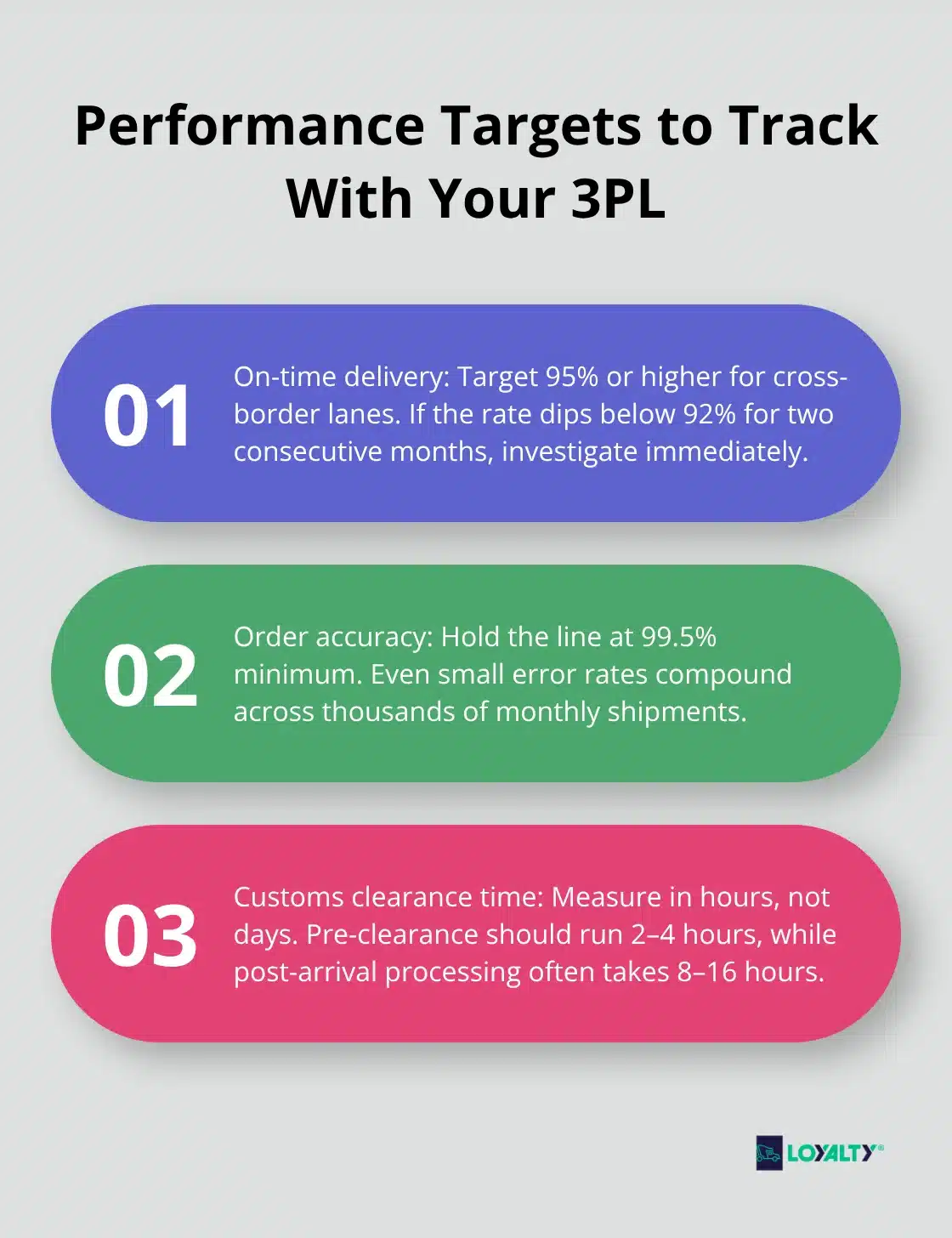
Establish a monthly review cadence where you examine these metrics against targets and identify trends. If your 3PL’s on-time rate dips below 92 percent for two consecutive months, that signals operational problems requiring immediate investigation, not quarterly discussions. Using supply chain analytics to identify patterns in delays and clearance bottlenecks gives you the data to hold your 3PL accountable with specifics, not assumptions. This disciplined approach prevents small issues from becoming supply chain failures.
Build Communication Structures That Surface Problems Early
Communication determines whether problems surface early or compound into failures. Schedule weekly calls with your 3PL contact during the first 90 days, then transition to bi-weekly once operations stabilize. These calls should focus on specific issues: What shipments experienced delays and why? Which customers complained about delivery windows? Did customs holds occur, and what triggered them?
Push your 3PL to provide root cause analysis, not excuses. When they blame carrier delays, ask which carrier and whether alternative routing would improve performance. When they cite customs issues, demand specifics about which HS codes triggered holds and how documentation will change to prevent recurrence. Many logistics managers fail here by accepting vague explanations instead of demanding accountability.
Request a shared dashboard where you view real-time inventory levels, in-transit shipments, and customs status without waiting for reports. If your 3PL cannot provide this visibility within 48 hours of request, they lack the technology infrastructure you need. Also establish an escalation process: define which issues require immediate notification versus those reported in regular reviews. If a shipment misses a delivery window by more than 6 hours, you should hear about it same-day with a corrective action plan.
Plan Ahead to Prevent Capacity Crises
Integrate your 3PL team into your planning cycles. When you forecast seasonal peaks or launch into new markets, include them in those discussions 60 to 90 days ahead. This allows them to secure carrier capacity and warehouse space before crunch periods arrive, preventing the premium rates and service failures that plague unprepared partnerships. Building supply chain risk management practices into your 3PL partnership ensures you have contingency carriers and alternative routing before disruptions hit. Shared planning transforms your 3PL from a reactive service provider into a strategic partner.
Leverage Data to Drive Continuous Improvement
Data analytics separate high-performing partnerships from mediocre ones. Every month, analyze which product categories experience the longest customs clearance times and why. If electronics consistently clear faster than machinery, examine the HS code classification and documentation patterns. Work with your 3PL to identify whether documentation completeness or product category differences drive the gap.
Analyze which border crossings generate the most delays. If the Ambassador Bridge consistently shows longer clearance than alternative crossings, calculate the toll cost difference and routing impact. Many 3PLs default to convenient crossings rather than optimizing for total landed cost. Understanding how to navigate cross-border shipping routes across the U.S., Mexico, and Canada helps you challenge your 3PL’s routing decisions with data rather than intuition. Demand that they route strategically based on real-time congestion data and clearance patterns.
Track inventory carrying cost reductions resulting from faster customs clearance. When pre-clearance procedures drop clearance time from 12 hours to 3 hours, you reduce safety stock requirements and free working capital. Quantify this benefit monthly and reference it when evaluating partnership ROI. Use this data to drive continuous improvement discussions. Instead of asking your 3PL what they plan to improve, present specific data showing where performance lags and ask them to propose solutions. This shifts conversations from defensive to constructive and demonstrates that you take partnership seriously.
Ready to compare your current logistics setup against a cross-border specialist?
Get a no-obligation quote from Loyalty Logistics and see how our carrier networks, customs coordination, and real-time visibility stack up.
Get a Free Quote →Final Thoughts
Selecting the right third party logistics 3PL providers requires discipline and specificity rather than price-focused decisions that lead to poor performance and missed deadlines. The evaluation process matters: map your exact needs, test capabilities against real scenarios, calculate total landed cost including inventory carrying costs and potential penalties, and pilot before full commitment. A 3PL that costs 5 percent less per shipment but delays customs clearance by 8 hours destroys your margin advantage through excess safety stock and working capital tied up in transit.
Once you’ve chosen a partner, active management determines whether you achieve results or accept mediocre performance. Define metrics that matter-on-time delivery above 95 percent, order accuracy at 99.5 percent minimum, and customs clearance measured in hours not days-then review these metrics monthly and demand root cause analysis when performance dips. Build communication structures that surface problems early through weekly calls and shared dashboards showing real-time inventory and shipment status, and integrate your 3PL into your planning cycles 60 to 90 days ahead of seasonal peaks or market launches so they secure capacity before crunch periods arrive.
High-performing partnerships require continuous data analysis: identify which product categories experience longer customs clearance, analyze which border crossings generate delays, and quantify the working capital freed by faster clearance. Use this data to drive improvement conversations instead of accepting vague explanations, and treat your 3PL as a strategic partner rather than a transactional vendor.
Related Articles
• How to Choose the Best 3PL Logistics Provider – Detailed evaluation criteria for selecting among 3PL candidates
• 3PL vs 4PL Logistics: Understanding the Differences – When to consider upgrading from 3PL to 4PL management
• Freight Broker vs Freight Forwarder: Key Differences – Clarifies roles so you know which partners to include alongside your 3PL
• How to Optimize Your Supply Chain Effectively – Broader optimization strategies that complement 3PL partnership management
Need a Cross-Border Logistics Partner You Can Hold Accountable?
Loyalty Logistics provides freight transportation with real-time visibility, customs coordination, and dedicated carrier networks across the U.S., Mexico, and Canada. We operate with the transparency and accountability this guide demands from your logistics partners.
Loyalty Logistics: Connecting businesses with opportunities across North America.
Written by: Carlos Robayo, Director of Marketing at Loyalty Logistics
With experience in logistics marketing and international trade strategies, Carlos specializes in connecting companies with efficient, reliable transportation solutions for the North American market.

