
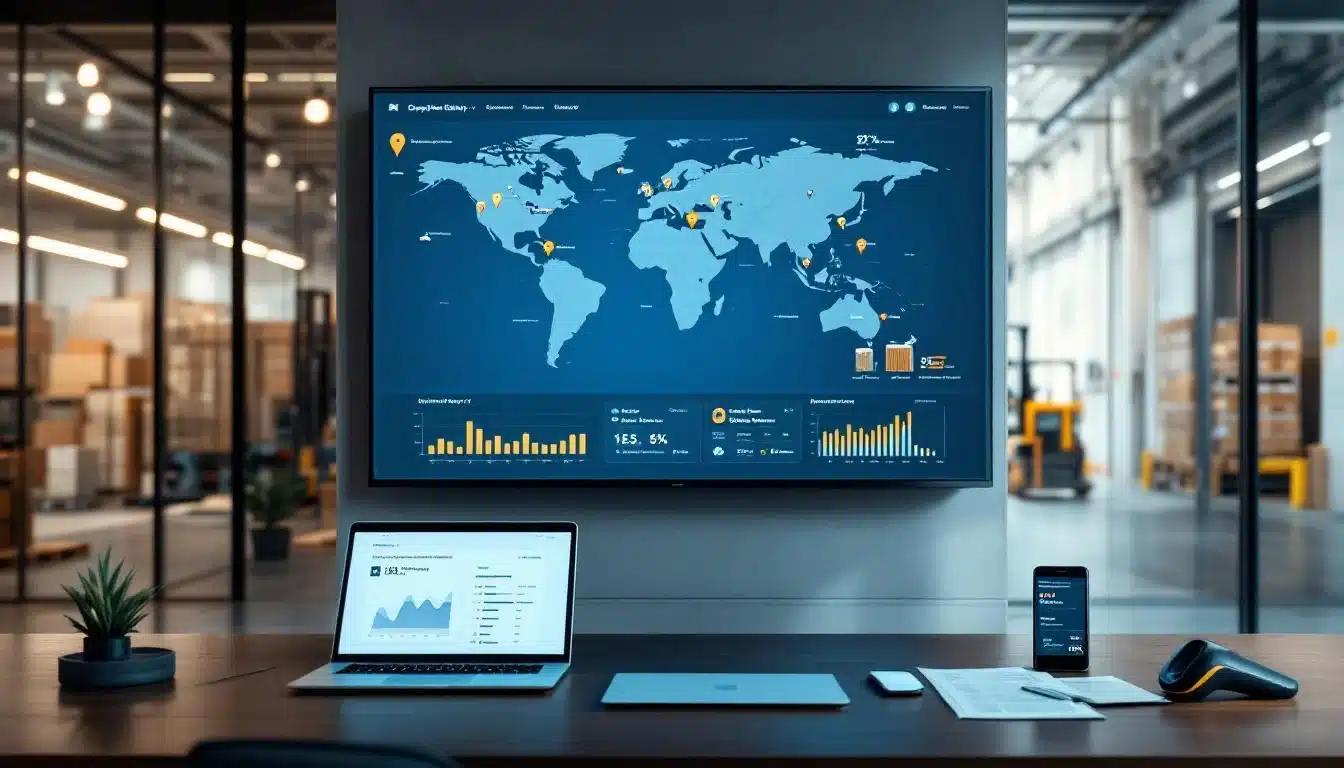
Supply chain visibility tools have become non-negotiable for logistics managers facing mounting pressure to cut costs and eliminate delays. Without real-time insight into your shipments, you’re operating blind-losing money to preventable disruptions and compliance failures.
At Loyalty Logistics, we’ve seen firsthand how visibility transforms operations. This guide walks you through what modern platforms deliver and how to implement one that actually fits your operation.
Why Supply Chain Visibility Cuts Through Your Costs
Real-time tracking transforms how you respond to disruptions, and the numbers prove it. Last-mile execution accounts for more than 50% of shipping costs, according to the U.S. Department of Transportation, making visibility here non-negotiable. When you know exactly where a shipment sits, you avoid the costly guessing game of rerouting, expediting, or explaining delays to frustrated customers. A logistics manager without real-time data reacts after problems surface-a shipment misses a delivery window, customs paperwork gets delayed at the border, or a carrier no-shows. Visibility lets you detect these issues hours or days earlier and adjust plans before your customer feels the impact. The Perfect Order Index, which measures on-time delivery, order accuracy, and damage-free arrival combined, improves measurably when you shift from reactive to proactive management. This metric directly affects customer retention; 84% of customers would abandon a retailer after a single poor delivery experience, so visibility functions as customer retention infrastructure.
Compliance Costs Demand Smarter Tracking
Regulatory compliance costs drive landed product costs up to 25% due to global regulatory complexity, and manufacturers report an average compliance cost of about $20,000 per employee. Real-time shipment visibility identifies non-compliant suppliers or missing documentation before shipments move, cutting the manual audits and rework that drain your team. Programs like CTPAT certification demonstrate compliance commitment that speeds up border crossings and reduces inspection rates. For cross-border operations, early collection of customs data and real-time tracking through your TMS of the clearance process prevent hold-ups that cascade into missed delivery promises and penalty fees. You reduce friction at every checkpoint when visibility platforms flag exceptions automatically rather than waiting for phone calls or email updates.
Forecasting Accuracy Flows From Visibility Data
Better forecasting follows naturally from visibility data. When you track shipment patterns, seasonal delays, and supplier performance across historical records, you build accurate demand forecasts that reduce stockouts and excess inventory. This foundation supports production planning that matches actual customer demand rather than guesses. Inventory turnover improves, working capital frees up, and your team stops firefighting phantom shortages. The data you collect today informs the decisions you make tomorrow-and the quarter after that. With this operational foundation in place, the next step involves selecting a platform that actually integrates with your existing systems rather than creating new silos.
What Modern Visibility Platforms Actually Deliver
GPS tracking and location updates form the backbone of real-time visibility, but the real value emerges when platforms translate raw location data into operational decisions. Modern systems pinpoint shipments across ground, ocean, and air movements, with providers like Project44 offering ETAs up to 180 days out-a capability that fundamentally changes how you plan around predictable delays. When you know a shipment will arrive three hours late due to port congestion or weather, you adjust warehouse staffing, customer communication, and production schedules proactively rather than scrambling at the last minute. For cross-border operations, real-time tracking of the customs clearance process prevents the silent delays that typically surface only after customers call. GPS data also exposes inefficiencies you wouldn’t spot otherwise; if a carrier routinely takes a circuitous route on a specific lane, visibility reveals the pattern and lets you renegotiate terms or switch providers.
Automated Alerts Stop the Reactive Cycle
Automated exception alerts represent the operational shift that actually saves money. Rather than checking dashboards manually or waiting for carrier updates, modern platforms flag delays, missed handoffs, customs holds, and compliance gaps the moment they occur. This early warning system typically triggers 4-24 hours before impact, giving your team time to reroute shipments, notify customers with accurate ETAs, or coordinate with backup carriers before disruptions cascade. Integration with your ERP and TMS systems means alerts flow directly into workflows your team already uses-not into separate dashboards that get ignored. For compliance-heavy operations, automated alerts catch missing documentation before shipments hit border checkpoints. Platforms that combine real-time tracking with AI-based exception detection reduce manual intervention and phone tag dramatically. When alerts flag potential issues early, your team can also verify that cargo securing protocols remain intact throughout transit. The result is faster decision-making and fewer escalations to management.
Integration Eliminates Data Fragmentation
Integration with existing systems separates platforms that deliver value from those that create new silos. Cloud-based visibility platforms that connect seamlessly to your ERP, TMS, and accounting systems eliminate manual data entry and reconciliation work that drains logistics teams. When visibility data flows directly into your demand planning tools, your forecasting accuracy improves immediately because your system sees actual shipment patterns rather than guesses. Many organizations struggle because they’ve stitched together multiple point solutions-a tracking tool here, a customs platform there-that never communicate. A unified platform with robust API connections to your core systems consolidates this fragmentation. For cross-border freight, integration becomes non-negotiable; you need visibility data flowing from customs brokers, border systems, and carriers into one source of truth so your team can see the full picture without toggling between five different screens. This consolidated approach transforms how your team responds to the next critical challenge: selecting and implementing a platform that matches your specific operational needs.
Need a carrier with real-time visibility built in?
Loyalty Logistics provides real-time tracking on every shipment across the U.S., Mexico, and Canada-with CTPAT certification and bilingual support.
Explore Our Freight Services →Selecting a Platform That Matches Your Operation
Start by mapping your specific pain points before you talk to any vendor. Most logistics managers chase feature lists instead of solutions. Spend a week documenting where visibility gaps cost you money right now. Are shipments regularly missing delivery windows because you don’t know about delays until customers call? Are customs holds at the border eating 12-24 hours because paperwork arrives late? Is your team manually checking five different carrier portals and still missing exceptions? Are compliance audits consuming 40 hours per month because you lack centralized documentation? Write these down with frequency and estimated cost impact. This exercise forces you to separate nice-to-have features from must-have capabilities. A platform that excels at last-mile tracking but ignores customs clearance visibility won’t solve your cross-border headaches.
Evaluate Vendors Against Your Actual Needs
Once you know your gaps, evaluate vendors on their ability to address them specifically. Ask for a pilot on a real lane that represents your pain point, not their showcase scenario. Request references from companies running similar operations in your geography and freight type. Demand integration specifications before signing anything; a vendor claiming seamless ERP integration but requiring manual data exports defeats the purpose. Verify that their support team can handle issues in your timezone and language. For cross-border operations, bilingual support matters enormously because delays often stem from communication breakdowns at border checkpoints or with Mexican carriers. Companies navigating cross-border shipping across North America need vendors who understand trilateral customs requirements, not just domestic tracking. Test their platform against your documented pain points rather than their marketing claims.
Plan Realistic Implementation Timelines
Expect 12-16 weeks of implementation, not the 6-week promise vendors advertise. This includes data migration, system configuration, team training, and the inevitable troubleshooting phase. Assign an internal project lead who understands both your operations and technology; this person bridges the gap between your team’s needs and the vendor’s capabilities. Test integrations thoroughly with your transport management system and ERP before going live on production shipments. Many implementations fail because teams rush go-live and then spend months fighting data synchronization issues.
Start Small and Scale Deliberately
Start with a single high-volume lane or region rather than deploying globally at once. This approach lets your team learn the platform’s workflows, identify configuration gaps, and build confidence before scaling. Document your data standards before implementation begins; inconsistent carrier naming, address formats, or shipment categorization will corrupt your visibility data and undermine forecasting. Schedule training in phases aligned with your go-live timeline, not all at once months before launch. Your team forgets what they learned if training happens too early.
Secure Sustained Organizational Commitment
Visibility platforms require ongoing vendor fees, internal support resources, and continuous configuration as your business evolves. Teams that treat implementation as a one-time project rather than an ongoing capability consistently underutilize their platforms. Executive commitment to sustained investment separates successful deployments from those that stall after the initial rollout. Your visibility program only delivers value when your organization treats it as a core operational capability that evolves with your business needs.
Shipping across the U.S.-Mexico-Canada corridor?
Our real-time tracking, CTPAT certification, and bilingual ops team give you full visibility on every cross-border shipment.
Get a Free Quote →Final Thoughts
Supply chain visibility tools have moved from nice-to-have to operational necessity, especially for cross-border freight where delays cascade quickly and compliance failures carry real penalties. Real-time tracking prevents the costly reactive cycles that drain your team’s time and your company’s margins, while automated alerts catch problems hours before they impact customers. Integration with your existing systems eliminates the manual work that slows decision-making and lets your team focus on execution rather than data entry.
Moving forward requires honest assessment of where visibility gaps cost you money today, then selecting a platform that addresses those gaps directly rather than offering features to problems you don’t have. Implementation takes longer than vendors promise, but that investment pays dividends through improved on-time delivery, reduced compliance costs, and better forecasting accuracy. Companies that combine visibility tools with broader supply chain optimization strategies see the strongest returns. Start with a single high-volume lane, train your team thoroughly, and scale deliberately as your organization builds confidence in the system.
Related Articles
• Supply Chain Visibility: Why Real-Time Tracking Is No Longer Optional – The technology behind modern visibility
• Harnessing Supply Chain Analytics for Smarter Logistics Decisions – Turning visibility data into action
• How to Optimize Your Supply Chain Effectively – Building resilience beyond visibility
Need a Carrier That Operates With Full Transparency?
At Loyalty Logistics, real-time tracking comes standard on every load. We operate across the U.S., Mexico, and Canada with CTPAT certification, bilingual support, and the operational transparency that makes your visibility platform work harder.
Loyalty Logistics: Connecting businesses with opportunities across North America.
Written by: Carlos Robayo, Marketing Director at Loyalty Logistics
With experience in logistics marketing strategy and international trade, Carlos specializes in connecting businesses with efficient and reliable transportation solutions across the North American market.

