
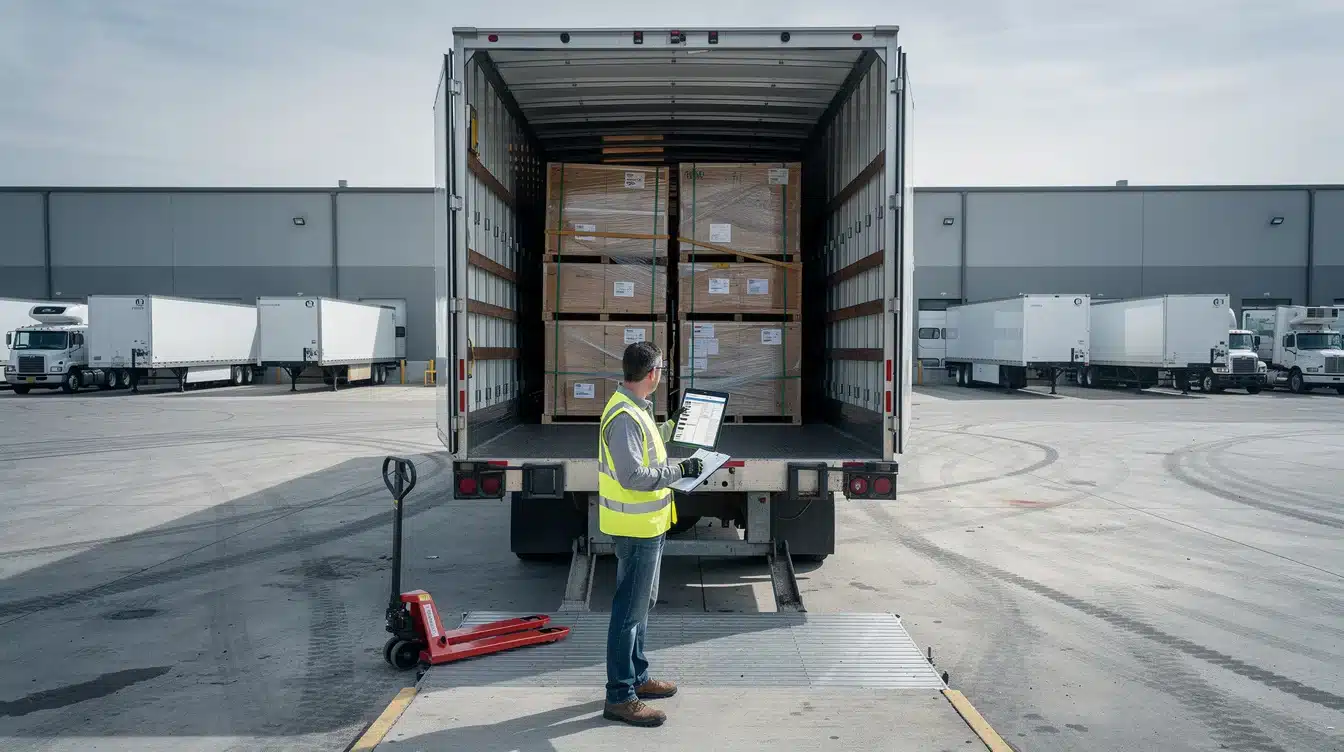
Full truckload services move the needle for supply chain managers handling consistent shipment volumes. When you’re moving enough freight to fill an entire truck, the economics and reliability shift dramatically in your favor.
At Loyalty Logistics, we’ve seen firsthand how the right FTL strategy cuts costs, reduces damage, and tightens delivery windows. This guide walks you through what matters: when to use FTL, why it outperforms alternatives, and how to pick a provider that actually delivers.
What Full Truckload Shipping Actually Is
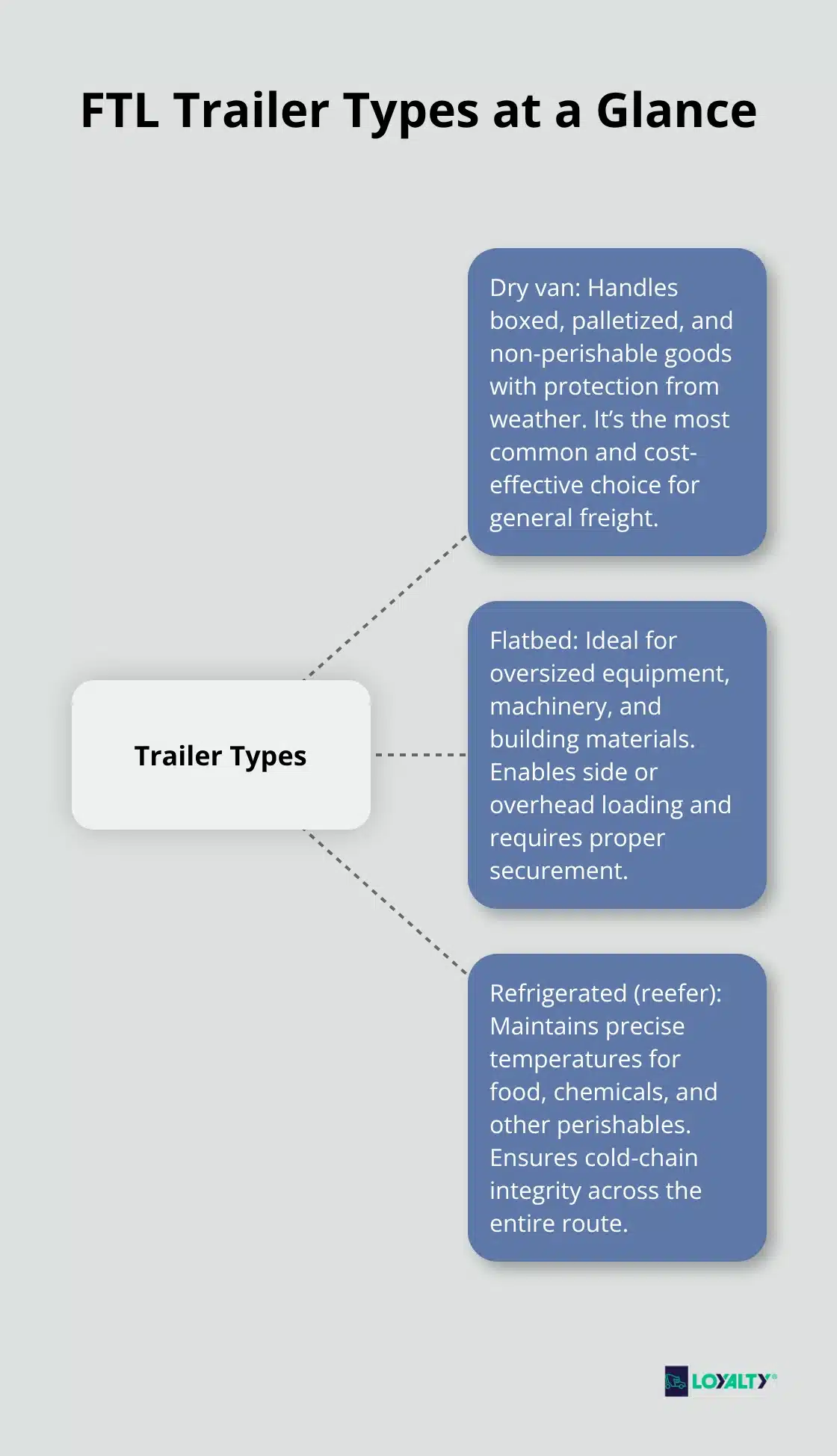
Full truckload shipping means one shipper controls an entire trailer, typically weighing 42,000 to 44,000 pounds and carrying up to 30 standard pallets. This differs fundamentally from LTL, where your freight shares space with multiple shippers. The economics matter here: once you move enough volume to justify a dedicated truck, you eliminate the consolidation stops, hub transfers, and handoff delays that plague LTL shipments. Standard trailers come in three types-dry van for general goods, flatbed for oversized equipment or machinery, and refrigerated for temperature-sensitive cargo like food or chemicals. When you book FTL, you pay for the entire capacity whether you fill it completely or not, which is why volume thresholds matter significantly. Most logistics managers find FTL makes financial sense around 15,000 pounds of freight, though the actual breakeven depends on your lane, carrier availability, and how urgently you need the shipment moved.
The Direct Route Advantage
The real advantage isn’t just the trailer itself; it’s the direct origin-to-destination service with minimal stops. This typically cuts transit time by 1–2 days compared to LTL on the same route. Your freight sits on one truck with fewer transfers, which means less exposure to rough handling at consolidation points. Freightquote’s network of more than 450,000 carriers helps maintain consistent FTL capacity, and instant online quotes let you compare rates and book shipments in a single platform without long-term contracts.
When FTL Outperforms LTL on Your Bottom Line
LTL works fine for smaller, infrequent shipments below 15,000 pounds, but it costs more per pound because you share truck space. Once your volume grows or your shipments become regular, FTL’s fixed-cost structure becomes cheaper. A Chicago-to-Toronto FTL typically takes 1–2 days versus 2–3 days for LTL when you factor in customs and hub processing. For supply chain directors managing inventory across multiple locations, FTL’s predictable delivery window reduces safety stock needs and improves cash flow. If you move 3,000+ pounds weekly on the same lane, switching from LTL to FTL usually cuts your per-pound cost by 20–40%, depending on equipment type and seasonal demand.
Partial Truckload: The Middle Ground
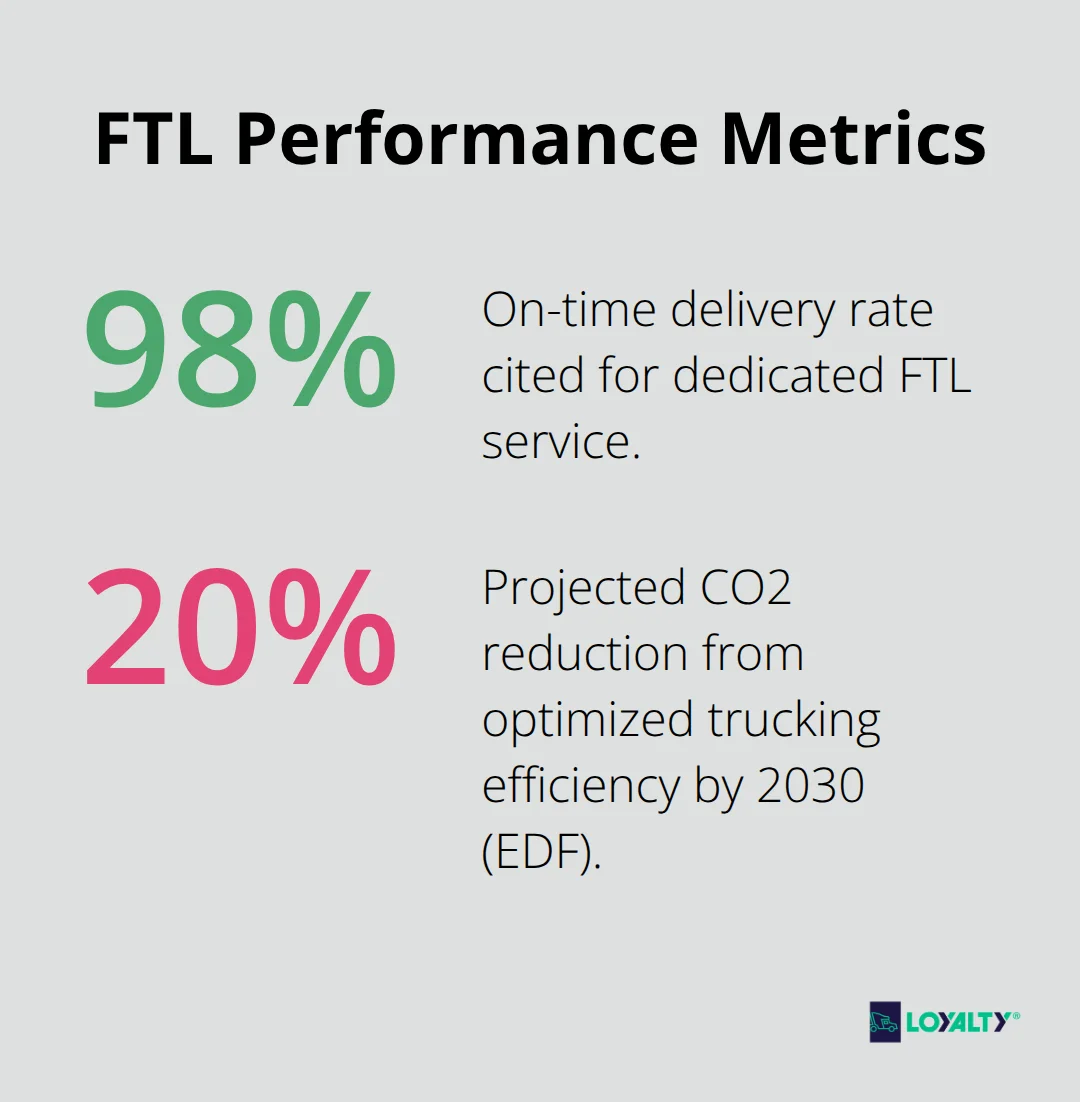
Partial truckload is worth considering when your shipment doesn’t fill a trailer but exceeds typical LTL weight thresholds-you get more control than LTL without paying for empty space. This option bridges the gap between cost efficiency and service reliability. Loyalty Logistics provides refrigerated and flatbed options that handle specialized cargo requiring direct routing, backed by a 98% on-time rate that reflects the reliability dedicated FTL service delivers. Understanding which trailer type matches your cargo needs sets the foundation for selecting the right provider.
Why FTL Reduces Damage and Cuts Your Shipping Costs
One truck, one shipment, one set of hands moving your freight from origin to destination. That operational simplicity translates directly to fewer damage claims and lower per-pound costs as your volume grows. FTL eliminates the consolidation stops where most damage occurs-your freight avoids transfers between hubs, stacking under other shipments, and handling by multiple carriers. When your shipment occupies an entire trailer, the driver and carrier hold direct accountability for its condition. LTL, by contrast, moves through at least two distribution hubs, gets sorted multiple times, and sits exposed to rough handling during transfers.
The Direct Routing Advantage
Direct origin-to-destination service cuts transit time by 1–2 days compared to LTL on the same route. A Detroit-to-Toronto FTL completes in one day versus two to three days for LTL when customs processing is factored in. That speed advantage cuts inventory carrying costs and reduces working capital tied up in transit. For supply chain directors managing multiple locations, FTL’s predictable delivery window lets you run leaner safety stock and align inventory with actual demand patterns rather than hedging against unpredictable LTL delays.
Cost Reduction at Scale
The cost math becomes compelling once you hit consistent volume thresholds. Most lanes show a 20–40% per-pound cost reduction when you shift from LTL to FTL, depending on equipment type and seasonal demand. If you move 3,000+ pounds weekly on the same corridor, the economics shift decisively toward FTL. Comparing quotes across carriers reveals price gaps of 25–40%, letting you identify the best value without committing to long-term contracts.
Environmental Impact of Dedicated Routing
FTL contributes directly to supply chain efficiency by eliminating wasted space and redundant stops. The Environmental Defense Fund estimates that optimized truck efficiency could reduce CO2 emissions by about 20% by 2030. Dedicated routing means fewer vehicles on the road and less fuel consumption per shipment moved.
Partial Truckload as a Bridge Solution
Partial truckload sits between LTL and full FTL when your shipment exceeds typical LTL thresholds but doesn’t justify a completely filled truck. This option gives you control over routing and handling without paying for empty space that adds no value to your operation. Refrigerated and flatbed equipment options handle specialized cargo requiring direct routing, and carriers with strong on-time performance records deliver the reliability that dedicated service provides. Understanding which trailer type matches your cargo needs sets the foundation for selecting the right provider and optimizing your next shipment decision.
Picking a Carrier That Actually Delivers
Finding the right FTL provider matters more than most logistics managers realize. Your carrier choice directly impacts whether shipments arrive on time, damage-free, and at the cost you quoted to your customers.
On-Time Performance Reveals Operational Discipline
Start with on-time performance records because that metric reveals how a carrier handles real operational pressure. Ask carriers for their on-time percentage over the last 12 months, not just their claim or marketing number. A carrier hitting 96–98% on-time delivery consistently has systems in place to manage delays, communicate proactively, and staff appropriately. When you compare carriers, request their safety ratings from the Federal Motor Carrier Safety Administration database. Carriers with Satisfactory safety ratings show fewer violations, accidents, and compliance issues than those with Conditional or Unsatisfactory ratings.
Equipment Type and Maintenance Standards
Equipment matters significantly. A carrier operating dry van, flatbed, and refrigerated trailers gives you flexibility without switching providers for different cargo types. Ask about trailer age and maintenance records because older equipment breaks down more frequently and creates unexpected delays. Carriers investing in modern trailers typically maintain better on-time performance because downtime for repairs stays minimal. Temperature control on reefer trailers should maintain within plus or minus 2 degrees Fahrenheit if you move perishable goods. Request references from shippers moving similar cargo on your intended lanes. A carrier strong on automotive parts shipments may struggle with food-grade temperature control or flatbed load securement.
Insurance Coverage and Certifications
Cross-check their insurance coverage limits against your cargo value and liability exposure. Most FTL carriers carry $1 million in liability insurance, but specialized cargo like electronics or pharmaceuticals may require higher limits. Verify they hold any required certifications for your cargo type, such as HAZMAT endorsements for chemicals or CTPAT certification for cross-border shipments into Mexico.
Pricing Transparency and Volume Discounts
Pricing transparency separates carriers worth your time from those that hide fees until invoicing. Request all-in quotes that include fuel surcharges, equipment fees, and any accessorial charges upfront. Carriers quoting lower rates but adding surcharges later create budget uncertainty and erode your margins. Comparing multiple quotes helps you identify pricing outliers without spending weeks on calls. Negotiate volume discounts if you commit to regular shipments on the same lanes. Most carriers offer 5–15% discounts for consistent weekly volume, and those discounts compound over time.
Technology Integration and Communication During Disruptions
Technology integration matters for operational efficiency. Can the carrier provide real-time tracking via GPS, automated delivery notifications, and digital proof of delivery? Poor visibility into shipment status forces you to chase the carrier for updates, wasting internal resources. Carriers with modern TMS platforms give you access to shipment status 24/7, reducing the need for manual follow-up. Evaluate their communication approach during disruptions as well. Delays happen due to weather, mechanical issues, or traffic. A carrier that notifies you immediately and offers a revised delivery window demonstrates accountability. Those that stay silent until you call are signaling operational chaos.
Final Thoughts
Full truckload services deliver measurable results when your volume justifies dedicated capacity. You cut damage risk by eliminating hub transfers, compress transit times by 1–2 days, and reduce per-pound costs by 20–40% once you hit consistent volume thresholds. The operational simplicity of one truck, one shipment, one carrier creates accountability that LTL simply cannot match.
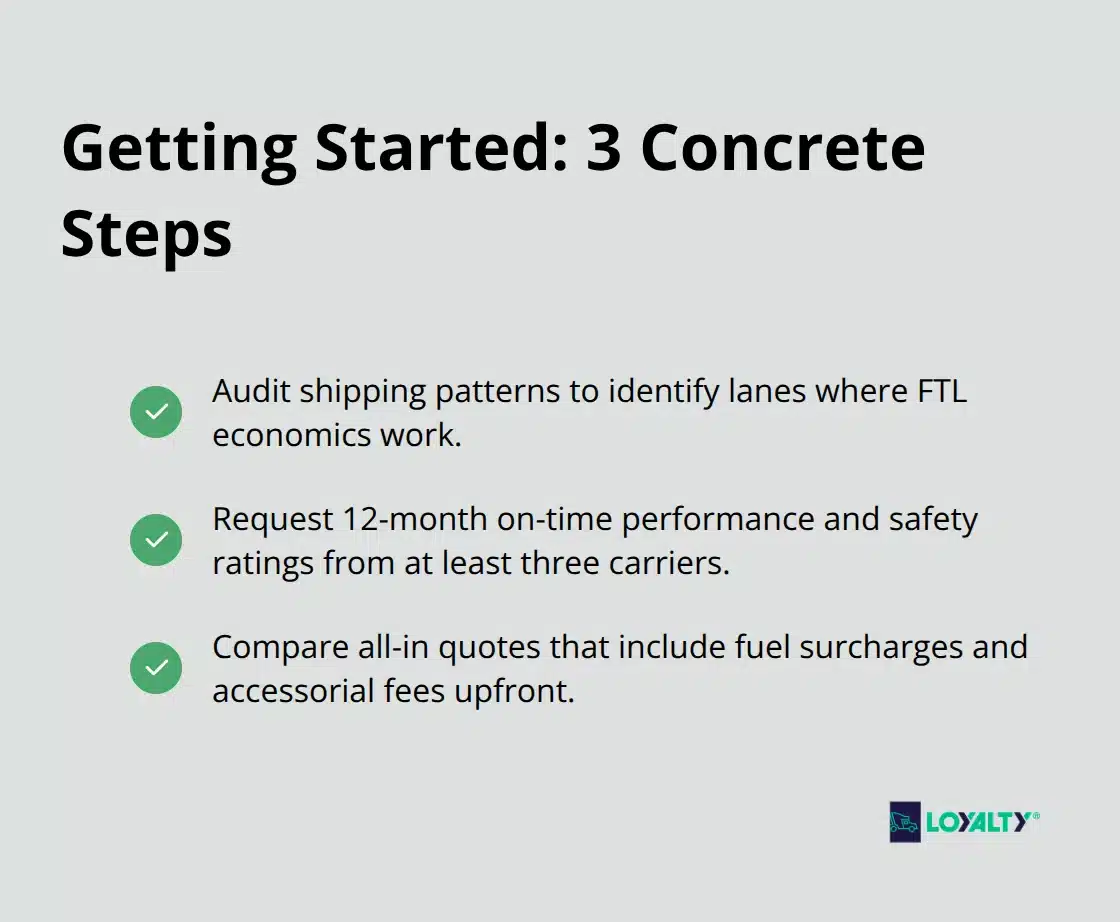
Getting started requires three concrete steps: audit your current shipping patterns to identify lanes where FTL economics work (if you move 3,000+ pounds weekly on the same corridor, the math favors switching from LTL), request on-time performance records and safety ratings from at least three carriers before committing, and compare all-in quotes that include fuel surcharges and accessorial fees upfront. A 96–98% on-time rate signals operational discipline, and FMCSA safety ratings reveal whether a carrier maintains equipment and trains drivers properly. Pricing transparency prevents budget surprises and lets you negotiate volume discounts for regular shipments.
We at Loyalty Logistics handle this complexity for you and can assess whether truckload services make sense for your operation. Request a quote and let our team identify cost savings, recommend equipment types for your cargo, and build a shipping plan that aligns with your delivery commitments.
