
Cross docking cuts inventory sitting time from weeks to hours. At Loyalty Logistics, we’ve seen supply chain managers reduce storage costs by 20-30% by moving freight directly from inbound to outbound docks with minimal handling.
The challenge is getting the timing and coordination right. This guide walks through what cross docking actually is, the real benefits it delivers, and the obstacles you’ll face when implementing it.
What Cross Docking Actually Is
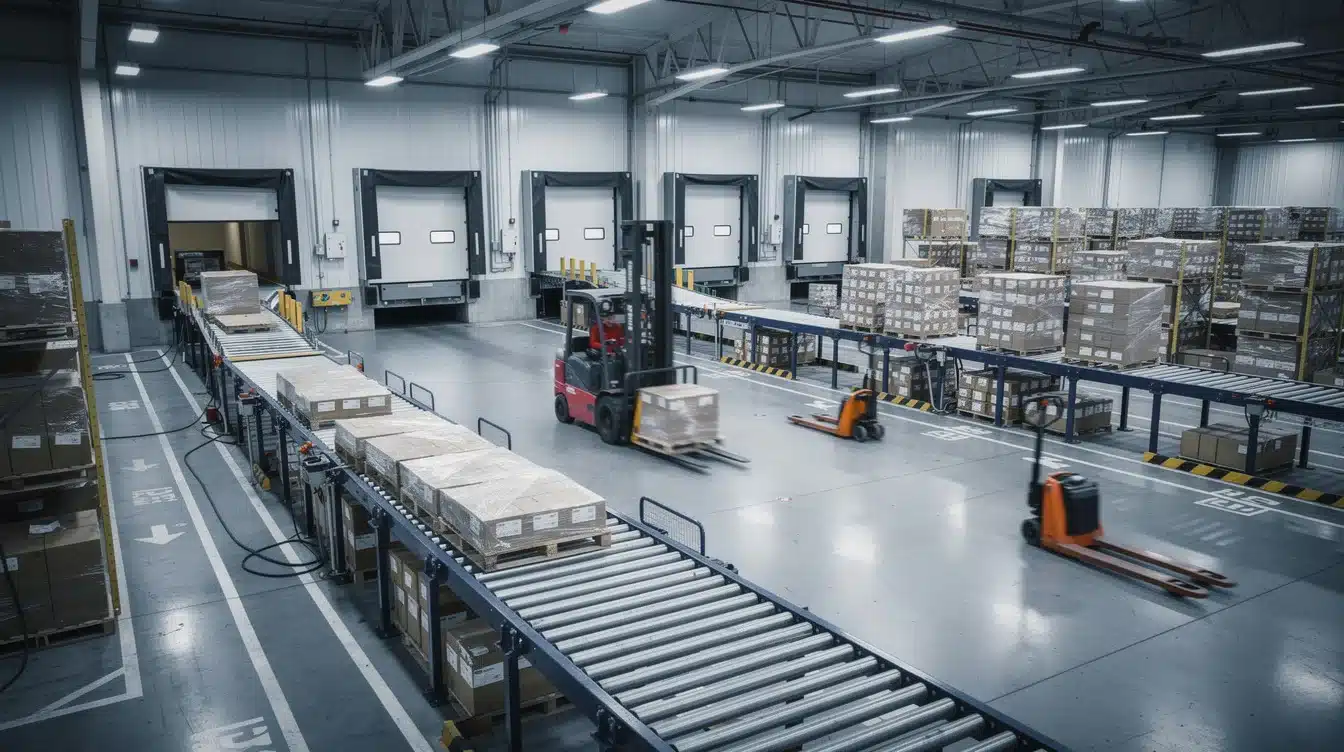
Cross docking moves products directly from inbound to outbound docks with minimal or no storage in between. Goods arrive, get sorted by destination, and load onto outbound vehicles within hours rather than sitting in a warehouse. The mechanics depend on your operation’s structure.
Understanding Cross Docking Models
In a continuous cross-docking model, similar products flow through steadily, which works well for high-volume items like groceries or fast-moving consumer goods. Consolidation cross-docking takes multiple smaller shipments and combines them into full truckloads before departure, reducing transportation costs by 15–20% according to industry benchmarks. Deconsolidation cross-docking does the opposite: it splits large inbound shipments into smaller outbound routes for multiple retail locations or customers.
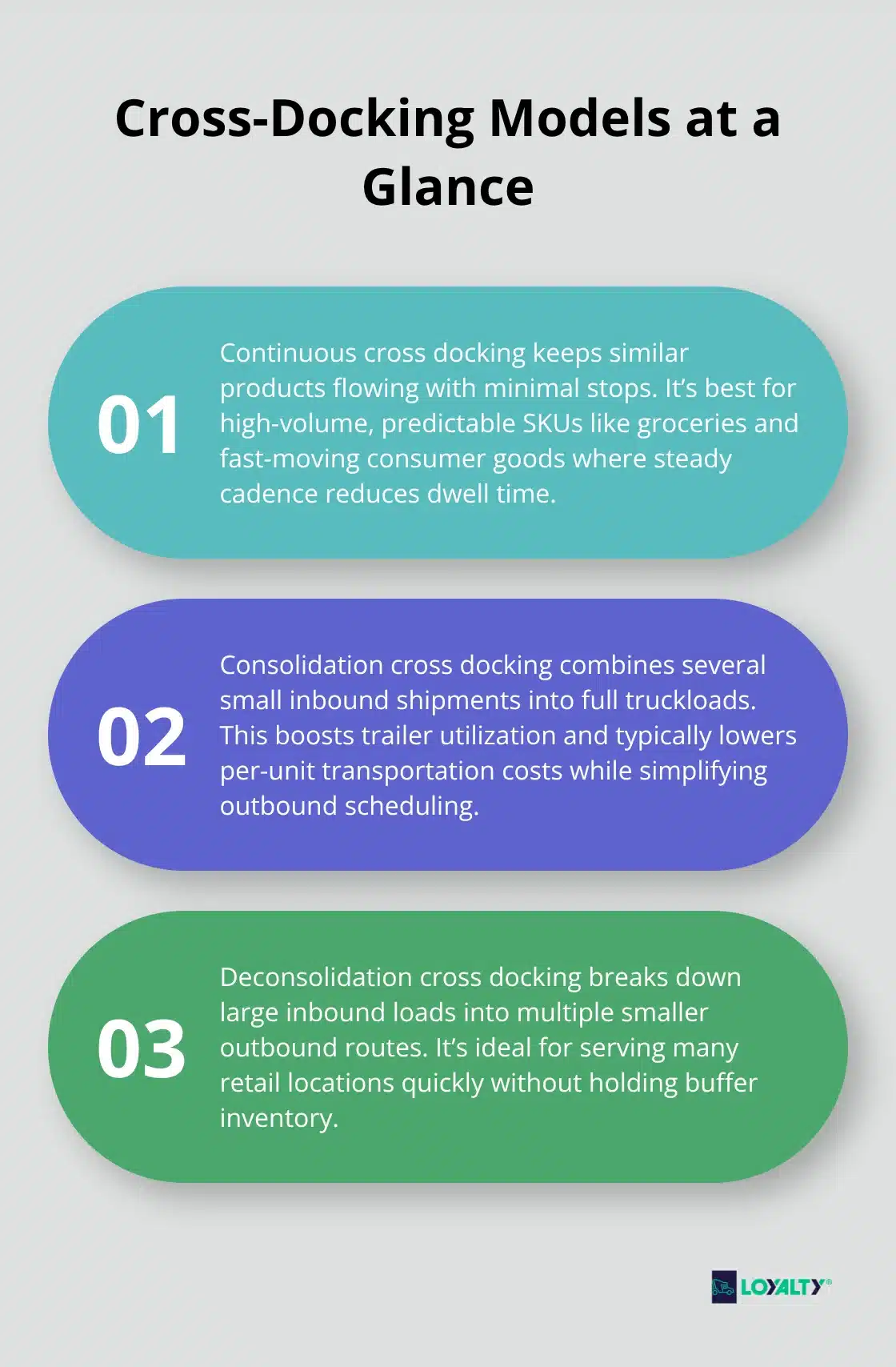
Pre-distribution cross-docking routes goods to final destinations before arrival, minimizing storage needs. Post-distribution cross-docking assigns final destinations after arrival, giving you flexibility when demand is uncertain.
How Cross Docking Differs From Traditional Warehousing
The key difference from traditional warehousing is that cross docking eliminates the putaway and picking steps entirely. In a typical warehouse, goods get unloaded, scanned, assigned to a storage location, stored for days or weeks, then picked and packed. Cross docking skips all that. Goods arrive, get sorted by destination code or shipment requirement, and move directly to the outbound dock. This means fewer touches, less labor, and faster throughput. Walmart popularized this approach in the 1980s and saw substantial inventory cost reductions and improved product availability across their network.
Facility Layout and Design
The layout matters significantly. Most cross-dock facilities use an I-shaped design with inbound docks on one side and outbound docks on the other, though larger operations may use T-shaped or X-shaped layouts to maximize dock-door throughput and prevent bottlenecks during peak volumes.
When Cross Docking Actually Works
Cross docking isn’t suitable for everything. It works best when you have predictable, high-volume SKUs moving to consistent destinations. If you ship 10–15 pallets per day to similar locations, the economics improve significantly. Perishable goods, seasonal merchandise, and items that don’t require extensive on-arrival inspection are ideal candidates. Temperature-controlled cross docking requires robust cold-chain processes and traceability, but the speed reduction in handling time cuts spoilage risk by roughly 20% compared to traditional warehousing.
Low-volume items with highly variable demand don’t fit the model. If your products sit in storage for extended periods, or if you need significant quality screening or repackaging upon arrival, traditional warehousing remains more cost-effective. The decision hinges on your dock-to-stock time and destination consistency. Understanding these operational requirements sets the stage for recognizing the real financial and operational benefits that cross docking delivers when conditions align.
Key Benefits of Cross Docking for Your Supply Chain
Reduced Storage Costs and Inventory Holding
Cross docking cuts your inventory carrying costs dramatically when volumes align with the model. Most supply chain managers see storage cost reductions of 20–30% because goods spend hours, not weeks, taking up warehouse space. That capital frees up immediately for other investments. A 50% reduction in inventory holding costs is achievable for high-volume operations, according to industry benchmarks, since you eliminate the cost of maintaining safety stock and reduce obsolescence risk. For perishable goods especially, the math becomes compelling: every day a product sits in a traditional warehouse increases spoilage risk and shrinkage. Cross docking cuts handling by up to 70%, which translates directly to fewer damaged units moving through your network. One logistics operation saw a 20% drop in damaged goods simply because products moved faster with fewer touches.
Transportation and Labor Savings
Your transportation spend also declines when consolidation cross docking is applied correctly. Taking five smaller LTL shipments and combining them into one full truckload saves 15–20% on per-unit transportation costs. Labor expenses drop by up to 30% per unit since your team eliminates putaway, location assignment, and picking operations entirely. These aren’t theoretical savings: they result from removing steps from your operation. If you currently move 10–15 pallets per day to similar destinations, the economics work strongly in your favor.
Faster Delivery and Competitive Advantage
Delivery speed becomes your competitive advantage when cross docking executes properly. Lead times shrink by up to 40%, which means your customers receive orders in days instead of weeks. One retailer improved their on-time-in-full performance from 89% to 97% in three months after implementing cross docking, which directly strengthened customer loyalty.
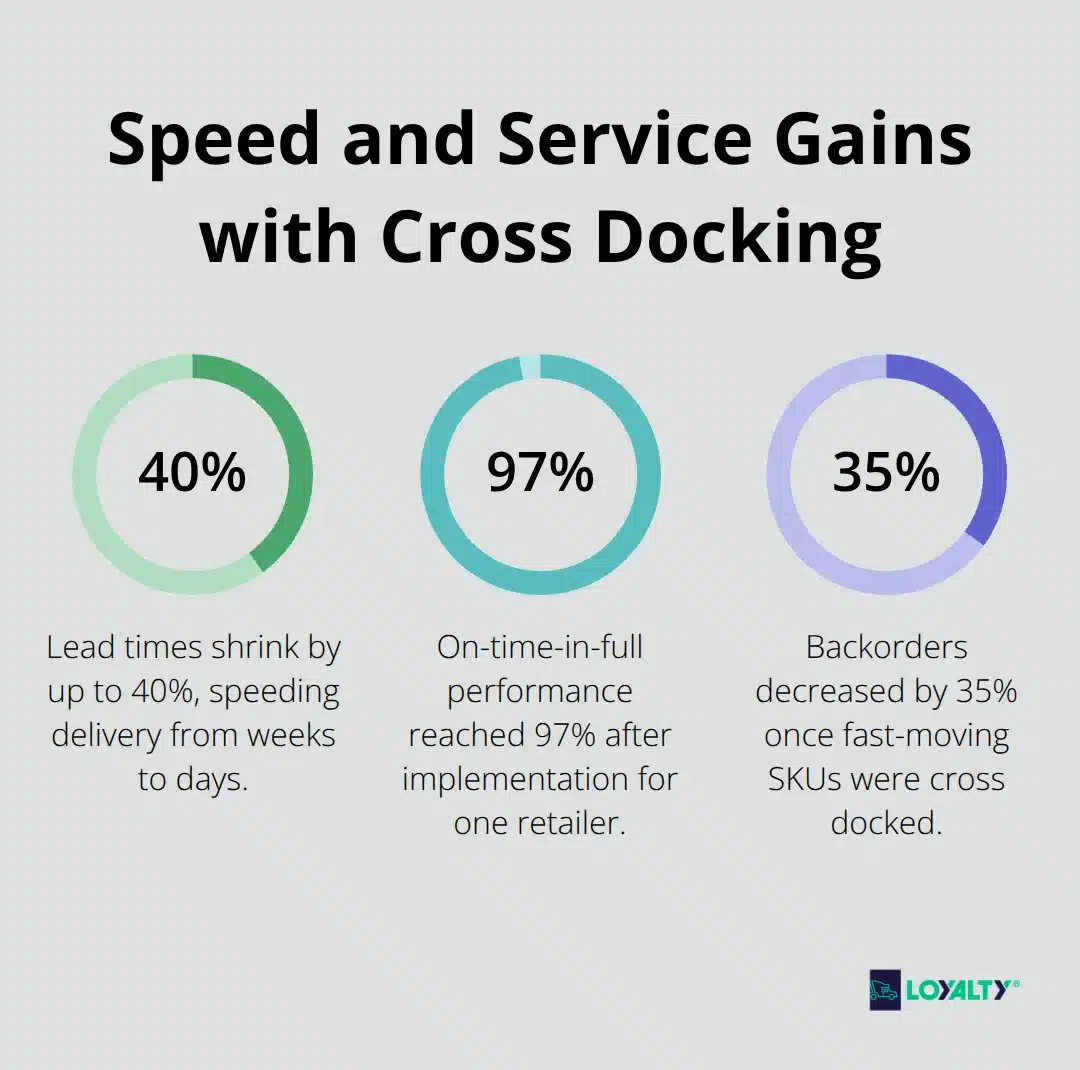
That speed also reduces backorder pressure: another brand saw a 35% decrease in backorders once they moved to cross docking for their fastest-moving SKUs. Faster inventory turnover means your products reach market while demand remains strong, not after the window closes. For seasonal merchandise or promotional items, this timing difference can mean the difference between profitability and markdowns.
Environmental and Operational Benefits
Real-time visibility across your inbound and outbound flows proves essential to capture these benefits, so your WMS and transportation management system must communicate without delays. The sustainability angle matters too: cross docking can cut your carbon footprint by 15–25% because you consolidate loads and eliminate redundant handling steps. One Los Angeles operation cut over 1,200 annual truck trips after implementing cross docking, which reduced emissions and fuel costs simultaneously. Speed, cost, and environmental responsibility converge in this model when your operation has the volume and predictability to support it. These financial and operational gains depend entirely on your ability to coordinate inbound and outbound timing effectively, which introduces real challenges that most supply chain managers must address head-on.
Common Challenges and How to Overcome Them
Most supply chain managers underestimate how fragile cross docking operations are when inbound and outbound timing falls out of sync. A truck arrives two hours late, and your outbound carrier leaves empty because you cannot hold inventory. Your supplier changes drop times without notice, and suddenly your dock sits idle. According to APICS, misaligned supplier schedules and insufficient carrier capacity during peak times rank among the most common reasons cross docking projects fail after launch. The reality is this: cross docking demands coordination across suppliers, your facility, and carriers simultaneously. If any link breaks, your operation reverts to traditional warehousing overnight, and you lose the cost savings that justified the investment.
Synchronization and Timing Failures
The technical side compounds this challenge significantly. Your warehouse management system must communicate in real time with your transportation management system. Your suppliers need to transmit accurate advanced shipment notices before goods arrive. Your carriers must confirm pickup windows without gaps. Most supply chain directors report that they underestimated the IT infrastructure required to make this work seamlessly. ASCM research shows that data synchronization failures and incomplete EDI integration are primary culprits when cross docking throughput drops below projections. These failures do not stem from poor planning alone-they reflect the operational complexity of moving goods across multiple handoffs without buffer inventory.
Facility and Technology Readiness
Before you commit capital to cross docking, assess whether your current dock capacity can handle the traffic pattern you are planning. An I-shaped facility with four inbound and four outbound doors works fine for 20 pallets per day, but that same setup bottlenecks at 50 pallets daily. You need enough dock doors to prevent inbound trucks from queuing and outbound vehicles from waiting. Larger operations typically require T-shaped or X-shaped layouts to maximize throughput.
The software piece matters equally. Your WMS must support cross docking workflows natively, not as a workaround. Many older systems were built for traditional putaway-and-pick operations and lack the real-time sorting and destination-based routing logic that cross docking demands. Upgrading or replacing your WMS can cost six figures and take 6–12 months to implement properly. Integration with your ERP system is non-negotiable if you want inventory visibility and demand forecasting to work correctly. Automation and sortation systems accelerate throughput but represent significant upfront investment.
Start with a hybrid approach: cross dock your highest-volume, most predictable SKUs while keeping traditional warehousing for slower movers. This strategy reduces technology and infrastructure risk while you validate the economics.
Selecting a Partner With Cross Docking Expertise
Your cross docking partner’s experience matters far more than their facility size or geographic footprint. A provider who has run cross docking operations for at least five years understands the operational nuances that newer providers have not encountered yet. Ask specifically about their dock-to-stock time metrics, their OTIF performance, and how they handle volume spikes or supplier delays.
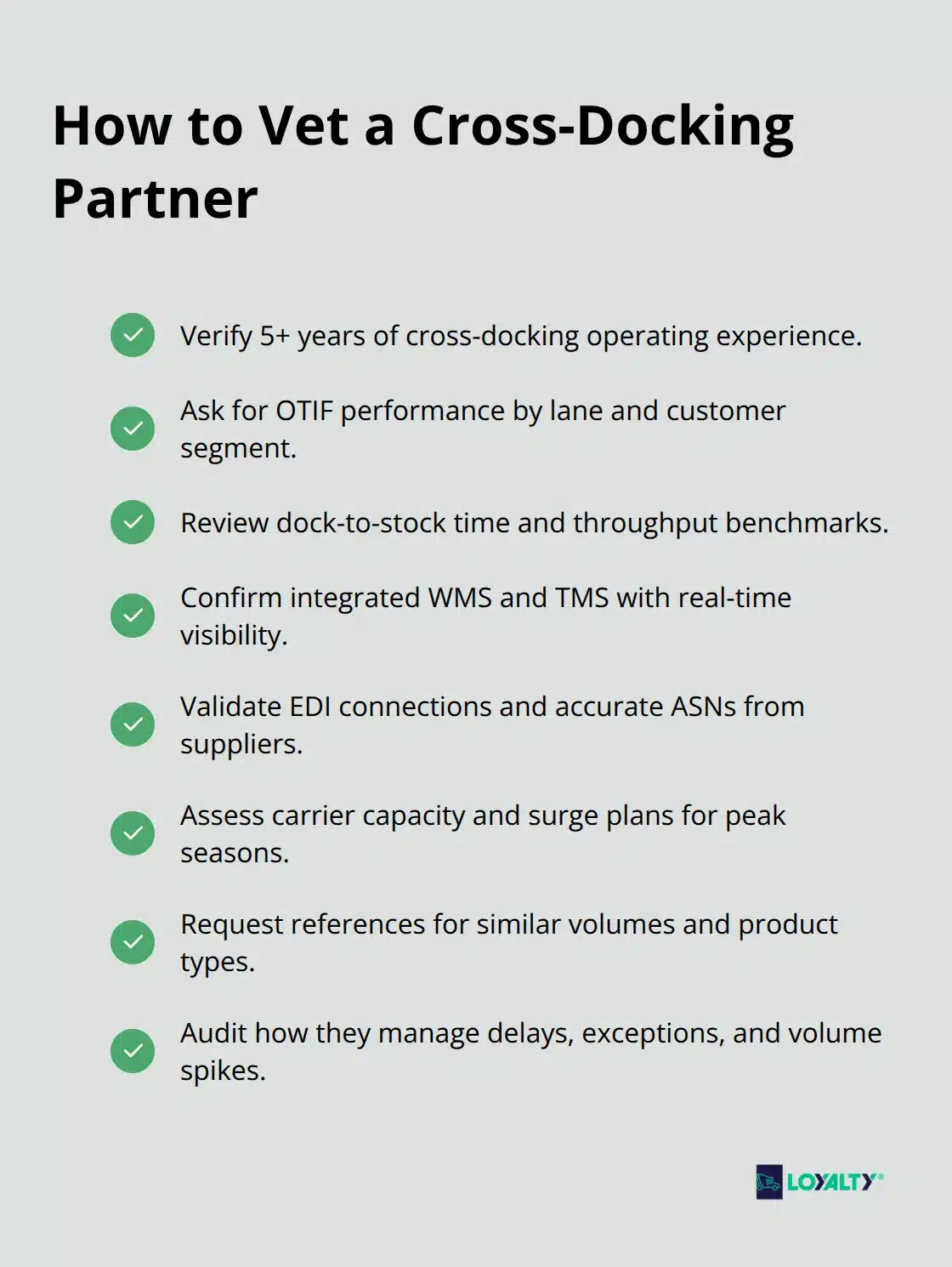
Look for partners with integrated WMS and TMS systems that provide real-time visibility into inbound and outbound flows. Carriers who rely on paper-based tracking or spreadsheets cannot support cross docking reliably. Ask about their supplier and carrier network: do they have relationships with your key suppliers and access to sufficient outbound capacity to move goods within your required windows? A provider with limited carrier relationships will struggle during peak seasons when capacity tightens.
Request references from companies shipping similar volumes and product types to yours. Ask those references specifically about how the provider handled unexpected delays or volume surges. The wrong partner will leave your goods sitting on docks, which defeats the entire purpose of cross docking. When evaluating providers, consider those offering diverse freight options across multiple regions with strong on-time performance and advanced logistics capabilities.
Final Thoughts
Cross docking delivers measurable results when your operation has the volume, predictability, and coordination to support it. Storage costs drop 20–30%, transportation spend falls 15–20% through consolidation, and labor expenses decline by up to 30% per unit. Lead times shrink by 40%, which translates directly to faster customer delivery and stronger competitive positioning in your market.
Cross docking makes sense for your business if you ship 10–15 pallets daily to consistent destinations with predictable demand. High-volume SKUs, perishable goods, and seasonal merchandise fit the model well, while products requiring extensive quality screening or moving to highly variable destinations perform better in traditional warehousing. Your dock-to-stock time requirements and destination consistency determine whether cross docking works for your operation.
Implementation requires you to assess your current volumes and SKU velocity honestly, validate the economics through a pilot program, and select a partner with proven cross docking experience and integrated technology systems. We at Loyalty Logistics understand the operational complexity this model demands across suppliers, facilities, and carriers, and we maintain strong on-time performance with refrigerated, reefer, flatbed, and LTL capabilities to support your cross docking strategy. Contact Loyalty Logistics to discuss how cross docking can reduce your supply chain costs while accelerating delivery to your customers.
