

Solar panels are fragile, heavy, and subject to strict regulations-making their transport far more complex than standard freight. Delays, damage, and compliance failures cost solar companies thousands per shipment.
At Loyalty Logistics, we’ve handled hundreds of solar panel shipments across borders. This guide covers the real obstacles you face and the practical solutions that work.
What Makes Solar Panels So Difficult to Ship
Solar panels arrive at your facility in factory cartons stacked on ISPM-15 heat-treated pallets, but the moment they leave the warehouse, they face three distinct threats that most standard freight carriers underestimate.
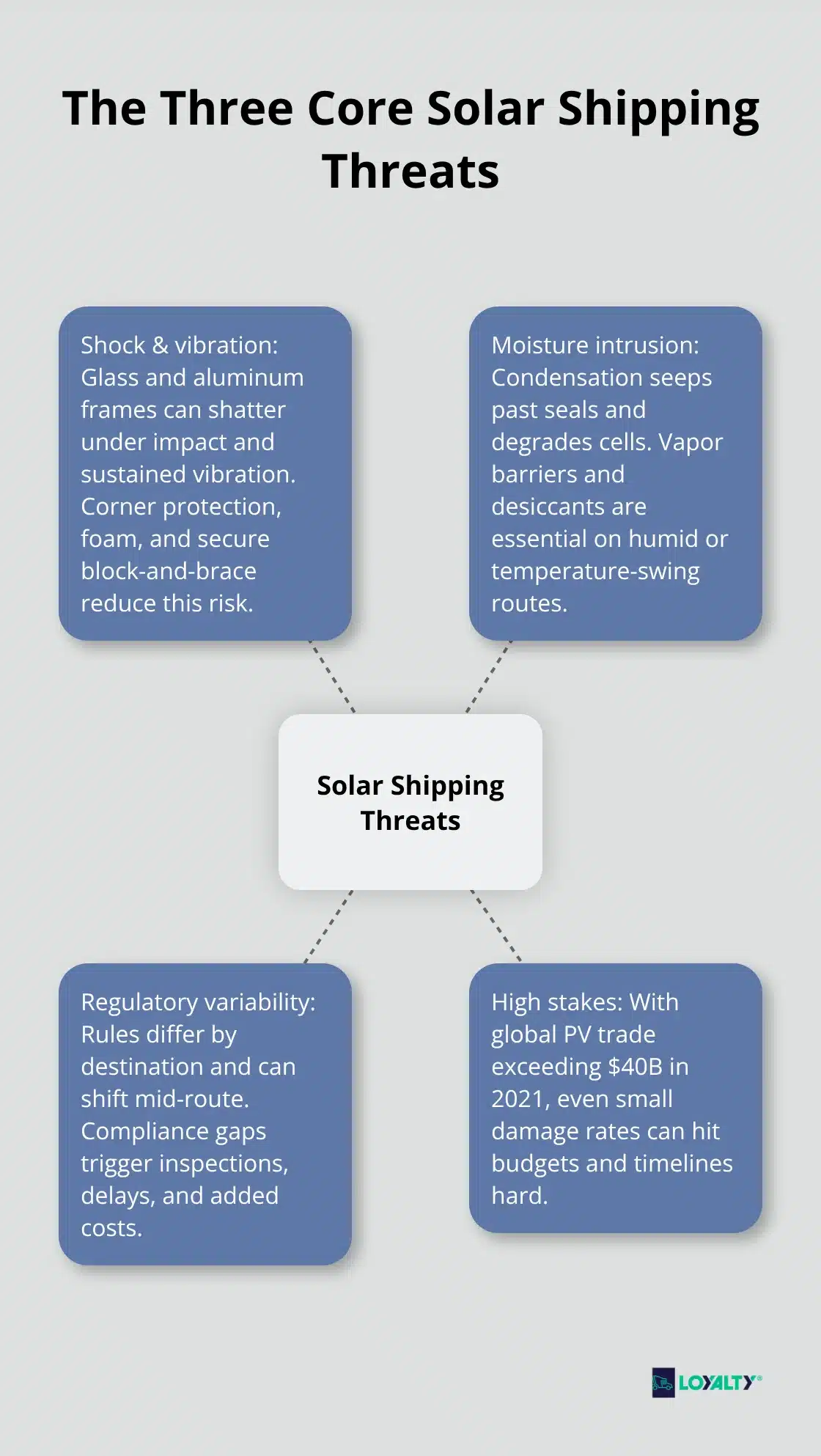
Glass and aluminum frames shatter under shock and vibration, moisture seeps into cells during humid transit, and regulatory frameworks shift depending on destination markets. These aren’t theoretical risks-they’re what cause 3–5% of solar shipments to arrive damaged, translating to thousands in replacement costs and project delays. The International Energy Agency reports that global PV trade exceeded 40 billion dollars in 2021, meaning even small damage rates affect significant volumes. Your logistics team must understand each obstacle separately because the solution for one often conflicts with the solution for another.
Moisture and Physical Damage During Transit
Condensation inside containers destroys solar cells faster than rough handling. When panels move from warm climates to cold regions or sit in humid ports, water vapor condenses on the glass and seeps past seals into the module itself. Vapor-barrier wrap around pallets and desiccants inside cartons stop this threat, but humidity indicators on every pallet verify the barrier actually works. Shock and tilt indicators serve the same purpose for vibration-they show whether handlers dropped or tilted containers during loading or unloading. Foam corner protectors and edge guards prevent frame damage when containers shift, but they only work if panels stay secured with block-and-brace blocking inside the container. Most damage claims fail because shippers assume standard packaging is sufficient; it isn’t. You need factory cartons plus foam separators between rows, corner guards rated for sea transport, and blocking that prevents any forward or sideways movement. A single poorly secured row can shift during a rough ocean crossing and crack 20–30 panels.
Weight Distribution and Oversized Cargo Permits
Ocean containers hold roughly 600–800 solar panels depending on frame size, pushing total weight to 20–30 tons. Uneven weight distribution causes containers to tip during handling, rail transport, or drayage to the final destination. Load the heaviest pallets toward the container floor center and keep side-to-side weight balanced; uneven loads require specialized heavy haul transport and increase damage risk. Dimensional constraints also matter-larger frames require flatbed or specialized containers instead of standard 40-foot boxes. Some panels exceed standard container height once stacked, forcing you to use open-top containers or break shipments into smaller loads. Each mode switch adds cost and handling risk. Ocean freight remains the cheapest option for large volumes, but the landed cost must account for drayage, customs duties, and tariffs. Tariffs on solar panels vary by origin and destination; anti-dumping duties now cover roughly 15% of global PV demand outside China. A shipment from China to the U.S. faces duties that can add 15–25% to the freight cost alone, yet many shippers ignore this until the bill arrives at port.
Customs Paperwork and Import Restrictions
Export paperwork must list metal content, manufacturing origin, and HS codes specific to photovoltaic modules-mistakes delay clearance weeks. Some destinations require certificates of origin, phytosanitary inspection reports for packaging, and proof that pallets meet ISPM-15 standards. If your panels contain cadmium or other restricted metals, you need additional safety documentation and destination-specific approvals. Several countries restrict solar panel imports to protect domestic manufacturing, so you must verify import eligibility before shipping. Customs brokers handle this, but you need to provide complete and accurate documentation upfront. A missing certificate or incorrect HS code forces port inspections that delay your shipment 5–10 days and cost hundreds in storage fees. The IEA projects that to meet net-zero targets by 2050, annual PV capacity additions must reach 630 gigawatts by 2030-meaning supply chains will face even tighter timelines and stricter compliance checks. Delays ripple through project schedules, forcing contractors to reschedule installations and absorb labor costs. Oversized panels also require route surveys in some regions to confirm roads and bridges can handle the load, adding another compliance layer that many shippers overlook until a carrier refuses the shipment.
These three obstacles-moisture damage, weight management, and regulatory compliance-demand more than standard logistics. The next section covers the specific practices that prevent each problem from derailing your shipment.
How to Protect Solar Panels From Damage, Delays, and Cost Overruns
Packaging That Stops Moisture and Shock
Standard freight carriers treat solar panels like any other cargo, which is why damage rates hover between 3–5% across the industry. Factory cartons alone fail to protect panels adequately. Panels must sit on ISPM-15 heat-treated pallets with foam separators between every row, corner guards on all four sides of each stack, and a vapor-barrier wrap that seals out humidity. Inside each carton, desiccants absorb moisture that condenses during temperature swings, and humidity indicators on the pallet itself signal when moisture has breached the barrier. Shock indicators serve the same function for vibration and rough handling.
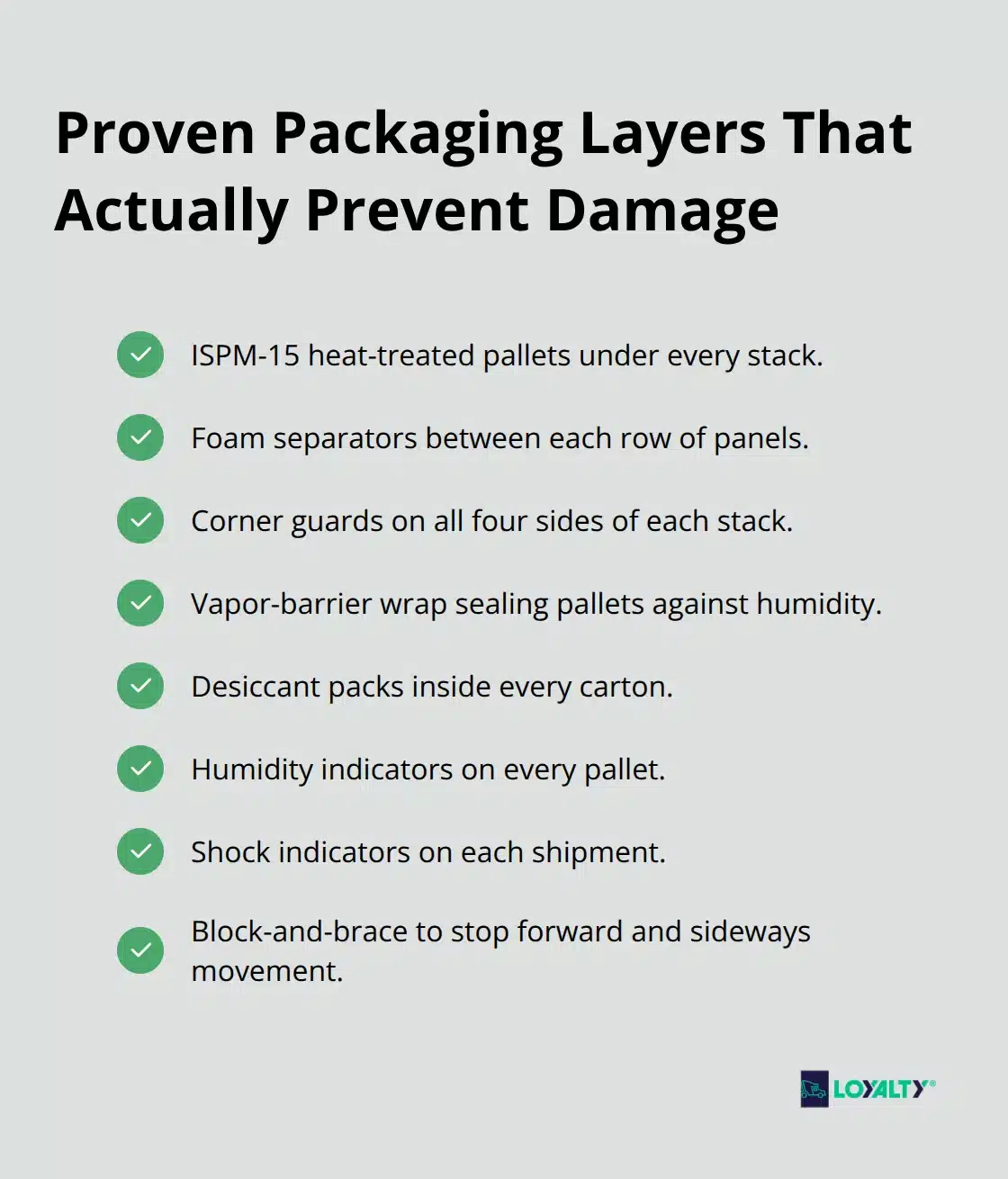
This layered approach costs 8–12% more than basic packaging but prevents the 15–25% loss rate that occurs when panels arrive damaged and require replacement or refurbishment.
Weight Distribution and Container Loading
Weight distribution inside the container matters as much as what surrounds each panel. Load the heaviest pallets toward the center of the container floor, keeping side-to-side weight balanced within 500 pounds per side. Uneven loading causes containers to shift during ocean crossings or rail transport, which cracks frames and cells even if individual panels are well-protected. Ocean containers typically hold 600–800 panels depending on frame size, pushing total weight to 20–30 tons. Block and brace that weight so nothing moves forward, backward, or sideways during transit. Leave clear aisles for port inspectors to walk through and verify the load without moving anything. Most carriers refuse to load an unbalanced shipment, which delays your timeline and forces you to repack.
Route Planning and Tariff Strategy
Route planning must account for tariffs, dimensional constraints, and customs windows, not just distance. China dominates solar panel manufacturing with over 80% of global PV production, which means most shipments originate there and face anti-dumping duties in North America and Europe that add 15–25% to landed costs. Ocean freight remains the cheapest mode for large volumes but takes 2–6 weeks depending on ports and sailing schedules. Air freight cuts that to a few days but costs 4–6 times more and only makes sense for high-value or time-sensitive loads under 5,000 pounds. Rail handles continental moves at moderate cost and speed (roughly 5–10 days across North America) but requires inland drayage to and from rail hubs. Each mode switch increases handling and damage risk, so choose the fewest transitions possible. Oversized panels that exceed standard container height require flatbed or open-top containers instead of standard 40-foot boxes, which cost 20–30% more and limit available carriers.
Customs Documentation and Compliance
Customs documentation must be complete and accurate before the truck leaves your warehouse. HS codes for photovoltaic modules differ from general electrical equipment, and errors force port inspections that delay clearance 5–10 days and cost hundreds in storage fees. Some destinations require certificates of origin, phytosanitary reports for ISPM-15 pallets, and proof of metal content if panels contain cadmium or other restricted materials. Verify import eligibility for your specific destination market before committing to a shipment because several countries restrict solar imports to protect domestic manufacturing. A customs broker should handle the paperwork, but you must provide accurate panel specifications, origin documentation, and destination details upfront. Route surveys are mandatory in some regions to confirm roads and bridges can support the load; skipping this step forces carriers to refuse the shipment at the last minute.
Temperature Control and Timeline Planning
Temperature-controlled containers protect panels from extreme heat or cold during transit, which matters most on routes crossing deserts or arctic regions where condensation risk spikes during temperature swings. The added cost is 10–15% per container but prevents moisture damage that destroys cells faster than physical shock. Plan for lead times that account for customs clearance windows, port congestion, and drayage capacity at the destination. Most delays happen not during ocean transit but before departure and after arrival, when documentation review and inland transport stack up. Build 3–5 days of buffer into your project schedule for each customs checkpoint and drayage handoff. These execution details determine whether your panels arrive intact and on schedule, but they only work when your carrier understands solar-specific requirements and commits to the protocol throughout the entire journey.
How to Cut Solar Shipping Costs Without Sacrificing Speed or Safety
Calculate True Landed Cost, Not Just Freight Rates
Ocean freight remains your cheapest option for large solar shipments, but landed cost tells the real story. A 40-foot container holding 600–800 panels costs roughly $3,000–$5,000 to move from Shanghai to Los Angeles, yet tariffs add another $4,500–$7,500 depending on origin and anti-dumping classifications. The International Energy Agency reports that anti-dumping, countervailing, and import duties now cover roughly 15% of global PV demand outside China, making tariff strategy as important as carrier selection. Before you book freight, calculate your true landed cost by adding ocean freight, drayage, customs brokerage, duties, and insurance.
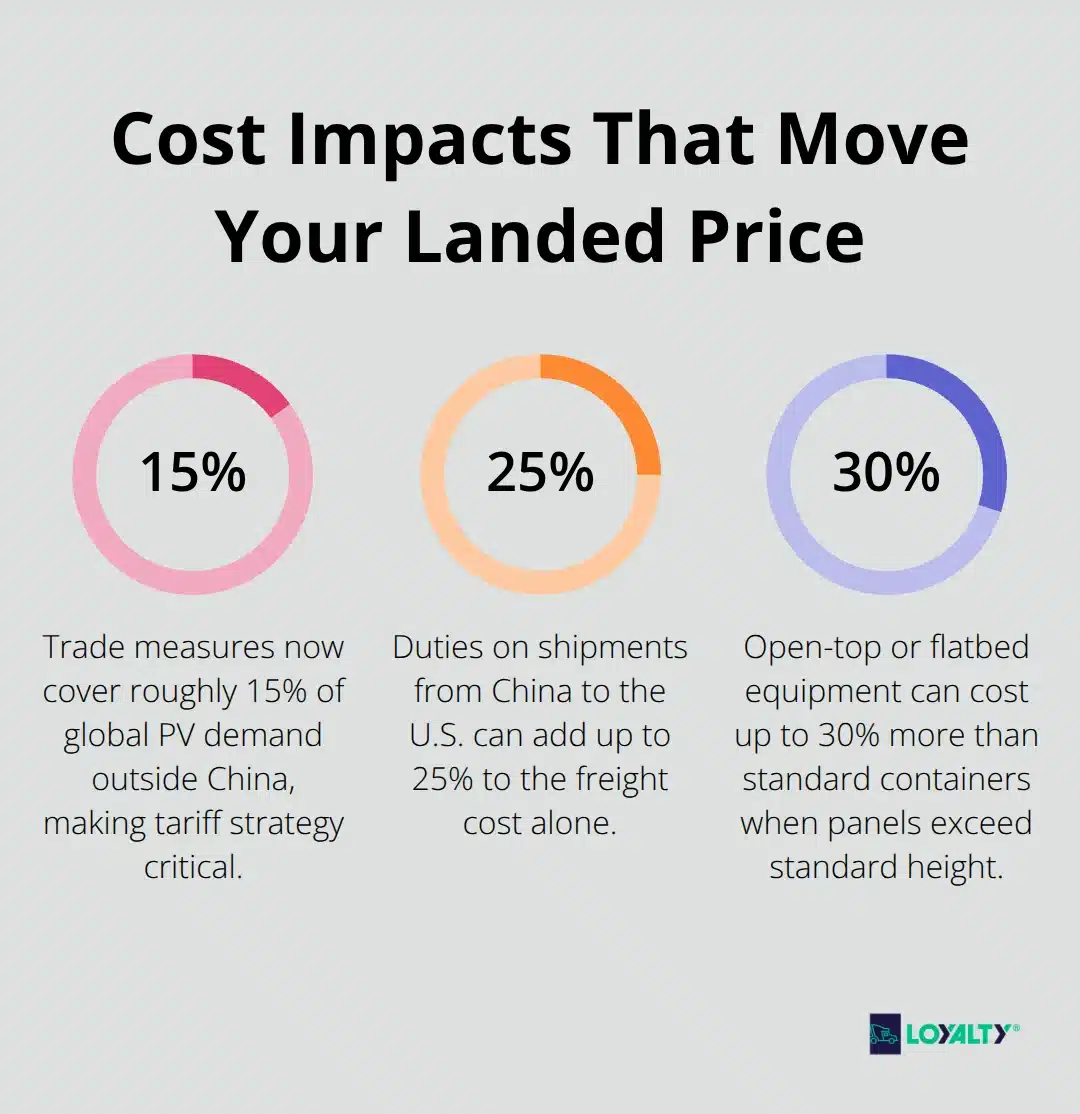
Many shippers focus only on the ocean rate and get blindsided at port when duties arrive.
Select the Right Transport Mode for Your Timeline
Rail transport across North America costs 30–40% less than air freight for continental moves and takes 5–10 days, making it the better choice for non-urgent shipments. Air freight costs 4–6 times more than ocean but cuts transit time to a few days and only justifies itself for time-sensitive loads under 5,000 pounds or when project delays cost more than the airfreight premium. Consolidation with other shippers reduces per-unit costs, but you lose schedule control and add handling risk. Temperature-controlled containers cost 10–15% more per shipment but prevent moisture damage that destroys cell efficiency and forces expensive replacements. If your panels cost $15,000 and a 3–5% damage rate means you replace 18–40 units, the extra container cost of $1,500–$2,250 pays for itself on the first shipment. Route planning directly impacts cost, so avoid oversized panels that require flatbed transport costing 20–30% more than standard containers. If your supplier offers standard-height frames, the savings compound across dozens of shipments annually.
Track Shipments to Prevent Hidden Delays and Costs
Visibility into your shipment matters because delays compound costs faster than freight rates do. Real-time tracking shows exactly where your panels sit during customs clearance, drayage delays, or port congestion so you can alert your installation teams and reschedule labor before costs explode. Most delays happen not during ocean transit but in the 5–10 days before departure and after arrival when documentation review and inland drayage stack up. Shock and tilt indicators on every pallet reveal whether handlers damaged your load during these vulnerable handoff points, letting you file claims immediately rather than discovering damage weeks later when panels are already installed and worthless. Humidity indicators serve the same function for moisture risk, showing whether your vapor-barrier packaging actually protected the cells.
Secure Proper Insurance and Partner With Reliable Carriers
Insurance covers theft and damage during transit, but carrier liability limits are roughly $1.50 per pound, which means a fully loaded 30-ton container insured under carrier liability is worth only $45,000 even if the panels cost $150,000. You need separate cargo insurance tailored to solar panels for high-value loads. Eco-friendly routing reduces both emissions and costs by optimizing for fewer mode transitions and shorter drayage distances. Choosing a carrier that understands solar-specific handling, tracks shipments in real time, and commits to schedule reliability prevents the project delays that destroy margins faster than any freight rate increase.
Final Thoughts
Solar panel shipping demands precision at every step, from packaging and weight distribution through customs clearance and final delivery. The three core obstacles-moisture damage, regulatory compliance, and cost management-require more than standard freight handling. Shippers who treat solar panels like generic cargo face 3–5% damage rates, weeks of customs delays, and landed costs that balloon when tariffs and duties arrive at port.
Experienced logistics providers understand these requirements because they have handled hundreds of shipments and learned where delays and damage actually occur. They know that most problems happen during the vulnerable handoff points before departure and after arrival, not during ocean transit. They track shipments in real time so you can alert installation teams before delays cascade into rescheduled labor and lost revenue, and they secure proper cargo insurance tailored to solar panels instead of relying on carrier liability that covers only a fraction of your load value.
The difference between standard freight handling and solar-specific logistics determines whether your panels arrive intact and on schedule. Contact us to discuss your solar panel shipping needs and calculate your true landed cost including tariffs and duties.
