
Flatbed shipping rates vary wildly depending on what you’re moving and when. Distance, weight, seasonal demand, and equipment needs all play a role in what you’ll actually pay.
At Loyalty Logistics, we’ve helped logistics managers cut through the confusion. This guide breaks down the real factors behind pricing, shows you how to compare quotes properly, and reveals concrete strategies to lower your costs.
What Actually Drives Flatbed Shipping Costs
Distance matters, but not in the way most people think. A 500-mile haul doesn’t cost twice as much as a 250-mile run because fuel represents only 25-35% of total operating costs for flatbed carriers. Labor, equipment maintenance, insurance, and permits make up the rest. Route complexity hits harder than raw mileage. A shipment from Los Angeles to Phoenix on I-10 costs less per mile than a delivery into rural Montana, even if Montana is shorter, because carriers face empty return miles and limited backhaul opportunities.
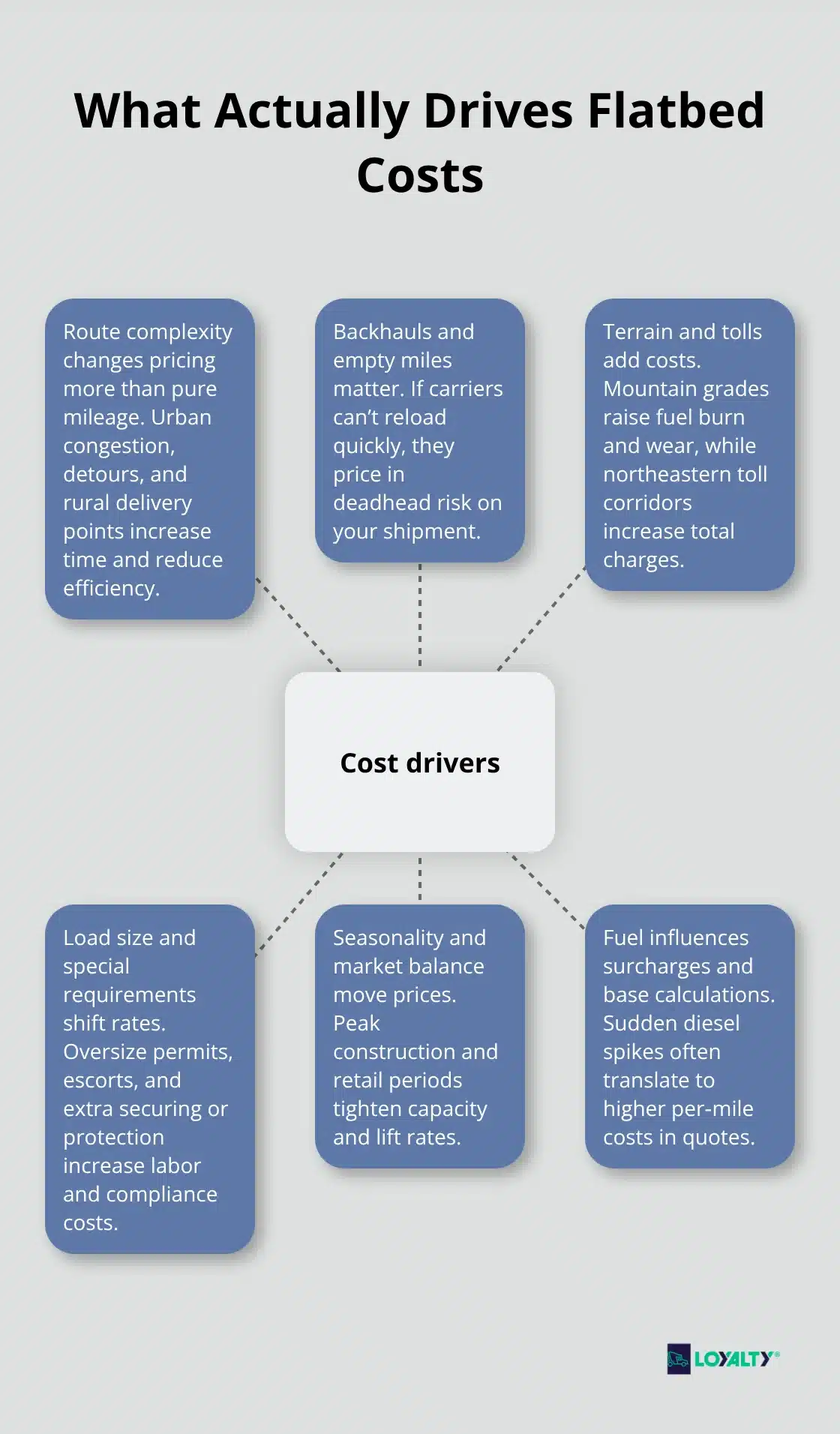
Tolls on northeastern corridors can add 8-12% to your bill. Mountainous terrain increases fuel consumption and tire wear, pushing costs up by 15-20% compared to flat routes. When you request quotes, ask carriers specifically about the return leg-if they deadhead back empty, that cost gets factored into your shipment’s price.
Load specifications determine pricing more than you’d expect
Weight and dimensions don’t scale linearly with cost. A 20,000-pound load uses the same flatbed as a 45,000-pound load, so lighter shipments pay a premium per pound. Most carriers charge between $1.50 and $3.50 per mile for standard flatbed work, but oversized loads-anything exceeding 8.5 feet wide, 13.5 feet tall, or 80,000 pounds gross-trigger permits costing $500-$2,000 per state and require escort vehicles at $300-$500 daily. Specialized handling demands more. Loads that require edge protection, blocking, or bracing add labor costs of $200-$600. Hazmat commodities demand certified drivers (costing carriers 10-15% more in payroll) and specialized insurance, multiplying your rate by 1.5 to 2 times the standard quote. Know your exact dimensions and weight before requesting quotes-vague specifications lead to lowball estimates that carriers correct (upward) once they inspect your freight.
Seasonal swings and market conditions reshape what you pay
Peak season-July through September and November through December-sees flatbed rates jump 20-40% because construction and retail restocking demand capacity. Summer weather also limits operations in northern regions, reducing available trucks. Winter creates opposite pressures: demand drops, but snow and ice restrict routes and slow deliveries, so rates stay elevated in northern corridors. Diesel fuel prices correlate directly with rates; a $0.50 increase per gallon typically adds $0.08-$0.12 to your per-mile cost. Check the Department of Energy’s weekly diesel reports before negotiating. Economic recessions actually create opportunities-during 2023’s freight slowdown, spot rates for flatbed dropped 15-25% below contract rates because carriers competed aggressively for volume. Booking flexibility wins here. If your shipment moves in February instead of August, or mid-week instead of Friday, you’ll see 10-15% savings. Long-term partnerships with carriers who have consistent backhauls on your routes let you lock in better rates year-round because they reduce their empty-mile risk.
How to position yourself for better pricing
Carriers calculate rates based on what they know about your shipment and your reliability. Vague load details, last-minute bookings, and inconsistent volumes all signal risk to them-and risk means higher prices. Provide complete specifications upfront (exact weight, dimensions, commodity type, and pickup/delivery locations). Carriers reward predictable shippers with volume discounts and preferred pricing. If you can commit to regular shipments on the same lanes, you move from spot-market rates to contract rates, which typically run 15-25% lower. Equipment availability also matters. Flatbeds with drop decks, removable sides, or specialized racks cost more, but standard flatbeds move at lower rates. Match your equipment needs to what you actually require-oversized flatbeds for standard loads waste money. The comparison process itself reveals opportunities. When you request quotes from multiple carriers, you’ll notice which ones understand your specific route and which ones are guessing. Carriers with frequent backhauls on your lane will quote lower because they solve their empty-mile problem with your freight.
Comparing Flatbed Quotes Without Getting Blindsided
Standardize Your Quote Requests
Multiple quotes look straightforward until you realize carriers structure their pricing completely differently. One quotes per mile, another adds fuel surcharges, a third bundles equipment fees into the base rate. This inconsistency isn’t accidental-it obscures real costs. Request quotes on identical terms: same pickup and delivery locations, same load specifications, same equipment type, and same timeline. Ask each carrier to break down their quote into base rate per mile, fuel surcharge (stated as a percentage or fixed amount), equipment fees, and any accessorial charges.
The base rate alone means nothing. A carrier quoting $2.00 per mile might add a 25% fuel surcharge plus $400 in equipment fees, while another at $2.25 per mile includes fuel in the base and charges $150 for equipment. The second option actually costs less. Fuel surcharges fluctuate with diesel prices, so confirm whether a carrier’s quote includes a fuel adjustment clause. Many carriers apply automatic surcharges when the Department of Energy’s weekly diesel average exceeds a threshold, typically adding $0.05 to $0.15 per mile.
Uncover Hidden Accessorial Charges
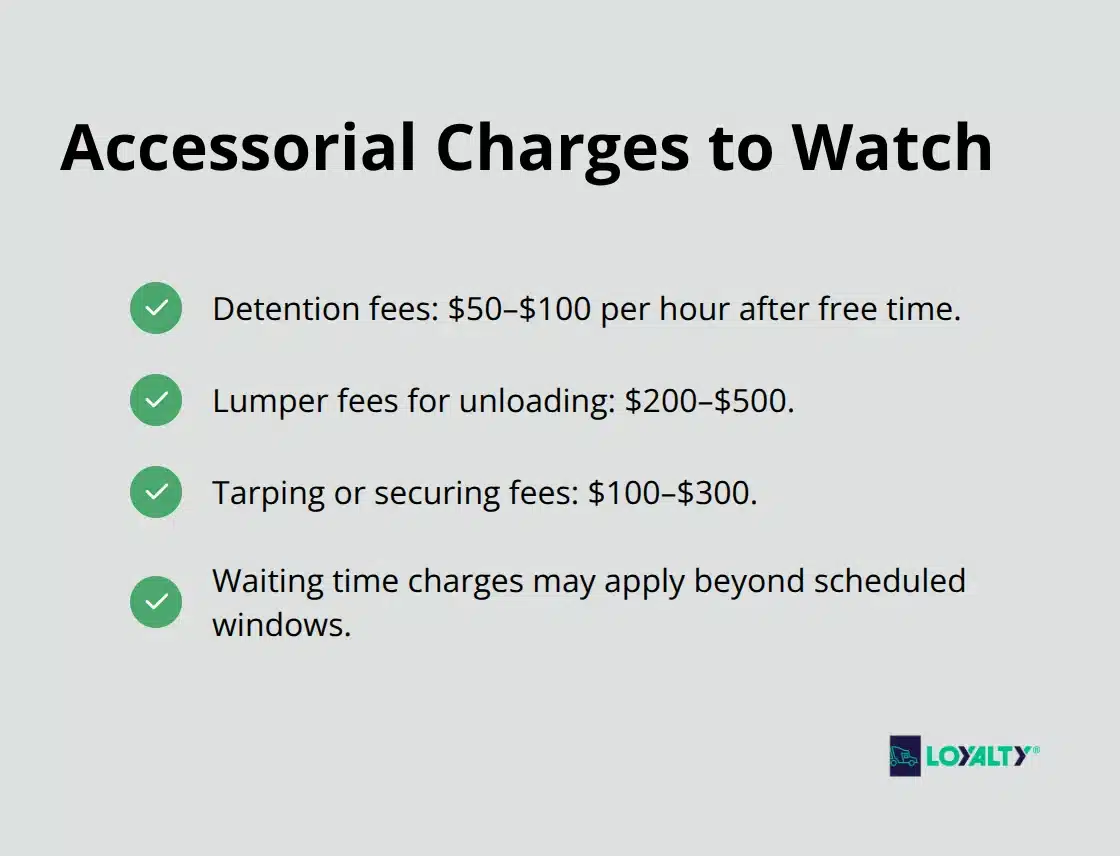
Ask specifically what triggers a carrier’s surcharge and how it works-some reset weekly, others monthly. Accessorial charges hide significant costs: detention fees ($50–$100 per hour after free time), lumper fees for unloading ($200–$500), tarping or securing fees ($100–$300), and waiting time charges. Request an itemized list of all possible charges before accepting a quote. Carriers with transparent pricing structures save you money because you avoid surprise invoices.
Evaluate Reliability Beyond Price
Reliability matters more than rate alone, yet most logistics managers compare price first. A carrier quoting 10% lower than competitors but delivering late 15% of the time costs far more when your production line stops or retail shelves go empty. Request on-time performance metrics from each carrier-ask for their percentage of on-time deliveries over the past 12 months.
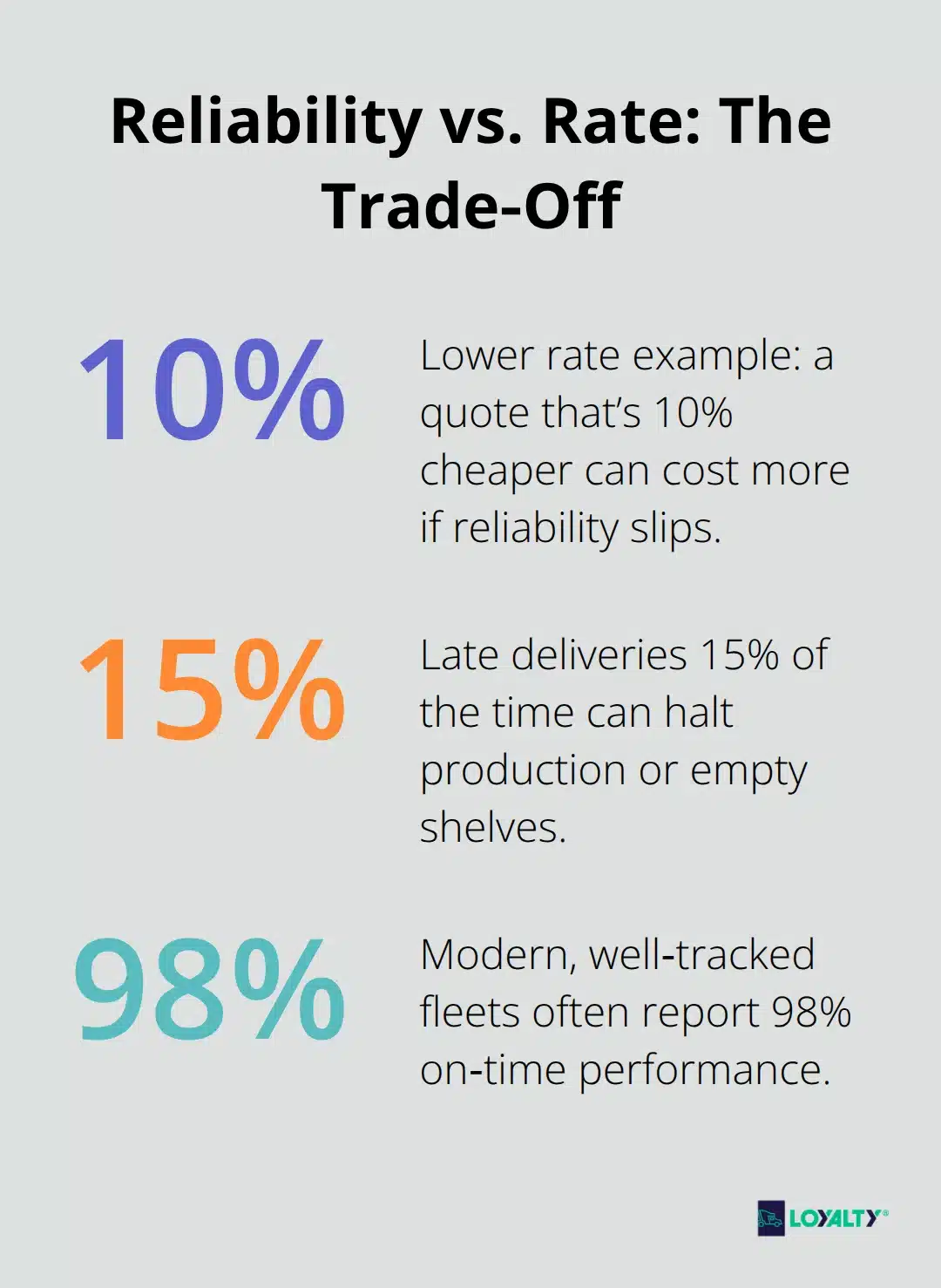
Carriers using modern fleet management systems typically achieve 96–98% on-time rates; those without tracking technology often fall to 85–92%.
Check the Federal Motor Carrier Safety Administration’s SafeStats database for violation and accident records-carriers with clean records demonstrate operational discipline. Ask references from shippers on similar lanes; they’ll reveal whether a carrier actually delivers when promised or if delays are routine.
Negotiate Strategically for Better Terms
Carriers have limited flexibility on per-mile rates during peak seasons, but they’ll adjust accessorial charges, fuel surcharge structures, or volume discounts. If you commit to consistent monthly shipments on the same lanes, you can negotiate contract rates 15–25% below spot rates. Long-term commitments reduce a carrier’s empty-mile risk because they solve their backhaul problem with your freight.
Timing your negotiation matters too-carriers compete harder in February than in August. If you can shift shipments to slower months, you gain negotiating leverage. Never accept a first quote. Carriers expect pushback and often have room to move, particularly on accessorial fees and fuel surcharge structures. The difference between your first and final negotiated rate typically runs 8–12% if you handle it professionally.
Once you’ve compared quotes and negotiated rates, the next step involves building the right carrier relationships that sustain those savings over time.
How to Actually Cut Flatbed Shipping Costs
Consolidate Loads to Maximize Flatbed Capacity
Consolidation works because carriers charge less per pound when you fill the flatbed efficiently. A half-loaded flatbed costs nearly as much as a full one, so batching smaller shipments into single loads reduces your per-unit cost significantly. If you ship three 15,000-pound loads separately at $2.50 per mile, you pay roughly $7,500 for a 1,000-mile haul. Consolidating those loads into one 45,000-pound shipment drops the per-mile rate to $2.10 because the carrier uses their capacity fully, cutting your total to $2,100 for the same distance. The math is brutal: consolidation saves $5,400 on one shipment.
Build a 30-day shipping calendar instead of booking weekly. This visibility lets you identify consolidation opportunities and coordinate with suppliers or customers on pickup and delivery windows. You’ll spot patterns in your shipment volumes and adjust your logistics accordingly.
Shift Shipments to Off-Peak Seasons
Seasonal timing creates genuine savings that most shippers ignore. February, March, August, and September see 20-30% lower rates than July-September peak season because construction projects pause and retail restocking demand drops. If your freight can move in off-peak months without disrupting operations, shift it. A shipment costing $3,000 in August costs $2,100 in February-that’s $900 saved on a single load.
This strategy requires flexibility in your supply chain, but the financial impact justifies the effort. Talk to your procurement and sales teams about moving shipments forward or backward by a few weeks when possible.
Lock in Contract Rates Through Carrier Partnerships
Long-term carrier relationships trump spot-market shopping every time. Carriers lock in contract rates 15-25% below spot rates when you commit to consistent monthly volume on specific lanes because you solve their empty-mile problem. A carrier returning empty from Phoenix to Los Angeles desperately wants your shipment going that direction, and they’ll price accordingly.
Negotiate annual or quarterly contracts specifying volume minimums and lanes; the discount far exceeds what you’ll negotiate on individual shipments. You transform from a transactional buyer into a valued partner, and carriers reward that loyalty with better pricing and priority service.
Leverage Technology for Rate Transparency
Technology transparency matters more than most realize. Freight shipping cost estimators and rate management platforms show you real-time pricing across carriers, eliminating the information gap that carriers exploit. This transparency forces carriers to compete on actual value rather than obscured fees. You gain visibility into what rates actually exist in the market, which strengthens your negotiating position significantly.
Final Thoughts
Flatbed shipping rates reflect factors both within and outside your control, yet your approach to comparing quotes, negotiating terms, and building carrier relationships determines whether you pay market rates or substantially less. The logistics managers who win on cost reject the lowest bid trap and instead standardize their quote requests to compare apples to apples, uncover hidden accessorial charges before signing contracts, and evaluate carrier reliability because a 10% rate discount vanishes when deliveries arrive late. Strategic negotiation works because carriers maintain flexibility on fees and fuel surcharges even when per-mile rates appear fixed.
Real savings emerge when you consolidate loads to fill flatbeds efficiently, shift shipments to off-peak months where rates drop 20-30%, and lock in contract rates through long-term carrier partnerships that solve a carrier’s empty-mile problem. A carrier who moves your freight on their backhaul lane will price 15-25% below spot rates because they reduce their deadhead risk. Technology transparency also matters-when you access real-time pricing across multiple carriers, you eliminate the information gap that carriers exploit to inflate your costs.
Audit your current flatbed shipments and identify consolidation opportunities within your shipping calendar. Then reach out to carriers you trust and propose a contract relationship on your highest-volume lanes. If you need a partner who understands flatbed logistics and delivers consistently, Loyalty Logistics operates across the U.S., Canada, and Mexico with a 98% on-time rate and the transparency that transforms flatbed shipping rates from a cost burden into a competitive advantage.