Moving heavy equipment across state lines means navigating a maze of permits, weight restrictions, and compliance rules that change depending on where you’re headed. Get these details wrong, and you’re looking at fines, delays, or worse, a shipment that gets stopped mid-route.
At Loyalty Logistics, we’ve helped supply chain directors and logistics managers handle hundreds of heavy equipment transport shipments on flatbed transport lanes. This guide walks you through the regulations, planning steps, and cost factors you need to know before your next move.
Regulations and Permits for Heavy Equipment Transport
Federal Thresholds and State-Level Complexity
Federal law sets a hard line: any load exceeding 80,000 pounds gross vehicle weight, 20,000 pounds on a single axle, or 34,000 pounds on a tandem axle crosses into heavy-haul territory and requires permits. The U.S. Department of Transportation oversees the baseline rules, but here’s where it gets complicated, every state adds its own layer of requirements. Texas might allow a certain configuration that California flatly prohibits. Width limits vary from 8 feet in some states to 10 feet in others. Height restrictions around bridges and overpasses differ by region.
Submit permit applications 7 to 10 business days before your shipment to avoid expedited fees and last-minute bottlenecks on multi-state routes. Permit processing times range from about 3 days to more than 10 days depending on the state and load complexity. Automated permit cost calculators and permit management systems reduce administrative delays and provide real-time application status, saving you from phone tag with DOT offices.
Each state also specifies escort requirements, some demand a pilot car for loads over certain dimensions, others don’t. Weight restrictions tied to seasonal thaws, particularly in northern states, can force you to delay shipments or reroute entirely during spring months. Missing these seasonal restrictions costs time and money.
Load Restrictions That Shape Your Route
The federal thresholds are just the floor. Individual states impose bridge weight limits, time-of-day restrictions, and corridor-specific rules that can shut down your preferred route overnight. Research each segment of your route in advance using geospatial tools to identify low-clearance bridges, weight-restricted roads, and urban bottlenecks.
Lowboy trailers with removable goosenecks work better for tall or heavy loads because they lower the deck height and improve weight distribution across multiple axles. Flatbed trailers provide versatile access for machinery loadings from multiple sides (top, back, side, or front), making them practical for many configurations. Specialized heavy-haul trailers with multiple axles and hydraulic systems distribute weight evenly and enable safe transport of extremely large cargo.
Document everything: permits, loading plans, risk assessments, and escort requirements. This documentation protects you during inspections and disputes. Build relationships with DOT offices and permit agencies, a compliant track record often speeds processing and helps you navigate gray areas faster than first-time shippers.
Cross-Border Permits and Customs Requirements
Canada-to-US overweight permits come from provincial or territorial authorities in Canada and state departments of transportation in the US, requiring separate applications for each jurisdiction. Crossing the Canada-US border means compliance with US Customs and Border Protection regulations, including documentation, a customs bond, and a goods manifest. USA-to-Mexico transport requires navigating Mexican customs procedures and may involve temporary import permits and duties or taxes that can surprise you if not planned early.
Plan for customs clearance and inspections as part of your timeline, experienced customs brokers minimize border wait times and help you avoid classification errors that trigger delays. Once permits are locked in and routes confirmed, the next step focuses on assessing your equipment’s exact dimensions and weight to match the right transport method and carrier to your shipment.
Permits, escorts, and cross-border duties eating into your heavy equipment transport budget?
Loyalty Logistics coordinates flatbed and lowboy capacity with state permit management, escort vehicle coordination, and customs broker relationships across U.S., Canada, and Mexico routes.
Planning Your Heavy Equipment Shipment
Measure Twice, Commit Once
Accurate dimensions and weight measurements determine everything that follows. Measure your equipment in multiple directions, length, width, and height, and account for any attachments, stabilizers, or protective covers that add to the overall footprint. Weigh the equipment on a certified scale rather than relying on manufacturer specs, which often don’t account for fluids, fuel, or components added during assembly. Federal thresholds classify heavy loads as those exceeding 80,000 pounds gross vehicle weight, 20,000 pounds on a single axle, or 34,000 pounds on a tandem axle, so your exact weight determines permit requirements and trailer selection.
Route Constraints Shape Your Options
Once you have precise measurements, match them against your route’s constraints, bridge height and weight limits, lane width requirements, and corridor-specific restrictions that might eliminate certain paths. Geospatial planning tools let you identify problem areas before you commit to a route, preventing the costly scenario where a carrier discovers mid-shipment that a bridge won’t support your load or an overpass is too low. This upfront work saves weeks of delays and rerouting fees that can exceed permit costs themselves.
Select the Right Carrier and Equipment
Selecting the right carrier means understanding their equipment inventory and cross-border experience. Flatbed trailers work for most machinery because they allow loading from multiple sides and provide flexibility for various shapes, but oversized or extremely heavy loads need lowboy trailers with removable goosenecks to lower deck height and distribute weight across multiple axles. Some carriers specialize in domestic moves only; if your shipment crosses into Canada or Mexico, verify that your carrier holds the necessary operating authorities and has experience navigating customs procedures, temporary import permits, and duties or taxes that differ by jurisdiction. Vet candidates against the broader landscape of heavy haul trucking companies before you commit.
Coordinate All Moving Parts
Coordinate loading and unloading schedules with your carrier and any riggers involved well in advance, misaligned timelines trigger demurrage charges and idle equipment costs that add thousands to your bill. Communication among drivers, riggers, escorts, and your logistics coordinator reduces delays and prevents the bottlenecks that occur when dock availability, crane scheduling, or personnel readiness fall out of sync. Ask carriers for their average permit processing timeline and whether they use automated permit management systems that track applications in real time rather than leaving you guessing about approval status. With your equipment specifications locked in and your carrier selected, the next phase focuses on understanding the cost factors that shape your budget and identifying where you can optimize spending without cutting corners on safety or compliance.
Cost Factors and Budget Optimization
Permit Fees Add Up Fast Across State Lines
Permit fees alone won’t sink your budget, but they’re just the opening act. A single overweight or oversized permit typically costs between $50 and $300 depending on the state and load complexity, but multi-state routes compound this fast. Submit applications 7 to 10 business days ahead to avoid expedited processing fees that can double or triple the base cost. Automated permit management systems track application status in real time and alert you to rejections or missing documentation before delays cascade into rerouting costs. Some states charge per-axle fees or corridor-specific surcharges that don’t appear in initial quotes, so request a detailed permit breakdown from your carrier before locking in timelines.
Fuel Consumption Climbs with Oversized Loads
Fuel costs on heavy hauls run significantly higher than standard freight because oversized loads travel at reduced speeds, take longer routes to avoid restricted corridors, and require more horsepower to move safely. A 500-mile haul with an oversized load consumes 40 to 50 percent more fuel than the same distance with standard freight, translating to $800 to $1,500 in additional fuel expenses depending on diesel prices and equipment efficiency.
Labor Costs Extend Beyond Driver Wages
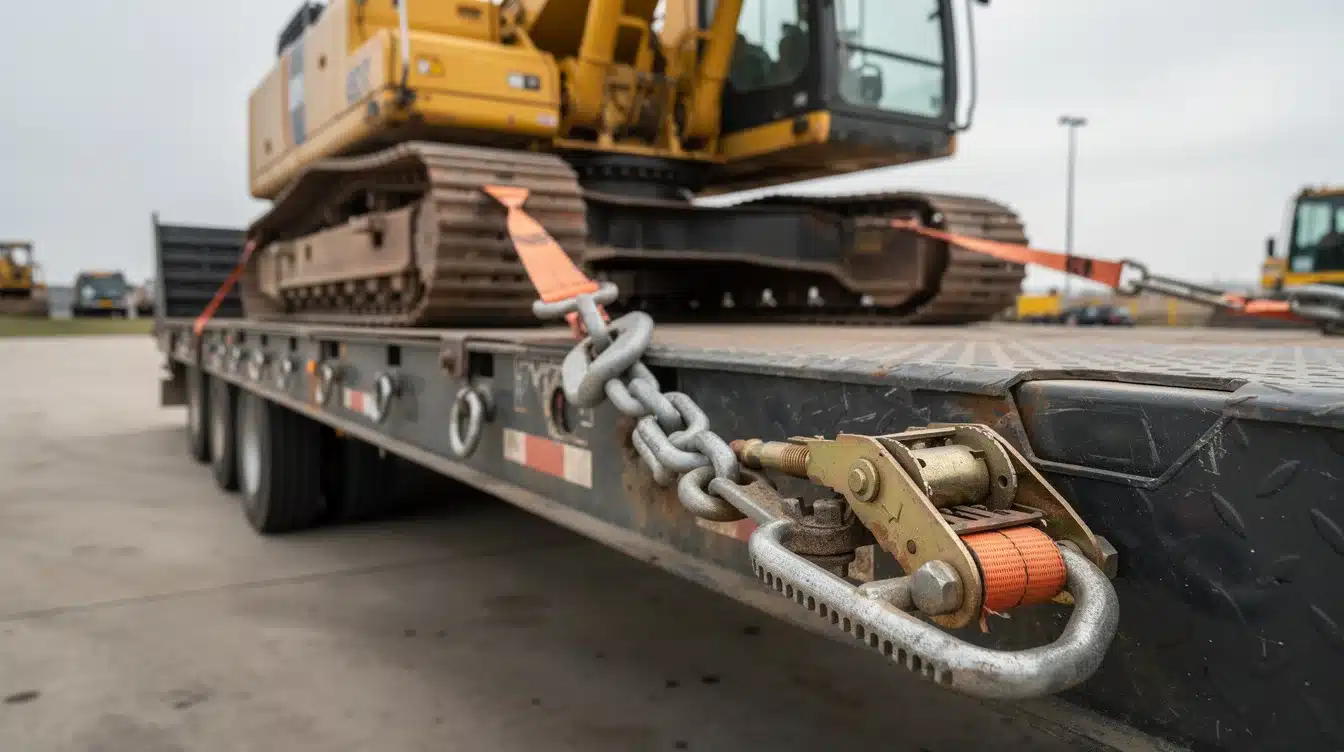
Labor expenses extend beyond driver wages to include riggers, escorts, and coordination time that many shippers underestimate. Riggers handle load securement with chains, straps, and shackles, plus any equipment disassembly or reassembly needed for transport, typically costing $500 to $2,000 per load depending on complexity and duration. Escort vehicles (pilot cars or police escorts) coordinate with drivers to navigate tight turns, low bridges, and weight-restricted areas, adding $300 to $800 per state crossed.
Insurance and Liability Protection
Insurance and liability coverage protects against cargo damage, third-party claims, and equipment loss, with premiums ranging from 2 to 5 percent of the shipment value for heavy equipment transport. A $100,000 piece of machinery demands robust coverage that costs $2,000 to $5,000 for a single cross-border move. Licensed heavy equipment carriers must carry adequate liability limits to cover potential damages during loading, transport, and unloading, so verify your carrier’s coverage meets your risk tolerance before signing contracts.
Route Planning and Contingency Buffers Prevent Cost Overruns
The U.S. trucking industry loses about $108.8 billion annually to traffic congestion according to the American Transportation Research Institute, and roughly 52 percent of congestion costs concentrate in 10 states with Texas, California, and Florida leading the way. This means routing through congested corridors extends delivery timelines and burns fuel, so investing upfront in detailed geospatial route planning that avoids peak-congestion areas during peak hours pays dividends in reduced demurrage charges and faster delivery windows.
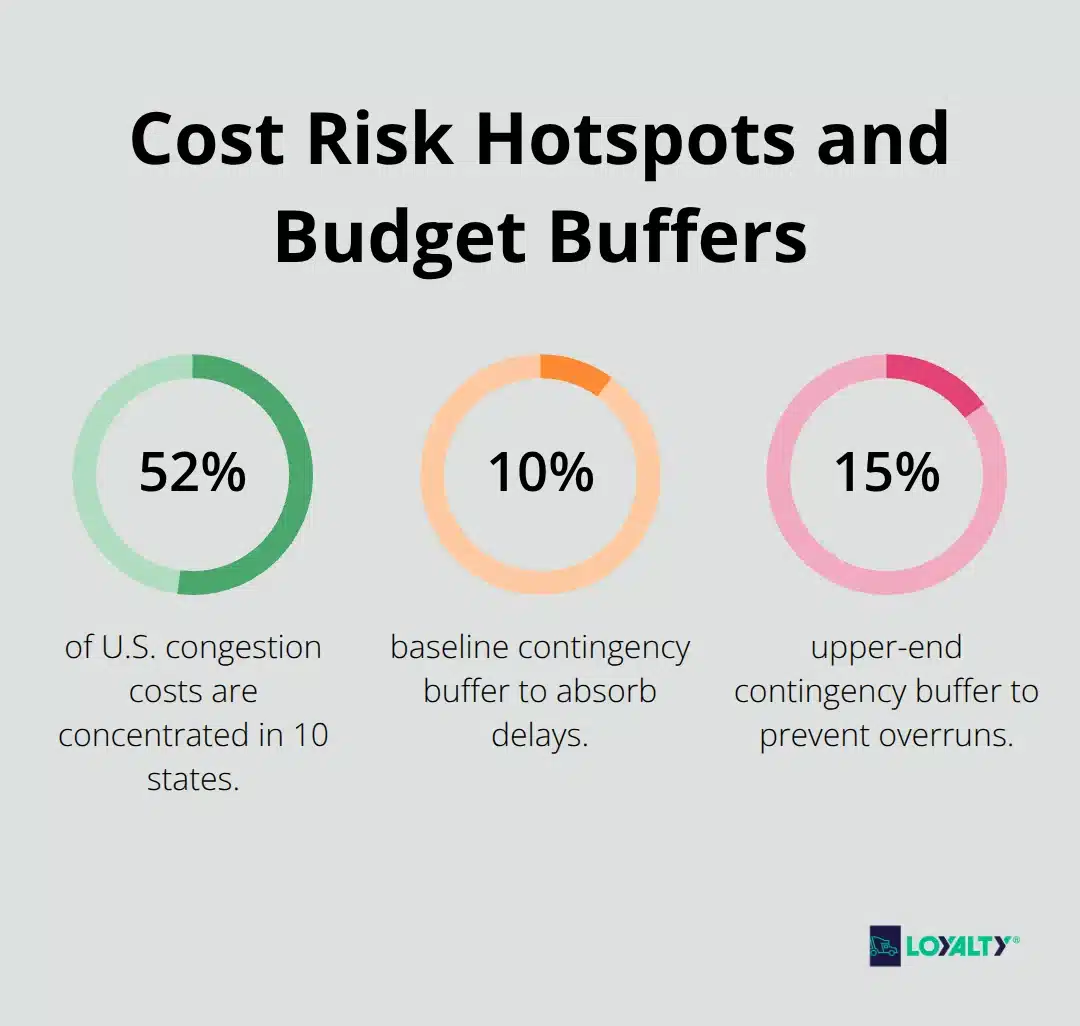
Contingency buffers in your budget absorb unforeseen delays from weather, road closures, or equipment issues without derailing deadlines, and experience shows that allocating 10 to 15 percent above your base estimate prevents cost overruns that exceed your original budget by 20 to 30 percent when surprises hit mid-route.
Need a flatbed and lowboy partner that itemizes permit, escort, rigger, and customs costs upfront?
Tell us your equipment dimensions, weight, lanes, and timeline. We’ll quote heavy equipment transport with state permit handling, escort coordination, and detailed cost breakdowns so contingencies stay inside your 10-15% buffer.
Final Thoughts
Heavy equipment transport demands precision at every step, and the difference between a smooth delivery and a costly disaster often comes down to planning. The regulations are real, the permits are mandatory, and the costs compound quickly when details slip through the cracks. Your success hinges on three fundamentals: locking in accurate equipment measurements before anything else, submitting permit applications 7 to 10 business days ahead to avoid expedited fees, and selecting a carrier with proven cross-border experience and transparent cost breakdowns.
The mistakes that derail shipments are predictable, shippers underestimate permit processing times and discover mid-route that approvals haven’t cleared, they skip geospatial route planning and hit low-clearance bridges that force expensive reroutes, or they miscalculate labor costs by forgetting rigger fees and escort charges. Treat your heavy equipment transport plan as a project with documented milestones, measure your equipment on certified scales, research state-specific restrictions for every segment of your route, and request detailed permit breakdowns from your carrier before committing. Build in contingency buffers of 10 to 15 percent above your base budget to absorb weather delays, road closures, or equipment issues without derailing deadlines.
We at Loyalty Logistics handle heavy equipment transport across the U.S., Canada, and Mexico with proven expertise in permits, rigger coordination, and customs procedures. Explore our freight transportation services to discuss your next shipment and get a detailed cost estimate that accounts for permits, fuel, labor, and insurance without surprises.
Frequently Asked Questions
What permits do you need for heavy equipment transport?
Any load exceeding 80,000 pounds gross vehicle weight, 20,000 pounds on a single axle, or 34,000 pounds on a tandem axle requires overweight and/or oversized permits. The U.S. DOT sets baseline federal rules, but each state issues its own permits with different fees, escort requirements, and corridor restrictions. Single permits cost $50 to $300; multi-state routes compound costs fast. Submit applications 7 to 10 business days ahead to avoid expedited fees that can double or triple the base cost. Cross-border moves require additional Canadian provincial permits, US CBP documentation, or Mexican temporary import permits.
What’s the difference between flatbed and lowboy trailers for heavy hauls?
Flatbed trailers provide multi-side loading access and work for most standard machinery, with deck heights around 5 feet and capacity up to 48,000 pounds. Lowboy (and removable gooseneck or RGN) trailers have a low deck height (about 18-24 inches) that lets you transport taller machinery without exceeding bridge clearance, and they distribute weight across multiple axles for loads in the 40,000-150,000+ pound range. Choose flatbed for standard equipment up to legal height; choose lowboy or RGN for tall, oversized, or extremely heavy machinery.
How much does heavy equipment transport cost?
Heavy equipment transport costs combine permits ($50-$300 per state), fuel (40-50% higher than standard freight, $800-$1,500 extra per 500-mile haul), labor (riggers $500-$2,000 per load, escorts $300-$800 per state), and insurance (2-5% of shipment value). A typical cross-border move of a $100,000 piece of machinery runs $2,000-$5,000 in insurance alone. Total cost depends on weight, dimensions, route complexity, and number of states crossed. Build a 10-15% contingency buffer to absorb weather delays and reroutes.
How long does heavy equipment transport take?
Heavy equipment transport timelines start with permit processing (3 to 10+ days depending on state and load complexity). Cross-border moves add customs broker coordination, CBP inspections, and Mexican temporary import paperwork (1-5 additional days). Transit itself depends on lane and route restrictions; oversized loads typically travel at reduced speeds and often must avoid peak congestion windows. Plan 2-3 weeks lead time for typical multi-state moves and 3-5 weeks for cross-border heavy hauls to absorb permit, customs, and routing complexity.
Ready to Move Heavy Equipment Without Permit or Cost Surprises?
Heavy equipment transport rewards shippers who partner with carriers running state permit management, escort coordination, and itemized cost breakdowns. Tell us your equipment dimensions, weight, lanes, and timeline and we’ll quote flatbed or lowboy capacity with detailed permits, customs broker support, and 10-15% contingency planning.
Related Articles
- Heavy Haul Trucking Companies: How to Choose the Best: Provider selection criteria for heavy-haul carriers.
- RGN vs Lowboy: Which Trailer Is Right for Your Haul?: Equipment comparison for oversized and overweight loads.
- Flatbed Solutions for Heavy Haul Transportation Challenges: Flatbed-specific solutions for heavy and oversized cargo.
Loyalty Logistics: Connecting businesses with opportunities across North America.
Written by: Carlos Robayo, Marketing Director at Loyalty Logistics
With expertise in logistics marketing and international trade, Carlos specializes in connecting businesses with efficient and reliable transport solutions for the North American market.