
Domestic freight shipping is the backbone of North American supply chains, yet it remains one of the most complex operations to manage. Delays, compliance headaches, and rising costs hit your bottom line hard.
At Loyalty Logistics, we work with logistics managers and supply chain directors who face these pressures every day. This guide breaks down the real strategies that work across North American corridors.
Why Your Supply Chain Depends on Domestic Freight Performance
Domestic freight shipping across North America isn’t a cost center you can ignore-it directly affects your ability to meet customer expectations and maintain margins. When October 2025 cross-border freight between the U.S. and Mexico hit $78.1 billion, up 4.7% year over year, the volume tells you something critical: shippers who move cargo efficiently capture market share, while those who don’t fall behind. The pressure is real. Your customers expect faster delivery windows, your finance team demands lower transportation spend, and regulators keep adding compliance layers that slow operations if you’re not prepared. These aren’t separate problems. They’re interconnected, and they demand a coordinated approach.
Speed Without Sacrificing Compliance
Faster delivery times sound simple until you factor in customs documentation, cross-border inspections, and regional safety standards that vary across jurisdictions. In October 2025, truck freight between the U.S. and North America accounted for $93.5 billion in total transborder movement, up 5.8% year over year, which shows that road capacity moves goods-but delays still happen. Laredo, Texas, the largest cross-border freight hub, processes roughly $30.235 billion in annual transborder cargo. When a shipment sits idle for incorrect paperwork or a missing certificate of origin, you lose days and revenue. The solution isn’t to cut corners on compliance; it’s to embed accuracy into your documentation process from day one. Electronic customs filing systems and pre-cleared documentation templates eliminate the friction that compliance mistakes create. Carriers that specialize in North American corridors already know which forms CBP requires at Laredo versus El Paso versus Detroit, and they build that knowledge into their standard operations.
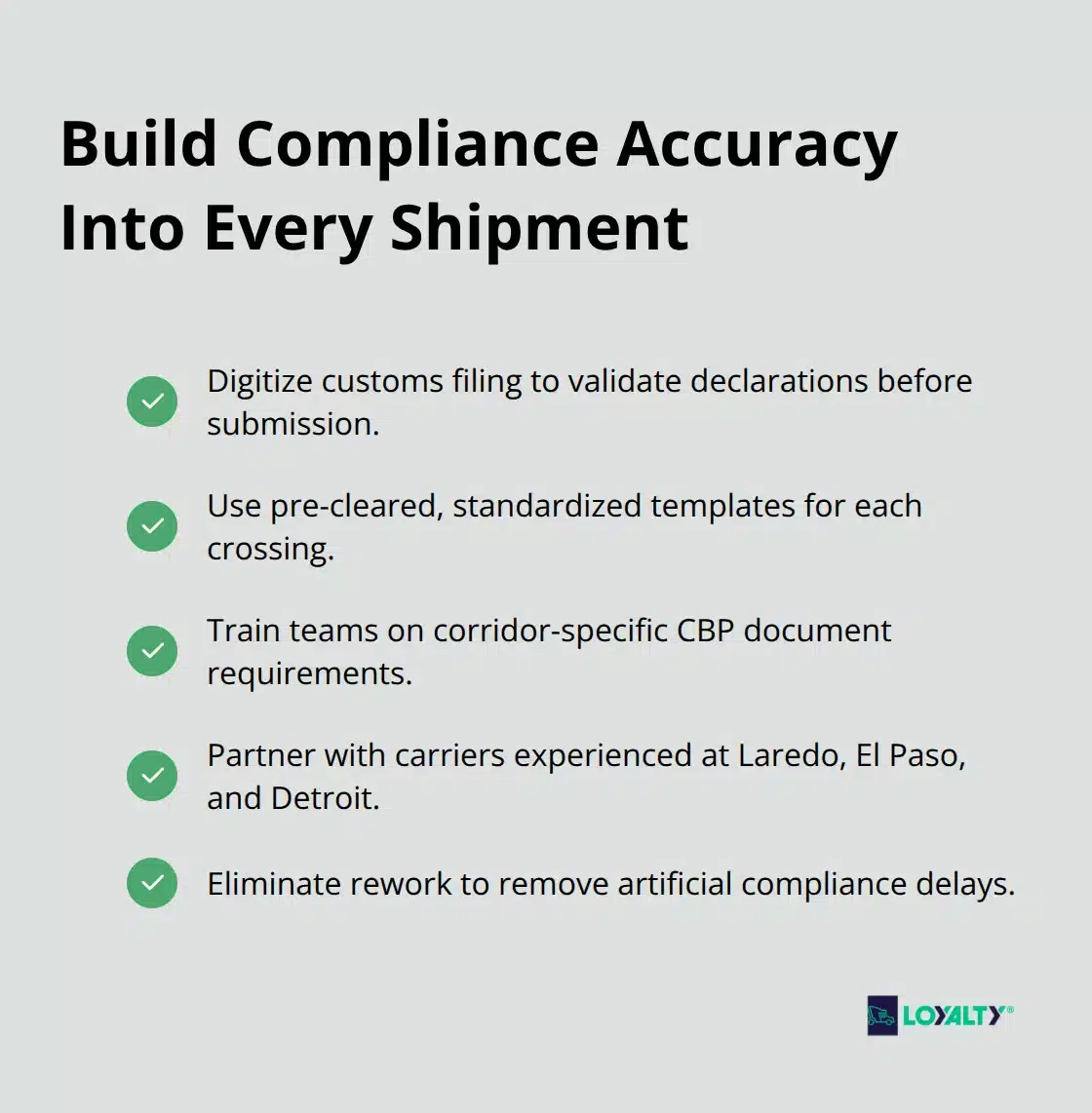
This isn’t about moving faster-it’s about removing the artificial delays that compliance errors introduce.
The Real Cost of Inefficiency
Fuel costs and market volatility hit every shipper, but your response determines whether you stay profitable. The freight market in 2024 saw modest growth with persistently tight margins, driven by regulatory costs that carriers pass through to shippers. If you negotiate rates without understanding the cost structure (detention time, equipment utilization, fuel surcharges), you’ll either overpay or push carriers into unprofitable lanes, which means they stop serving your routes. Detention costs alone represent a massive hidden drain. According to the OOIDA Foundation, drivers lose up to $1,500 per week from uncompensated detention time. That cost either gets absorbed by carriers and passed back to you through higher rates, or it gets passed to your customers through longer lead times. Route optimization and dock appointment systems cut detention dramatically. Real-time tracking lets you see when a shipment arrives at a warehouse and flag delays before they compound. Consolidating smaller shipments into full truckloads on electronics-focused corridors-where December 2025 machinery and specialized equipment exports nearly doubled-reduces per-unit costs and improves carrier utilization. The carriers that win in tight-margin environments possess visibility into load planning and networks that match freight efficiently across corridors.
Choosing Carriers That Understand Regional Networks
Your carrier choice determines whether you navigate North American corridors smoothly or face repeated delays and cost overruns. Carriers with established networks across the U.S., Canada, and Mexico understand regional bottlenecks, seasonal capacity constraints, and the specific documentation requirements at major hubs like Detroit ($11.595 billion in annual transborder freight) and Port Huron ($10.111 billion). They know which routes experience winter disruptions, which ports require advance notice, and how to position equipment efficiently. A carrier that operates only in one region or lacks cross-border experience will cost you time and money. Look for partners with proven performance on the corridors you ship (electronics, automotive, machinery, or other sectors) and the equipment types you need-whether refrigerated, flatbed, or LTL. When evaluating options, understand the differences between freight brokers and forwarders to pick the right partner for your cross-border shipments. The right carrier reduces your operational complexity and lets your team focus on demand planning rather than firefighting logistics problems.
Need a carrier that already operates U.S., Canada, and Mexico corridors?
Loyalty Logistics runs established networks at Laredo, Detroit, and Port Huron with positioned equipment ready to move your freight without empty backhauls or last-minute repositioning charges.
Key Challenges in North American Freight Corridors
Documentation Errors Cost You Days, Not Minutes
Documentation mistakes, seasonal capacity crunches, and volatile fuel costs create a perfect storm that disrupts North American corridors. These aren’t abstract problems-they hit your operations and margins directly. When CBP inspects a shipment at Laredo because your certificate of origin lists the wrong harmonized tariff code, you don’t lose minutes; you lose days. That delay cascades through your supply chain and forces you to expedite replacement shipments or apologize to customers.
The FMCSA detention pay studies tied to the 2021 infrastructure law will deliver results around July 2024, with follow-up studies due July 2025, signaling that regulators finally acknowledge detention as a systemic cost problem. Drivers lose up to $1,500 per week from uncompensated detention time according to the OOIDA Foundation, and those costs flow directly into carrier pricing.
Build Accuracy Into Your Documentation Process
If your documentation process relies on manual entry and spot-checking, you build delays into every shipment. Electronics-focused corridors, where December 2025 machinery and specialized equipment exports nearly doubled, move freight faster because shippers consolidate loads and pre-clear paperwork with CBP. You need the same rigor.
Implement electronic customs filing systems that validate declarations before submission. Use standardized templates for each major border crossing. Require suppliers to provide origin documentation upfront. Carriers operating on major corridors like Laredo ($30.235 billion in annual transborder freight), Detroit ($11.595 billion), and Port Huron ($10.111 billion) already embed this into their operations because they’ve learned the cost of delays. Working with a customs broker who understands these corridors can streamline your compliance and reduce inspection risk.
Seasonal Capacity Constraints Demand Aggressive Planning
Seasonal capacity constraints and fuel volatility demand different strategies. Canadian winter conditions disrupt cross-border movements, and Quebec’s mandatory 125-hour PESR driver training for Class 1 trucks tightens capacity over time because fewer drivers qualify for those routes. The 2024 freight market saw modest growth but persistently tight margins driven by regulatory costs that carriers pass through to shippers.
When capacity tightens, carriers prioritize lanes with the highest utilization and reject shipments that don’t fill trucks efficiently. Your response should be aggressive: lock in rates with carriers during periods of soft demand, consolidate shipments across weeks to create full truckloads, and diversify across corridors so you don’t depend on a single lane during peak seasons. Understanding cross-border shipping requirements helps you plan shipments that move smoothly through capacity constraints.
Fuel Surcharges and Rate Volatility Require Active Management
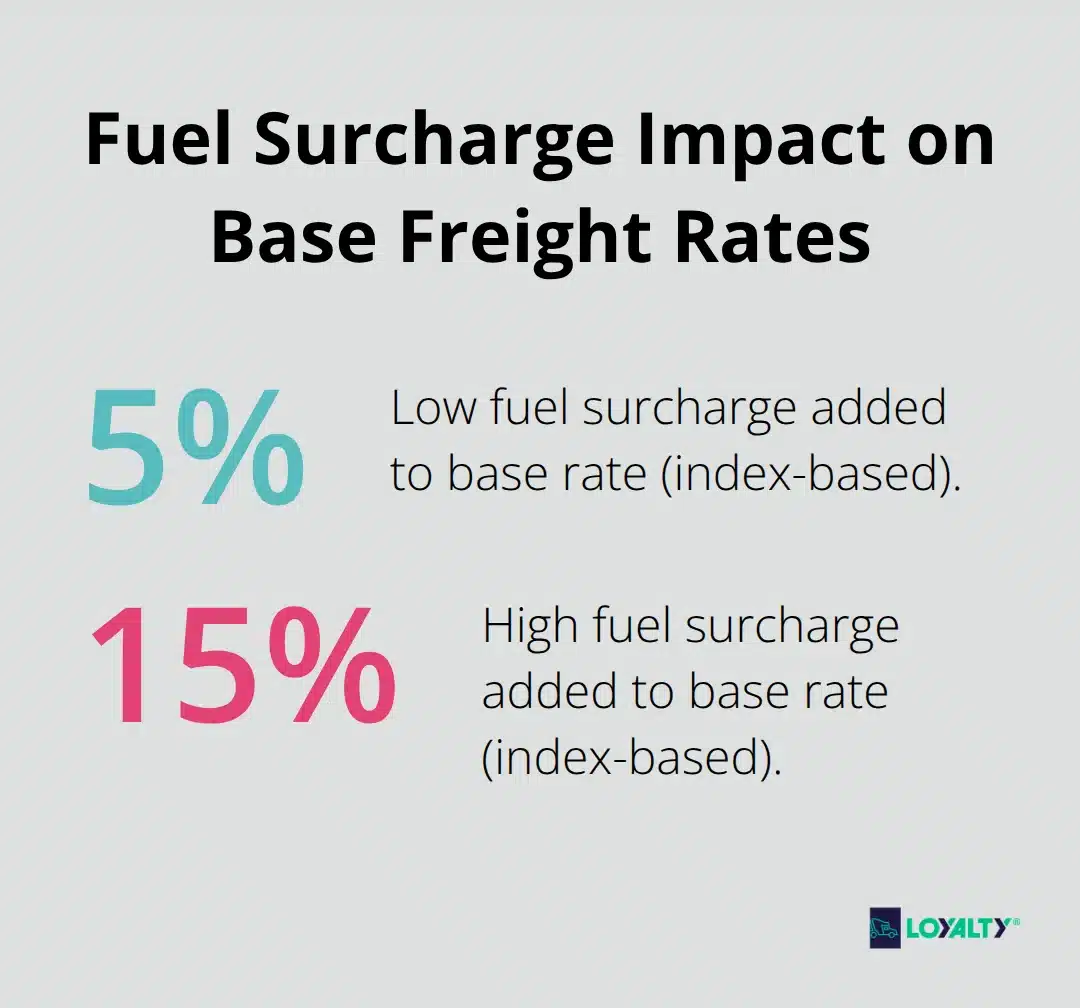
Fuel surcharges fluctuate with crude oil prices and add 5-15% to base rates depending on the carrier’s fuel index. Rather than absorb these swings, negotiate fuel index caps with carriers and build fuel-cost assumptions into your rate analysis. Real-time tracking systems reveal which shipments sit idle at docks and which routes experience bottlenecks, giving you data to renegotiate dock appointments and push back on carrier excuses.
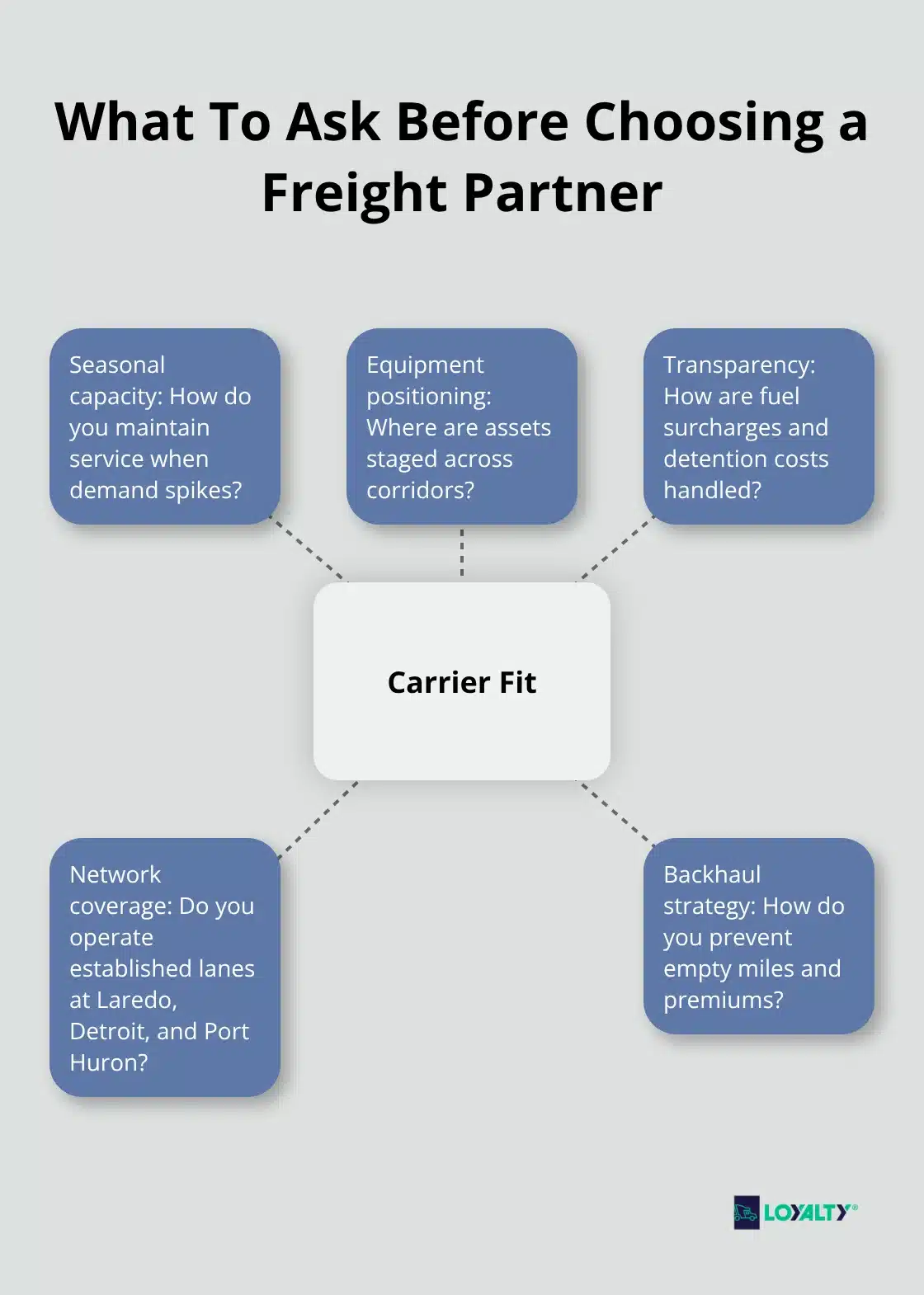
Carriers with integrated networks across the U.S., Canada, and Mexico handle seasonal volatility better than brokers who assemble capacity ad hoc. The carriers worth partnering with show you their equipment positioning strategies and explain how they avoid capacity crunches rather than simply raising prices when demand spikes. This transparency matters because it separates partners who solve problems from those who simply pass costs along.
Optimizing Routes and Reducing Shipping Costs
Eliminate Detention Through Dock Coordination
Real-time visibility into your shipments reveals where you bleed money. Detention time at docks and distribution centers represents one of the largest unmanaged costs in North American freight. According to the OOIDA Foundation, drivers lose up to $1,500 per week sitting idle at loading docks, and those costs cascade through your supply chain as carriers build them into rates or refuse to serve unprofitable lanes. The solution isn’t to push harder on carriers; it’s to eliminate the delays that create detention in the first place.
Implement dock appointment systems that lock in specific arrival windows and coordinate with your warehouse teams to have freight staged and ready before trucks arrive. Real-time tracking platforms show you exactly when a shipment reaches a facility, which lets you flag delays before they compound into multi-day waits. When you see a truck sitting for six hours at a distribution center, you contact the facility manager immediately rather than discovering the problem in a post-shipment report.
Tired of paying for detention you can’t control?
Tell us your lanes and equipment needs. We’ll quote you based on real network capacity and dock coordination, not padded rates to cover idle trucks.
Consolidate Loads to Cut Detention and Costs
Carriers operating major corridors like Laredo, which processed $30.235 billion in transborder freight in October 2025, already demand appointment slots because their networks move too much volume to absorb unpredictable delays. Consolidating smaller shipments into full truckloads cuts detention because carriers prioritize routes with high utilization. Electronics-focused corridors, where December 2025 machinery and specialized equipment exports nearly doubled, move freight faster because shippers consolidate loads upfront and pre-clear paperwork with CBP. This approach saves money on per-unit transportation costs and reduces dock time because full trucks move through systems faster than partial loads.
Match Equipment to Your Freight Type
Equipment choice matters more than most logistics teams realize. Refrigerated trucks cost more to operate than dry vans, but sending temperature-sensitive freight in uncontrolled equipment creates spoilage losses that dwarf the equipment premium. Flatbed capacity moves construction materials and machinery, but choosing the wrong flatbed type forces expensive repositioning or cargo rejection at pickup. The carriers worth partnering with show you their equipment positioning across North American corridors and explain how they avoid empty backhauls that inflate your costs.
A carrier with trucks positioned in Detroit, Port Huron, and Laredo can move your freight efficiently because they have return loads already scheduled, which means they offer competitive rates rather than charging you a premium to position empty equipment. This transparency separates partners who optimize networks from those who simply book available capacity. When you evaluate carriers, ask specifically how they handle seasonal capacity constraints. Quebec’s mandatory 125-hour PESR driver training for Class 1 trucks tightens cross-border capacity over time because fewer drivers qualify, and Canadian winter conditions disrupt movements regularly.
Plan Ahead for Seasonal Capacity Tightening
Carriers that plan ahead lock in driver capacity during off-peak seasons and position equipment before constraints hit. Those that react after capacity tightens will charge you premium rates or reject your shipments. The right partner shows you their seasonal strategies and explains how they maintain service levels when demand spikes. Loyalty Logistics specializes in timely, damage-free delivery across the U.S., Canada, and Mexico with a 98% on-time rate, offering refrigerated, reefer, and flatbed trucks alongside LTL shipping to match your freight needs and corridor requirements.
Final Thoughts
Reliable domestic freight shipping across North American corridors delivers measurable advantages that compound over time. When you eliminate detention through dock coordination, consolidate loads efficiently, and match equipment to your freight type, you reduce costs while improving on-time performance. The carriers that win in tight-margin environments possess visibility into load planning and networks that match freight across corridors without artificial delays.
Evaluating freight partners requires looking beyond rate quotes. Ask how they handle seasonal capacity constraints, what their equipment positioning strategy looks like, and whether they show transparency around fuel surcharges and detention costs. A carrier operating across the U.S., Canada, and Mexico with established networks at major hubs like Laredo, Detroit, and Port Huron understands regional bottlenecks and can position equipment efficiently rather than charging you premiums for empty backhauls.
We at Loyalty Logistics specialize in timely, damage-free delivery across North American corridors with a 98% on-time rate, offering refrigerated, reefer, and flatbed trucks alongside LTL shipping to match your freight needs. Our eco-friendly Loyalty Green Rewards program promotes sustainable practices while contributing to reforestation, and with more than 10,000 successful deliveries, we’ve built the operational rigor and network visibility that eliminate the delays and cost overruns you face with less experienced partners. Explore our freight transportation services to learn how we can streamline your domestic freight shipping and enhance your supply chain efficiency.
Frequently Asked Questions
What is domestic freight shipping in North America?
Domestic freight shipping in North America refers to the movement of goods by truck, rail, or intermodal transport within and between the United States, Canada, and Mexico. It covers both intra-country shipments and cross-border moves along established corridors like Laredo, Detroit, and Port Huron, using FTL, LTL, refrigerated, flatbed, or drayage equipment depending on the cargo type and the lane.
How does detention time affect freight shipping costs?
Detention time raises freight shipping costs because drivers lose up to $1,500 per week from uncompensated detention according to the OOIDA Foundation, and carriers either absorb that cost and pass it through as higher rates or reject lanes with repeated dock delays. Dock appointment systems and real-time tracking eliminate the artificial delays that create detention and keep per-shipment rates competitive.
Which are the major North American freight corridors?
The major North American freight corridors include Laredo, Texas (roughly $30.235 billion in annual transborder freight), Detroit ($11.595 billion), and Port Huron ($10.111 billion). In October 2025, total truck freight between the U.S. and North America reached $93.5 billion, with U.S.-Mexico cross-border traffic alone at $78.1 billion. Carriers with equipment positioned at these hubs move freight efficiently without empty backhauls.
How do you choose a domestic freight carrier?
Choose a domestic freight carrier by evaluating network coverage across the U.S., Canada, and Mexico, their equipment positioning strategy at major hubs, their transparency around fuel surcharges and detention fees, and their on-time performance record. Ask how they handle seasonal capacity constraints like Canadian winter conditions or Quebec’s PESR driver training requirements, and confirm they have the specific equipment (refrigerated, flatbed, LTL) your freight needs.
Ready to Streamline Your Domestic Freight Shipping?
Whether your priority is cross-border freight across U.S.-Canada-Mexico corridors or dedicated capacity for domestic lanes, Loyalty Logistics combines network visibility, compliance expertise, and consistent on-time performance to keep your supply chain moving. Tell us about your routes and equipment needs, and we’ll build a plan around your actual freight profile instead of generic rate quotes.
Related Articles
- Mastering Cross-Border Shipping in North America: A complete playbook for shippers moving between the U.S., Canada, and Mexico.
- Supply Chain Risk Management: Mitigating Disruption in Cross-Border Operations: How to identify and contain risks when freight moves across borders.
- LTL vs FTL: Which Is Right for Your Business?: Pick the right capacity type for your lanes and your budget.
Loyalty Logistics: Connecting businesses with opportunities across North America.
Written by: Carlos Robayo, Marketing Director at Loyalty Logistics
With expertise in logistics marketing and international trade, Carlos specializes in connecting businesses with efficient and reliable transport solutions for the North American market.

