
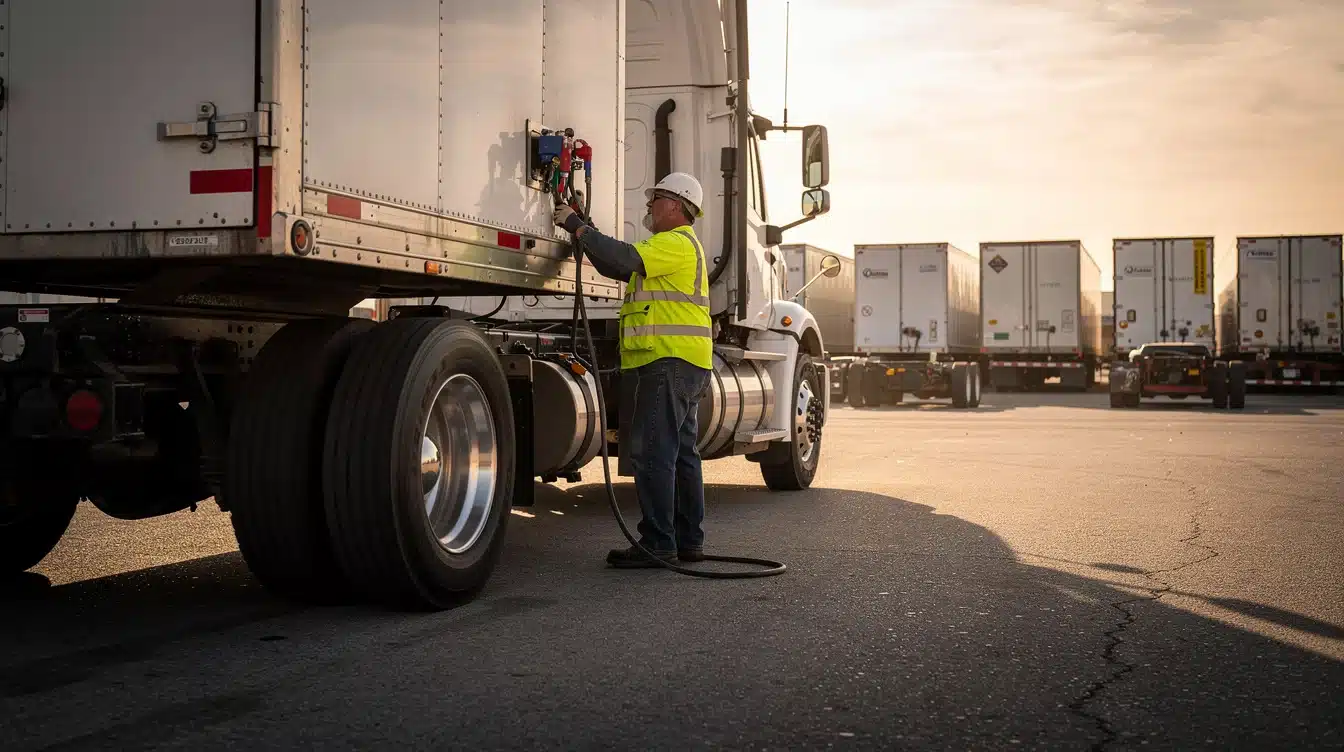
Power only freight loads give you a tractor without the trailer, which means lower costs and more control over your shipments. At Loyalty Logistics, we see logistics managers choosing this option when they need flexibility without paying for unnecessary capacity.
The real advantage? You only pay for the power unit, not a full truckload. This works especially well for cross-border moves where timing and compliance matter most.
How Power Only Freight Actually Works
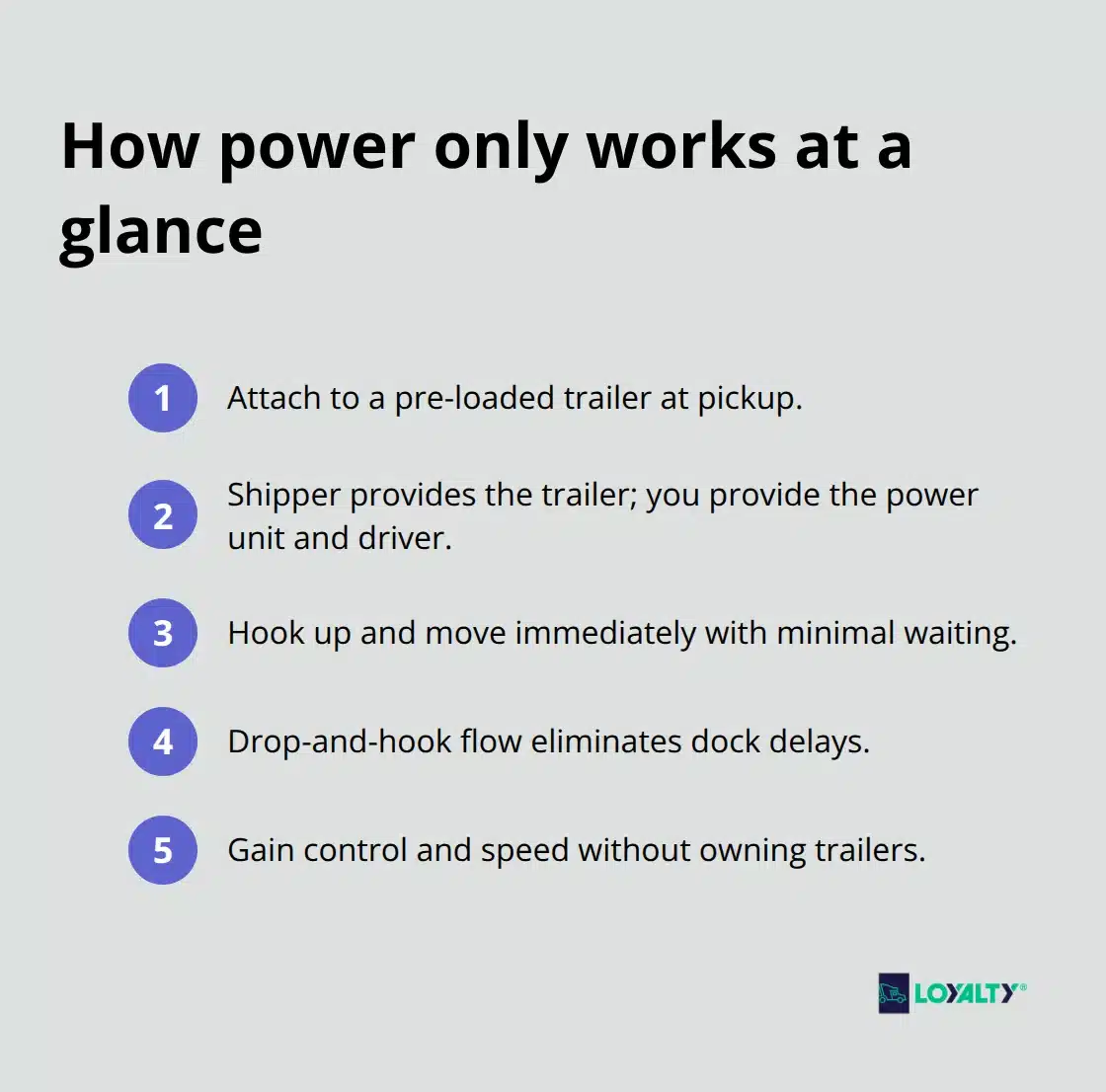
Power only freight requires you to attach your tractor to a pre-loaded trailer at pickup, deliver it, and disconnect. The shipper or logistics provider owns or leases the trailer-you supply only the power unit and driver. This differs fundamentally from full truckload services, where you own or control the entire asset. The trailer sits at the facility until your tractor arrives, which eliminates waiting time that reduces margins on traditional loads. Shippers load on their schedule, not yours, and you hook up and move immediately. Pre-loaded trailers mean zero dock delays.
The Drop-and-Hook Advantage
Most power only loads use drop-and-hook operations, where you drop an empty trailer and immediately pick up a loaded one. According to Truckstop data, this approach reduces on-duty time significantly compared to waiting for loading crews. You move faster, complete more loads per week, and maximize your billable hours. The efficiency gains compound across multiple shipments, which is why experienced carriers prefer this model for consistent income.
Why Shippers Pick Power Only Over Standard Truckload
Logistics managers choose power only when their freight is already packed and ready to move immediately. Warehouse relocations, seasonal surges, and just-in-time operations all benefit from this flexibility. A shipper running peak season avoids buying or leasing trailers for three months-they source capacity without the capital expense. The Owner-Operator Independent Drivers Association 2022 survey found that trailer costs run around $20,000 for used equipment or $60,000 new, plus ongoing maintenance, registration, and storage fees. Power only eliminates all that burden.
Lower Barriers to Entry for Carriers
New owner-operators can start with just a tractor and immediately access thousands of pre-loaded loads on boards like Truckstop and DAT, which list power only freight updated in real time. You avoid the debt and overhead of trailer ownership while building your business. Urban routes typically pay more than rural ones, and rates on the spot market for dry van power only range from $1.50 to $2.25 per mile, with contracted lanes reaching $2.50 or higher. Flatbed and specialized loads command $2.00 to $3.00 per mile or more due to the extra handling required.
Sourcing Capacity Without Managing Multiple Relationships
For shippers, power only means sourcing capacity from multiple freight brokerage services without managing relationships with five different trucking companies. You consolidate logistics through a single provider instead of juggling separate contracts. This simplification reduces administrative overhead and improves visibility across your freight network. When you need to scale capacity for seasonal demand or unexpected surges, power only solutions respond faster than traditional dedicated fleets.
The flexibility and cost structure of power only freight make it attractive for both shippers and carriers, but success depends on understanding the compliance landscape-especially when your loads cross international borders.
How Power Only Cuts Your Real Freight Costs
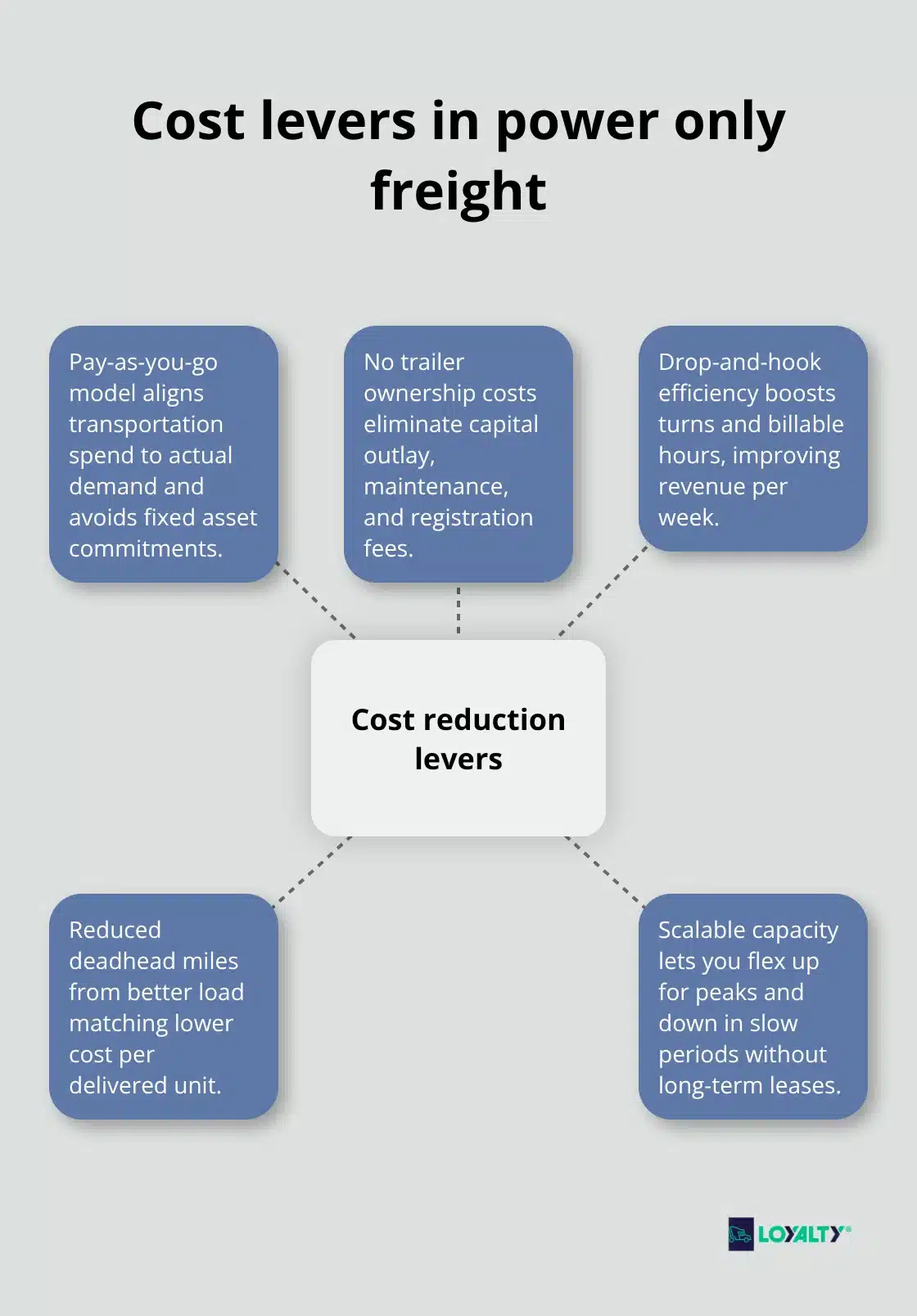
Power only freight eliminates the financial burden that traditional full truckload services impose on shippers. When you use power only, you pay only for active transportation time, not for trailer ownership, maintenance, or idle capacity. The Owner-Operator Independent Drivers Association 2022 survey shows trailer costs alone run $20,000 to $60,000 upfront, plus annual registration, insurance, and maintenance expenses that accumulate regardless of utilization. With power only, these capital expenses vanish entirely. You also avoid the trap of over-leasing trailers during slow periods or scrambling to source additional capacity during peaks. This pay-as-you-go model directly impacts your transportation budget because costs align with actual demand instead of fixed asset commitments. Shippers moving seasonal freight, managing warehouse relocations, or handling unexpected surges benefit most because they scale capacity up or down without renegotiating long-term contracts or disposing of underutilized equipment.
Drop-and-Hook Operations Reduce Your Costs Per Mile
Drop-and-hook operations embedded in power only freight reduce on-duty time substantially compared to traditional loading dock waits. According to Truckstop data, carriers who complete drop-and-hook loads maximize billable hours by eliminating loading crew delays that drain margins on standard truckload shipments. A carrier who completes four power only loads weekly versus two traditional loads generates higher revenue per week despite potentially lower per-mile rates. The math works because faster turnarounds mean more revenue-generating trips. Dry van power only loads on the spot market range from $1.50 to $2.25 per mile, while contracted lanes reach $2.50 or higher. Flatbed and specialized power only work commands $2.00 to $3.00 per mile or more. When you factor in reduced deadhead miles from efficient load matching on boards like DAT and Truckstop, your cost per delivered unit drops significantly below traditional truckload economics.
Eliminate Empty Return Miles From Your Network
Logistics managers who consolidate power only shipments across multiple lanes reduce empty return miles that otherwise consume 20 to 30 percent of traditional fleet miles. This efficiency compounds across your entire freight network, making power only a direct cost reduction lever rather than a capacity workaround. Load boards that specialize in power only freight (DAT and Truckstop both maintain extensive networks) connect you with carriers who can move your pre-loaded trailers without the deadhead penalty that kills margins on partial loads. The result: your transportation costs align with actual freight movement, not wasted miles.
Scale Capacity Without Long-Term Commitments
Power only solutions let you respond to demand spikes without signing multi-year trailer leases or committing capital to equipment you’ll use for only three months. Seasonal businesses, retailers managing peak periods, and manufacturers handling project-based surges all benefit from this flexibility. You source additional capacity when you need it and release it when demand normalizes. This operational agility protects your margins during economic uncertainty and prevents you from carrying excess assets during downturns.
The cost advantages of power only freight extend beyond simple per-mile economics-they reshape how you manage compliance and documentation when your loads cross international borders.
Power Only Across International Borders
Cross-border power only operations demand strict compliance because regulators on both sides of the border enforce different rules, and mistakes cost you time and money. Mexico-domiciled carriers must hold a valid U.S. DOT number and FMCSA registration before moving freight into the United States, according to FMCSA requirements. Mexican drivers need either a B-1 visa or a Border Crossing Card to operate legally. On your end, shipments require a commercial invoice, bill of lading, and packing list cleared through U.S. Customs and Border Protection.
Verify Carrier Credentials Before Booking
The best practice is vetting your carrier partners upfront: confirm they hold C-TPAT certification on both sides of the border, which reduces inspection delays and unlocks FAST Lane access at major crossings like the World Trade Bridge in Laredo. This single verification step eliminates weeks of potential delays because C-TPAT certified carriers face fewer inspections at the border. Load boards like DAT and Truckstop list power only freight crossing into Mexico and Canada, but you must verify carrier credentials yourself before booking. One logistics manager wasted three weeks on a cross-border power only shipment because the carrier lacked proper FMCSA registration, forcing a complete reload at the border. That mistake cost roughly $2,500 in delay penalties plus the extra transload expense.
Prepare Documentation and Manage Customs Costs
Documentation matters equally: prepare your commercial invoice with precise product descriptions, unit counts, and declared values before your power only load reaches the border. Customs brokers can handle this work, but costs typically run $150 to $400 per shipment depending on complexity. If you move regular cross-border power only freight, hiring a customs broker on retainer saves money versus per-shipment fees.
Choose the Right Border Crossing for Your Shipment
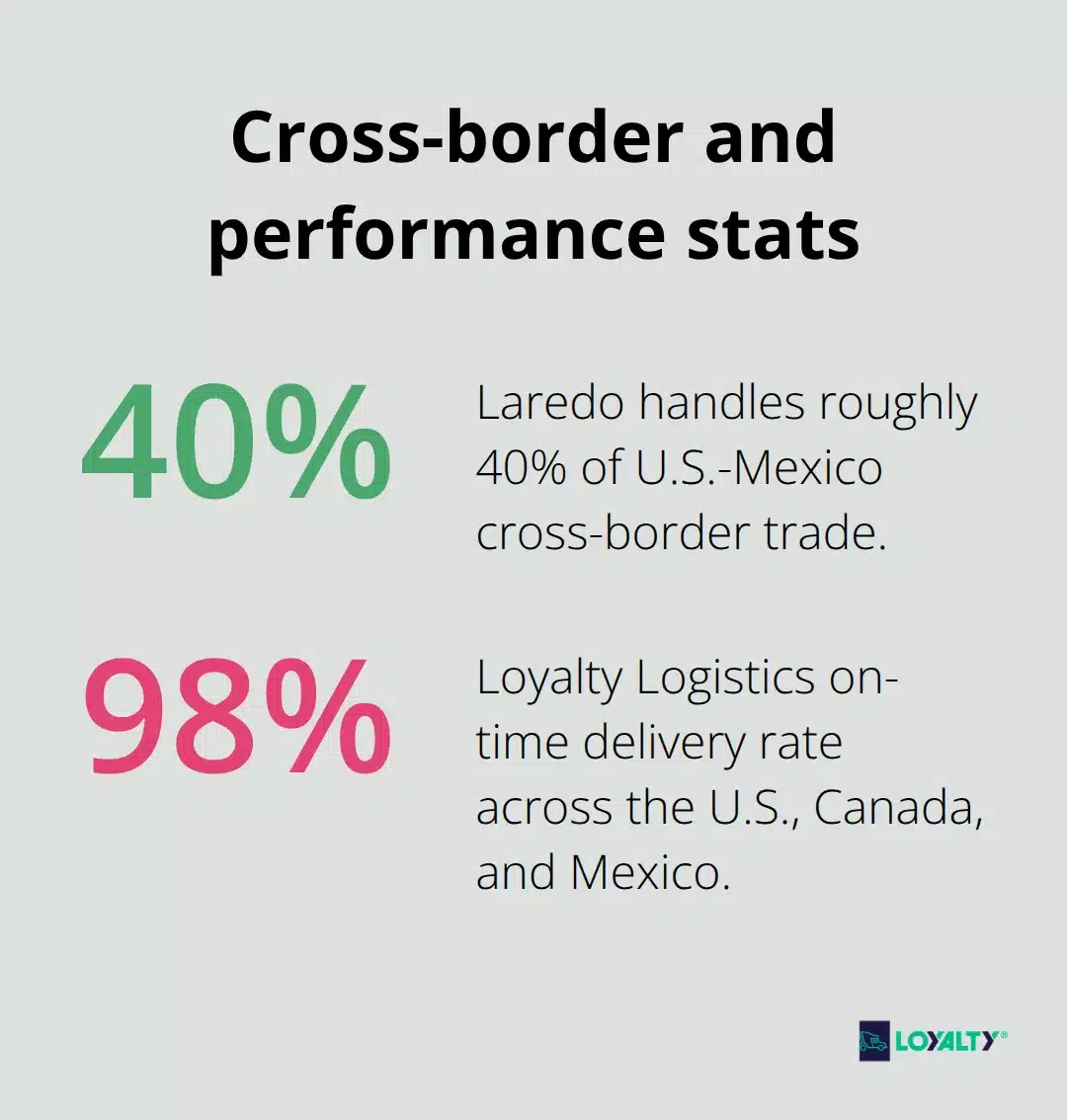
Laredo serves as the largest U.S.-Mexico gateway, handling roughly 40 percent of cross-border trade, and offers 24/7 maintenance and FAST Lane infrastructure that speeds your power only loads through inspections. El Paso, Eagle Pass, Otay Mesa, Nogales, and McAllen handle secondary volume but often experience longer wait times during peak periods. Route planning matters because choosing the right crossing directly impacts transit time and compliance friction.
Leverage Through-Trailer Service and Intermodal Options
Through-trailer service, where your sealed trailer crosses the border with only the tractor and driver changing at the checkpoint, reduces handling and transit time compared to traditional transloading at the border. This method works best for pre-loaded power only freight because the cargo remains undisturbed, cutting inspection risk. Direct intermodal via rail eliminates border stops entirely and can deliver freight up to three days faster than standard cross-border trucking, though it requires advance planning and higher minimum volumes. For seasonal power only shipments or peak-period surges, through-trailer service beats transloading because you avoid double-handling costs and reduce the chance of damage or customs complications.
Maintain Real-Time Visibility Throughout Movement
Maintain real-time visibility throughout your cross-border power only movement because delays compound quickly at the border. Load tracking systems that integrate with your TMS provide predictive analytics showing estimated crossing times, allowing you to adjust downstream logistics before problems occur. Loyalty Logistics specializes in cross-border operations with more than 10,000 successful deliveries and offers warehousing, cross-dock, and transload services that complement power only freight when compliance or handling complexity demands extra support.
Final Thoughts
Power only freight loads eliminate trailer ownership costs, reduce deadhead miles, and let you scale capacity without long-term commitments. For cross-border operations, power only solutions simplify your logistics network while maintaining compliance across the U.S., Canada, and Mexico. The real value emerges when cost savings align with operational agility-your transportation budget matches actual demand instead of fixed asset commitments.
Modern supply chains demand flexibility that traditional dedicated fleets cannot provide. Power only freight integrates seamlessly into seasonal operations, warehouse relocations, peak-period surges, and just-in-time shipments. Load boards like DAT and Truckstop connect you with pre-loaded capacity within hours, not weeks, giving you the responsiveness your competitors lack.
Evaluate your current freight mix and identify seasonal peaks or irregular surges where power only solutions would reduce costs. For cross-border operations, verify carrier credentials and prepare documentation processes before your first shipment. At Loyalty Logistics, we specialize in timely, damage-free delivery across the U.S., Canada, and Mexico with a 98% on-time rate-explore how our transportation solutions can strengthen your supply chain efficiency.
