
![Mastering Cross-Border Shipping in North America [Guide]](https://www.whyloyalty.com/wp-content/uploads/emplibot/nafta-shipping-hero-1759752467.webp)
Cross-border shipping in North America presents unique challenges that can make or break your supply chain efficiency. NAFTA shipping regulations, customs documentation, and border crossing delays create complex hurdles for businesses expanding their reach.
We at Loyalty Logistics have seen companies lose thousands of dollars due to improper documentation and regulatory missteps. The good news is that with the right strategies, you can streamline your operations and avoid costly mistakes.
What Documentation Do You Actually Need for Cross-Border Shipping?
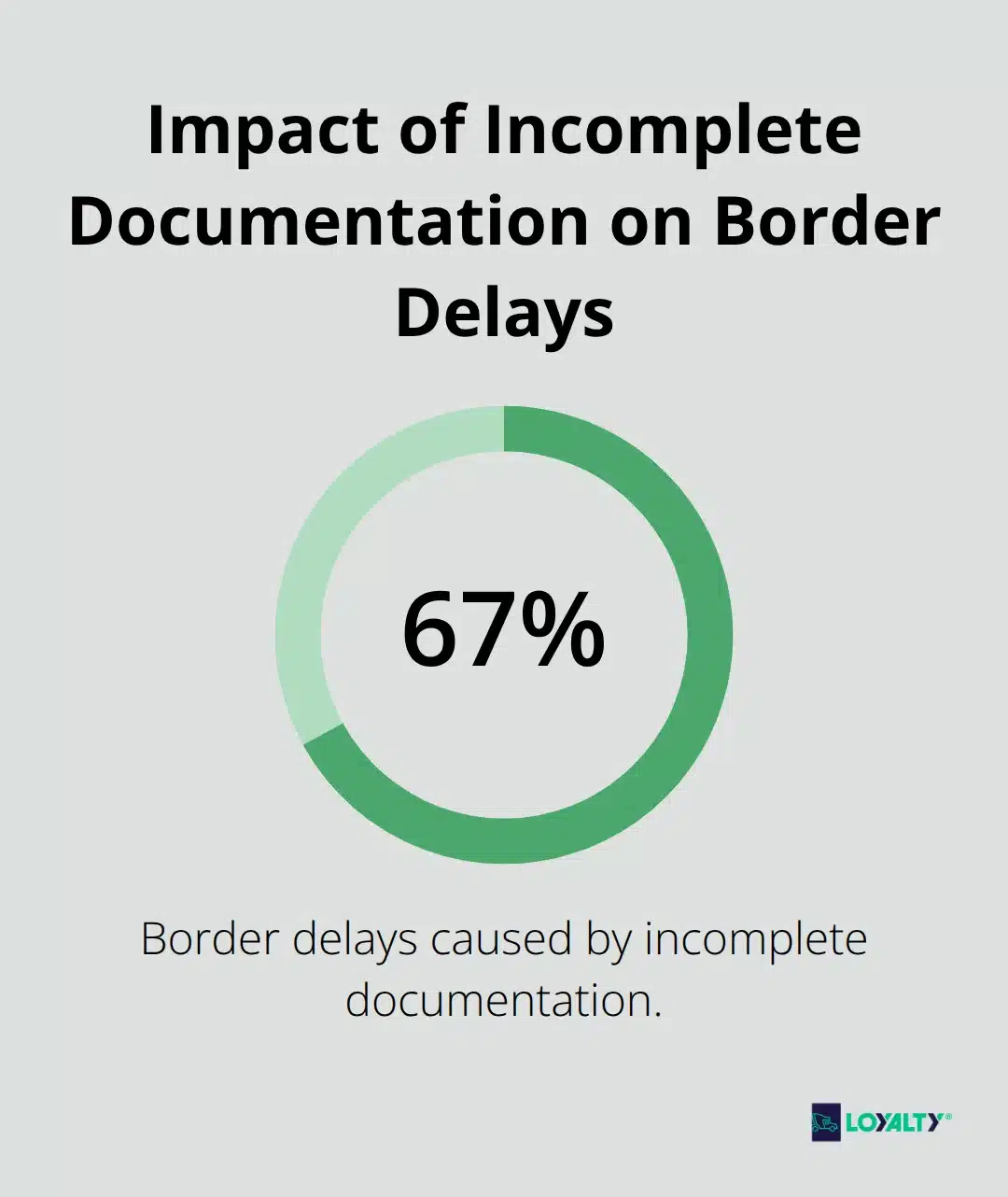
The documentation requirements for North American cross-border shipping are non-negotiable, and missing even one form can cost you days of delays and thousands in demurrage fees. The Canada Customs Invoice is mandatory for all shipments that enter Canada, while the commercial invoice must include precise product descriptions, values, and country of origin details. The Bureau of Transportation Statistics reports that incomplete documentation causes 67% of border delays, which makes accuracy your top priority.
The USMCA Documentation Game Changer
The United States-Mexico-Canada Agreement transformed documentation requirements when it took effect in July 2020, and it created new opportunities for duty savings but stricter compliance standards. Your Certificate of Origin must now meet enhanced rules of origin requirements, particularly for automotive goods where specific regional value content thresholds apply. USMCA facilitated $1.8 trillion in trade during 2022, but only companies with proper documentation capture these benefits. The HTS classification codes determine your duty rates, and when you get them wrong, this triggers costly reclassifications and penalties. Understanding how tariffs impact US-Mexico trade relationships helps you anticipate duty costs and structure shipments for maximum savings.
Prohibited Items That Will Stop Your Shipment Cold
Each country maintains strict prohibited and restricted item lists that change frequently, and ignorance costs money. Mexico prohibits used clothes and certain electronics without permits, while Canada restricts dairy products and requires special licenses for controlled substances. The key is to work with customs brokers who track these changes daily rather than rely on outdated lists. Temperature-controlled shipments face additional scrutiny (with fresh produce that requires phytosanitary certificates and meat products that need USDA inspection certificates before they cross any border).
Essential Forms You Cannot Skip
The Bill of Lading serves as your contract of carriage and receipt of goods, while the Electronic Export Information (EEI) form becomes mandatory for shipments over $2,500. Commercial invoices must contain complete buyer and seller information, detailed product descriptions, and accurate values in the currency of the destination country. The Packing List provides customs officers with specific details about your cargo contents and weights (which helps expedite inspections and reduces delays at checkpoints).
The complexity of these requirements makes proper preparation essential before you select your transportation mode and routes.
How Do You Choose the Right Logistics Strategy for Cross-Border Success?
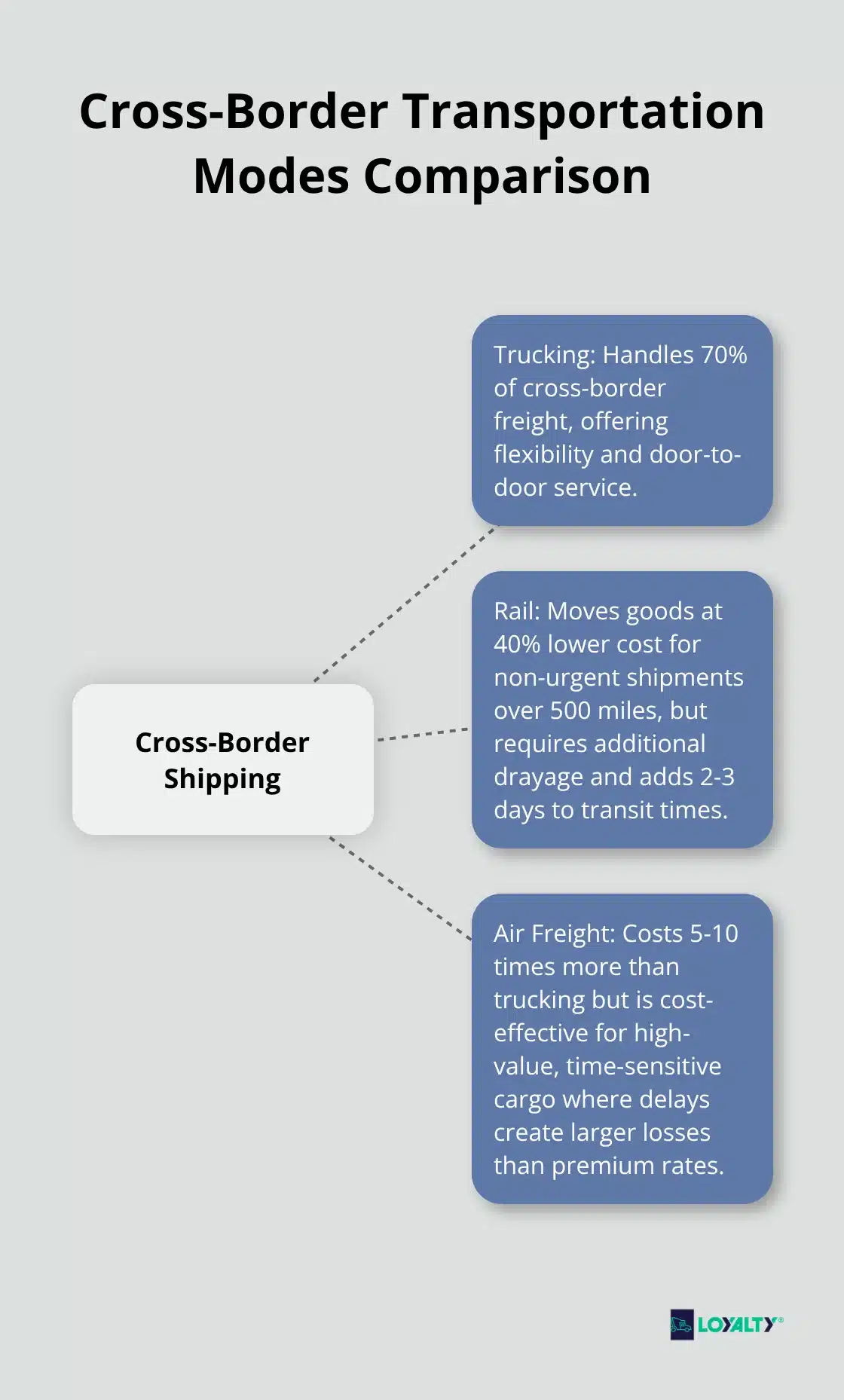
Your transportation mode selection directly impacts your bottom line, and the wrong choice costs more than just money. Trucking handles 70% of cross-border freight according to the Bureau of Transportation Statistics, but rail moves goods at 40% lower cost for non-urgent shipments over 500 miles. Rail requires additional drayage and adds 2-3 days to transit times. Air freight costs 5-10 times more than trucking but becomes cost-effective for high-value, time-sensitive cargo where delays create larger losses than premium rates.
The Customs Broker Decision That Makes or Breaks Your Timeline
You cannot afford to work without a customs broker for regular cross-border shipments. Professional customs brokers process clearances 60% faster than self-filed documentation and maintain relationships with border officials that expedite inspections. They charge 0.5-1% of shipment value but prevent delays that cost 10-15% in demurrage fees and lost sales. The Customs Self Assessment program allows pre-approved shipments to clear in hours rather than days, but qualification requires consistent compliance records that only experienced brokers maintain. Choose brokers with CTPAT certification and offices at your primary border crossings rather than generic freight forwarders who subcontract customs work.
Transit Time Management That Actually Works
Your delivery schedule must account for border variability, not just road miles. The Ambassador Bridge between Detroit and Windsor averages 45-minute delays during peak hours, while the Peace Bridge sees 2-hour backups on Mondays. Smart shippers build 24-48 hour buffers for standard shipments and use expedited programs like FAST lanes for time-critical cargo. Temperature-controlled shipments require additional planning since refrigerated trucks consume 25% more fuel and face stricter inspection protocols that add processing time at checkpoints. Companies shipping perishables across borders should review criteria for selecting reliable refrigerated trucking partners to ensure temperature integrity throughout customs delays.
Route Optimization Beyond Basic Mileage
You must consider infrastructure quality and border crossing efficiency when you select routes. The Laredo-Nuevo Laredo crossing handles 40% of U.S.-Mexico trade but experiences significant congestion during peak seasons (particularly November through January). Alternative crossings like Eagle Pass-Piedras Negras offer shorter wait times but limited hours of operation. Highway conditions vary dramatically between regions, with Mexican federal highways requiring different equipment standards than U.S. interstates.
Even the best route planning cannot prevent every delay, which makes your ability to handle unexpected challenges the next critical factor in cross-border success.
How Do You Survive Border Delays and Cost Volatility?
Border delays will happen regardless of your preparation, and your response strategy determines whether they cost you hundreds or thousands of dollars. The Ambassador Bridge experiences average delays of 2.5 hours during peak periods, while Mexican border crossings see wait times that stretch to 8 hours during harvest season when agricultural inspections intensify. Smart shippers maintain buffer inventory at strategic locations near major crossings and negotiate detention fees with carriers before shipments begin.
Temperature-Controlled Cargo Under Pressure
Temperature-controlled loads face additional pressure since refrigerated units consume $200-300 in fuel per day during extended delays. This makes expedited programs like FAST lanes worth their premium costs despite higher fees. Equipment failures during border delays cost $50,000-100,000 in spoiled goods, which explains why backup power systems and real-time temperature monitors become essential investments rather than optional upgrades.
Currency Risk Management That Protects Your Margins
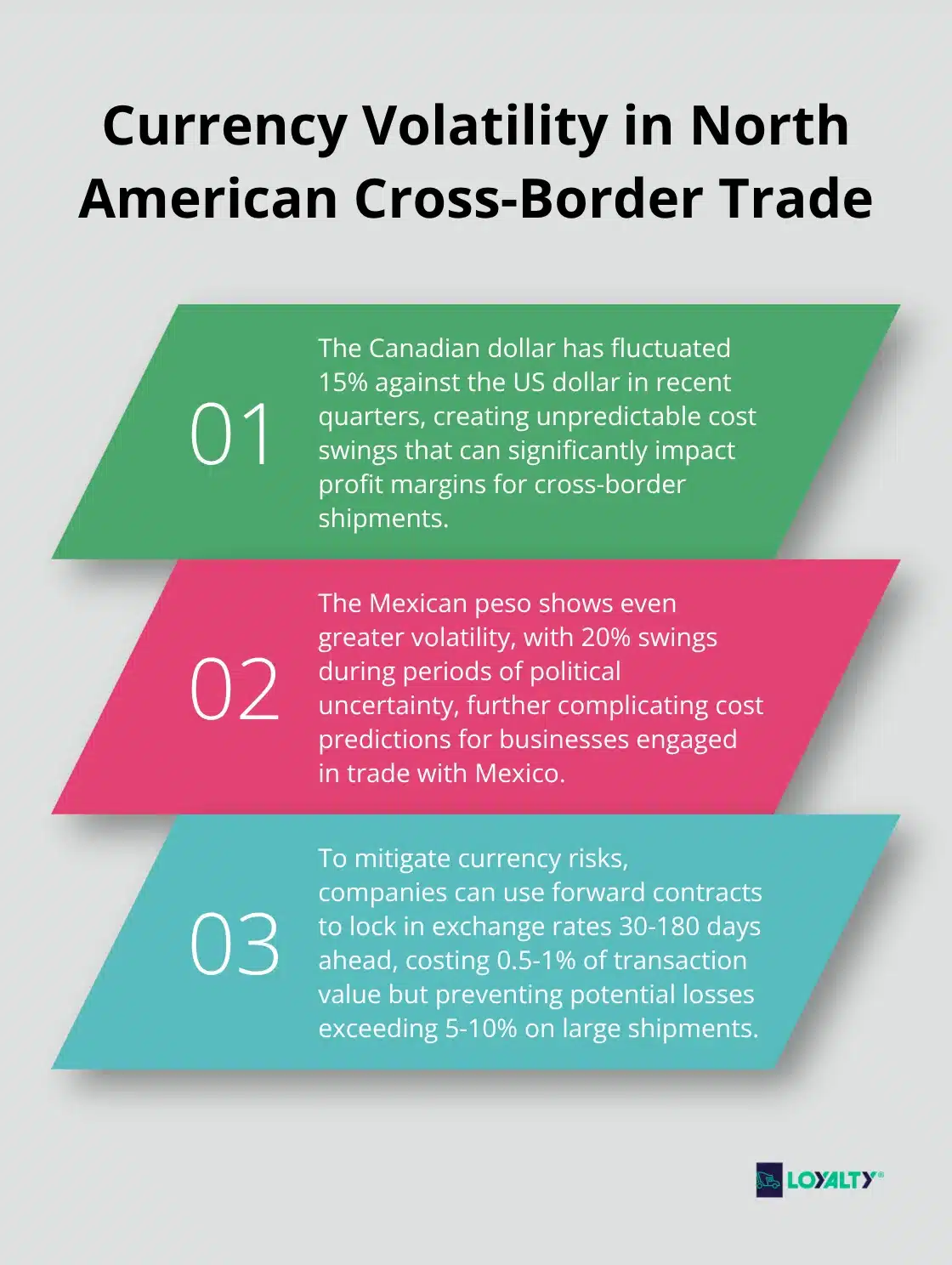
Currency fluctuations between the US dollar, Canadian dollar, and Mexican peso create unpredictable cost swings that destroy profit margins without proper protection. The Canadian dollar has fluctuated 15% against the US dollar in recent quarters, while the peso shows even greater volatility with 20% swings during political uncertainty periods. Forward contracts lock in exchange rates 30-180 days ahead and cost 0.5-1% of transaction value but prevent losses that exceed 5-10% on large shipments.
Invoice in your home currency when possible and build 3-5% currency buffers into prices for clients who insist on local currency terms.
Special Cargo Protocols That Prevent Disasters
Hazmat shipments require specialized documentation that includes Safety Data Sheets and emergency response information that varies between countries (with Mexico that requires Spanish translations for all chemical classifications). Oversized loads need permits from each jurisdiction along the route, and the permit process takes 5-10 business days in Canada versus 2-3 days in most US states. Pharmaceutical shipments demand chain of custody documentation and temperature logs that customs officers verify at every border point. For pharma shipments, understanding cold chain compliance requirements for pharmaceuticals is essential to avoid regulatory violations at border crossings.
Final Thoughts
Cross-border shipping success demands systematic preparation and professional expertise. The documentation requirements, regulatory compliance, and operational challenges we covered require precision that most companies cannot maintain internally. NAFTA shipping complexities have only intensified under USMCA, which makes professional logistics partnerships more valuable than ever.
For businesses focused specifically on the northern corridor, our guide on navigating US-Canada cross-border shipping provides detailed strategies for Canadian customs requirements and border crossing optimization.
Your next step involves evaluation of your current cross-border processes against the strategies outlined in this guide. Calculate the true cost of delays, documentation errors, and missed opportunities. Most companies discover that professional logistics partnerships cost less than internal mistakes.
Related Articles
- What is CTPAT and Why Does It Matter? – Deep dive into the trusted shipper certification program that expedites border crossings
- How to Navigate Cross Border Shipping from US to Canada – Specific strategies for the northern trade corridor
- Cross Border Shipping: Complete Guide to Navigating International Shipping Challenges – Comprehensive overview of international logistics fundamentals
- How Do Tariffs Impact Trade Between US and Mexico? – Understanding duty costs and trade policy implications
Simplify Your Cross-Border Shipping Operations
At Loyalty Logistics, we handle the complexities of North American cross-border shipping so you can focus on growing your business. Our team manages customs documentation, coordinates with certified brokers, and optimizes routes across US, Mexico, and Canada borders daily—with refrigerated, flatbed, and LTL capabilities to match your cargo requirements.
Whether you’re shipping temperature-sensitive goods through Laredo or oversized equipment through Detroit, our experience with thousands of successful border crossings means fewer delays and lower costs for your supply chain.

