
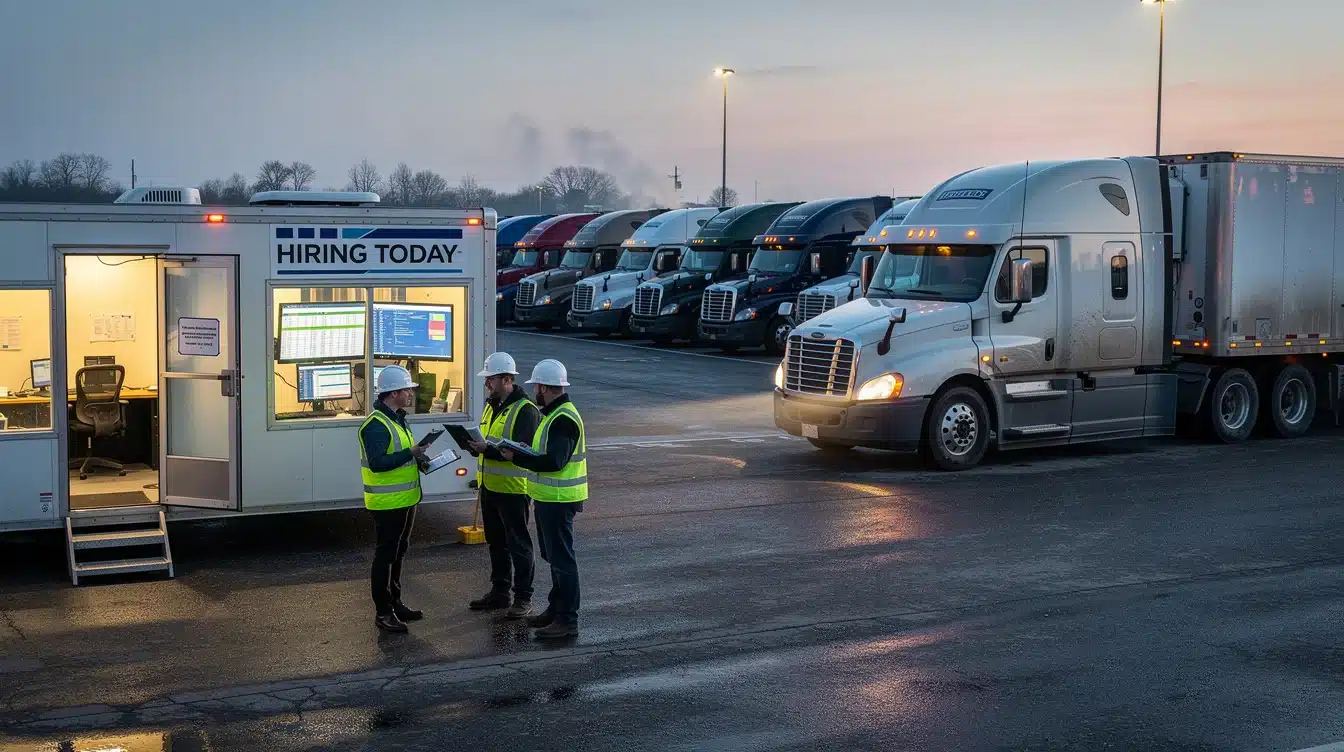
The trucking industry driver shortage impact continues to reshape freight operations across North America. Vacant positions hit record levels, pushing delivery costs higher and straining supply chains at every level.
At Loyalty Logistics, we see firsthand how this shortage affects shippers and carriers alike. The solutions emerging now-from wage increases to automation-are reshaping how the industry operates.
How Bad Is the Driver Shortage Really?
The trucking industry faces a shortage that extends far beyond empty seats in cabs. Industry estimates project a truck-driver shortage of 60,000 to 80,000 positions in 2025, according to the American Trucking Associations. That gap matters because trucks moved 11.27 billion tons of freight in 2024, accounting for 67% of surface trade between the U.S. and Canada. When capacity tightens, freight rates climb. Shippers pay premium rates today and absorb costs that ripple through supply chains for months. The median annual wage for heavy and tractor-trailer drivers reached $57,440 in May 2024, yet turnover in long-distance truckload operations still averages 94% at large carriers and 79% at smaller ones. This churn forces carriers to spend heavily on recruitment and training only to watch drivers leave within months.
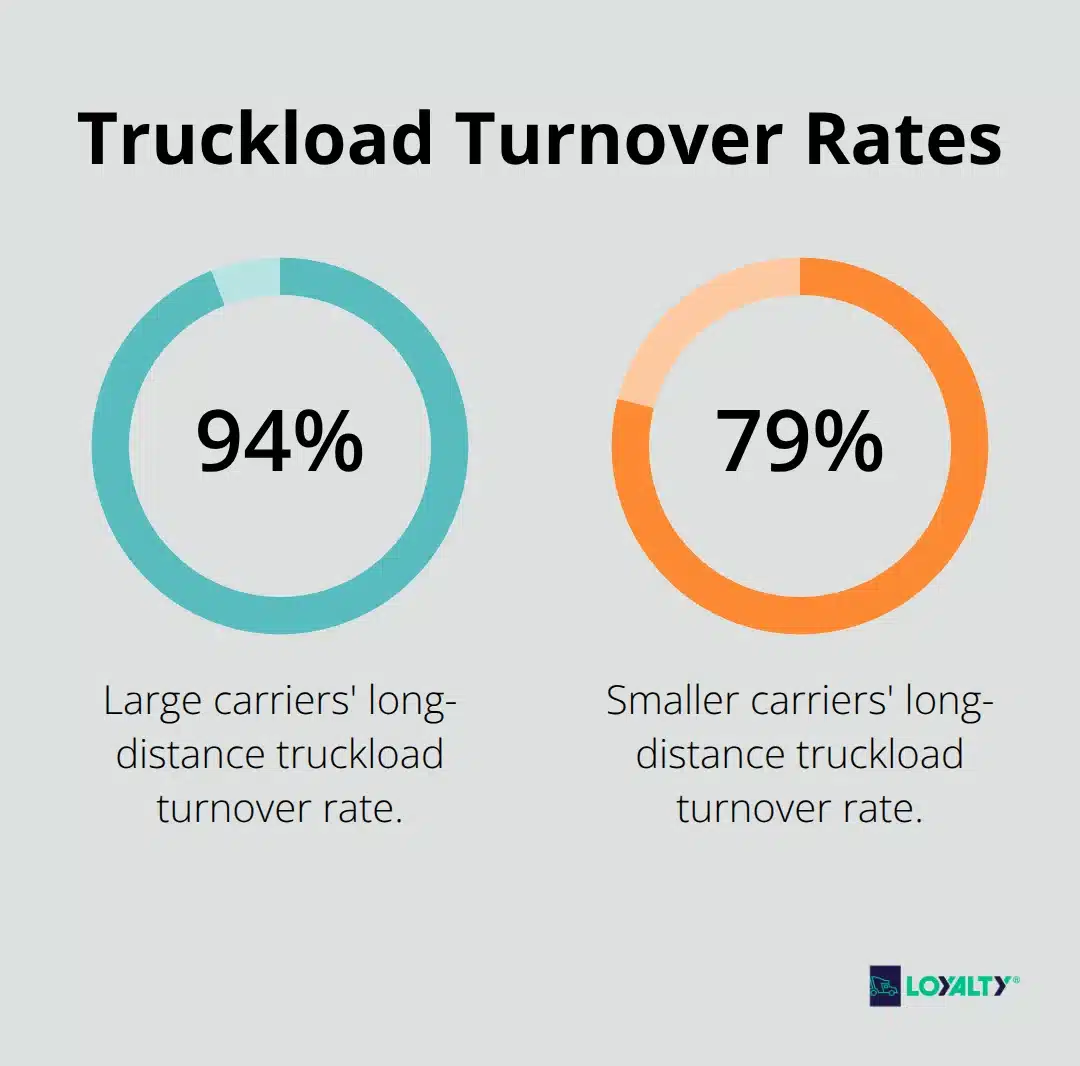
The problem concentrates in specific segments rather than spreading evenly across trucking. Long-haul operations suffer the worst turnover, while regional and LTL segments retain drivers more effectively. For logistics managers, this segmentation matters because driver availability and truck capacity constraints shape which freight modes face the tightest capacity constraints and highest rate pressure.
The Workforce Is Aging Fast
The average age of heavy truck drivers sits at 47, with 28% of drivers aged 55 or older. This demographic cliff will hit hard within five to ten years as retirements accelerate. The supply of new drivers cannot keep pace because only about 9.5% of commercial truck drivers are women, far below their 47% representation in the broader workforce. Entry barriers also slow recruitment: interstate CDL requirements set a minimum age of 21, creating a three-year gap after high school when potential drivers pursue other careers. Foreign-born drivers constitute roughly 18% of the U.S. truck driver population and have historically helped stabilize supply chains, particularly in long-haul freight. However, the U.S. Department of State paused new employment visas for commercial truck drivers in August 2025, effectively freezing this pathway. That policy decision will tighten capacity further in 2025 and 2026.
Regional Variations in Shortage Intensity
Regional shortages vary in intensity across North America. Markets dependent on long-haul freight and border crossings-including the cross-border trade corridor between the U.S. and Canada-face sharper constraints than regions with robust LTL networks. Delivery times stretch, and shippers competing for limited capacity accept longer lead times or pay expedited premiums. Carriers operating in high-shortage regions raise driver pay to attract available talent, then pass those costs to shippers through rate increases.
What the Shortage Costs You
Driver shortages drive higher freight rates, cause delivery delays, threaten just-in-time supply models, and increase spoilage risk for perishables. Retail stores face product shortages when trucking capacity cannot keep pace with demand.
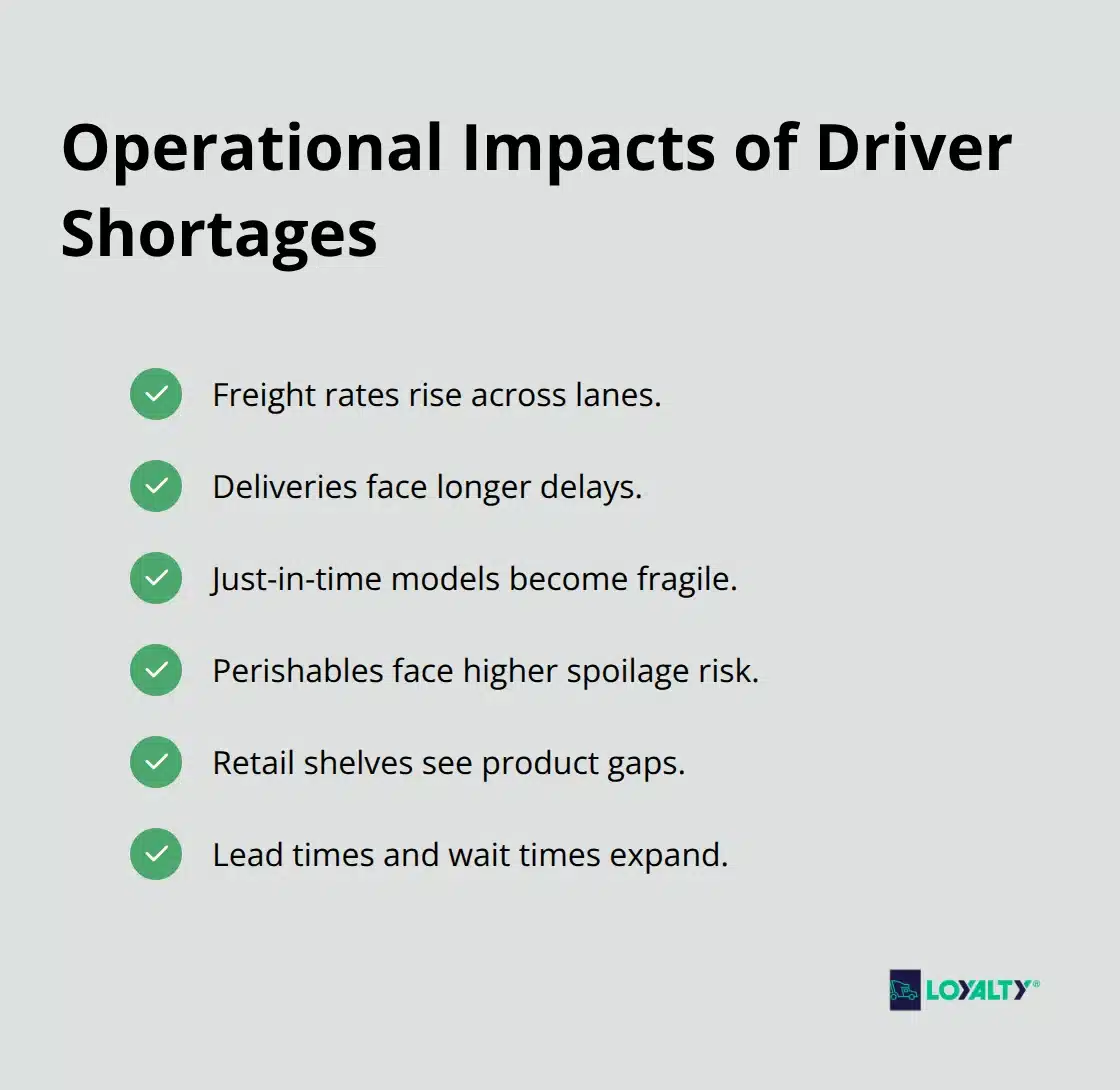
The economic ripple extends upward: labor-cost pressures from driver shortages flow into supplier pricing and ultimately consumer prices. For logistics managers sourcing cross-border freight, the impact hits immediately. Tighter capacity on Canada-U.S. routes means fewer available trucks, longer wait times at borders, and rate increases that can shift 10 to 20% or more during peak seasons. Small carriers operating ten or fewer trucks-which account for 92% of trucking firms-struggle most because they lack scale to absorb wage pressures. This fragmentation forces shippers to work harder to secure consistent capacity. Planning freight movements further in advance, diversifying carrier relationships, and considering alternative modes like LTL become operational necessities rather than options. The shortage will not resolve through market forces alone, and capacity constraints will persist through 2026 and beyond.
Why the Trucking Industry Can’t Keep Drivers
The driver shortage stems from three interconnected problems that no single wage increase will solve. The workforce ages out faster than younger workers enter the profession. Trucking pay lags behind safer, less demanding alternatives. The job itself-long hours away from home, irregular sleep, poor nutrition, and highway fatigue-creates health risks that deter recruitment and accelerate burnout. These root causes shape which solutions actually work.
The Demographic Crisis Hits Hardest
The average heavy truck driver age stands at 47, with 28% already aged 55 or older. This means roughly one in four drivers will reach retirement age within the next decade. The supply pipeline cannot replace them fast enough. Women comprise only 9.5% of commercial truck drivers despite representing 47% of the total U.S. workforce-a massive untapped pool that the industry has failed to recruit effectively. Foreign-born drivers, who historically filled about 18% of trucking positions and stabilized long-haul capacity, face new barriers after the U.S. Department of State paused new employment visas for commercial truck drivers in August 2025. That policy decision alone will worsen capacity constraints significantly. Entry barriers also slow recruitment: CDL requirements set a minimum age of 21, creating a three-year employment gap after high school when potential drivers pursue other careers instead. The industry competes poorly for young talent because trucking appears less appealing than construction, manufacturing, or warehouse work that offer better home time and comparable or higher starting wages.
Compensation Masks a Deeper Problem
The median annual wage for heavy truck drivers reached $57,440 in May 2024, which sounds reasonable until you compare it to skilled trades. Electricians, plumbers, and HVAC technicians earn similar or higher pay while working from a home base, maintaining regular schedules, and avoiding the health hazards inherent to long-haul trucking. The lifestyle damage matters more than raw salary. Truck drivers face elevated risks for diabetes, high blood pressure, and digestive problems due to extended sitting, limited access to healthy meals, and irregular sleep patterns. The American Trucking Associations reports that turnover in long-distance truckload operations averages 94% at large carriers and 79% at smaller ones-a churn rate that no industry should tolerate.
Why Long-Haul Drivers Leave
Long-haul drivers spend weeks away from family, navigate unpredictable traffic and weather delays, and absorb the stress of highway safety hazards. Regional and LTL drivers fare better because they return home nightly, maintain consistent schedules, and avoid the worst fatigue pressures. That segmentation reveals the real problem: the industry structure itself, not just wage levels, drives the shortage. Carriers operating long-haul lanes face the tightest labor constraints because the job itself repels workers.
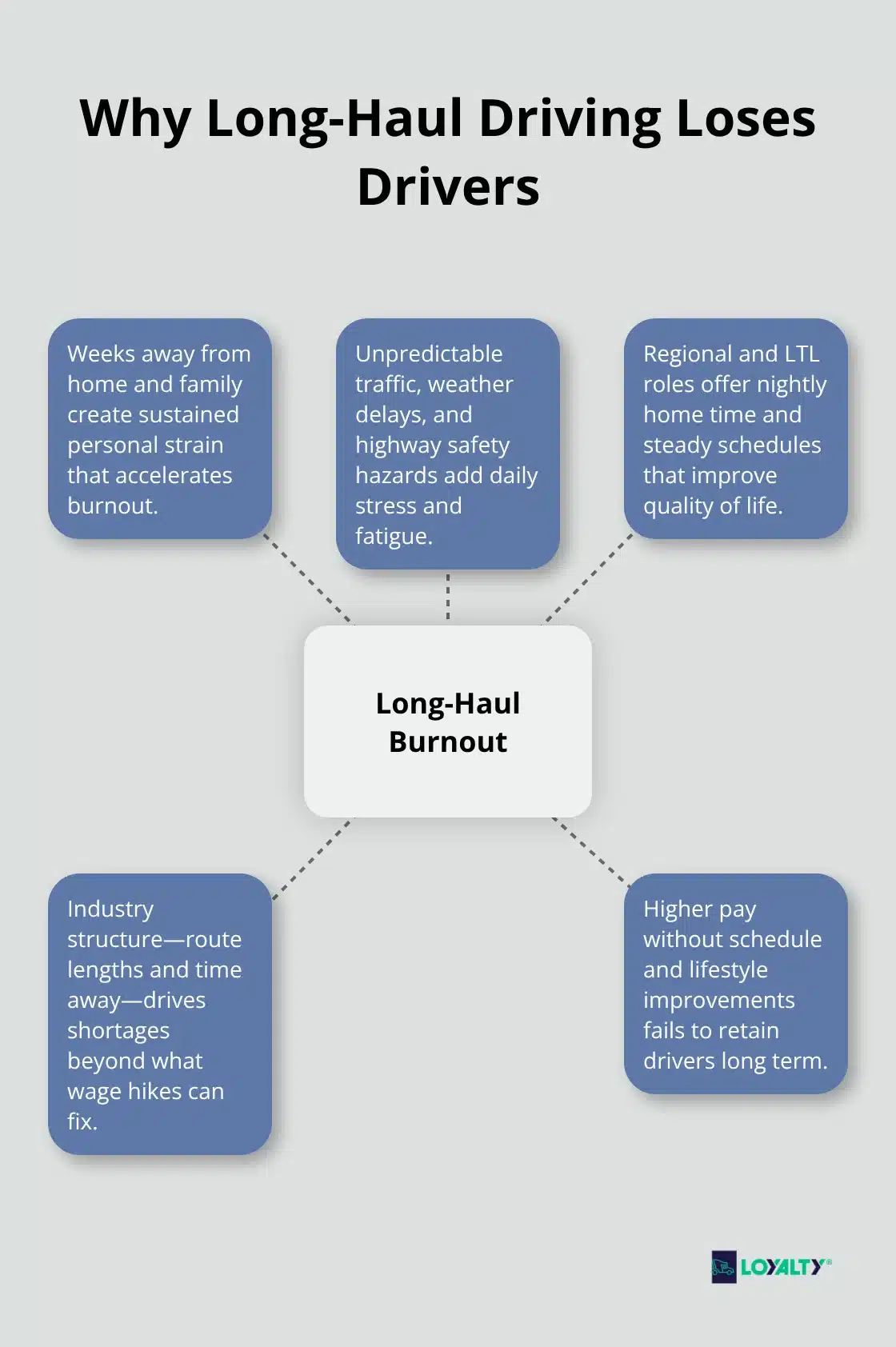
Higher wages help temporarily, but they do not address the underlying lifestyle issues that cause drivers to exit trucking within months.
What This Means for Your Freight Strategy
Capacity will remain constrained in long-haul corridors-including cross-border routes between the U.S. and Canada-even as carriers raise driver compensation. The shortage will not resolve through market forces alone. Securing reliable freight movement requires that you plan further ahead, diversify carrier relationships, and consider mode alternatives like LTL or regional carriers that retain drivers more effectively. These operational adjustments become necessary because the driver shortage reflects structural problems in how the industry operates, not temporary market imbalances that will self-correct.
How the Industry Is Actually Fixing the Driver Shortage
The trucking industry attacks the shortage through three concrete strategies that produce measurable results: recruiting from overlooked talent pools, investing in technology that reduces driver dependency, and restructuring compensation to compete directly with other skilled trades. These approaches work because they address the root causes that previous wage increases alone could not solve.
Recruitment Targets Underrepresented Populations
Carriers shift recruitment away from the traditional long-haul driver archetype toward regional and LTL operations where home time and schedule predictability matter most. Targeting minorities, women, and veterans taps populations historically underrepresented in trucking. Women comprise only 9.5% of commercial truck drivers despite representing 47% of the workforce, yet carriers investing in female recruitment report stronger retention rates because women often prioritize schedule stability and workplace culture over raw hourly pay.
Some carriers now partner with trade schools and community colleges to build pipelines of younger drivers before they commit to construction or manufacturing roles. The American Trucking Associations reports that entrants into trucking come largely from transportation and warehousing sectors, but recruiting from construction and manufacturing requires competing on lifestyle, not just compensation. Reducing time on the road through LTL expansion and local distribution hub networks directly addresses the fatigue and health issues that drive long-haul turnover. Carriers operating shorter routes report retention rates 15 to 20 percentage points higher than long-haul operators, making mode diversification a practical retention tool.
Technology Reduces Driver Demand and Improves Utilization
Autonomous trucking development and advanced routing software reduce reliance on long-haul drivers in specific corridors, though full automation remains years away for most operations. More immediately, digital logistics platforms and real-time border monitoring systems reduce delays at crossings, which lowers driver hours and improves utilization rates. Carriers integrating GPS-based routing and fuel management systems cut operational costs while improving driver satisfaction through fewer idle hours and clearer load assignments. Technology integration also plays a role: carriers using telematics and real-time visibility platforms optimize routes to reduce unnecessary wait times and administrative overhead, which improves driver experience without adding cost.
Compensation Packages Now Compete With Skilled Trades
Compensation restructuring moves beyond base pay toward benefits packages that compete with skilled trades. The May 2024 median wage of $57,440 annually for heavy truck drivers remains competitive only when paired with robust 401(k) matching, tuition reimbursement for driver education, health insurance with mental health coverage, and home-time guarantees. Carriers raising driver pay in isolation see temporary improvements followed by renewed turnover, but those combining wage increases with schedule improvements and benefits packages report sustained retention gains.
Small carriers operating ten or fewer trucks, which represent 92% of trucking firms, often lack scale to match large carrier benefits. These operators increasingly partner with third-party logistics providers to stabilize capacity and manage driver recruitment collectively, reducing individual recruitment burden. For logistics managers, this fragmentation means working with carriers or providers that invest in driver retention infrastructure rather than treating capacity as a commodity. Loyalty Logistics prioritizes retention-focused operations and partnerships that keep drivers engaged, directly supporting the on-time delivery rates and capacity reliability that shippers depend on.
Final Thoughts
The trucking industry driver shortage impact will persist through 2026 and beyond because the problem runs deeper than temporary capacity gaps. Sixty thousand to eighty thousand vacant positions, combined with 94% turnover in long-haul operations, represent structural challenges rooted in workforce aging, lifestyle pressures, and policy shifts that restrict foreign-born driver pathways. Freight rates will remain elevated, delivery timelines will stretch, and logistics managers will face ongoing capacity constraints on cross-border routes and long-haul corridors.
Yet the industry moves forward with solutions that actually work. Carriers recruit from underrepresented populations-particularly women and minorities-and build sustainable talent pipelines. Technology investments in routing optimization and border monitoring reduce driver hours and improve utilization, while compensation restructuring that pairs wage increases with robust benefits and schedule guarantees produces measurable retention gains. Regional and LTL operations demonstrate that mode diversification addresses the fatigue and health issues that drive long-haul turnover.
For logistics managers, the path forward requires planning freight movements further in advance and prioritizing partners that invest in driver retention infrastructure. Capacity will remain tight, but working with carriers committed to sustainable operations creates competitive advantage and reduces the operational friction that driver shortages create. Explore how Loyalty Logistics can stabilize your freight strategy with timely, damage-free delivery across the U.S., Canada, and Mexico.

