Fresh produce loses value fast. Between harvest and delivery, temperature swings, rough handling, and border delays can turn a profitable shipment into waste.
At Loyalty Logistics, we know how to ship fresh produce across borders without spoilage on refrigerated transport lanes. The right combination of refrigeration, packaging, compliance planning, and carrier expertise makes the difference between arriving fresh and arriving ruined.
Getting Temperature Right From Start to Finish
Why Temperature Control Matters Most
Temperature control separates successful produce shipments from total losses. Research shows that roughly one-third of fresh fruits and vegetables globally are lost or wasted due to non-optimal cold chain management, according to the FAO. The single most critical factor in shelf-life degradation is temperature itself, quality loss follows predictable patterns based on time and heat exposure, which means every degree matters.
Matching Temperature to Your Produce Type
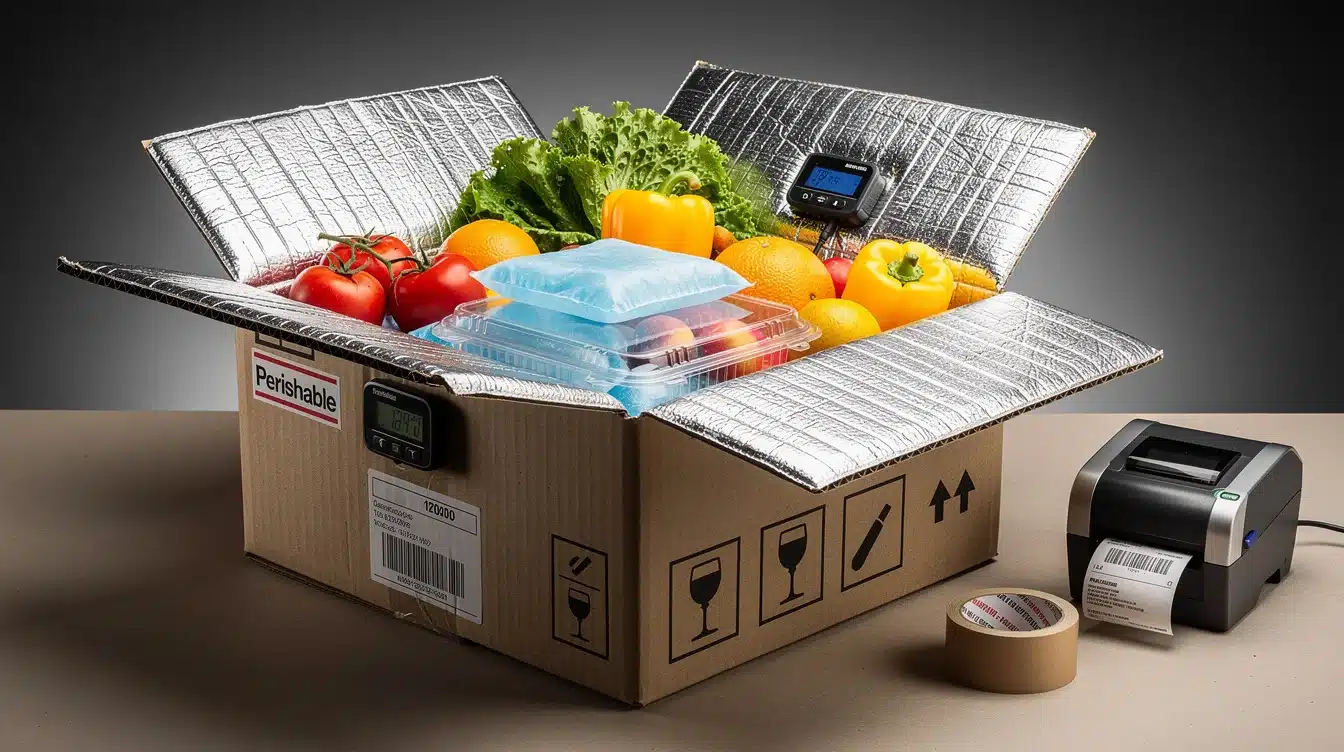
Most produce requires a narrow window: berries, leafy greens, and stone fruits need 0-4°C, while bananas and avocados demand 13-15°C to ripen correctly without spoiling. Reefer trucks maintain these ranges consistently, but the real advantage comes from real-time monitoring. Wireless sensor networks placed throughout your pallets, not just on the surface, catch temperature deviations the moment they happen.
Studies on blackberry shipments found that 57% of pallets arrived with insufficient remaining shelf life because temperature history wasn’t tracked properly. Installing multi-location sensors and monitoring centre-of-pallet temperatures gives you the accuracy needed to make dynamic routing decisions. Carriers that maintain cold chain product integrity document every excursion in audit-ready logs that satisfy FDA reviews.
Pre-cooling and Airflow Strategy
Pre-cooling produce before loading cuts transit spoilage dramatically. Produce that reaches the truck already at target temperature stays fresher longer because the refrigeration system maintains rather than struggles to achieve the right temperature. Even simple improvements in packing airflow during loading can reduce losses by roughly 10%, according to research on berries and bananas.
Poor airflow means cold air circulates around the outside of pallets while interiors stay warm, a common problem that modern reefer truck designs address, but only if you load strategically.
Applying FEFO Routing to Maximize Shelf Life
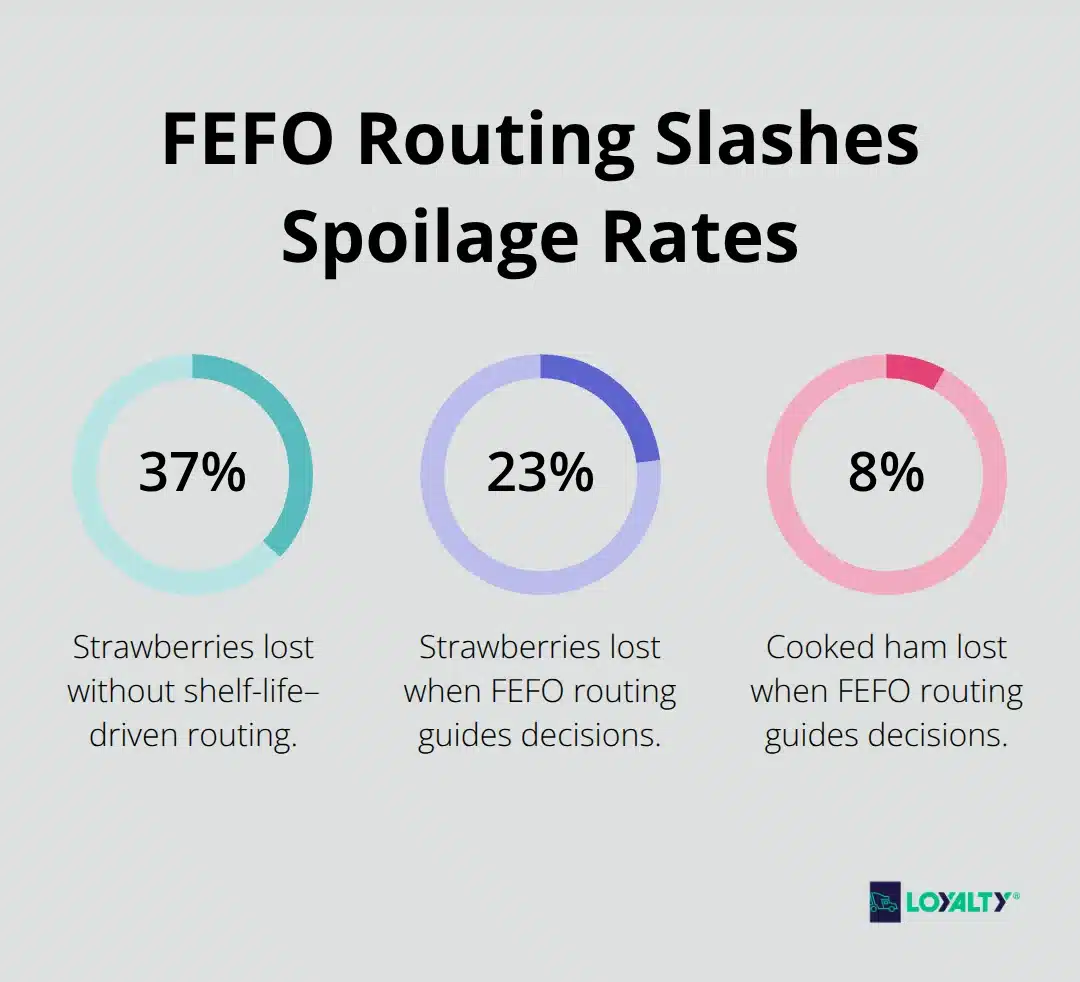
First-expired-first-out (FEFO) routing matches deliveries with remaining shelf life. This approach works because it accounts for expected transport duration and actual temperature history rather than just assuming products stay good until a printed expiration date. When you combine wireless sensors, accurate shelf-life modelling, and experienced carriers who understand cold chain basics, spoilage drops significantly, simulations show losses falling from 37% to 23% for strawberries and from 16% to 8% for cooked ham when shelf-life decisions drive routing.
The logistics providers you select must validate their refrigeration equipment regularly and maintain consistent temperature performance. Experienced perishable freight forwarders in cross-border fresh produce shipments understand how border delays affect product quality and plan accordingly. This foundation of temperature precision and monitoring sets the stage for the next critical element: how you package and handle your shipment to protect what refrigeration preserves.
Losing produce to centre-of-pallet temperature drift your current carrier won’t admit to?
Loyalty Logistics runs FSMA-compliant reefer capacity with wireless sensor networks across pallets, FEFO-aware dispatch, and food and beverage transport experience across U.S., Canada, and Mexico.
Packaging and Handling Best Practices
Moisture Control Protects Produce Quality
Packaging is your first line of defense against spoilage, and the wrong choice undermines everything temperature control accomplishes. Moisture is the enemy, soggy boxes collapse, trapped humidity accelerates mold growth, and wet produce deteriorates faster than dry produce exposed to the same temperature. Line the inside of your shipping boxes with plastic liners to create a moisture barrier. This single step prevents water from seeping into cardboard and keeps produce dry throughout transit. For berries, leafy greens, and other high-moisture items, this isn’t optional, it’s the difference between arriving fresh and arriving moldy.
Selecting Packaging Materials That Withstand Transit Stress
Select corrugated boxes designed for produce weight and stackability, not generic shipping boxes. Produce pallets get stacked, compressed, and shifted during loading, unloading, and transit. Flimsy packaging fails under pressure. Fill empty spaces inside boxes with paper or bubble wrap to prevent bruising and movement.

Frozen items and seafood demand insulated foam containers with gel packs or dry ice to maintain deep-freeze conditions. See our companion guide on how to ship frozen food safely if your mix includes frozen SKUs alongside fresh produce. The packaging material itself matters: sturdy, food-grade materials prevent contamination and resist punctures that expose contents to temperature swings. Research on strawberry and blackberry shipments shows that packaging integrity directly affects which products arrive with usable shelf life and which don’t. Poor packaging also means poor visibility, if a box tears open mid-transit, you won’t know until delivery, and the damage compounds.
Minimizing Time Outside Refrigeration
Speed during loading and unloading determines how long produce sits outside refrigeration. Every minute counts. Organize your dock so pallets move directly from cold storage into reefer trucks without delay. Pre-cooling works only if you don’t waste that benefit through slow loading. Train your team to load strategically: arrange pallets for proper airflow inside the truck rather than cramming them in randomly. Experienced cross-border carriers understand that border inspections can add hours to transit time, and they plan produce shipments accordingly, scheduling earlier in the week avoids weekend delays when inspections back up, and they coordinate with customs brokers to streamline documentation.
Real-Time Tracking Prevents Silent Failures
Minimize handling time during transit through the fastest feasible shipping option available. FedEx Priority Overnight delivers fresh produce from California to the East Coast within 24 hours, and while speed costs more, spoilage costs more. Partner with carriers who track shipments in real time and alert you to delays before they threaten product quality. Real-time visibility means you know immediately if a truck breaks down or traffic builds up, giving you time to reroute or notify receivers to prepare for slightly delayed arrival. This level of coordination separates reliable produce shipments from gambles.
The packaging and handling systems you establish form the backbone of spoilage prevention, but they only work when your carrier understands the regulatory landscape. Border crossings introduce new variables, inspections, documentation holds, and timing delays that can unravel even the best cold chain. Getting compliance right from the start keeps your shipments moving and your produce fresh.
Clearing Customs Without Losing Freshness
Border inspections and customs documentation create the largest risk window for fresh produce shipments. A produce truck can sit for hours waiting for inspection clearance, and every hour outside refrigeration degrades shelf life. We’ve seen shipments with perfect temperature control during transit fail at the border simply because paperwork wasn’t ready or inspectors couldn’t locate the right documentation quickly. The solution isn’t hoping inspections move fast, it’s preparing so thoroughly that your shipment clears without delays.
Documentation That Moves Shipments Fast
Commercial invoices, bills of lading, certificates of origin, and any required export or import licenses must be complete, accurate, and accessible before you reach the border. Inspectors need to verify commodity codes, weight, origin, and compliance with phytosanitary regulations within minutes, not hours. Electronic data interchange speeds this process dramatically compared to paper documents. When your customs broker and carrier coordinate before pickup, they can pre-file documentation electronically, which means inspectors review your shipment details before the truck arrives. This coordination cuts border wait time from hours to minutes in many cases.
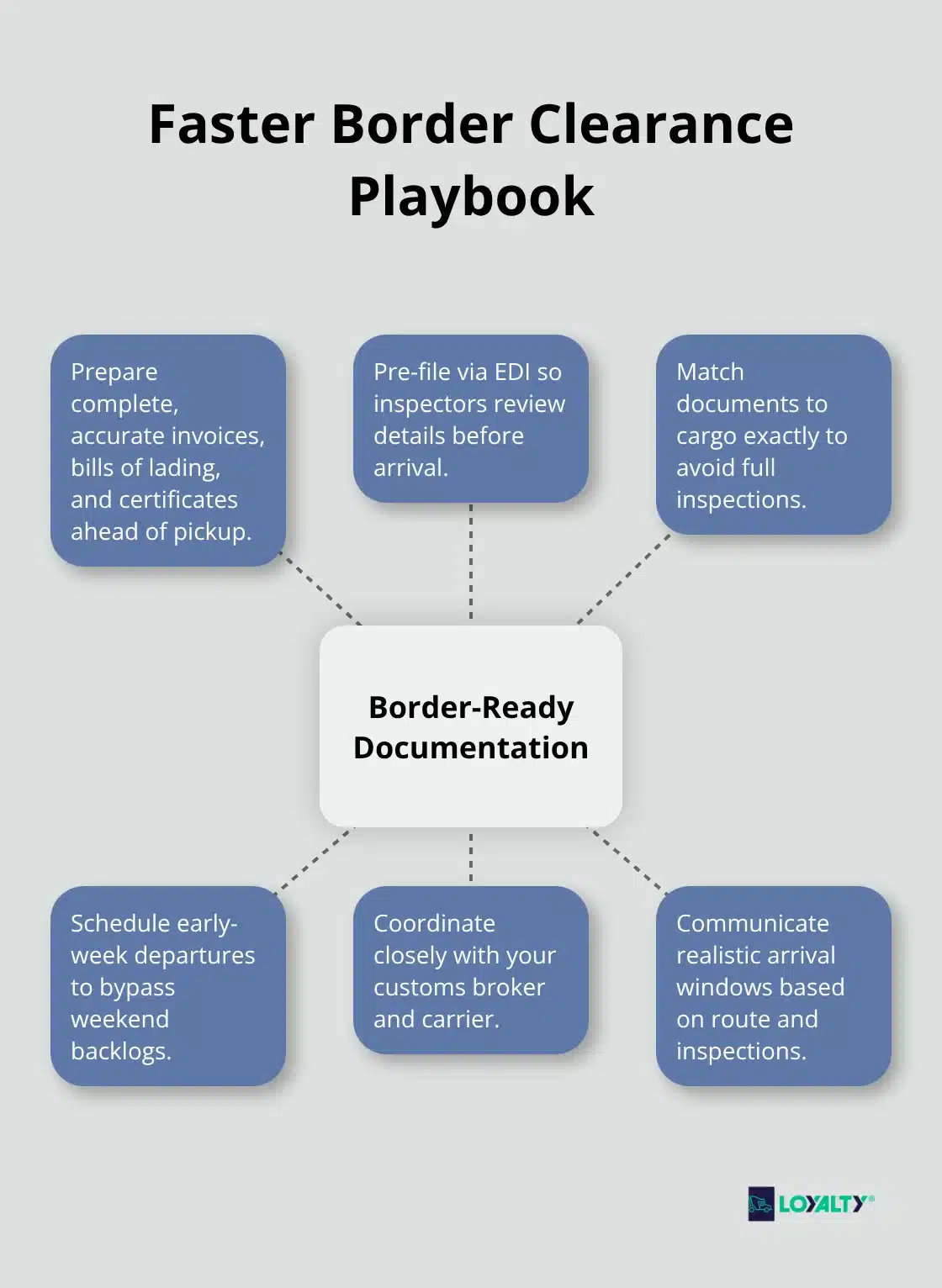
Your documentation must match your actual cargo exactly, if your invoice lists 40 pallets of strawberries but the truck carries 40 pallets plus loose boxes, inspectors will flag the discrepancy and conduct a full physical inspection. Opening boxes exposes produce to temperature swings and extends wait times significantly. Accuracy prevents these delays entirely.
Strategic Scheduling Avoids Inspection Backlogs
Experienced cross-border carriers understand that fresh produce inspection protocols differ between the U.S., Canada, and Mexico, and they know which inspectors prioritize speed versus thoroughness on specific routes. They schedule shipments strategically, early-week departures avoid weekend inspection backlogs when staffing is lighter and wait times stretch to 8 or more hours. They also maintain relationships with customs brokers who know the specific inspectors and inspection procedures at each border crossing, which means they anticipate questions and have answers ready before the inspection begins.
Carriers who specialize in fresh produce know that certain commodities face stricter scrutiny: berries often require pest inspection, leafy greens need pathogen testing verification, and imported stone fruits may need phytosanitary certificates. They build inspection time into their transit estimates and communicate realistic arrival windows to receivers, preventing the panic that leads to poor decisions at the border.
Partnering With Carriers Who Know the Border
When you partner with a carrier that maintains strong relationships at border crossings and coordinates with your customs broker before pickup, you’re not just getting a truck, you’re getting a partner who has pre-solved the compliance problems that delay other shipments. They verify that every document is complete and matches your cargo, and they know the fastest routes through each border crossing based on current inspection volumes and procedures. This level of preparation separates produce that arrives fresh from produce that arrives late.
Want a fresh produce partner that pre-files docs, coordinates dock times, and produces FSMA logs on request?
Tell us your products, temperature bands, lanes, and harvest volumes. We’ll quote reefer capacity with FEFO-aware dispatch, customs broker coordination, and continuous sensor logging across pallets.
Final Thoughts
Shipping fresh produce without spoilage requires three interconnected systems that work together seamlessly. Temperature control with real-time monitoring catches deviations before they damage your shipment, packaging and handling protocols protect what refrigeration preserves by keeping moisture out and produce intact through every transfer, and border compliance planning eliminates the delays that undo all your other efforts. Skip any one of these systems, and spoilage wins.
The logistics providers you choose determine whether these systems actually work in practice. A carrier with reefer trucks but no sensor network provides cold air without visibility into what’s happening at the centre of your pallets, while a broker who files paperwork after pickup instead of before creates border delays that spoil produce regardless of how well you packed it. A partner who understands how to ship fresh produce knows that every hour matters, that centre-of-pallet temperatures matter more than surface readings, and that strategic scheduling at borders prevents the inspection backlogs that cost you shelf life.
We at Loyalty Logistics specialize in timely, damage-free delivery across the U.S., Canada, and Mexico, and we maintain refrigerated and reefer trucks equipped for real-time monitoring while coordinating with customs brokers before your shipment reaches the border so inspections move fast. Explore our freight transportation services to see how we treat spoilage prevention as seriously as you do.
Frequently Asked Questions
What temperature should fresh produce be shipped at?
Fresh produce temperature ranges depend on commodity: berries, leafy greens, and stone fruits need 0-4°C; bananas and avocados need 13-15°C to ripen without spoiling; tropical fruits like mangoes hold at 10-13°C. Reefer trucks must maintain these ranges with wireless sensors placed throughout pallets (not just on the surface) to catch centre-of-pallet drift. Pre-cool produce to target temperature before loading; that single step cuts transit spoilage dramatically.
How do you prevent spoilage when shipping fresh produce?
Spoilage prevention combines four systems: precise temperature control with multi-location sensors (centre-of-pallet, not just surface), moisture-barrier packaging (plastic liners inside corrugated boxes), FEFO routing that matches deliveries with remaining shelf life, and strategic border scheduling that avoids weekend inspection backlogs. Simulations show losses falling from 37% to 23% for strawberries when these systems work together. The weakest link determines the outcome.
What documentation is needed for shipping fresh produce across borders?
Cross-border fresh produce requires commercial invoices, bills of lading, certificates of origin, phytosanitary certificates (especially for stone fruits and produce facing pest inspections), import or export licenses, and continuous temperature records from pickup through delivery. Electronic data interchange pre-files documentation before the truck arrives at the border, cutting wait time from hours to minutes. Documentation must match cargo exactly; any discrepancy triggers full physical inspections that expose produce to temperature swings.
How long can fresh produce last during shipping?
Shelf life during shipping depends on commodity and starting condition. Berries last 3-7 days under ideal cold chain, leafy greens 7-14 days, stone fruits 7-21 days, bananas 14-28 days when held at 13-15°C with proper ripening protocols. FEFO routing extends usable shelf life by matching deliveries with remaining quality rather than printed expiration dates. FedEx Priority Overnight delivers fresh produce coast-to-coast within 24 hours; expedited service costs more but spoilage costs more.
Ready to Ship Fresh Produce With FEFO Routing and Sensor Coverage?
Fresh produce rewards shippers who partner with carriers running sensor networks, FEFO dispatch, and pre-filed customs documentation. Tell us your products, temperature bands, lanes, harvest volumes, and arrival windows and we’ll quote reefer capacity with HACCP/FSMA documentation, continuous logging, and customs broker coordination.
Related Articles
- How to Ship Frozen Food Safely: Frozen-specific companion guide for SKUs that need -18°C and dry ice protocols.
- How to Choose a Perishable Freight Forwarder: Provider selection criteria, HACCP/FSMA certs, and 95%+ on-time benchmarks.
- Reefer Truck Guide: Keep Food Fresh in Transit: Equipment fundamentals that anchor every fresh produce decision.
Loyalty Logistics: Connecting businesses with opportunities across North America.
Written by: Carlos Robayo, Marketing Director at Loyalty Logistics
With expertise in logistics marketing and international trade, Carlos specializes in connecting businesses with efficient and reliable transport solutions for the North American market.