
Frozen food shipments fail for one reason: temperature breaks. A single degree of drift can spoil inventory, trigger regulatory fines, and damage your reputation.
At Loyalty Logistics, we’ve handled thousands of cross-border frozen shipments on refrigerated transport lanes. We know how to ship frozen food without the guesswork. This guide covers the regulations you must follow, the practices that work, and the mistakes that cost money.
What Regulators Actually Require for Frozen Food Shipments
FDA oversight of frozen food shipments centers on two non-negotiable demands: maintaining unbroken temperature control and producing documentation that proves you did it. The FDA doesn’t care about your intentions, it cares about your data. For frozen vegetables, the target range is -18°C to -23°C (roughly -0.4°F to -9.4°F). Any drift above that threshold accelerates microbial growth and enzymatic spoilage. Real-time temperature monitoring using IoT sensors isn’t optional if you want to demonstrate compliance. Automated alerts catch deviations before they become expensive problems. Your documentation must show continuous records from pickup through final delivery, with timestamps that match your shipping timeline. If a customs inspector asks why your shipment sat in a warm truck for two hours, you need data that proves it didn’t happen, or proof of what happened and why. Gaps in your temperature logs create immediate red flags that can trigger detention, rejection at the border, or product recalls.
Temperature Monitoring Creates Your Legal Record
Most logistics providers claim they monitor temperature, but few do it with the rigor regulators expect. You need systems that log readings every 15 to 30 minutes during transit, not spot checks at the warehouse. IoT data loggers track temperature, humidity, and light exposure while creating a verifiable digital trail that satisfies both FDA inspectors and your customers. This data becomes essential if a product arrives compromised, it either proves your cold chain held or identifies exactly where the failure occurred. Many companies skip this step because they assume a reefer truck automatically maintains temperature. That assumption costs money. Equipment fails, seals crack, and doors open during loading. Without continuous monitoring, you won’t know until the product arrives damaged. Carriers that maintain cold chain product integrity document every excursion in audit-ready logs that satisfy FDA reviews.
Documentation Prevents Delays and Disputes
Cross-border shipments demand consistent documentation across multiple documents: commercial invoices, packing lists, bills of lading, and temperature records. Any mismatch between what you declared and what inspectors find stops your shipment cold. Product descriptions must be specific, not frozen vegetables, but frozen broccoli florets in 2-pound bags.
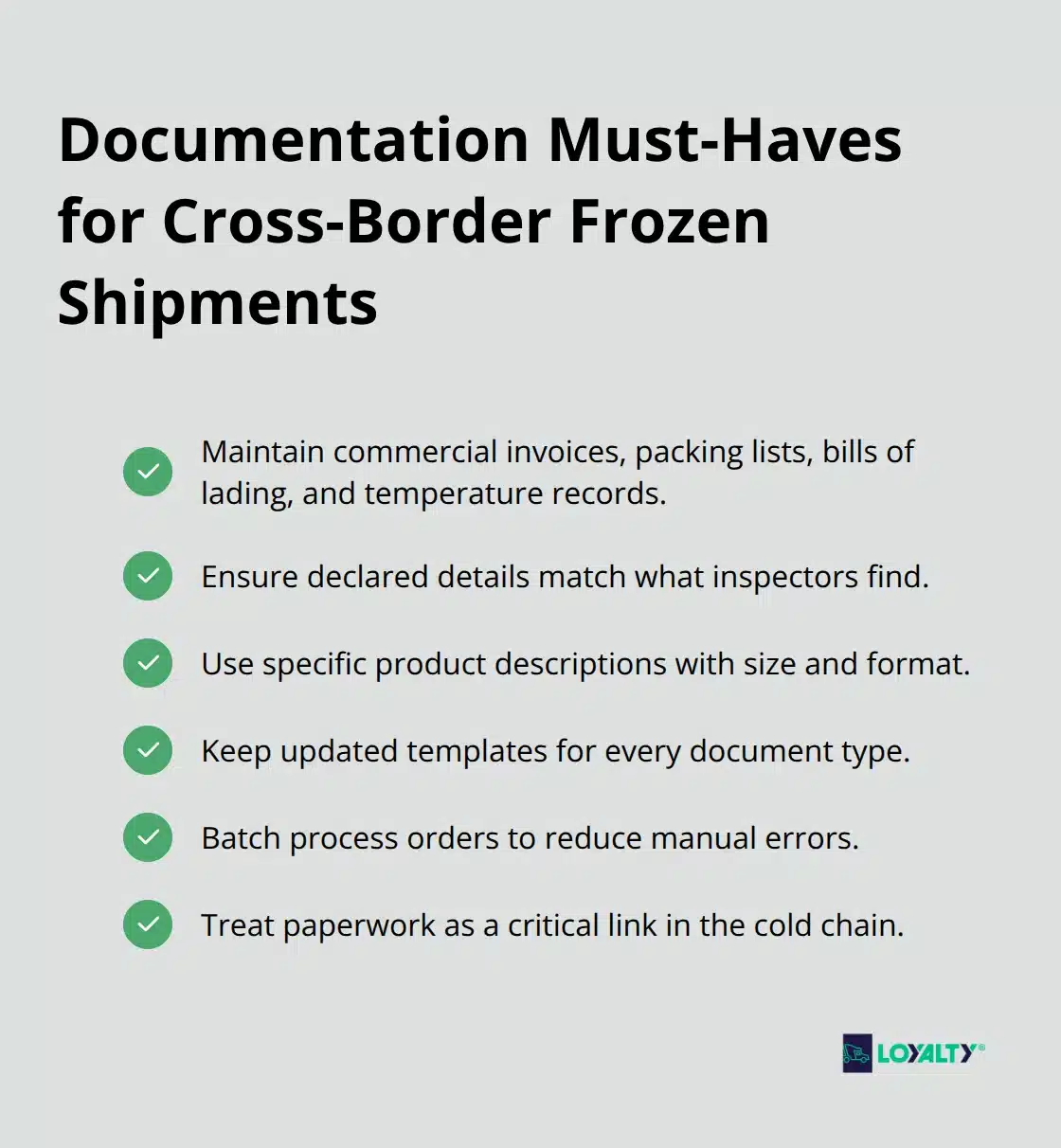
Vague descriptions trigger additional inspections and delays that can thaw product in hours. You should keep templates ready for every document type and update them as your product line changes. Batch processing multiple orders at once reduces manual handling errors that create documentation gaps. Your cold chain is only as strong as your paperwork.
What Happens When Documentation Fails
Inspectors use your paperwork to verify that your cold chain practices match your claims. Inconsistencies between your invoice and your packing list raise questions that halt shipments. Temperature records that don’t align with your declared transit time signal potential problems. Missing or incomplete documentation forces customs officials to hold your shipment for additional review, which extends exposure to ambient temperatures and increases spoilage risk. The cost of a single delayed shipment, lost product, regulatory fines, and damaged customer relationships, far exceeds the time it takes to maintain accurate records. This is why your next step involves selecting the right transportation partner who understands both the regulatory landscape and the operational demands of frozen food logistics.
Lost a shipment to a temperature break that should have been caught in transit?
Loyalty Logistics runs FSMA-compliant reefer capacity with continuous IoT logging at ±2°F tolerance, FDA-aware documentation, and food and beverage transport experience across U.S., Canada, and Mexico.
How to Build a Cold Chain That Actually Holds Temperature
Your reefer truck is only as reliable as the equipment inside it and the way you load it. We see shipments fail because companies assume a refrigerated trailer automatically maintains frozen conditions. It doesn’t. A reefer truck with a broken seal, a unit running 5 degrees too warm, or a door left open during loading will thaw product in hours. You must inspect your reefer unit before every shipment, check the door gasket for cracks, verify the thermostat reads accurately, and confirm the compressor cycles properly. Run a test cycle for 30 minutes before loading to confirm the unit reaches -18°C and holds it. Many carriers skip this step. Don’t.
Packaging Choices Determine What Survives Transit
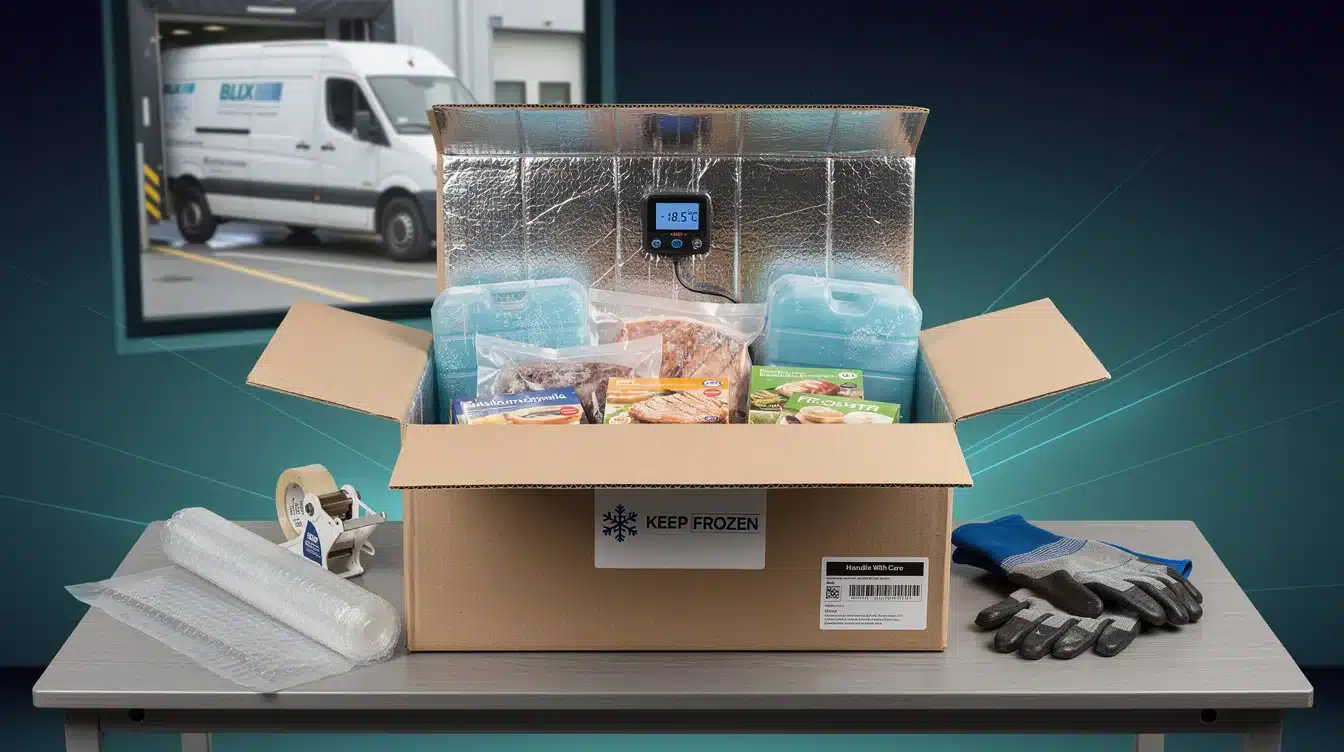
Your packaging choices matter equally to your equipment. Use insulated foam containers with at least 1.5 inches of thick walls and line the interior with a watertight barrier if your product can leak. Surround items with dry ice or gel packs positioned on all sides. Dry ice maintains -78°C and sublimates rather than melts, leaving no liquid, superior for frozen foods. However, dry ice requires hazmat labeling and documentation if you use air freight. For ground shipments under 48 hours, gel packs work if they reach room temperature before use, but they keep items cold at 34°F to 50°F, not frozen. Wet ice requires double-bagging in 2-mil plastic, sealed tightly with absorbent material underneath to catch melt.
Fill all empty spaces in your outer corrugated box with packing material to prevent shifting, which damages insulation integrity. Apply H-taping, three strips of 2-inch tape across the top, bottom, and seams, to prevent box separation during handling.
Loading and Unloading Create Your Largest Temperature Risk
Loading and unloading create the largest temperature exposure windows in your cold chain. Never load a reefer trailer that hasn’t reached target temperature first. Open doors only long enough to load product in organized stacks, never pile items loosely. Temperature abuse during loading kills more shipments than transit failures. If your facility temperature sits above 10°C, your frozen product begins thawing the moment it leaves the freezer. Work quickly, pre-stage your pallets, and have your reefer backed up and running before opening warehouse doors.
During unloading at your destination, the same principle applies, the receiving facility must have a functioning freezer ready before your trailer arrives. Coordinate arrival times with the receiver to minimize dock time. Delays at the receiving end extend your product’s exposure to ambient temperature, and by then you’ve already spent hours in transit.
Real-World Impact of Disciplined Procedures
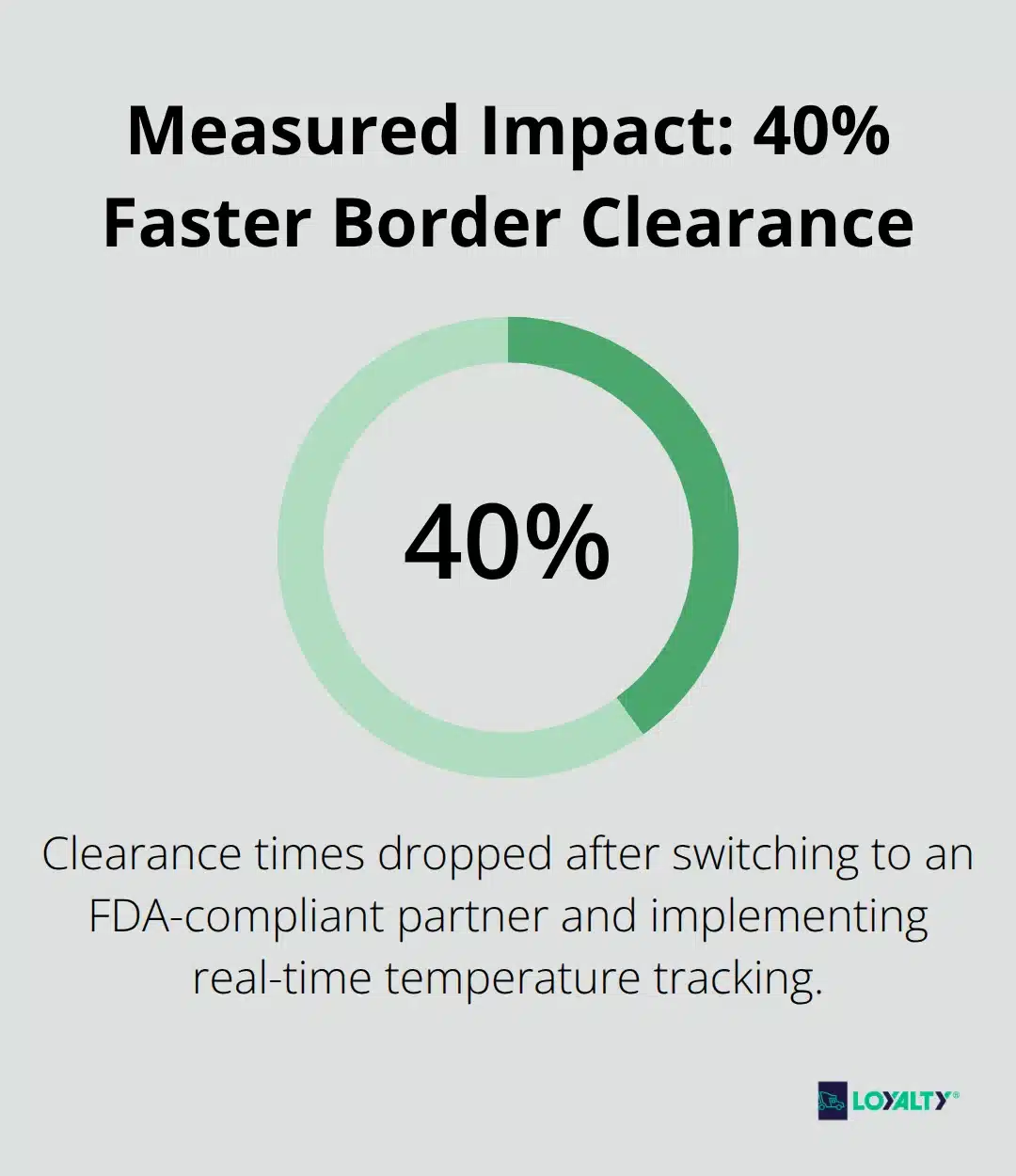
A Canadian snack brand faced repeated border delays because they used non-FDA-registered fulfillment partners and missed FDA Prior Notice deadlines. Once they switched to an FDA-compliant partner and implemented real-time temperature tracking during loading and transit, their clearance times dropped by 40%. The shift wasn’t complicated, it required disciplined procedures, proper equipment inspection, and a partner who understood that cold chain failures happen between the facility walls, not just on the highway.
These operational practices form the foundation of your cold chain, but they only work when paired with the right transportation partner. Your next step involves selecting a carrier and logistics provider who can execute these procedures consistently across every shipment.
Common Challenges and How to Avoid Them
Temperature swings during transit destroy frozen shipments faster than most logistics managers realize. Your reefer unit might hold -18°C in the warehouse, but the moment your trailer hits the highway, external heat, equipment drift, and handling gaps create real damage. Research from FedEx shows that a temperature shift of just a few degrees can cost thousands in spoilage. The problem isn’t always your equipment, it’s the gaps between temperature control points. Loading a frozen shipment into a reefer that hasn’t fully cooled down, opening doors for extended periods during stops, or receiving delays at your destination all create temperature abuse windows. These gaps compound over 24 to 72 hours of transit. Your IoT sensors will show these spikes in real time, but the product is already compromised. The only way to prevent this is aggressive pre-transit inspection and continuous communication with your carrier about arrival windows.
Pre-Delivery Coordination Prevents Temperature Abuse
Call your receiving facility 24 hours before delivery to confirm they have freezer space ready. Coordinate dock times to minimize unloading delays. If your product sits on a warm dock for two hours waiting for a freezer slot, that damage becomes irreversible. Your carrier must know the exact arrival window and the receiving facility’s capacity before the trailer leaves your warehouse. This coordination eliminates the most common cause of temperature abuse, unplanned delays at the destination. Many logistics managers treat arrival coordination as optional. It isn’t. A single two-hour delay at the receiving dock can thaw product that survived 48 hours of transit perfectly.
Moisture Damage Runs Parallel to Temperature Problems
Condensation forms when warm air inside your package meets cold product surfaces, creating ice crystals that damage texture and structure. Frozen vegetables lose cell integrity when ice crystals form and refreeze, and baked goods become soggy when moisture accumulates inside packaging. Your insulated foam container must have a watertight liner if your product can leak or sweat. Gel packs and dry ice both create moisture as they cool, gel packs melt into liquid, and dry ice sublimates into carbon dioxide gas that can trap humidity inside sealed packages. Never fully seal your liner when using dry ice; leave small venting gaps to allow gas to escape. For gel packs, place absorbent material underneath to catch melt and prevent pooling.
Route Planning Directly Impacts Both Temperature and Moisture Exposure
Shipping frozen foods Monday through Wednesday cuts total transit time because carriers have clearer schedules and fewer holiday delays. Avoid Friday shipments that extend into weekends when receiving facilities may have reduced staffing and slower unloading.
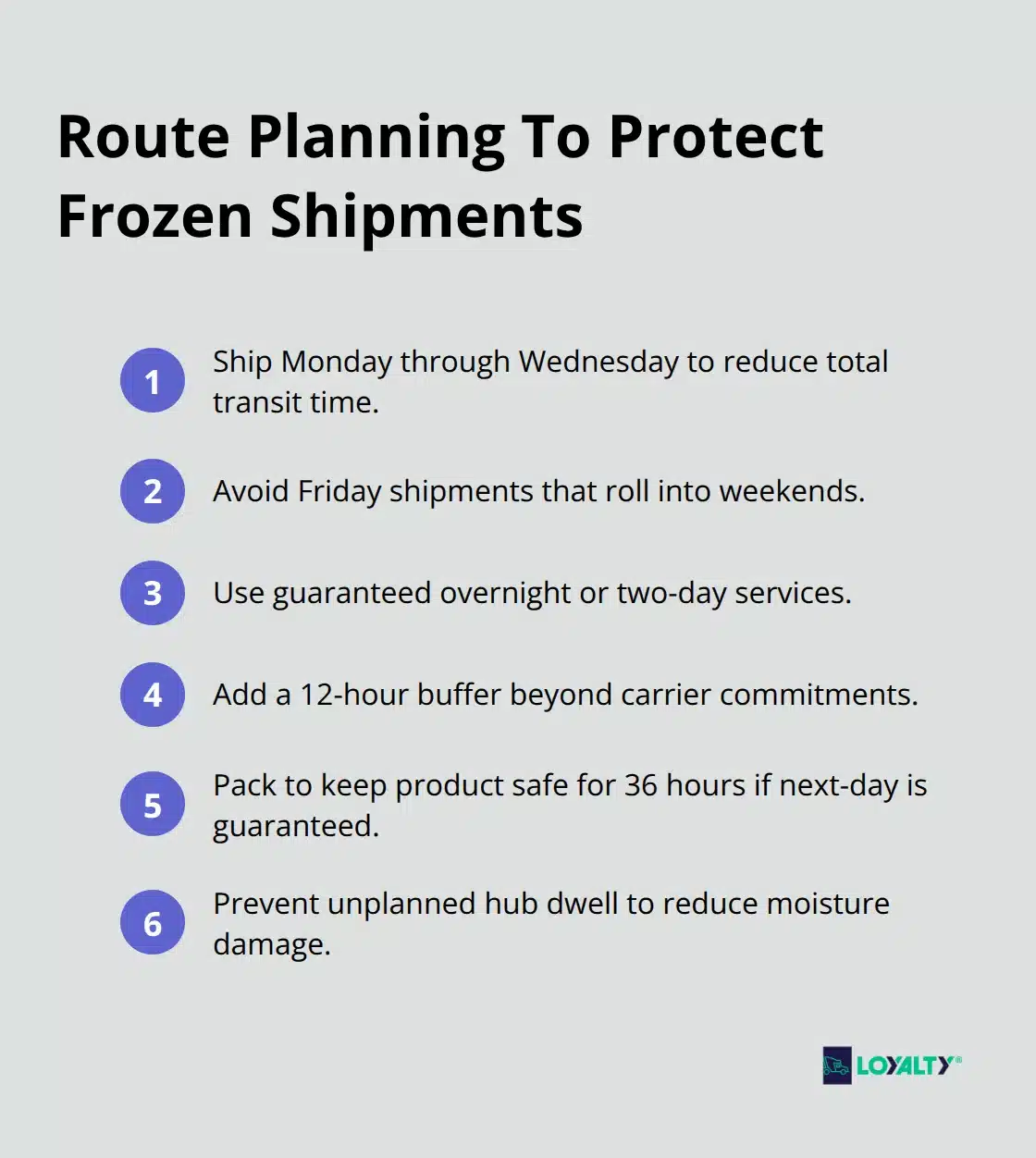
Overnight or two-day services with guaranteed delivery windows protect against the unpredictable delays that destroy cold chains. A shipment that sits in a distribution hub for 12 unplanned hours accumulates moisture damage that becomes visible weeks later when customers open damaged products.
Calculate your transit time with a 12-hour buffer beyond your carrier’s commitment. If your guarantee is next-day delivery, your packaging and coolant must keep product safe for 36 hours. This margin accounts for unexpected delays without compromising product quality. The difference between a Friday shipment and a Wednesday shipment often determines whether your product arrives frozen or partially thawed, and your customer never knows the difference until they open the box.
Need a frozen freight partner that produces FSMA logs, dock coordination, and 95%+ on-time data on request?
Tell us your products, temperature bands, and lanes. We’ll quote reefer capacity with HACCP/FSMA documentation, continuous logging, and 95%+ on-time performance backed by audit-ready records.
Final Thoughts
Safe frozen food shipping rests on three interconnected elements: regulatory compliance, operational discipline, and the right logistics partner. FDA requirements protect your product, your customers, and your business, they aren’t bureaucratic obstacles. Temperature monitoring, accurate documentation, and coordinated procedures eliminate the guesswork that destroys margins and damages customer relationships.
The practices outlined in this guide address the actual failure points in cold chains. Loading into unprepped reefers, skipping pre-delivery coordination, and accepting vague carrier commitments create the gaps where product spoils. A Canadian snack brand reduced border delays by 40% simply by implementing disciplined procedures and partnering with an FDA-compliant provider, which proves that treating cold chain operations as a system rather than isolated steps produces measurable results.
Professional logistics partners execute these procedures consistently across every shipment, not just the ones that receive attention. We at Loyalty Logistics specialize in how to ship frozen food safely with the operational rigor this guide describes, and we operate refrigerated and reefer trucks across the U.S., Canada, and Mexico to handle the regulatory landscape and operational demands of cross-border frozen food logistics. Explore our freight transportation services to see how we improve your cold chain operations and reduce the spoilage costs embedded in your supply chain.
Frequently Asked Questions
What temperature should frozen food be shipped at?
FDA-compliant frozen food shipments hold between -18°C and -23°C (roughly -0.4°F to -9.4°F). Frozen vegetables, baked goods, and frozen meats all require this range to prevent microbial growth and enzymatic spoilage. Reefer units should be pre-cooled to target temperature before loading, and IoT data loggers should record readings every 15 to 30 minutes throughout transit to create a verifiable digital record satisfying FDA inspectors and customers.
How long can frozen food stay frozen during shipping?
Insulated foam containers with 1.5-inch walls plus dry ice maintain frozen temperatures for 48 to 72 hours when properly packed. Dry ice holds -78°C and sublimates without leaving liquid, ideal for frozen foods. Gel packs only hold 34°F to 50°F (refrigerated, not frozen) and work for ground shipments under 48 hours. For longer transit, use reefer trailers with continuous temperature monitoring. Always add a 12-hour buffer beyond your carrier guarantee to account for unexpected delays.
What documentation is required for shipping frozen food?
Cross-border frozen food shipments require commercial invoices, packing lists, bills of lading, and continuous temperature records from pickup through delivery. Product descriptions must be specific (frozen broccoli florets in 2-pound bags, not just frozen vegetables). Cross-border shipments also need FDA Prior Notice filings for U.S. imports, FSMA-compliant temperature logs, and chain of custody records that match declared transit times. Documentation mismatches trigger inspections that thaw product in hours.
What’s the difference between dry ice and gel packs for frozen shipments?
Dry ice holds -78°C, sublimates into carbon dioxide gas (no liquid mess), and is required for true frozen shipments. It needs hazmat labeling for air freight but not ground. Gel packs hold 34°F to 50°F (refrigerated, not frozen) and melt into liquid, requiring absorbent material to catch pooling. Use dry ice for anything that must stay below freezing; use gel packs only for chilled (not frozen) ground shipments under 48 hours. Never fully seal a liner with dry ice; leave venting gaps for CO2 to escape.
Ready to Ship Frozen Food Without Temperature Surprises?
Frozen food rewards shippers who pick partners with documented FSMA certifications, audit-ready temperature logs, and 95%+ on-time records. Tell us your products, temperature bands, lanes, and volumes and we’ll quote reefer capacity with HACCP/FSMA documentation, continuous logging, and dock coordination protocols.
Related Articles
- Reefer Truck Guide: Keep Food Fresh in Transit: Equipment fundamentals that anchor every frozen freight decision.
- How to Ship Food Safely and Efficiently: Broader food shipping playbook covering both chilled and frozen lanes.
- Ensuring Product Integrity in Cold Chain Logistics: Audit-ready monitoring and logging that satisfy FDA reviews.
Loyalty Logistics: Connecting businesses with opportunities across North America.
Written by: Carlos Robayo, Marketing Director at Loyalty Logistics
With expertise in logistics marketing and international trade, Carlos specializes in connecting businesses with efficient and reliable transport solutions for the North American market.

