
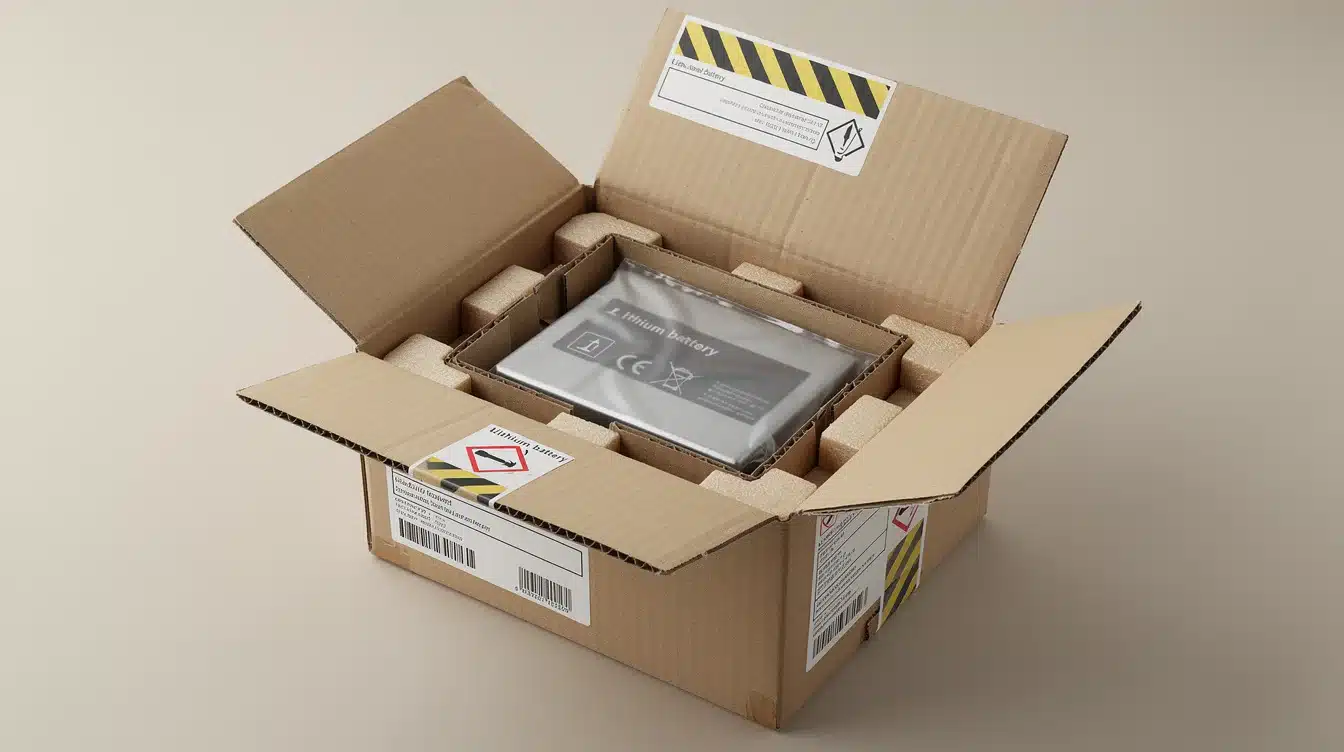
Lithium batteries power everything from smartphones to electric vehicles, but shipping them wrong can trigger fires, regulatory fines, and supply chain shutdowns. The rules governing how to ship lithium batteries are strict, and they vary by country, carrier, and transport mode.
At Loyalty Logistics, we’ve guided hundreds of shippers through these requirements on cross-border freight lanes without delays or compliance headaches. This guide covers what you need to know to move lithium batteries safely and legally across borders.
Understanding DOT and IATA Requirements for Lithium Battery Shipments
Lithium batteries fall under Class 9 dangerous goods in transport, which means they’re subject to strict regulations from the U.S. Department of Transportation (DOT) and the International Air Transport Association (IATA). The DOT governs ground and some air shipments under 49 CFR 173.185, while IATA controls all international air transport. These aren’t suggestions, they’re legal requirements, and violations carry substantial fines and potential criminal penalties.
Classification Standards That Determine Your Shipping Method
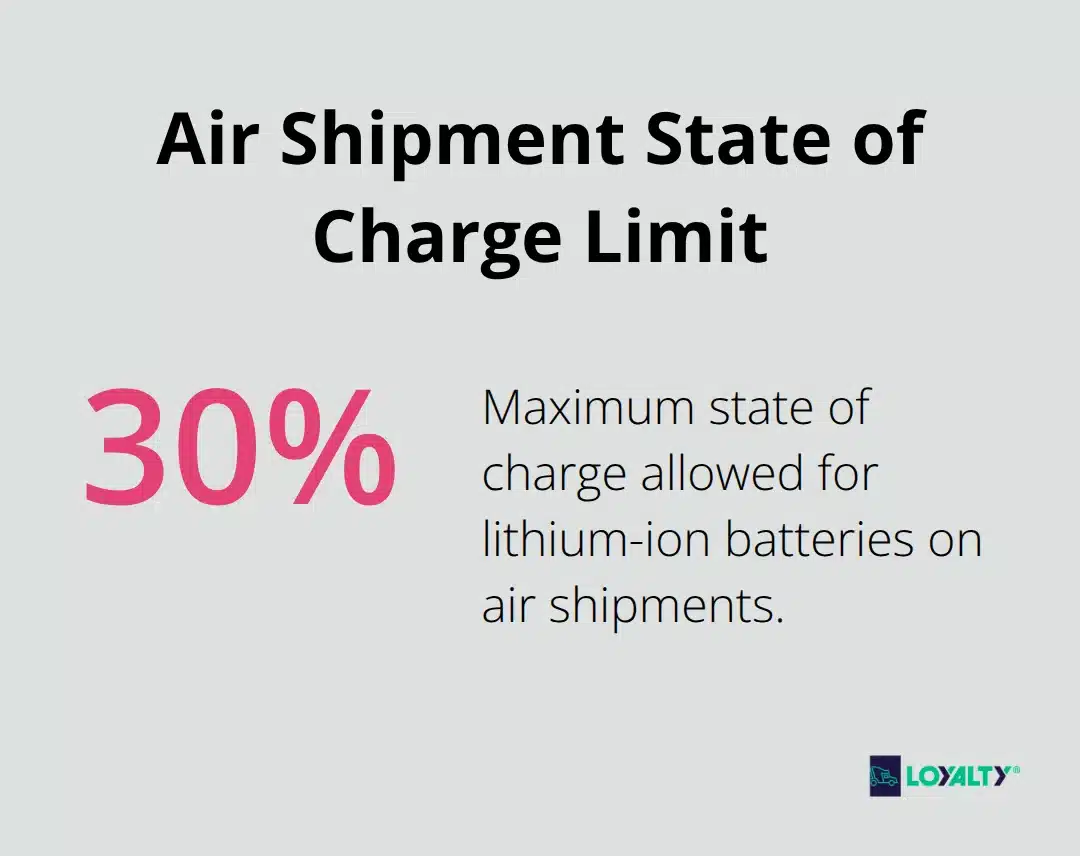
The classification depends on battery type and configuration. Lithium-ion batteries shipped alone use UN 3480, while lithium-ion batteries packed with or contained in equipment use UN 3481. Lithium metal batteries follow UN 3090 or UN 3091 respectively. For air shipments specifically, state of charge cannot exceed 30% of full capacity, this is non-negotiable and must be documented before shipment leaves your facility. Damaged, defective, or recalled batteries are prohibited entirely; carriers will refuse these shipments outright, and for good reason. A single thermal event in cargo can compromise an entire aircraft. The right hazmat trucking company understands these classifications by heart and will reject shipments that fail to meet them before they hit the road.
Packaging Standards That Prevent Short Circuits and Movement
Lithium batteries shipped alone require individual inner packaging to prevent short circuits, then placement in a rigid outer container with cushioning to prevent movement during transit. If batteries are packed with equipment, terminals must be protected with tape or caps, and the device must be powered off and incapable of activation. The outer packaging must meet UN specifications and be strong enough to withstand the transport environment without leakage or damage. Specialized hazmat truck equipment adds another containment layer that standard dry van trailers cannot match.
Labeling and Documentation That Regulators Demand
Labeling is where many shippers fail. Each shipment requires the appropriate IATA Dangerous Goods label, the correct UN number, and the shipping name clearly marked on the outer package. You’ll also need a Dangerous Goods Shipper’s Declaration, this document proves you’ve classified the shipment correctly and packed it according to regulations. The PHMSA Lithium Battery Guide for Shippers provides step-by-step procedures, and consulting it directly matters more than relying on carrier websites alone.
Documentation must include test summary documents confirming compliance with UN 38.3 testing standards; since January 2022, manufacturers are required to make these available upon request. Keep copies of everything, test reports, declarations, carrier confirmations, for at least two years in case regulators or insurers ask questions. Proper documentation transforms a risky shipment into a traceable, defensible one.
How Carrier Selection Affects Your Compliance Path
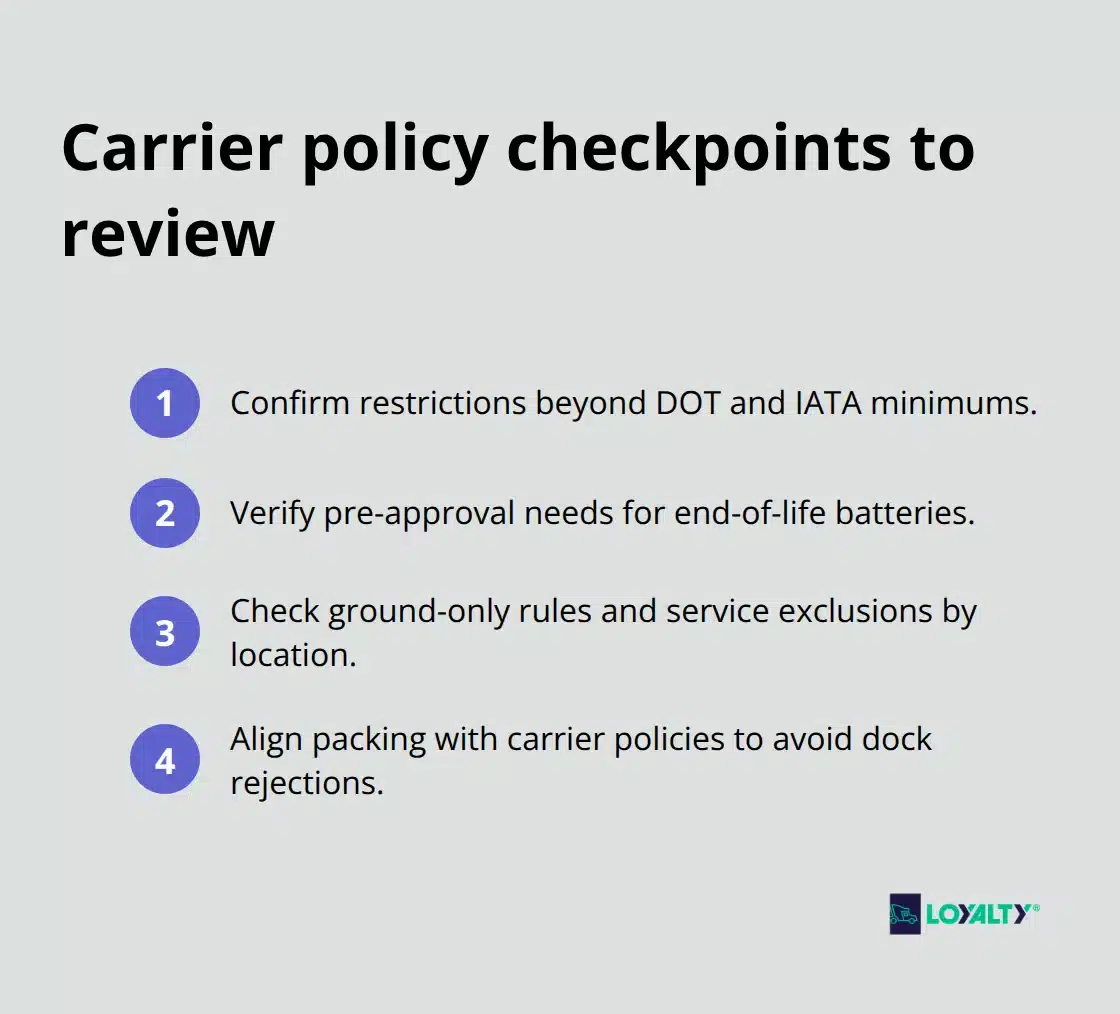
Different carriers impose additional restrictions beyond DOT and IATA minimums. Some prohibit damaged batteries entirely, while others require pre-approval for end-of-life battery shipments. Ground-only restrictions apply to certain battery conditions, and service exclusions affect Alaska, Hawaii, and Puerto Rico. Understanding your carrier’s specific policies before packing prevents costly rejections at the dock.
Need a hazmat-qualified carrier for lithium-ion cells, EV battery packs, or end-of-life cores?
Loyalty Logistics coordinates cross-border hazmat freight with UN 3480/3481 documentation, 30% SoC verification, and Class 9 placarding across U.S., Canada, and Mexico industrial manufacturing supply chains.
Storing and Inspecting Lithium Batteries Before Shipment
Temperature Control Prevents Thermal Runaway
Temperature control is the first line of defense against lithium battery failures. Batteries stored above 25°C degrade faster and increase thermal runaway risk during transport. Maintain storage temperatures between 15-25°C in a dry environment with humidity below 60% to prevent corrosion and electrolyte breakdown. Heat accelerates chemical reactions inside cells, shortening lifespan and raising fire risk. If your facility lacks climate control, invest in it now rather than absorb losses from damaged inventory or rejected shipments. Battery manufacturers tested under UN 38.3 standards account for storage temperature in their safety assessments, so deviating from recommended ranges invalidates those test claims.
Visual Inspection Catches Damage Before Packing
Inspection before shipment separates compliant shippers from those facing carrier rejections and regulatory penalties. Every battery must pass visual checks for physical damage, swelling, corrosion, or leakage before packing. Damaged, defective, or recalled batteries are prohibited entirely under DOT and IATA rules, and carriers enforce this strictly. Document your inspection process with photos and date stamps; this creates a defensible record if a battery fails in transit. Personnel handling batteries need hands-on training on hazard recognition, not generic online modules. The FAA maintains an interactive Lithium Battery Air Incidents chart showing real cargo fires and near-misses, and reviewing these cases with your team builds practical awareness that classroom training alone cannot.
State of Charge Verification Protects Air Shipments
State of charge verification is non-negotiable for air shipments. Lithium-ion batteries cannot exceed 30% state of charge, and you must document how you verified this before the shipment leaves your facility. Many shippers skip this step and face shipment holds at the carrier’s dock.
Use manufacturer documentation or a battery analyzer to confirm state of charge in writing. Your personnel need to understand why this matters: a single thermal event in cargo can destroy an aircraft. Generic safety briefings miss this connection. Instead, show your team the specific hazards and consequences relevant to your operation.
Carrier-Specific Training Reduces Friction
Carriers like UPS offer lithium battery training webinars covering classification, packaging, and shipping procedures specific to their network requirements. Taking this training signals to your carrier that you take compliance seriously and reduces friction during shipments. Your team gains clarity on what each carrier expects, preventing costly rejections at the dock.
End-of-Life Batteries Require Pre-Approval and Special Packaging
End-of-life battery shipments carry higher fire risk because their internal condition is unknown. The EPA provides guidance on battery recycling and responsible disposal, but shipping used batteries requires thermal-event containment packaging and pre-approval from your carrier. Ground-only restrictions apply, and service to Alaska, Hawaii, and Puerto Rico is typically excluded. Planning ahead prevents discovering these restrictions when you’ve already packed the shipment. Contact your carrier well before you pack end-of-life batteries to confirm eligibility and packaging requirements for your specific shipment.
Moving Lithium Batteries Across Borders Without Delays
Selecting the Right Carrier for Your Battery Type and Route
The carrier you choose determines whether your shipment arrives on schedule or sits rejected at a border crossing. Ground transport within North America offers more flexibility than air, but carrier restrictions vary significantly. DHL Express prohibits shipping damaged or defective lithium batteries within its network entirely, while UPS allows ground shipments to the lower 48 states under specific conditions but excludes Alaska, Hawaii, and Puerto Rico for certain battery types. FedEx and other carriers impose their own thresholds for state of charge, packaging specifications, and pre-approval requirements. Request current lithium battery shipping guidelines in writing from your carrier and confirm your specific battery type qualifies for their network before committing to a shipment. Cross-border carriers running ground routes through Canada and Mexico must comply with both U.S. DOT and destination-country regulations simultaneously, which adds complexity but eliminates air transport restrictions that cap state of charge at 30 percent.
Understanding Cross-Border Regulations Beyond DOT and IATA
If you ship to Mexico regularly, verify that your batteries meet NOM standards and that your carrier holds proper permits for cross-border hazmat transport. Many shippers assume their carrier handles this verification automatically and face shipment holds when documentation gaps emerge at the border. The PHMSA Hazardous Materials Information Center at 1-800-HMR-4922 answers compliance questions directly, and consulting them before your first cross-border shipment prevents costly mistakes. Documentation must cross borders intact, so maintain separate folders for DOT paperwork, IATA declarations, and destination-country permits.
Securing Proper Insurance and Liability Coverage
Standard cargo insurance excludes dangerous goods claims, so you need specific hazmat cargo insurance coverage that names lithium batteries explicitly. Request a Certificate of Insurance from your carrier that confirms they maintain coverage for lithium battery thermal events and that your shipment qualifies under their policy limits. Insurance and liability coverage for lithium battery shipments must reflect the actual hazard level, not generic cargo rates. This distinction protects your company if a thermal event occurs in transit.
Working with Customs Brokers to Reduce Border Delays
A licensed Mexican customs broker familiar with lithium battery imports reduces delays significantly because they know which countries require pre-notification, which require import permits, and which impose additional testing requirements beyond UN 38.3. Customs delays increase when documentation is incomplete or when inspectors discover missing test reports or state-of-charge verification records. Communication with border authorities before shipment reduces surprise inspections and holds. Some ports and border crossings have dedicated hazmat inspection teams with specific expertise in battery shipments; requesting inspection at these facilities rather than general cargo facilities accelerates clearance.
Want a hazmat-cleared cross-border partner that pre-verifies UN 38.3 docs, Class 9 placards, and Mexican NOM compliance?
Tell us your battery chemistry, UN classification, SoC at pickup, lanes, and volumes. We’ll quote cross-border freight with hazmat-qualified carriers, vetted Mexican brokers, and PHMSA-aware documentation.
Final Thoughts
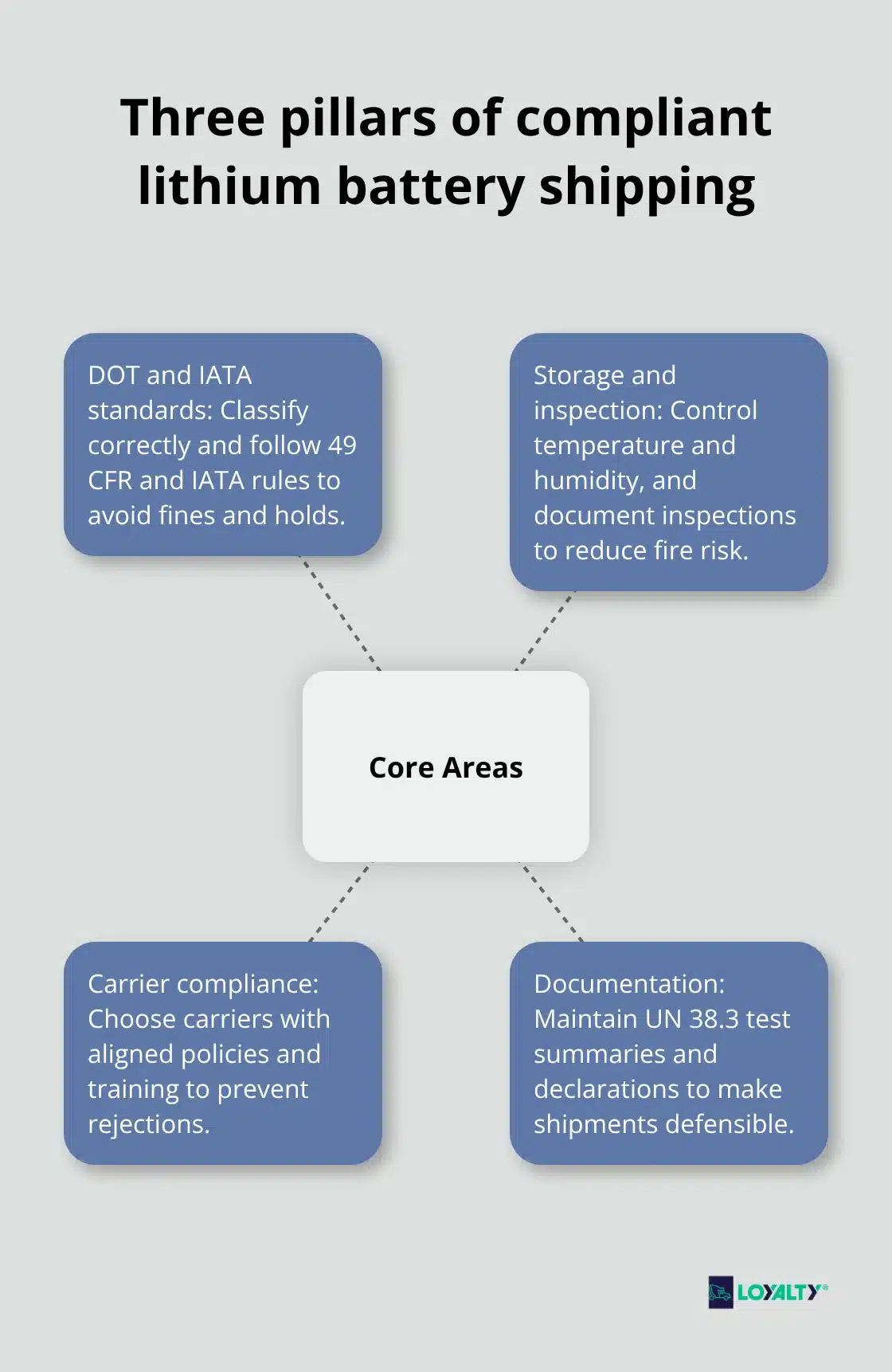
Shipping lithium batteries safely requires attention to three core areas: understanding DOT and IATA classification standards, maintaining proper storage and inspection protocols, and selecting carriers that enforce compliance at every step. Skipping any of these creates risk, regulatory fines, supply chain delays, or worse, a thermal event that damages cargo and reputation. The regulations exist because lithium battery fires in transit have real consequences for aircraft, ground transport, and personnel.
The practical reality is that how to ship lithium batteries correctly depends on knowing your specific battery type, state of charge, destination, and carrier restrictions before you pack anything. Documentation matters as much as packaging, test reports, state-of-charge verification, and Dangerous Goods declarations transform a risky shipment into a defensible one. Your personnel need hands-on training that connects hazard recognition to real incidents, not generic safety modules.
We at Loyalty Logistics have guided hundreds of shippers through these requirements without delays or compliance headaches. Our network spans the U.S., Canada, and Mexico with advanced logistics that handle hazmat shipments with precision and maintain the documentation, carrier relationships, and regulatory expertise that keep your lithium battery shipments moving safely and legally across borders. Explore our freight transportation services to learn how we streamline your cross-border battery transport while keeping compliance costs down.
Frequently Asked Questions
What are the DOT and IATA requirements for shipping lithium batteries?
Lithium batteries are Class 9 dangerous goods regulated by the U.S. DOT under 49 CFR 173.185 for ground and some air shipments, and by IATA for all international air transport. Requirements include UN-specification outer packaging, individual inner packaging to prevent short circuits, IATA Dangerous Goods labels, the correct UN number (3480/3481 for lithium-ion, 3090/3091 for lithium metal), and a Dangerous Goods Shipper’s Declaration. UN 38.3 test summary documents must accompany the shipment. Violations carry substantial fines and potential criminal penalties.
What is the maximum state of charge for shipping lithium batteries by air?
Lithium-ion batteries shipped by air cannot exceed 30% state of charge (SoC) under IATA Dangerous Goods Regulations. This limit is non-negotiable and must be verified and documented before the shipment leaves your facility. Use manufacturer documentation or a battery analyzer to confirm SoC in writing. Ground transport has no equivalent 30% cap, which is why many lithium battery shippers use cross-border ground routes through Canada and Mexico instead of air for cells and packs.
Can damaged lithium batteries be shipped?
Damaged, defective, or recalled lithium batteries are prohibited entirely under DOT and IATA rules; carriers will refuse these shipments outright. End-of-life batteries can be shipped but require thermal-event containment packaging and pre-approval from your carrier, plus ground-only routing in most cases. Service to Alaska, Hawaii, and Puerto Rico is typically excluded for end-of-life cores. Contact your carrier and review EPA recycling guidance well before packing.
What UN numbers apply to lithium battery shipments?
Four UN numbers cover most lithium battery shipments: UN 3480 (lithium-ion batteries shipped alone), UN 3481 (lithium-ion batteries packed with or contained in equipment), UN 3090 (lithium metal batteries shipped alone), and UN 3091 (lithium metal batteries packed with or contained in equipment). The correct UN number must appear on outer packaging, shipping documents, and the Dangerous Goods Declaration. Misclassification voids carrier acceptance and triggers regulatory action.
Ready to Ship Lithium Batteries Without Compliance Surprises?
Lithium battery freight rewards shippers who partner with carriers that already speak UN 38.3, Class 9 placarding, and Mexican NOM. Tell us your battery chemistry, UN classification, SoC at pickup, lanes, and volumes and we’ll quote cross-border freight with hazmat-qualified carriers and PHMSA-aware documentation.
Related Articles
- How to Choose a Hazmat Trucking Company: Provider selection criteria for Class 9 hazmat carriers including lithium batteries.
- What is a Hazmat Truck and When is it Needed?: Equipment fundamentals for moving dangerous goods including lithium-ion shipments.
- How to Choose the Right Cargo Insurance Coverage: Hazmat-specific coverage that names lithium batteries and thermal-event claims.
Loyalty Logistics: Connecting businesses with opportunities across North America.
Written by: Carlos Robayo, Marketing Director at Loyalty Logistics
With expertise in logistics marketing and international trade, Carlos specializes in connecting businesses with efficient and reliable transport solutions for the North American market.

