
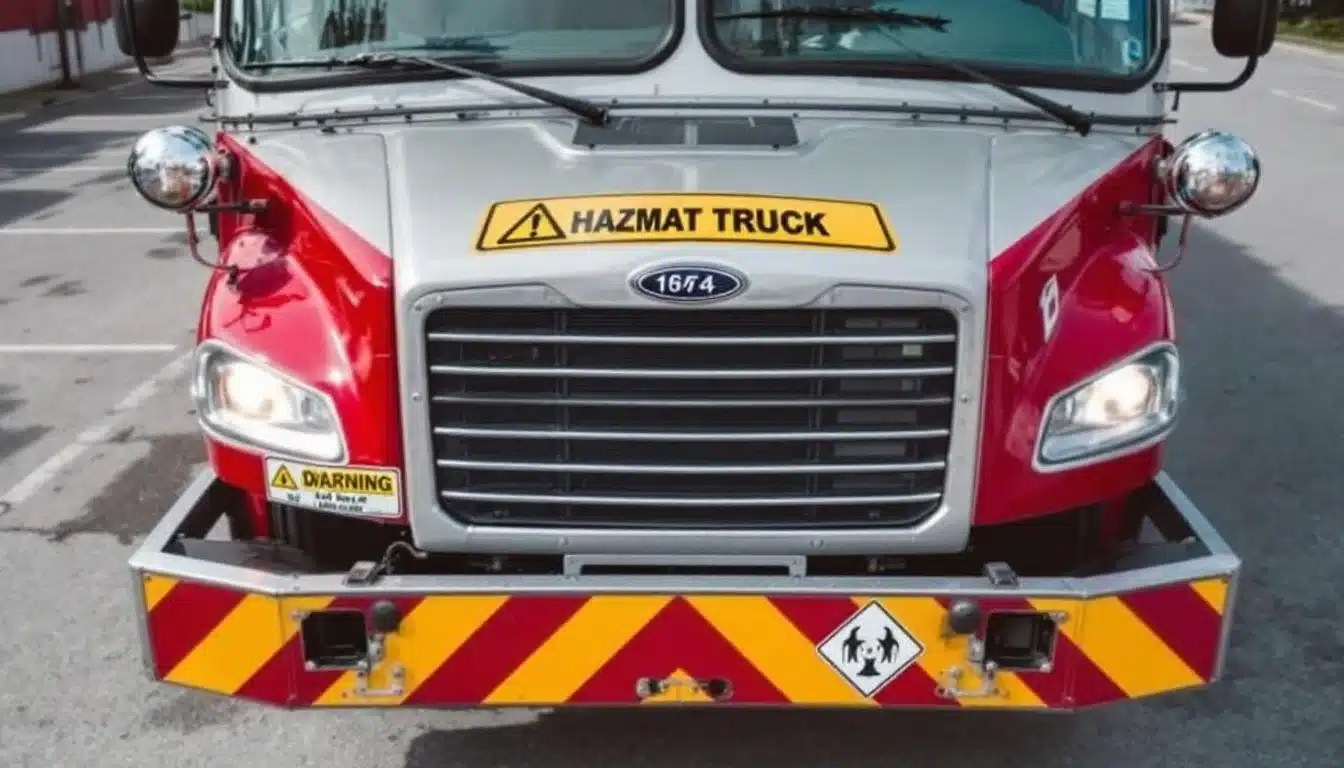
Transporting hazardous materials requires specialized knowledge and strict adherence to safety protocols. A single mistake while operating a hazmat truck can lead to catastrophic consequences for drivers, communities, and the environment, which is why selecting qualified hazmat trucking companies matters as much as driver training itself.
We at Loyalty Logistics understand that proper training and preparation are non-negotiable when handling dangerous goods. This guide covers the essential safety practices every hazmat driver and shipper must master.
What Regulations Must Hazmat Drivers Follow
The Federal Motor Carrier Safety Administration establishes strict standards for hazmat transportation that apply to every shipment, regardless of distance. Under 49 CFR Parts 100-185, drivers must obtain a Commercial Driver’s License with hazmat endorsement, which requires them to pass both written and skills tests plus complete a Transportation Security Administration background check. The process takes 60-90 days and costs approximately $150-200, but this investment protects your business from penalties that reach $79,976 per incident (according to 49 U.S.C. § 5123).
Documentation Requirements That Matter
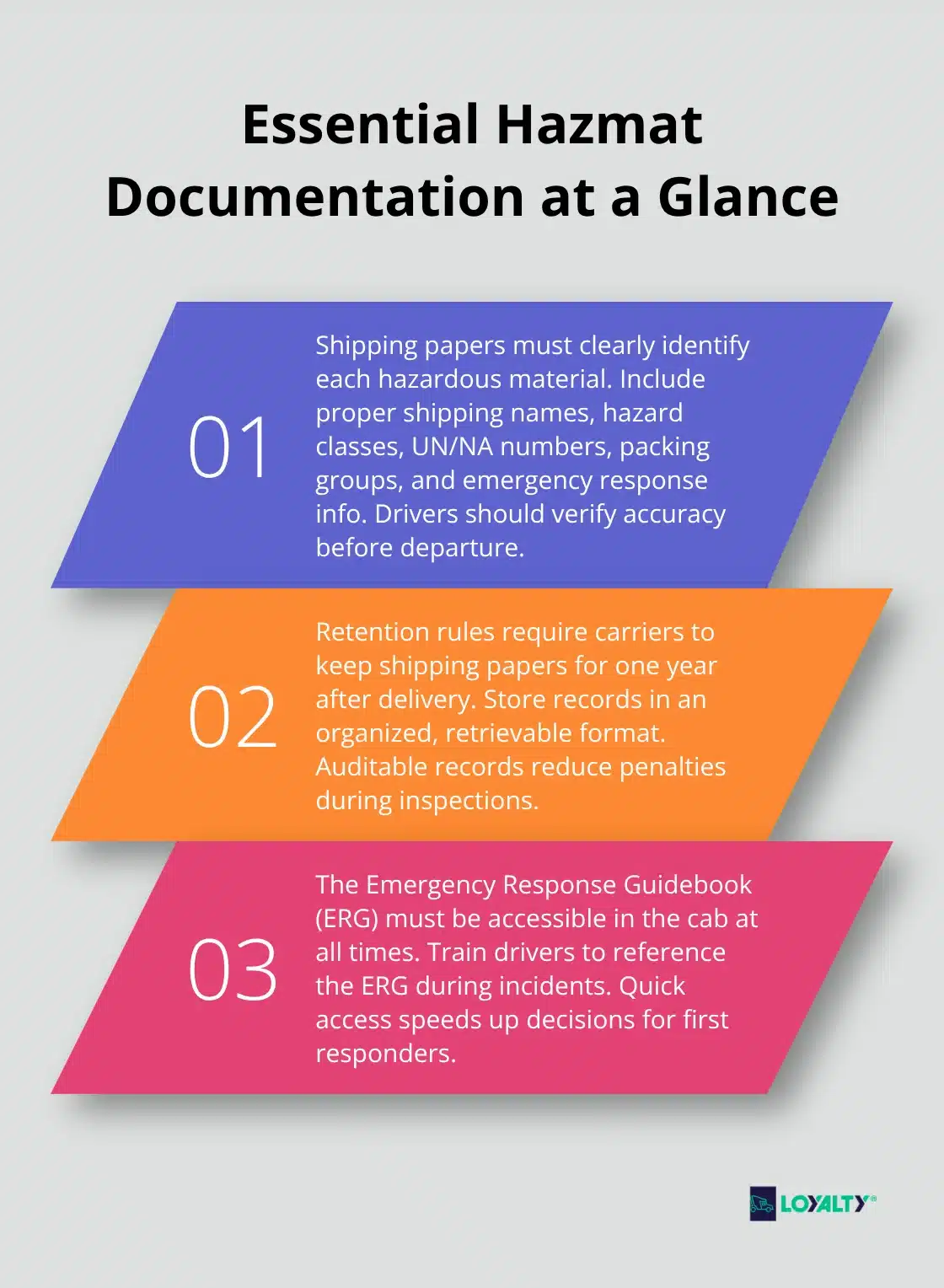
Shipping papers must accompany every hazmat load and contain precise material descriptions, emergency response information, and contact details for immediate assistance. These documents stay with the driver throughout transport and require retention for one year after delivery. The Emergency Response Guidebook must remain accessible in the cab at all times – the Pipeline and Hazardous Materials Safety Administration has distributed over 18 million copies to emergency responders nationwide.
Classification and Placarding Standards
The DOT classifies hazardous materials into nine specific categories, from explosives to miscellaneous dangerous goods. Each class requires distinct placards that remain visible on all four sides of the vehicle, and drivers must verify placard accuracy during pre-trip inspections. Materials that exceed 1,001 pounds or meet certain criteria need a Hazardous Materials Safety Permit under 49 CFR 385.400. Improper placarding creates immediate liability and puts first responders at risk during emergencies.
Training and Certification Updates
Hazmat employees must complete recurrent training every three years or whenever job responsibilities change. This training includes general awareness, function-specific safety protocols, and security measures that protect both drivers and communities. Companies must maintain training records and verify that all personnel handle hazardous materials according to current regulations.
Once you understand these regulatory foundations, the next step involves thorough preparation before each trip begins.
Shipping hazmat and need a carrier with current CDL hazmat endorsements?
Loyalty Logistics maintains hazmat-certified drivers, current placarding, and Emergency Response Guidebooks across U.S., Canada, and Mexico operations. Tell us your hazmat class and lanes.
What Pre-Trip Procedures Keep Hazmat Drivers Safe
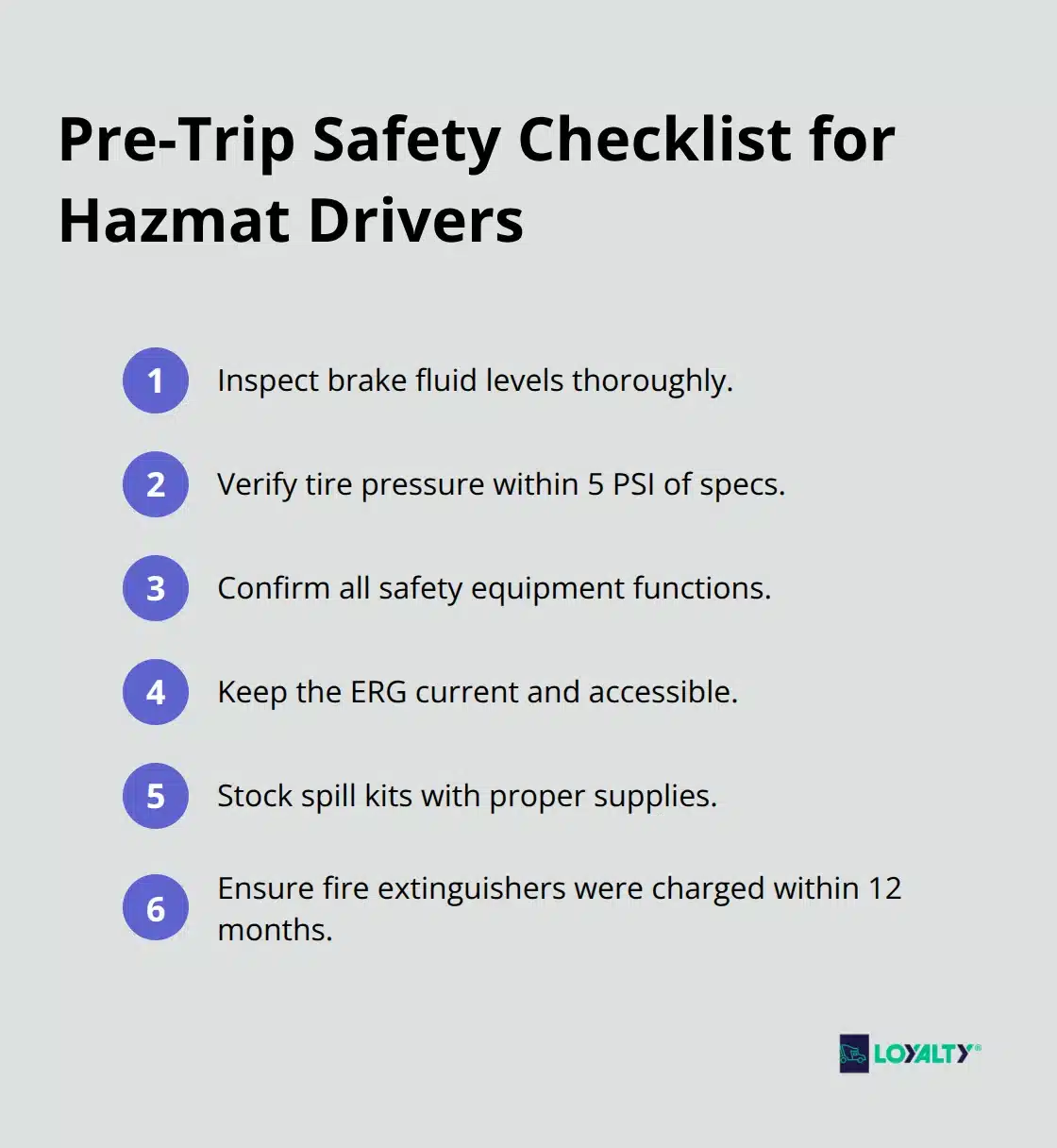
Professional hazmat drivers follow comprehensive preparation protocols that prevent unnecessary risks. Start with a vehicle inspection that exceeds standard DOT requirements – check brake fluid levels, verify tire pressure within 5 PSI of manufacturer specifications, and confirm that all safety equipment operates correctly. The Emergency Response Guidebook must remain current and accessible, spill kits must contain proper supplies, and fire extinguishers need charges within the last 12 months.
Document every inspection result because the Federal Motor Carrier Safety Administration prioritizes hazmat vehicle inspections based on violation history. A single missed defect can trigger a roadside inspection that costs hours and thousands in penalties. When evaluating freight brokerage services that handle hazmat shipments, ask about their carrier vetting process and whether vendors document daily pre-trip inspections.
Container Integrity and Load Verification
Container integrity checks require more than visual inspection – physically test latches, seals, and valve connections before you accept any shipment. Weight distribution affects vehicle stability, so verify that cargo weight stays within axle limits and that proper methods prevent movement during transport. The motor carrier bears responsibility for proper securement under federal regulations (not the shipper).
Check compatibility between different materials with segregation tables in 49 CFR 177.848 because incompatible substances can create explosive reactions. Many drivers skip this step, but preventable incidents from improper load combinations occur too frequently.
Strategic Route Planning
Plan routes that avoid tunnels, bridges with weight restrictions, and densely populated areas whenever possible. Contact state transportation departments for current construction zones and hazmat route restrictions, as some states prohibit certain materials on specific highways. Identify hospitals and emergency services along your route, plus backup routes for unexpected closures. For cross-border hazmat shipments, route planning grows more complex because Mexican and Canadian regulations differ from U.S. federal rules.
GPS systems designed for commercial vehicles help avoid height restrictions, but always verify hazmat-specific requirements. Schedule rest stops at approved locations only – parking regulations for hazmat vehicles are stricter than standard commercial trucks, and violations create immediate safety risks.
Emergency Preparedness Protocols
Prepare emergency contact information and verify that communication devices work properly before departure. Test radio equipment and confirm that cell phone coverage exists along your planned route. Keep personal protective equipment accessible and verify that spill response materials match the specific hazards you transport.
These preparation steps create the foundation for safe transport, but proper execution requires specific techniques once you begin the journey.
How Should You Drive a Hazmat Truck Safely
Hazmat trucks demand fundamentally different techniques than standard commercial vehicles. Maintain speeds at least 5-10 mph below posted limits because hazardous materials create momentum that affects braking distance and vehicle stability. The National Highway Traffic Safety Administration reports that large trucks need up to two football field lengths to stop safely, and this distance increases significantly with hazardous cargo. Following distances must extend to 10-15 seconds behind other vehicles rather than the standard 4-6 seconds for regular trucks.
Speed Control and Distance Management
Research from commercial driver monitoring systems shows that speeds between 70-80 km/h correlate with higher distraction incidents among hazmat drivers. Never exceed 55 mph on highways regardless of posted limits, and reduce speed to 45 mph in urban areas or construction zones. Fatal crashes in work zones continue to increase, which makes speed reduction mandatory for hazmat operations. Check mirrors every 8-10 seconds to monitor blind spots and scan ahead constantly for potential hazards that require gradual speed adjustments.
Weather Response and Road Adaptation
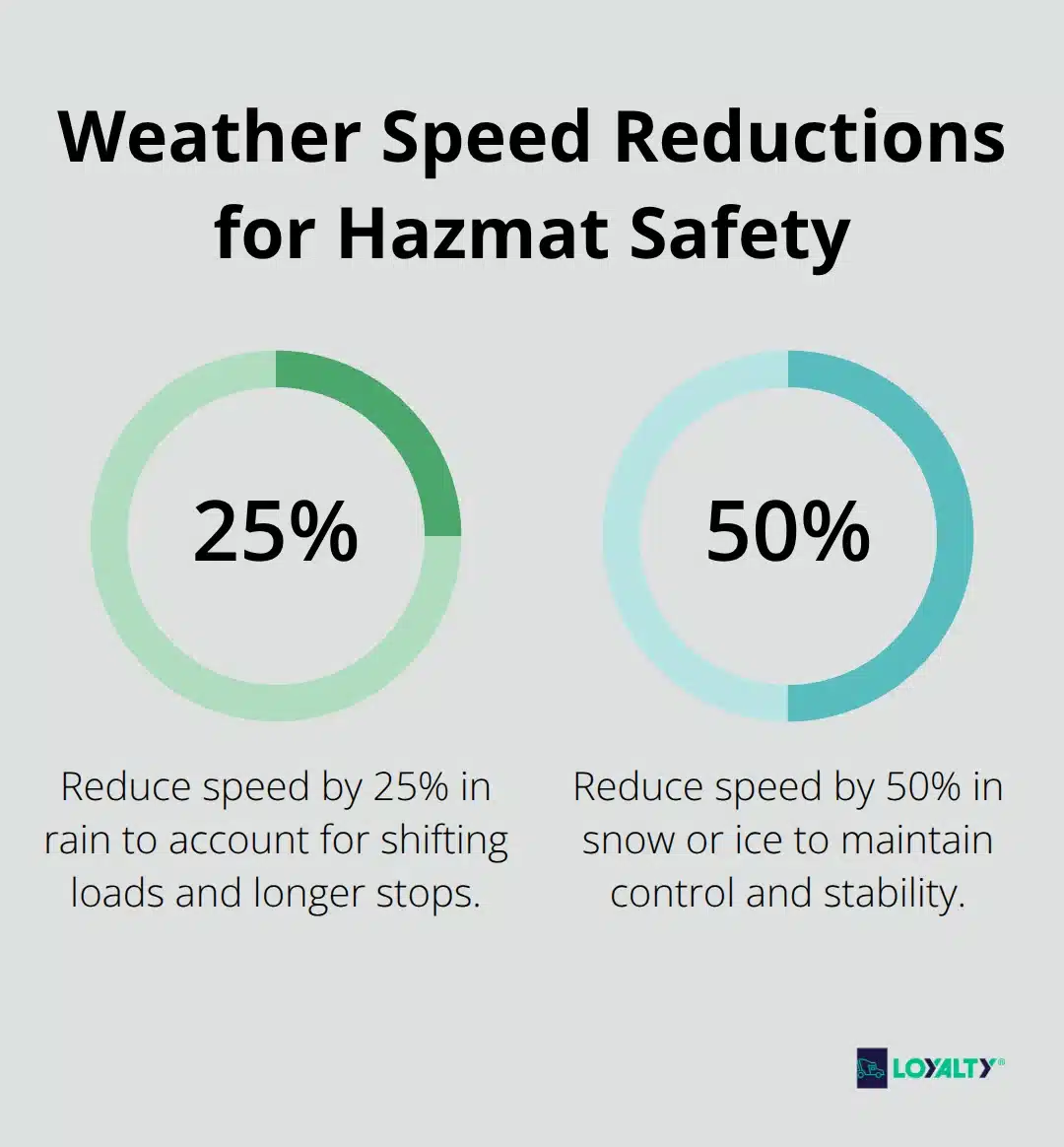
Reduce speeds by 25% in rain and 50% in snow or ice conditions because hazardous materials shift cargo weight distribution unpredictably. Wet roads double stopping distances, while icy conditions can increase stopping requirements by 400%.
Plan alternate routes when weather services predict severe conditions because some materials react dangerously to temperature extremes or moisture exposure (particularly Class 3 flammable liquids). Cancel trips rather than risk exposure to conditions that compromise vehicle control or material stability.
Strategic Parking and Rest Protocols
Park only at designated truck stops that allow hazmat vehicles – many facilities prohibit dangerous goods within 300 feet of buildings or fuel pumps. Schedule mandatory vehicle inspections every 2-3 hours during long hauls to check cargo securement and detect potential issues before they become emergencies. Avoid parking near schools, hospitals, or residential areas, and never leave hazmat vehicles unattended for more than brief periods. Use electronic logging devices to track Hours of Service compliance because fatigue management prevents the majority of preventable hazmat incidents (studies show fatigue correlates with travel times of 3-6 hours).
Need hazmat capacity quoted with full compliance baked in?
Tell us your hazmat class, packaging, and lanes. We’ll quote with hazmat-certified drivers, placarding, ERG access, and route plans that avoid restricted tunnels and bridges so nothing surprises you on shipment day.
Final Thoughts
Safe hazmat truck operation demands strict compliance with federal regulations, thorough preparation protocols, and defensive techniques that protect drivers and communities. Companies must invest in continuous education because regulations change frequently and new materials enter the transportation stream. Organizations that maintain strict compliance standards experience fewer incidents and avoid penalties that reach nearly $80,000 per violation.
Professional hazmat transportation requires specialized expertise that most businesses lack internally. Drivers need current certifications, comprehensive safety protocols, and experience with dangerous goods handling procedures. The complexity of hazmat regulations makes internal management both costly and risky for companies without dedicated transportation expertise. When evaluating hazmat trucking companies, verify their certification records, request audit history from the past 24 months, and confirm equipment maintenance schedules align with the materials you ship. Selecting carriers familiar with cross-border shipping requirements becomes essential for hazmat moves into Canada or Mexico, where placarding rules and routing restrictions differ from U.S. federal standards. Comparing carrier rates with a freight shipping cost estimator reveals where hazmat surcharges hit hardest before you book.
We at Loyalty Logistics provide specialized hazmat truck transportation solutions across North America with experienced drivers who maintain current certifications. Our team follows comprehensive safety protocols that protect your hazardous materials throughout transport (from pickup to final delivery). Rather than risk compliance violations or safety incidents, partnering with qualified professionals allows you to focus on core business operations while maintaining proper safety standards. Explore our freight transportation services to discuss how we can support your hazmat shipping requirements.
Frequently Asked Questions
What should you look for in a hazmat trucking company?
Look for hazmat trucking companies with current CDL hazmat endorsements for all drivers, documented training records (recurrent training every 3 years per FMCSA), proper placarding for all 9 hazmat classes, Emergency Response Guidebooks accessible in every cab, and carrier-side compliance with 49 CFR Parts 100-185. Request audit history from the past 24 months and verify their Hazardous Materials Safety Permit status under 49 CFR 385.400 if your loads exceed 1,001 pounds or meet permit-trigger criteria.
What certifications do hazmat carriers need?
Hazmat carriers need drivers with CDL hazmat endorsements (requiring written and skills tests plus a TSA background check, $150-$200 cost, 60-90 day process), recurrent training every 3 years, and Hazardous Materials Safety Permits for shipments over 1,001 pounds. The carrier itself must maintain documented compliance with 49 CFR Parts 100-185, current shipping papers, segregation tables (49 CFR 177.848) for incompatible materials, and proper placarding visible on all four sides of the vehicle.
How are hazmat trucking companies different from standard carriers?
Hazmat trucking companies operate under stricter speed limits (5-10 mph below posted limits, never exceeding 55 mph on highways), longer following distances (10-15 seconds vs 4-6 for standard trucks), restricted parking (300+ feet from buildings, not near schools or hospitals), tunnel and bridge avoidance routing, and mandatory pre-trip inspections that exceed standard DOT requirements. Penalty exposure reaches $79,976 per incident under 49 U.S.C. § 5123, which is why hazmat-trained drivers and certified equipment cost more.
How do hazmat trucking companies price their services?
Hazmat trucking companies charge premiums above standard freight rates to cover certified drivers, specialized placarding, route restrictions, slower transit times (speed limits below standard), required safety equipment (spill kits, charged fire extinguishers, ERGs), and higher insurance liability. Pricing varies by hazmat class, distance, and route restrictions; Class 3 flammable liquids carry different surcharges than Class 8 corrosives. Use a freight shipping cost estimator to compare carrier quotes apples-to-apples before booking.
Ready for a Hazmat Trucking Partner That Has the Certifications?
Hazmat trucking rewards shippers who pick carriers with documented compliance, not the cheapest quote. Tell us your hazmat class, packaging, lanes, and volumes and we’ll quote with certified drivers, complete placarding, ERG access, and route plans that respect tunnel and bridge restrictions across U.S., Canada, and Mexico.
Related Articles
- What Is a Hazmat Truck and When Is It Needed?: Sibling primer on hazmat truck design and use cases.
- Cross Border Shipping: Complete Guide [2026]: Cross-border hazmat shipments require additional regulatory navigation.
- Best Freight Brokerage Services: Brokers that vet hazmat carriers prevent compliance gaps before booking.
Loyalty Logistics: Connecting businesses with opportunities across North America.
Written by: Carlos Robayo, Marketing Director at Loyalty Logistics
With expertise in logistics marketing and international trade, Carlos specializes in connecting businesses with efficient and reliable transport solutions for the North American market.

