

Food spoilage costs the logistics industry billions annually, and temperature control failures are a leading culprit. A reefer truck is your frontline defense against waste, but only when operated with precision.
At Loyalty Logistics, we’ve seen firsthand how proper refrigeration management transforms supply chains. This guide covers the systems, practices, and strategies that keep perishables intact from pickup to delivery.
How Reefer Trucks Control Temperature and Preserve Cargo Quality
Modern reefer units maintain precise temperature ranges inside insulated trailers, enabling transport within a fraction of a degree of your target setpoint. The refrigeration system sits atop the trailer and runs independently from the truck engine, so temperature stays stable even during stops or idle time. Most reefer trucks operate between negative 25 degrees Celsius and positive 8 degrees Celsius, covering fresh produce, dairy, meat, seafood, frozen foods, and pharmaceuticals. Multi-temperature reefers offer separate compartments at different temperatures, letting you transport diverse products in one trip without cross-contamination or quality loss.
Real-Time Monitoring Catches Problems Before Spoilage Starts
Real-time monitoring is non-negotiable. Modern systems use continuous temperature sensors that log data every few minutes and send alerts if conditions drift outside spec. Without this visibility, you won’t catch a failed compressor or a door seal leak until spoilage has already started. The UN ATP guidelines specify maximum temperatures for perishables during transport-raw milk at 6 degrees Celsius or below, red meat at 7 degrees Celsius or below, meat products and pasteurized milk at 6 degrees Celsius or below. Staying compliant means your product arrives legally saleable and your reputation stays intact.
Right-Sizing Temperature Settings Saves Energy and Protects Quality
Many logistics managers default to the coldest setting, thinking lower equals safer. This assumption costs you money and can actually harm certain products. Pre-cool your reefer to the target range before loading, then maintain that setpoint throughout transit. For example, fresh produce respires and generates heat, so undetected heat buildup inside an improperly loaded trailer causes quality defects even if the unit runs cold.
Ethylene-emitting produce accelerates spoilage of nearby items, so use ethylene absorption sachets to prevent this damage in transit. Chilled shipments between 0 and 5 degrees Celsius extend shelf life but demand strict contamination control and heavy monitoring. Frozen shipments preserve quality longer with lower spoilage risk, though you still need vigilance against contamination. Setting temperatures correctly and ensuring proper airflow under pallets can deliver 10 to 15 percent energy savings while maintaining or improving cargo quality.
Container Preparation Sets the Foundation for Success
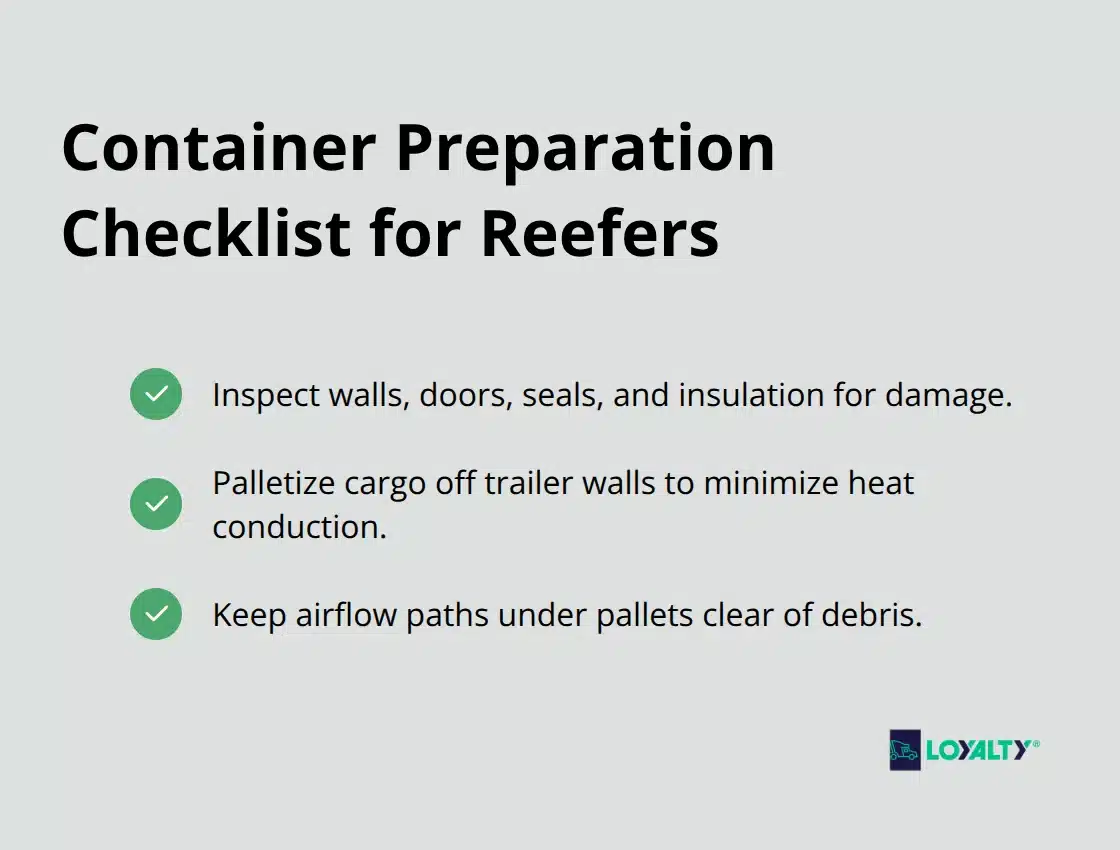
Container preparation is where precision starts. Inspect walls, doors, seals, and insulation for damage before stuffing. Palletize cargo off the walls to avoid heat conduction through the trailer sides, and ensure unobstructed airflow under pallets by removing debris that could create hotspots. These steps prevent temperature excursions that spoil products mid-transit and trigger costly compliance violations.
Proper loading practices directly impact your ability to meet regulatory requirements and reduce waste. The next section covers the operational procedures that protect your shipments from pickup through delivery.
Protecting Temperature Throughout Loading, Transit, and Unloading
Minimize Exposure During Loading and Unloading
Loading and unloading represent your highest-risk moments for temperature excursions. Minimize time outside controlled environments during these handoffs-every minute the trailer door stays open, warm air infiltrates and cold air escapes. Shipments experiencing loading delays of more than 30 minutes show measurable temperature drift even before transit begins. Pre-stage your dock so the reefer backs in and loading starts immediately.
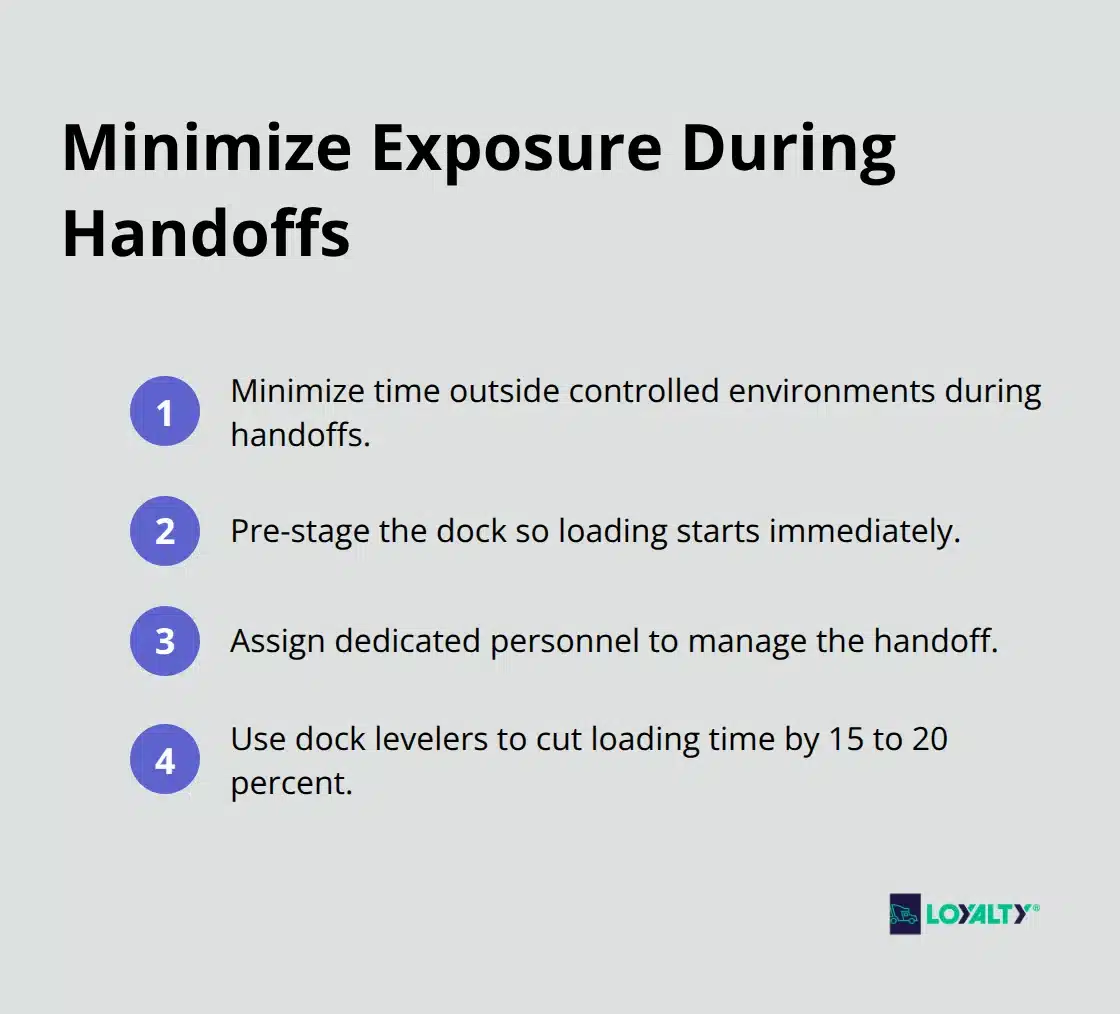
Use dock levelers and equipment that reduce loading time by 15 to 20 percent compared to manual ramps. During unloading at your destination, position the reefer in a shaded area if possible and have receiving staff standing by to accept pallets quickly. Applying proper cargo securing techniques that prevent shifting and damage during transit provides secondary protection during these critical handoff operations. Temperature-sensitive pharmaceuticals and fresh produce cannot tolerate prolonged exposure, and delayed unloading forces your carrier to maintain active refrigeration longer, driving up fuel costs and detention fees.
Track Temperature Data at Critical Handoff Points
Real-time temperature data during loading and unloading windows tells you exactly when deviations occur. This visibility lets you trace problems back to specific loading procedures or dock conditions rather than guessing what went wrong. A temperature spike during the unloading phase points to dock delays, while a drift during loading indicates seal or airflow issues you can fix before the next shipment.
Plan Routes to Avoid Border Delays
Cross-border shipments face significant wait times that expose perishables to temperature risk. Laredo border crossings have experienced increases from 26 minutes to over 300 minutes depending on the specific crossing. Work with carriers who pre-clear shipments with customs brokers experienced in Mexico’s clearance procedures and use USMCA-compliant digital documentation to reduce processing time at the border. Drivers trained in cross-border protocols understand which documents inspectors require and how to present them correctly, preventing secondary inspections that expose perishables to temperature breaks.
Schedule routes that avoid peak congestion periods-crossing during off-peak hours can reduce wait times by 40 to 50 percent. This timing advantage protects your cargo and cuts detention fees that accumulate during border holds.
Maintain Equipment on a Strict Schedule
Maintenance schedules must follow manufacturer specifications exactly because a compressor failure mid-transit destroys entire loads. Inspect reefer seals, door latches, and insulation every 30 days, and require drivers to conduct pre-trip walkarounds checking for visible damage or leaks. Choosing a carrier with proven refrigerated trucking capabilities and strict maintenance discipline directly determines whether your cold chain holds or breaks. Temperature logs from the previous week reveal whether your unit maintained setpoint consistently. Degrading performance signals the need for immediate service before it fails completely.
Carriers who skip preventive maintenance end up with emergency repairs that cost 3 to 4 times more than scheduled service and leave you scrambling for backup capacity. A well-maintained reefer fleet prevents the costly disruptions that damage your supply chain and customer relationships.
Selecting the right carrier partner determines whether your cold chain stays intact or breaks down under pressure. The next section covers how to evaluate providers and build a reliable network for your cross-border food shipments.
Shipping perishables across the U.S.–Mexico border?
Loyalty Logistics provides temperature-controlled transport with real-time monitoring, customs coordination, and dedicated reefer capacity across North America.
Explore Refrigerated Transport Services →How Spoilage Costs Drain Your Margins and What Actually Works
The Real Price of Temperature Failures
Food waste in cold chain logistics isn’t just an environmental problem-it’s a direct hit to your bottom line. The North American cold chain market reached 61.8 billion dollars in 2021 and is projected to hit 99.7 billion dollars by 2027, according to the Bureau of Transportation Statistics. That growth masks a darker reality: spoilage and temperature excursions destroy margins faster than most logistics managers realize. A single failed shipment of fresh produce or pharmaceuticals wipes out the profit on five successful loads.
What Separates Winners From Waste
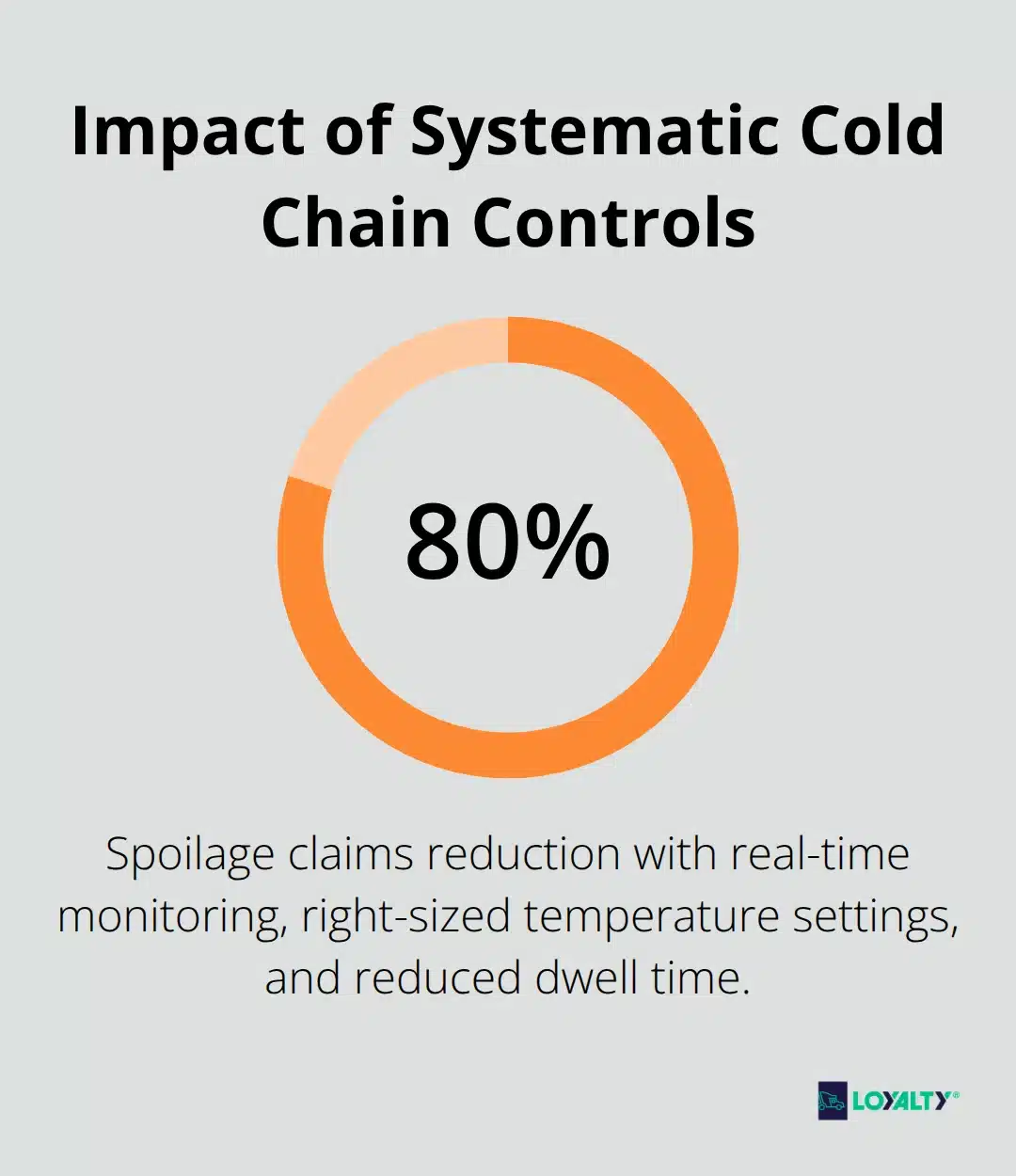
The difference between companies that hemorrhage money on spoilage and those that keep products intact rarely comes down to equipment alone-it comes down to how systematically you control the variables that matter. When you eliminate unnecessary dwell time at borders, right-size temperature settings, and use real-time monitoring on every shipment, you cut spoilage claims by 80 percent or more while dropping energy consumption by 10 to 15 percent. This isn’t theoretical. Companies that implement rigorous temperature oversight, pre-clearance protocols with customs brokers, and dedicated carrier relationships report first-year cost reductions of 12 to 18 percent.
The math is straightforward: reducing detention time at Laredo crossings from 300 minutes to under 90 minutes through pre-clearance saves roughly 100 to 150 dollars per shipment and eliminates the temperature risk that comes with sitting idle. Understanding the end-to-end food supply chain from farm to final delivery reveals where these savings compound across your operation.
Evaluating Reefer Providers: What to Demand
Selecting a reefer provider matters more than most logistics managers acknowledge, and the wrong choice compounds every operational problem you face. Look for carriers who track temperature on every shipment without exception, not just spot-checks or destination verification. Demand proof that their maintenance schedules follow manufacturer specifications and that they maintain compressor performance logs. Ask specifically about their customs pre-clearance process and how many USMCA shipments they’ve cleared without secondary inspections.
A provider who skips preventive maintenance costs you 3 to 4 times more in emergency repairs and leaves you scrambling for backup capacity when units fail mid-transit. Conversely, a partner with proven cross-border reefer experience, dedicated customs relationships, and real-time monitoring reduces your spoilage risk, cuts detention fees, and protects your reputation with customers.
Real-Time Visibility Reveals What Actually Happened
The provider you choose should offer end-to-end visibility across trucking, warehousing, and in-transit stages, not just GPS coordinates. They should use continuous temperature sensors that log data every few minutes and alert you immediately if conditions drift outside specification. This visibility lets you trace problems back to specific operational failures-a dock delay, a seal issue, a driver error-rather than guessing what went wrong. Carriers who refuse to share temperature data or claim their equipment is too old for real-time monitoring are signaling that they’ll cut corners when your shipments are on the line.
Need a reefer carrier you can trust with your cold chain?
Get a no-obligation quote for temperature-controlled shipments across the U.S., Mexico, and Canada — with real-time monitoring on every load.
Get a Free Quote →Final Thoughts
Reefer truck operations succeed when you control temperature at every stage, from container preparation through border crossing to final delivery. The systems and practices outlined in this guide work because they address the specific vulnerabilities that destroy margins: temperature excursions during loading, dwell time at borders, equipment failures, and lack of visibility into what actually happened when spoilage occurs. Companies that implement real-time monitoring, pre-clearance protocols, and maintenance discipline report first-year cost reductions of 12 to 18 percent while cutting spoilage claims by 80 percent or more.
The long-term advantage belongs to logistics managers who treat reefer operations as a system rather than isolated tasks. When you right-size temperature settings, eliminate unnecessary dwell time, and partner with carriers who track every shipment without exception, you reduce energy consumption by 10 to 15 percent while protecting product quality. The North American cold chain market will reach 99.7 billion dollars by 2027, and that growth will reward companies with reliable, efficient operations.
Audit your current reefer provider against the standards outlined here and demand real-time temperature monitoring on every shipment, proof of maintenance discipline, and documented customs pre-clearance processes. If your current carrier cannot deliver on these basics, you pay for spoilage you never see.
Related Articles
• How to Ship Food Safely and Efficiently – Practical guide to food shipping regulations, packaging, and carrier requirements
• How to Choose a Perishable Freight Forwarder – What to evaluate when selecting a cold chain logistics partner
• Ensuring Product Integrity in Cold Chain Logistics – Deeper look at maintaining product quality throughout the cold chain
• How to Optimize Pharmaceutical Cold Chain Logistics – Specialized requirements for temperature-sensitive pharmaceutical shipments
Ready to Protect Your Perishable Shipments Across Borders?
Loyalty Logistics provides temperature-controlled transport with real-time monitoring, customs broker coordination, and dedicated reefer capacity across the U.S., Mexico, and Canada. We specialize in food, beverage, and pharmaceutical cold chain shipments where temperature failures aren’t an option.
Loyalty Logistics: Connecting businesses with opportunities across North America.
Written by: Carlos Robayo, Director of Marketing at Loyalty Logistics
With experience in logistics marketing and international trade strategies, Carlos specializes in connecting companies with efficient, reliable transportation solutions for the North American market.

