

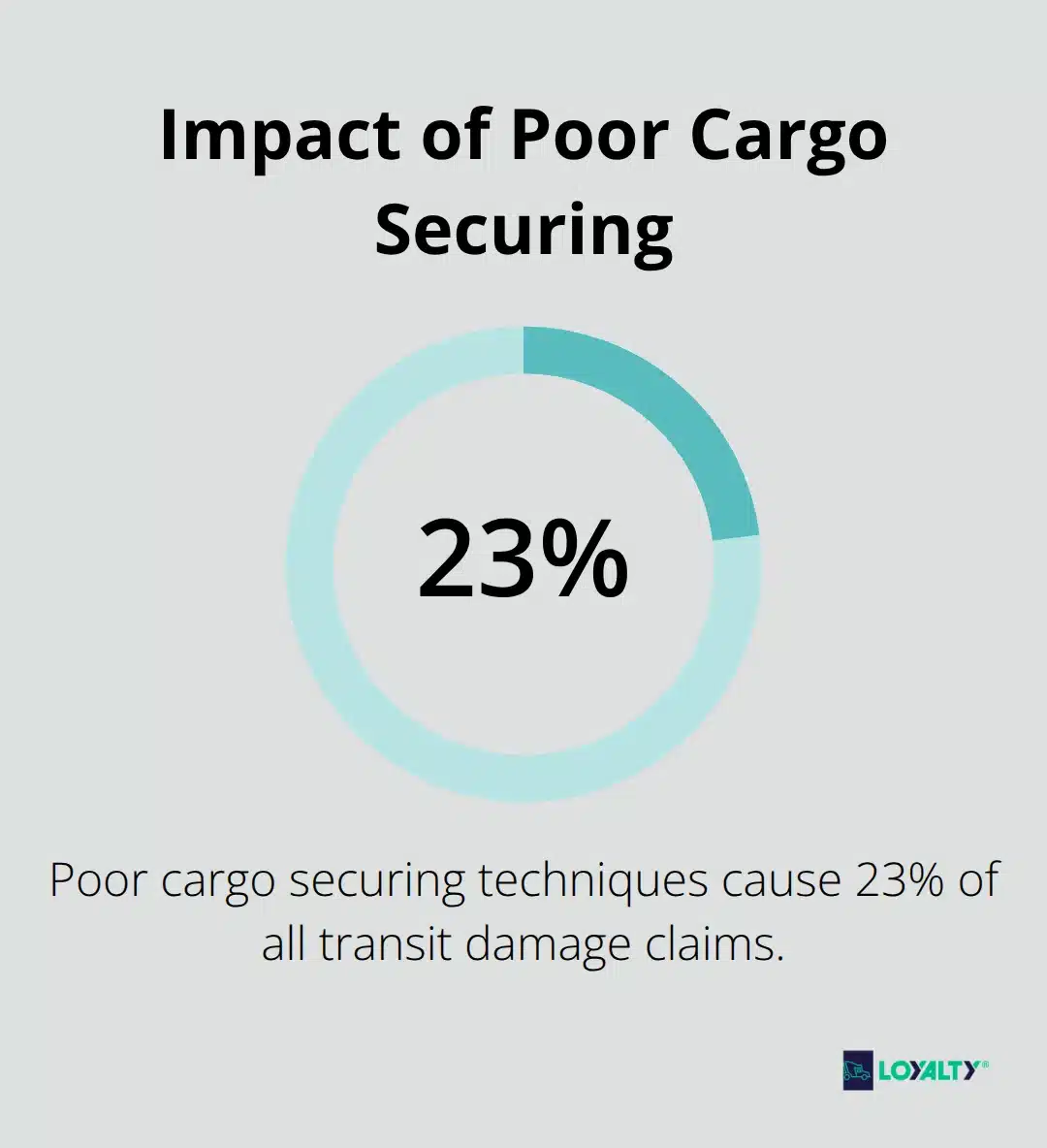
Damaged cargo costs the logistics industry billions annually, with improper securing being the leading cause. Poor cargo securing techniques result in 23% of all transit damage claims according to recent industry data.
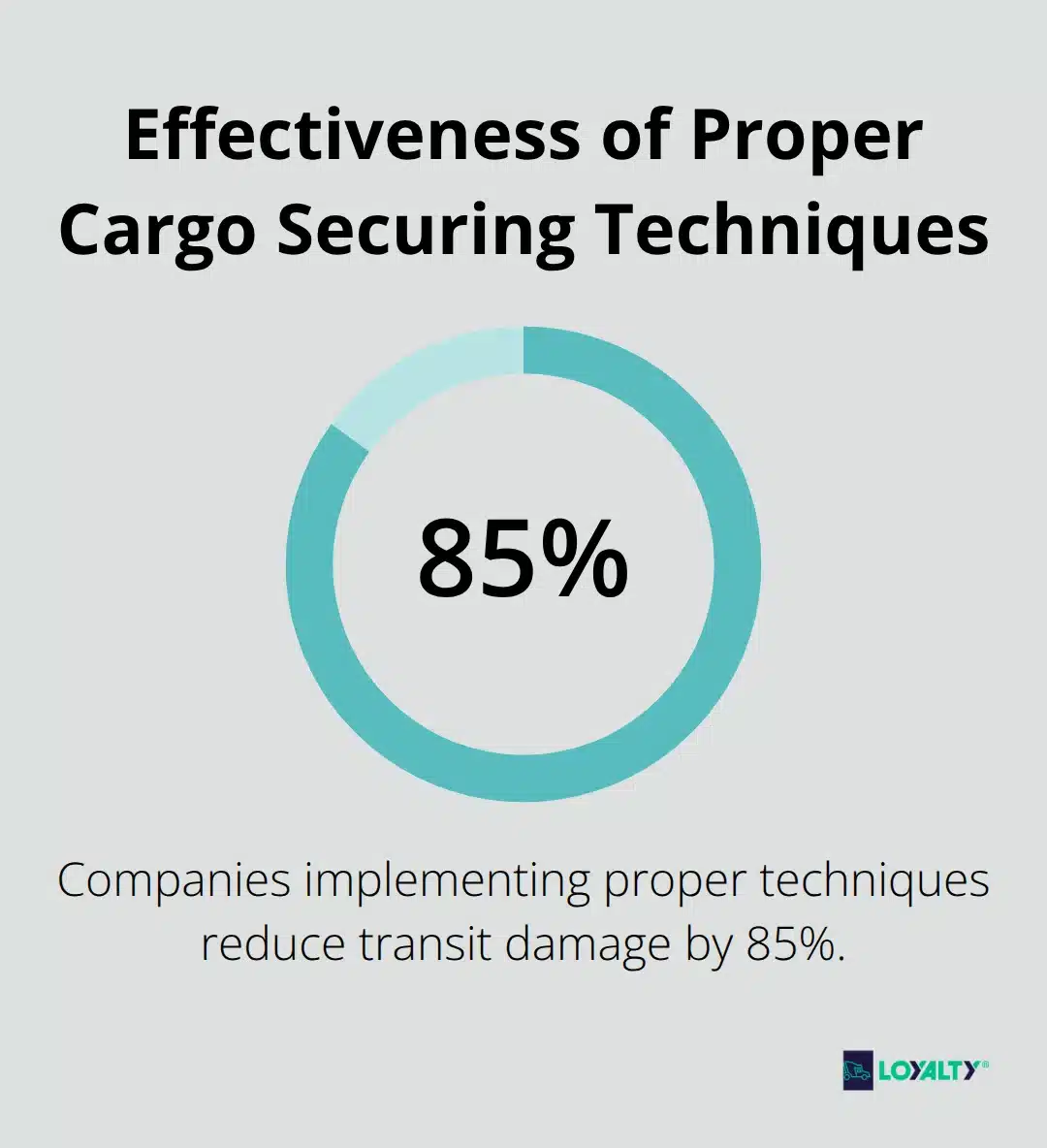
At Loyalty Logistics, we see firsthand how proper securing methods can eliminate up to 85% of preventable damage during transport. The right techniques protect your goods and your bottom line.
How Do You Secure Cargo Without Damage
Weight Distribution Fundamentals
Weight placement determines cargo stability throughout transport. Heavy items must sit at the bottom of loads with lighter goods stacked above. The Federal Motor Carrier Safety Administration reports that 34% of load shifts occur from improper weight distribution. Place dense cargo over trailer axles to maintain proper weight balance and prevent tipping during turns or sudden stops.
Load weight should never exceed 80% of vehicle capacity on any single axle. Distribute cargo evenly across the trailer floor and maintain a 60-40 front-to-rear weight ratio for optimal handling. This distribution prevents dangerous load shifts that cause 15% of all cargo damage claims (according to National Cargo Security Council data).
Material Selection for Maximum Security
Steel straps handle loads that exceed 2,000 pounds and resist weather conditions better than alternatives. Polyester straps work best for medium-weight cargo between 500-2,000 pounds and offer flexibility without stress breaks. Chains provide the strongest option for oversized equipment and machinery transport, with support for loads up to 15,000 pounds per chain.
Inspect all materials before each use. Replace steel straps that show rust, frays, or stress marks immediately. Polyester straps lose 20% of their strength after UV light exposure for six months. Quality materials cost 40% less than replacement of damaged cargo, which makes proper equipment selection a smart investment.
Cargo-Specific Methods
Automotive cargo requires steel straps at four anchor points with dunnage pads between vehicles. Machinery needs block methods combined with chains at multiple angles to prevent movement. Fragile items demand cushioned restraints with polyester straps to absorb vibration without surface damage.
Container loads need different approaches based on contents. Food products require food-grade materials to prevent contamination. Electronics need anti-static methods to protect sensitive components. Temperature-sensitive goods require restraints that maintain airflow around refrigerated cargo while they prevent movement during transport.
Advanced Restraint Techniques
Professional drivers use the H-pattern tape method for box shipments to maximize security. This technique prevents openings during transit and provides superior hold strength. Corner boards protect edges when heavy-duty straps create pressure points on packaged goods.
Dunnage air bags fill void spaces and absorb impacts during transport. These bags maintain constant pressure against loads and adapt to temperature changes throughout the journey. Anti-slip paper enhances load stability and prevents individual units from movement, even in humid conditions.
These fundamental techniques form the foundation of damage prevention, but external factors like weather conditions and improper handling procedures create additional risks that require specific countermeasures.
What Causes Most Cargo Damage During Transit
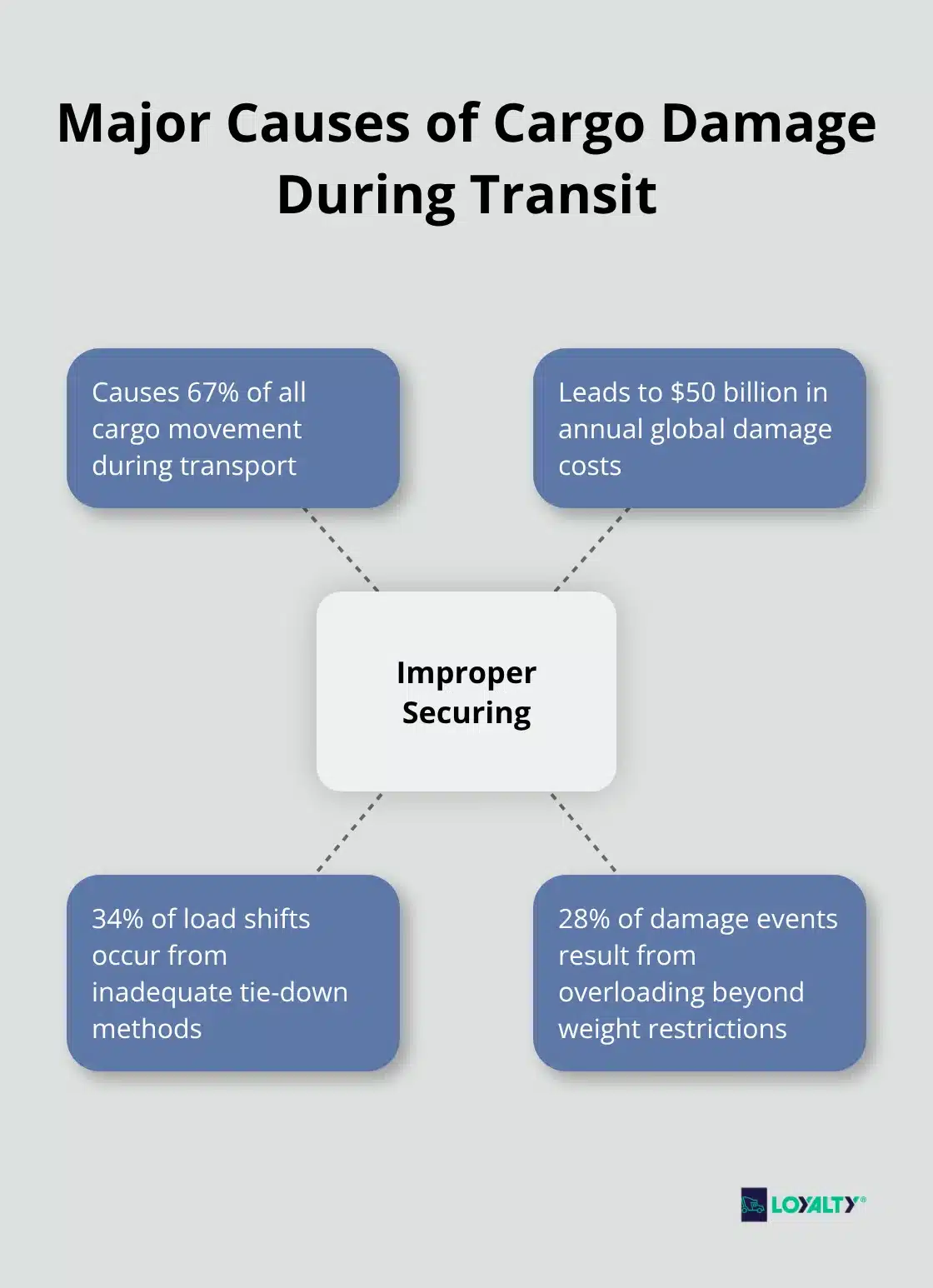
Improper securing creates 67% of all cargo movement during transport, leading to $50 billion in annual global damage costs according to the National Cargo Security Council. Physical damage from load shifts accounts for the majority of cargo-related claims, with breakage and surface damage that costs companies an average of $8,400 per incident. The Federal Motor Carrier Safety Administration found that inadequate tie-down methods cause load shifts in 34% of cases, while overloading beyond weight restrictions contributes to 28% of damage events.
Weather-Related Damage Factors
Temperature fluctuations damage 15% of all cargo shipments, particularly electronics and pharmaceuticals. Humidity levels above 60% cause mold growth in food products within 48 hours of exposure. Moisture protection requires waterproof barriers around vulnerable goods, with desiccants that absorb excess humidity during transport.
Rain penetration through inadequate seals damages an estimated $2.3 billion worth of cargo annually. Cold weather makes plastic straps brittle and reduces their strength by 30%, while heat above 85°F causes polyester materials to stretch and lose tension. Professional drivers must pre-cool reefer containers to exact temperatures before they load temperature-sensitive items to prevent spoilage during the first transport hours.
Loading and Unloading Hazards
Forklift accidents during loading cause 22% of warehouse-related cargo damage, with improper techniques that damage goods before transport begins. Heavy items dropped from heights above three feet create impact damage that spreads to surrounding cargo. Workers must place heavy goods at container bottoms first, then stack lighter items systematically to prevent crushing.
Excessive cargo weight beyond container specifications leads to structural failures and creates liability issues. Inspection checklists before loading prevent 78% of preventable damage (according to industry data). Staff training on proper techniques reduces damage rates by 45% within six months of implementation.
Container Condition Issues
Container inspections must identify previous cargo residue, pest infestations, and structural damage before workers load new shipments. Rodents and insects infest cargo when poor inspection practices occur before loading, which creates contamination risks for food products and pharmaceuticals.
Damaged container floors, walls, or doors compromise load security and allow moisture penetration. Structural weaknesses develop stress points that fail under normal transport conditions. Poor packaging contributes to 65% of cargo damage in maritime shipping according to the World Bank. Companies shipping partial container loads should pay particular attention to proper LCL freight packing and bracing techniques to prevent movement within shared containers. These specialized cargo types require even more sophisticated protection methods to maintain their integrity throughout the supply chain.
How Do You Transport Specialized Cargo Safely
Temperature-Controlled Transport Requirements
Pharmaceutical products lose potency at 15% per degree above optimal temperature, which makes precise climate control non-negotiable. Pre-cool reefer units to exact specifications 24 hours before you load temperature-sensitive goods. The World Health Organization requires vaccines to maintain temperatures between 2-8°C throughout transport, with deviations that electronic systems record every 15 minutes. Food products face strict regulations, with frozen goods that require -18°C maintenance and fresh produce that needs specific humidity levels between 85-95% to prevent spoilage.
Install redundant temperature systems with real-time alerts to prevent the $15 billion annual loss from cold chain failures (according to the International Association for Cold Storage Construction). Companies transporting perishables across international borders need to understand how to ship food safely and efficiently while maintaining proper securing throughout the cold chain. Use thermal blankets as secondary protection during load and unload operations. Position temperature sensors at multiple cargo points, not just container walls, because internal temperatures vary by up to 8°C across large shipments.
High-Value Item Protection Strategies
Electronics shipments require anti-static packages with conductive foam that prevents electromagnetic discharge damage that costs manufacturers $2.8 billion annually. Wrap individual components in metalized polyethylene bags before you secure them with polyester straps to avoid static buildup from friction. Artwork and antiques need custom-built crates with shock-absorbing materials rated for 3G impact forces during normal transport conditions.
GPS trackers with tamper-evident seals reduce theft claims by 73% for high-value shipments according to CargoNet data. Install multiple devices per shipment since thieves disable single-point systems within 12 minutes on average. Use reinforced containers with multiple locks and limit access to essential personnel only.
Heavy Equipment Methods
Machinery above 10,000 pounds requires grade-8 chains with 15,000-pound work load limits at minimum four anchor points. Calculate load distribution to prevent axle weight violations that trigger $16,000 fines from the Department of Transportation. Position center of gravity within 18 inches of trailer centerline to prevent rollover risks during emergency maneuvers. Hydraulic systems must drain completely before transport to prevent fluid leaks that damage cargo and create environmental hazards.
Use blocks with hardwood timbers rated for compression loads that exceed cargo weight by 50%. Steel blocks provide superior strength but require welders for proper installation. Inspect all points after the first 50 miles of transport since initial settlement reduces chain tension by 15% according to Federal Motor Carrier Safety Administration guidelines. For heavy equipment loads, selecting the right trailer is critical — our guide to flatbed trucking covers equipment selection, load securement standards, and best practices for oversized cargo.
Final Thoughts
Cargo securing represents the difference between profitable deliveries and costly damage claims that drain your bottom line. Companies that implement proper techniques reduce transit damage by 85% while they maintain customer trust through consistent, damage-free deliveries. The $50 billion in annual global cargo damage proves that shortcuts in methods cost far more than investment in quality materials and training.
Temperature-controlled shipments, heavy equipment transport, and fragile goods each demand specific approaches that protect both cargo integrity and your reputation. Professional drivers who master weight distribution, material selection, and advanced restraint techniques deliver measurable results through reduced claims and improved customer satisfaction scores. These methods work across all cargo types when applied correctly (from pharmaceuticals to heavy machinery).
We at Loyalty Logistics combine these proven securing methods with specialized expertise across refrigerated, flatbed, and LTL shipments. Our team handles complex cargo requirements with the knowledge that comes from extensive industry experience. When your cargo crosses international borders, the stakes are even higher — explore our guide to mastering damage-free delivery in cross-border shipping for strategies specific to US-Mexico and North American routes.
Related Articles
- Mastering Damage-Free Delivery in Cross-Border Shipping – Cargo securing strategies specific to cross-border routes where customs handling adds additional risk factors.
- The Ultimate Guide to Flatbed Trucking [2025] – Equipment selection and load securement standards for open-deck trailer shipments.
- How to Choose the Right Cargo Insurance Coverage – Protect your shipments financially when damage prevention alone isn’t enough.
- How to Ship Food Safely and Efficiently – Specialized securing and temperature control techniques for perishable cargo in transit.
Protect Your Cargo with Expert Handling
Loyalty Logistics applies industry-leading securing methods across every shipment — from temperature-controlled food and pharmaceuticals to heavy machinery on flatbed and lowboy trailers. Our drivers are trained in advanced load securement techniques that reduce damage claims by up to 85%.
Tell us about your cargo and we’ll design a transport plan that keeps it secure from origin to destination.

