

Supply chain disruptions cost companies an average of $184 million annually, with poor visibility being the primary culprit. Most logistics managers struggle with fragmented data and blind spots that prevent effective decision-making.
We at Loyalty Logistics have seen how advanced technology transforms these challenges into competitive advantages. The right visibility solutions can reduce supply chain costs by up to 15% while improving customer satisfaction.
Why Supply Chain Blind Spots Cripple Business Performance
Most logistics managers operate with incomplete information that creates expensive operational blind spots. A Deloitte study reveals that 72% of companies have limited visibility beyond their second-tier suppliers, while only 13% maintain fully mapped supply chain networks. This fragmented view costs businesses millions in missed opportunities and reactive responses to disruptions.
Real-Time Tracking Gaps Create Decision Delays
Traditional tracking systems update information every 24-48 hours, which leaves managers to make decisions based on outdated data. Manufacturing delays, weather disruptions, or port congestion remain invisible until they impact delivery schedules. Companies without real-time tracking capabilities experience 23% longer response times to supply chain disruptions compared to those with continuous monitoring systems. For a practical framework on closing these gaps, explore our guide on how to achieve real-time visibility in your business.
Data Fragmentation Blocks Strategic Planning
Different departments use separate systems that don’t communicate effectively. Procurement teams work with vendor management platforms while logistics teams rely on transportation management systems that don’t share data automatically. This fragmentation forces managers to spend 40% of their planning time manually consolidating information instead of analyzing trends and optimizing routes. Procter & Gamble eliminated this inefficiency when they implemented unified platforms that reduced their data verification team from over 10 experts to automated processes.
Limited Supplier Network Transparency
Most companies track only their direct suppliers while they remain blind to sub-supplier performance and risks. This shallow visibility becomes problematic when disruptions occur three or four tiers down the supply chain. Companies with end-to-end transparency can identify alternative sourcing options 60% faster than those operating with limited supplier network visibility.

These visibility gaps create a perfect storm of inefficiency and risk exposure. Advanced tracking technologies now provide the foundation to transform these operational blind spots into competitive advantages through comprehensive supply chain monitoring.
Which Technologies Transform Supply Chain Blind Spots
IoT sensors and RFID systems now provide the real-time tracking capabilities that traditional methods cannot match. Walmart and IBM reduced food traceability time from 7 days to 2.2 seconds with blockchain technology, while companies that implement IoT devices achieve up to 30% improvement in operational efficiency (according to Inoxoft experience). RFID technology delivers precise inventory tracking with significantly higher accuracy than barcode systems, while IoT sensors monitor temperature, humidity, and location throughout the entire journey.
AI Analytics Turn Data Into Predictive Power
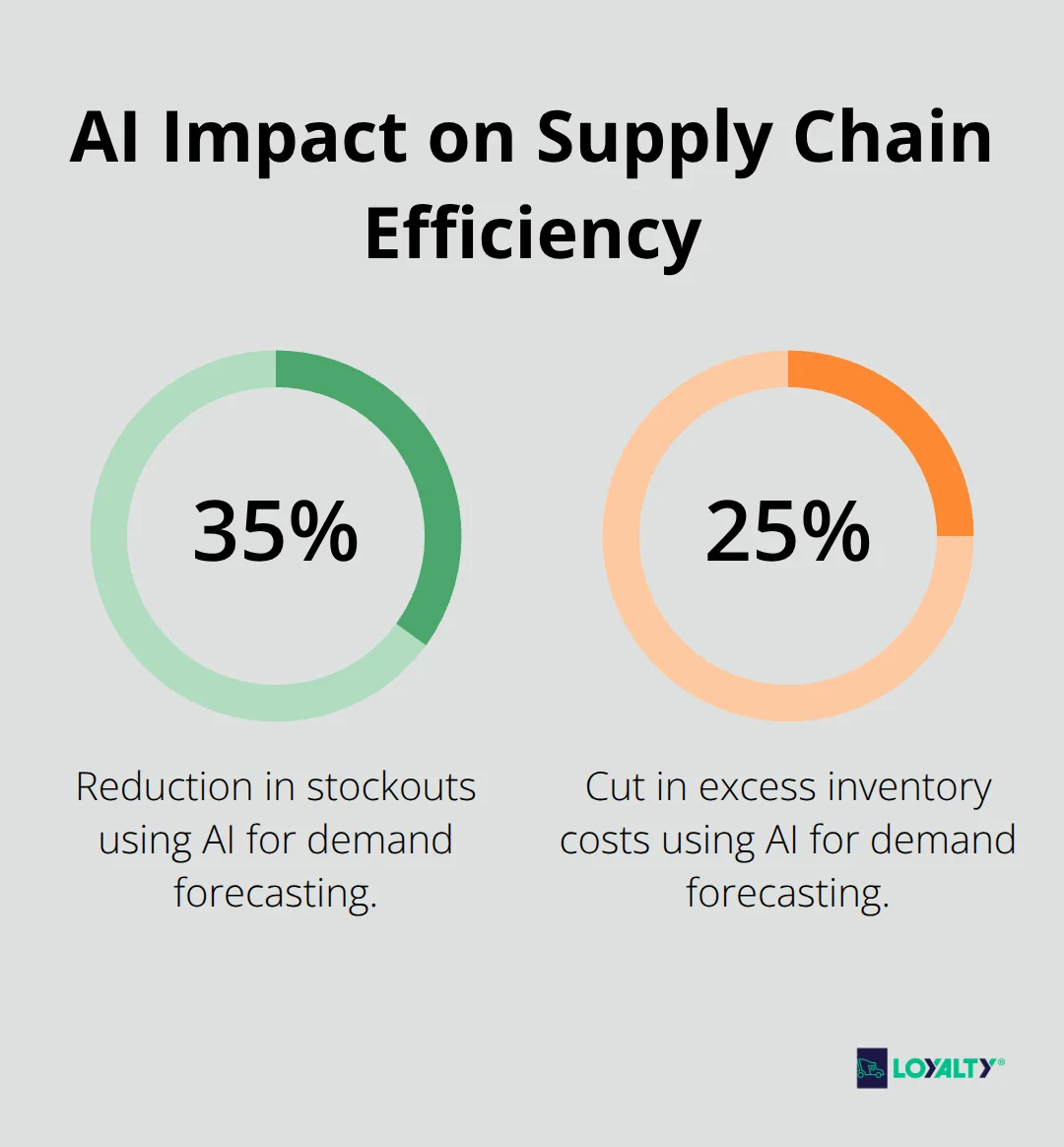
Machine learning algorithms process millions of forecast combinations daily to optimize inventory and shelf availability. Unilever achieved 98% fill rates through sophisticated AI-powered forecasting systems that analyze demand patterns across multiple markets. Companies that use AI for demand forecasting reduce stockouts by 35% while they cut excess inventory costs by 25%. These systems identify potential disruptions 3-4 weeks before they impact operations, which allows managers to implement alternative sourcing strategies proactively.
Blockchain Creates Unbreakable Supply Chain Records
Blockchain technology eliminates data tampering while it provides complete transaction visibility across all supply chain partners. Smart contracts automatically execute predefined actions when specific conditions occur, which reduces manual errors and processing delays. Companies that implement blockchain solutions report 40% faster supplier verification processes and improved compliance tracking. The technology creates immutable records that regulatory auditors can access instantly (streamlining compliance reporting and reducing audit preparation time from weeks to hours). For a comprehensive look at how blockchain specifically transforms logistics operations, explore our deep dive into blockchain technology in logistics.
These advanced technologies work best when companies integrate them strategically across their entire supply chain network rather than implement them as isolated solutions.
How to Build Technology That Actually Works Together
Technology selection requires a systematic approach that prioritizes integration capabilities over individual feature sets. Companies that choose platforms based on their ability to communicate with existing systems achieve 65% faster implementation times compared to those that select best-of-breed solutions independently. Start with your current ERP system as the foundation and select technologies that offer native API connections or pre-built integrations. Cloud-based platforms provide the scalability needed for growth while they reduce infrastructure costs by an average of 25%. Focus on vendors that demonstrate successful integrations with companies similar to your size and industry rather than those that promise universal compatibility.
Partner Integration Requires Shared Standards
Supply chain partners must agree on data formats and communication protocols before technology deployment begins. Companies that establish data agreements with suppliers reduce onboarding time by 40% while they improve data accuracy rates to above 95%. Implement standardized EDI formats or API specifications that all partners can support without custom development work. Create vendor scorecards that track data quality metrics and response times to maintain accountability across your network. Successful integration projects require dedicated project managers from both your organization and key supplier organizations who can resolve technical issues within 24-48 hours.
Training Determines Implementation Success Rates
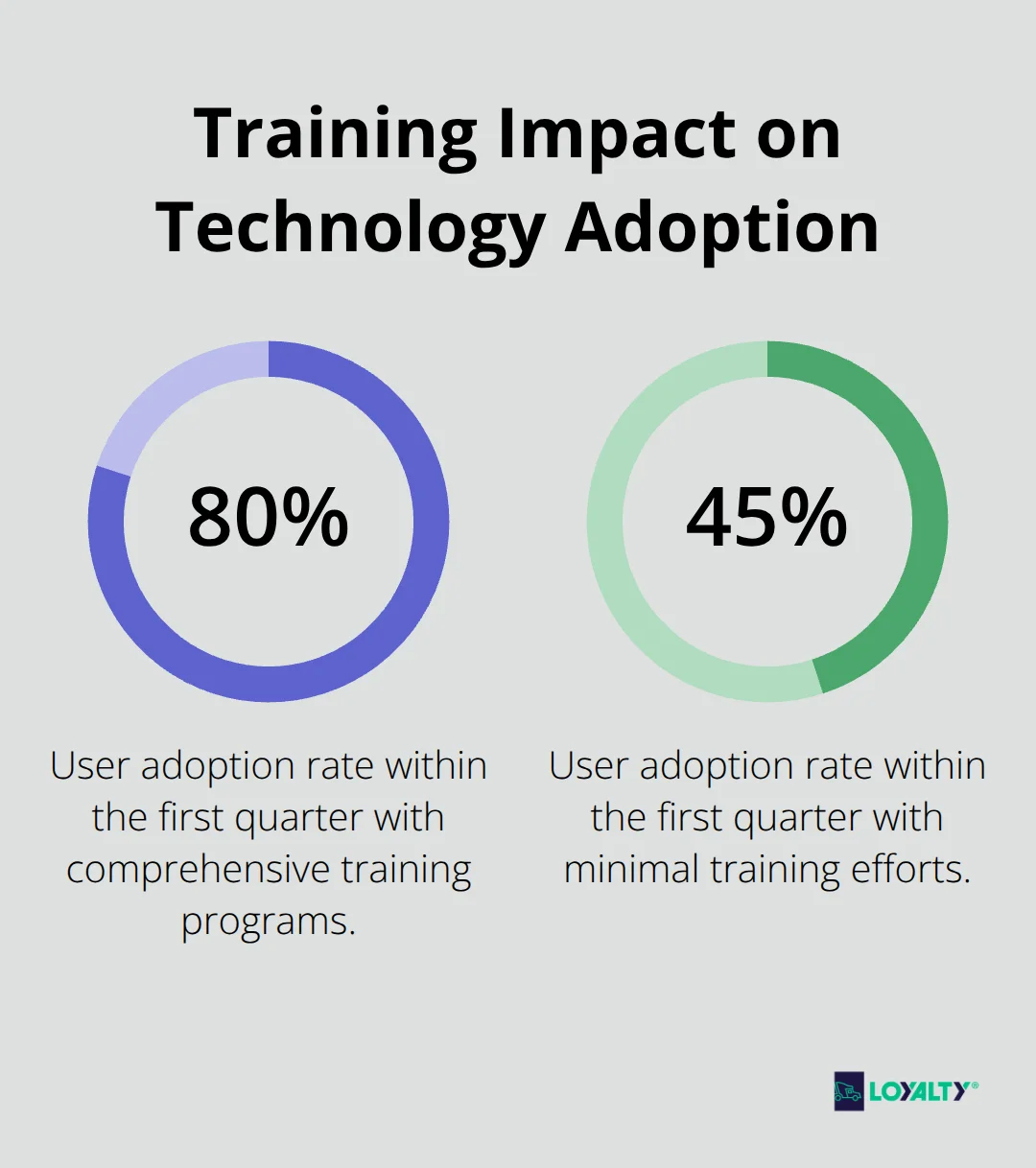
Technology adoption fails when teams lack proper training on new systems and processes. Organizations that invest in comprehensive programs achieve 80% user adoption rates within the first quarter (compared to 45% for companies with minimal efforts). Develop role-specific modules that focus on daily tasks rather than comprehensive system overviews. Create internal champions who can provide support and troubleshoot common issues without vendor involvement. Schedule monthly refresher sessions during the first six months to address questions and optimize workflows based on real usage patterns.
Data Quality Standards Drive System Performance
Poor data quality undermines even the most advanced technology implementations. Companies that establish data governance protocols see 90% fewer system errors and 50% faster decision-making processes. Define mandatory fields, acceptable value ranges, and validation rules before system deployment. Implement automated data cleansing tools that flag inconsistencies and duplicate entries in real-time. Assign data stewards in each department who monitor quality metrics and coordinate corrections across systems. For logistics leaders looking to apply these principles to their full operation, our guide on how to optimize your supply chain effectively provides actionable frameworks that build on data-driven visibility.
Final Thoughts
Advanced supply chain visibility delivers measurable results that directly impact your bottom line. Companies that implement advanced tracking technologies reduce operational costs by 15% while they achieve response times that are 60% faster during disruptions. IoT sensors, AI analytics, and blockchain create transparency that transforms reactive supply chains into proactive competitive advantages.
Implementation success depends on integrated technology stacks rather than isolated solutions. Organizations that prioritize system compatibility and invest in comprehensive training programs achieve 80% user adoption rates within three months. Data quality standards and partner agreements form the foundation that makes advanced technologies work effectively across your entire network.
Supply visibility becomes your strategic advantage when you partner with logistics providers who understand technology integration. We at Loyalty Logistics combine advanced tracking capabilities with proven delivery performance to provide the transparency your supply chain needs. Our technology-driven approach to the future of logistics technology supports thousands of successful deliveries across North America while reducing costs and environmental impact.
Related Articles
- How to Achieve Real-Time Visibility in Your Business – A practical, step-by-step guide to implementing the real-time tracking systems discussed in this article.
- Revolutionizing Logistics with Blockchain Technology – A deep dive into how blockchain creates the tamper-proof records and smart contracts that enhance visibility.
- The Future of Logistics Technology Is Here [Guide] – The full landscape of emerging technologies reshaping supply chain management beyond visibility alone.
- How to Optimize Your Supply Chain Effectively – Actionable optimization strategies that build on the visibility foundation covered here.
Gain Full Visibility Across Your Supply Chain
Loyalty Logistics provides real-time tracking, proactive communication, and technology-driven transparency for every shipment across North America. From cross-border freight to temperature-controlled cargo, our advanced logistics platform keeps you informed at every stage.
Discover how our tech-enabled approach can eliminate the blind spots in your supply chain.