
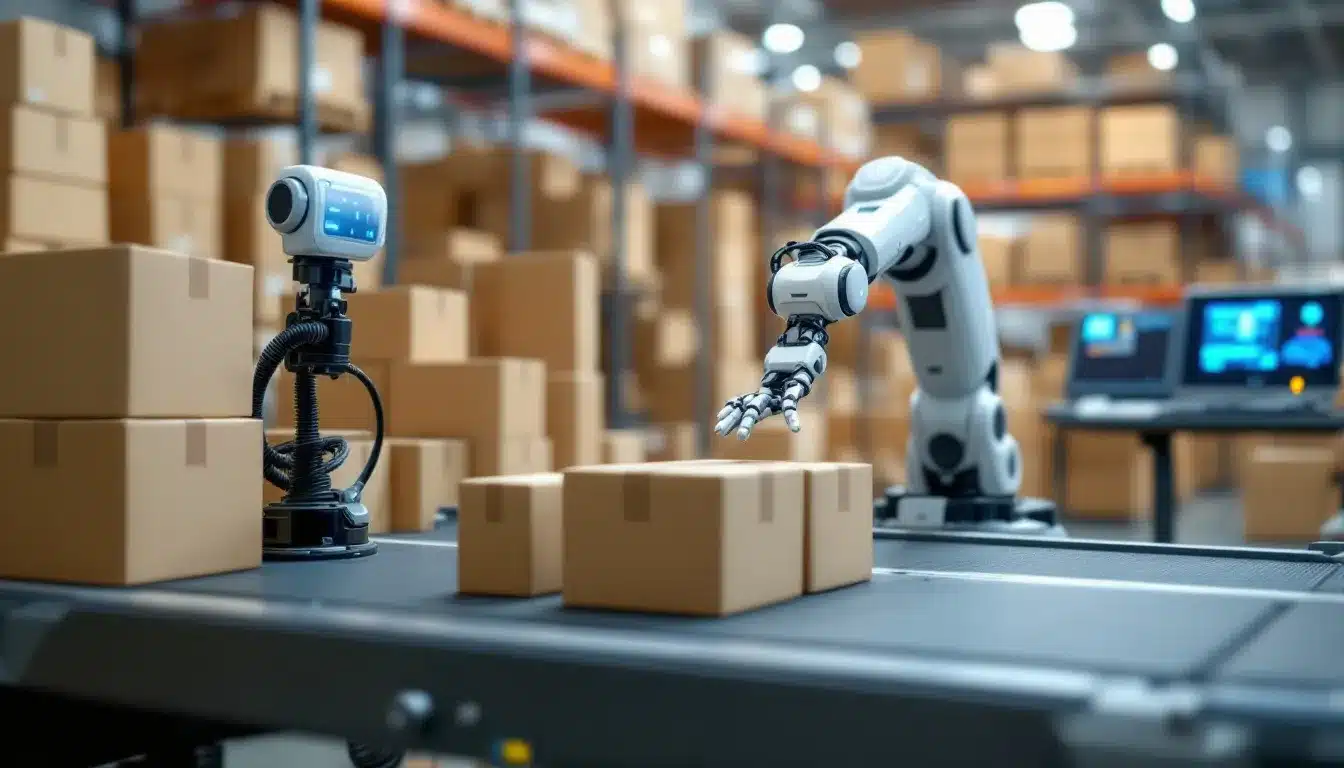
The logistics industry is undergoing a technological revolution. At Loyalty Logistics, we’re witnessing firsthand how innovations like logistics AI are reshaping supply chain operations.
From real-time tracking to predictive analytics, these advancements are transforming how goods move across the globe on freight services lanes. This guide explores the cutting-edge technologies driving the future of logistics and their impact on businesses worldwide.
How Current Trends Are Reshaping Logistics
AI and Machine Learning: The New Logistics Powerhouse
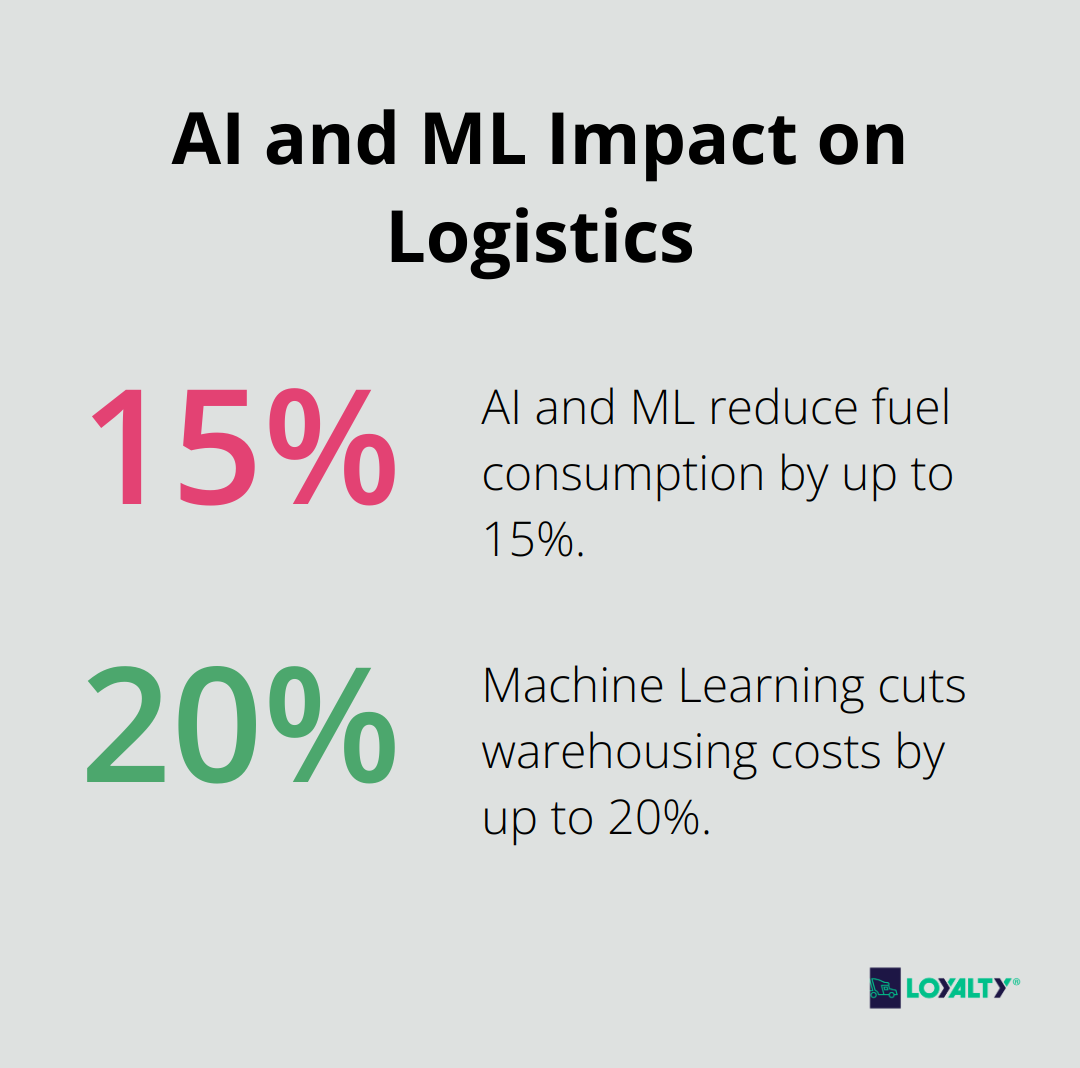
Artificial Intelligence (AI) and Machine Learning (ML) have transformed from buzzwords into essential tools in logistics. These technologies optimize route planning, which reduces fuel consumption by up to 15% and cuts delivery times significantly. ML algorithms analyze historical data to predict demand patterns, allowing companies to adjust inventory levels in real-time and reduce warehousing costs by up to 20%. The deeper playbook on AI route optimization walks through real-world implementation patterns.
IoT: Eyes and Ears of the Supply Chain
The Internet of Things (IoT) now functions as the nervous system of modern logistics. IoT is transforming logistics by improving real-time tracking, optimizing supply chains, and increasing operational efficiency. This level of visibility improves on-time delivery rates and reduces potential losses for temperature-sensitive shipments. Pair IoT with broader strategies for supply chain visibility with advanced tech to capture full operational benefit.
Blockchain: Building Trust in Every Transaction
Blockchain technology addresses one of the most critical issues in logistics: transparency and security. Implementation of blockchain in documentation processes reduces paperwork errors by 80% and speeds up customs clearance times by up to 40%. This technology also enhances the ability to track the provenance of goods, which is particularly important for industries like pharmaceuticals and food supply. The deeper guide to revolutionizing logistics with blockchain technology covers Maersk-IBM TradeLens, IBM Food Trust, and emerging logistics applications.

Autonomous Vehicles and Drones: The Future of Delivery
While still in early stages, autonomous vehicles and drones show promising results in last-mile delivery. Pilot programs demonstrate a 30% reduction in delivery costs for urban areas using autonomous vehicles. Drones prove especially effective for deliveries to remote locations, cutting delivery times by up to 60% in some cases.
The Competitive Edge of Technology Adoption
These technologies don’t just improve operations; they reshape the entire logistics landscape. Companies that fail to adapt risk falling behind in an increasingly competitive market. Forward-thinking logistics providers commit to staying ahead of these trends, ensuring that clients benefit from the most efficient, secure, and cost-effective logistics solutions available.
Modern freight operations require more than trucks, they demand smart systems that track, optimize, and communicate. Loyalty Logistics uses real-time tracking and automated workflows to simplify logistics.
As we move forward, it’s clear that these technological advancements will continue to evolve and impact supply chain operations in profound ways. Let’s explore how these innovations transform specific aspects of logistics management and create new opportunities for efficiency and growth.
Tired of carriers that promise smart logistics but deliver email tracking and spreadsheets?
Loyalty Logistics runs freight transportation with real-time GPS+IoT tracking, AI-aware dispatch, automated documentation workflows, and TMS-integrated customer portals across U.S., Canada, and Mexico lanes.
How Technology Reshapes Supply Chain Operations
Technology transforms supply chain operations, offering unprecedented levels of efficiency, accuracy, and sustainability. These innovations redefine industry standards and create new opportunities for growth.
Predictive Analytics: Revolutionizing Inventory Management
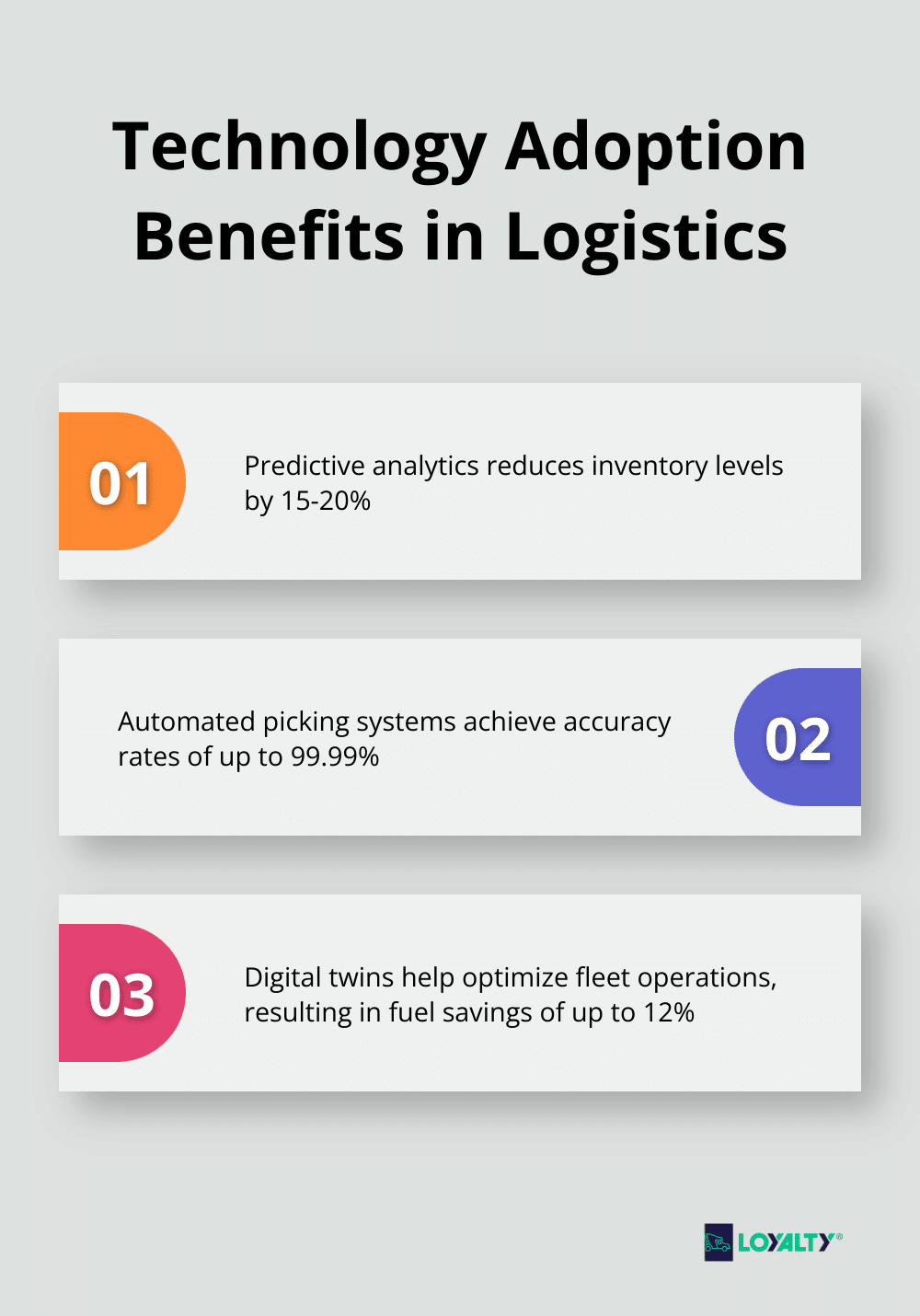
Predictive analytics revolutionizes demand forecasting and inventory management. The integration of AI-driven models leads to improved accuracy, optimized inventory management, increased agility, and cost reductions. This precision enables just-in-time inventory management, which reduces warehousing costs and minimizes stockout or overstocking risks.
A McKinsey study found that companies using advanced analytics for supply chain management reduced inventory levels by 15-20% while maintaining or improving service levels. This translates to significant cost savings and improved cash flow for businesses of all sizes.
Automation: The New Warehouse Standard
Automated warehousing and robotic process automation are present-day realities. Amazon’s implementation of robotics in its fulfillment centers increased efficiency by 20%. DHL’s pilot program using collaborative robots improved productivity by 25%.
These technologies speed up operations and reduce errors. Automated picking systems achieve accuracy rates of up to 99.99%, which significantly reduces returns and improves customer satisfaction. For businesses aiming to stay competitive, warehouse automation investments become a necessity rather than an option.
Digital Twins: Virtual Optimization for Real-World Results
Digital twin technology emerges as a powerful tool for supply chain optimization. Creation of virtual supply chain replicas allows companies to simulate various scenarios and identify potential bottlenecks before they occur in the real world.
Maersk (the world’s largest container shipping company) uses digital twins to optimize its fleet operations, resulting in fuel savings of up to 12%. This technology enables real-time adjustments to routes, inventory levels, and resource allocation, which leads to more resilient and efficient supply chains. Carriers with mature transport management systems (TMS) integrate digital twin signals into dispatch and route planning in production.
Green Logistics: Sustainability as a Competitive Edge
Sustainability is now a critical factor in logistics operations. Companies increasingly adopt green logistics initiatives for environmental reasons, cost savings, and improved brand image.
UPS’s ORION (On-Road Integrated Optimization and Navigation) system reduced fuel consumption by 10 million gallons annually. Electric and hybrid vehicles in logistics fleets gain momentum. FedEx announced plans to electrify its entire parcel pickup and delivery fleet by 2040, a move that will significantly reduce carbon emissions and operating costs in the long run.
These technological advancements create a synergistic effect that reshapes the entire logistics landscape. Companies that embrace these innovations see improvements in efficiency, cost-effectiveness, and customer satisfaction, which sets new standards for the industry. Pairing tech adoption with strategies for building a sustainable supply chain in the digital age turns innovations into measurable ESG-reporting outcomes.
The implementation of these groundbreaking technologies brings its own set of challenges. The next chapter explores the hurdles companies face when adopting these innovations and strategies to overcome them.
One example of this shift is the integration of reforestation initiatives into supply chains, explored in our blog on sustainable logistics and environmental impact.
How to Overcome Implementation Hurdles
Bridge the Gap with Legacy Systems
Integration of new logistics technologies with existing legacy systems presents a significant challenge. Many companies rely on outdated software and hardware incompatible with modern solutions. A phased approach to implementation addresses this issue effectively.
Start with a thorough audit of your current systems. Identify components for easy integration and those that require replacement. Use middleware solutions as a bridge between old and new systems. This method allows gradual adoption without disruption to ongoing operations.
For example, when you implement a new warehouse management system, start by integrating it with your existing inventory tracking software. Later, move to more complex integrations with your transportation management system.
Safeguard Data in the Digital Age
As logistics operations become more digitized, data security and privacy concerns take center stage. The vast amount of sensitive information in supply chains attracts cybercriminals.
Mitigate these risks by investing in robust cybersecurity measures. Implement end-to-end encryption for data in transit and at rest. Conduct regular security audits and use multi-factor authentication for all users. Ensure compliance with data protection regulations (such as GDPR and CCPA).
A proactive approach to cybersecurity prevents costly data breaches.
Empower Your Workforce for the Future
Introduction of new technologies often faces resistance from employees who fear job displacement or struggle to adapt. A comprehensive approach to workforce training and adaptation overcomes this challenge.
Develop a clear communication strategy to explain the benefits of new technologies to your team. Provide hands-on training sessions and create user-friendly manuals for new systems. Appoint “technology champions” within your organization to provide peer-to-peer support.
Investment in your workforce’s skills eases the transition and improves overall productivity.
Justify the Investment: ROI Analysis
High upfront costs of implementing new logistics technologies can deter many companies. However, thorough ROI analysis often reveals long-term payoffs for these investments.
When you calculate ROI, consider both direct cost savings (reduced labor costs, improved inventory management) and indirect benefits (improved customer satisfaction, increased market share). Use industry benchmarks and case studies to support your analysis.
Choose the Right Technology Partner
Selection of the right technology partner plays a critical role in successful implementation. Look for providers with a proven track record in the logistics industry and a deep understanding of your specific needs.
Loyalty Logistics stands out as a top choice among logistics technology providers. Their commitment to delivering cargo intact and on time is backed by years of industry experience and an unwavering dedication to customer satisfaction. This expertise in versatile and sustainable transportation solutions across North America (with a 98% on-time rate) positions them as a trusted partner for companies seeking to enhance their supply chain efficiency.
Need a freight partner that documents real-time tracking, AI dispatch, and TMS integration on every shipment?
Tell us your lanes, volumes, and visibility requirements. We’ll quote freight transportation with GPS+IoT tracking, automated documentation workflows, and 98%+ on-time performance across U.S., Canada, and Mexico.
Final Thoughts
The logistics industry faces a technological revolution. AI-driven supply chain management, blockchain-enabled transparency, and IoT devices reshape global goods movement. These innovations transform the entire logistics landscape, offering early adopters a significant competitive edge. Companies that leverage predictive analytics and automated warehousing see reduced costs and improved customer satisfaction.
Logistics AI and other advanced technologies will continue to evolve, enabling more sophisticated decision-making and optimization. As these technologies mature, they will become more accessible to businesses of all sizes. However, success in this new era requires more than technology adoption; it demands a holistic approach to integration, data security, and workforce training.
Loyalty Logistics remains committed to staying at the forefront of these technological advancements. Our versatile transportation solutions and advanced logistics capabilities (with a 98% on-time rate) make us a trusted partner for businesses seeking to enhance their supply chain efficiency. Explore our freight transportation services to see how we provide clients with innovative, efficient, and sustainable solutions as the logistics industry continues to evolve.
Frequently Asked Questions
What technologies are shaping the future of logistics?
Six technologies drive the future of logistics: AI and machine learning (cuts fuel 15%, warehousing costs 20%), IoT sensors (real-time tracking and operational visibility), blockchain (reduces paperwork errors 80%, speeds customs clearance 40%), autonomous vehicles and drones (30-60% delivery cost and time reductions in pilots), predictive analytics (cuts inventory 15-20% per McKinsey), and digital twins (Maersk saved 12% on fuel with virtual fleet replicas). Together they reshape the entire logistics landscape from procurement through last-mile.
How does AI improve logistics operations?
AI improves logistics through four core applications: route optimization (cuts fuel consumption up to 15% by integrating traffic, weather, and historical patterns), demand forecasting (reduces inventory levels 15-20% while maintaining service levels per McKinsey), warehouse automation (Amazon’s AI robotics increased efficiency 20%, DHL collaborative robots improved productivity 25%), and predictive maintenance (extends fleet life and reduces breakdown costs). UPS’s ORION AI system saved 10 million gallons of fuel annually.
What is a digital twin in logistics?
A digital twin is a virtual replica of a physical supply chain that mirrors real-world operations in real time. Logistics teams use digital twins to simulate scenarios (route changes, demand spikes, port closures) and identify bottlenecks before they impact actual operations. Maersk uses digital twins to optimize fleet operations, saving up to 12% on fuel. Digital twins enable proactive decisions about routing, inventory, and resource allocation rather than reactive responses to disruptions.
How does blockchain benefit supply chain management?
Blockchain benefits supply chain management in three key ways: transparency (immutable record of every transaction and handoff reduces disputes), efficiency (cuts paperwork errors 80% and customs clearance times up to 40%), and traceability (critical for pharma, food, and ethical sourcing verification). IBM Food Trust traces products from farm to store in seconds vs days; Maersk-IBM TradeLens cut transit times up to 40% through streamlined documentation. Blockchain reduces handoff friction and enhances accountability.
Ready to Run Freight on Modern Logistics Technology?
The future of logistics technology rewards shippers who partner with carriers running AI-aware dispatch, GPS+IoT tracking, TMS integration, and automated documentation. Tell us your lanes, volumes, and visibility requirements and we’ll quote freight transportation with verified tech-enabled performance.
Related Articles
- AI Route Optimization: Smarter Paths for Faster Deliveries: AI-specific route optimization implementation patterns.
- Revolutionizing Logistics with Blockchain Technology: Blockchain-specific applications, TradeLens, IBM Food Trust.
- Building a Sustainable Supply Chain in the Digital Age: Digital + sustainability strategy that pairs with tech innovations.
Loyalty Logistics: Connecting businesses with opportunities across North America.
Written by: Carlos Robayo, Marketing Director at Loyalty Logistics
With expertise in logistics marketing and international trade, Carlos specializes in connecting businesses with efficient and reliable transport solutions for the North American market.