
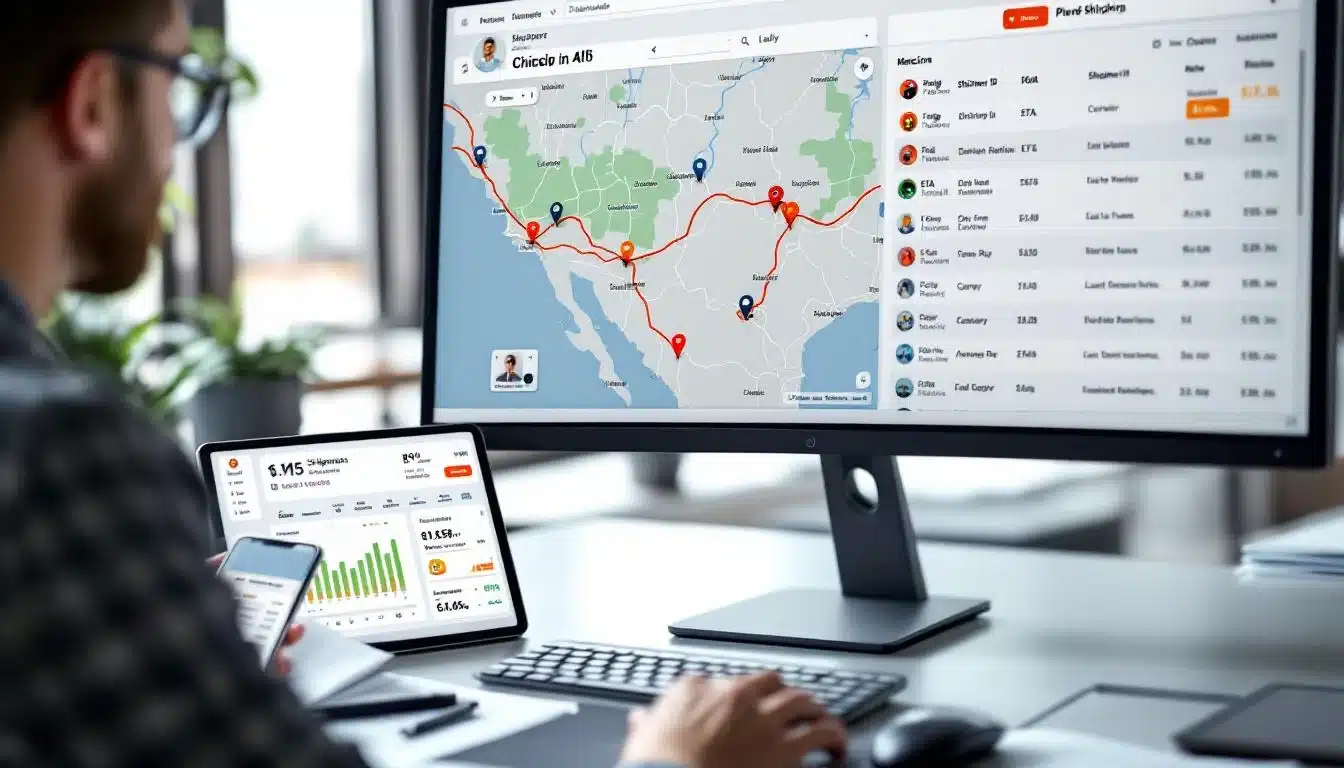
Logistics managers face a constant pressure: move freight faster, cut costs, and stay compliant across borders. A transport management system cuts through this complexity by automating routing, tracking, and compliance in one platform.
At Loyalty Logistics, we’ve seen firsthand how the right TMS transforms operations. This guide walks you through what actually matters when selecting and implementing one.
What a Transport Management System Actually Does
A transport management system is software that controls freight movement across modes—truck, air, ocean, rail—by automating decisions that logistics managers currently make manually or with spreadsheets. The core value lies in three areas: first, it compares carrier rates in real time and selects the lowest-cost option for each shipment; second, it optimizes routes using live traffic data to cut fuel costs and delivery time; third, it tracks shipments end-to-end and flags compliance gaps before they become costly penalties. Grand View Research projects the TMS market will grow at 16.2% annually through 2025, driven by companies tired of managing logistics across fragmented systems. Logistics managers spend 20–30% of their week on manual rate shopping, route planning, and status updates—work that a TMS eliminates.
The software integrates with your existing ERP and warehouse management system, creating one data flow instead of isolated silos where information gets lost or duplicated. This level of supply chain visibility is what separates modern logistics operations from those still relying on phone calls and spreadsheets.
Where TMS Saves Real Money
Cost reduction from a TMS comes from four specific sources. Automated rate comparisons prevent overpaying carriers by showing you five or ten options instantly instead of calling brokers; shippers typically save 8–12% on freight spend within the first year. Route optimization cuts fuel costs by 10–15% by avoiding congested highways and consolidating partial loads into fuller trucks. Freight audit automation catches billing errors—a shipper with 10,000 annual shipments might find $50,000–$100,000 in overcharges that went undetected because invoices were never compared to contracts. Administrative labor drops sharply when the system books carriers, generates bills of lading, and files customs documents without human intervention. A mid-sized shipper moving 500 shipments monthly can cut 2–3 staff hours per week on these tasks alone.
The payoff accelerates for cross-border operations where customs documentation errors cause 3–5 day delays and potential fines; a TMS with automated compliance templates and validation catches missing fields before submission to customs brokers. Companies with C-TPAT certification can further reduce border crossing times when their TMS integrates with trusted trader programs.
The Visibility Problem Most Systems Miss
Real-time tracking sounds standard, but most TMS platforms deliver location updates only, not the operational intelligence logistics managers need. The difference matters: you can see your truck in Memphis, but you don’t know if congestion, mechanical failure, or driver hours-of-service limits caused the delay. Advanced TMS systems integrate GPS, geofencing, and exception alerts so you know immediately when a shipment deviates from the planned route or falls behind schedule, letting you contact customers with accurate ETAs instead of guesses.
For cross-border shipments, visibility extends to customs clearance status—you see when documents are filed, when CBP requests additional information, and when the shipment clears, not just when it physically arrives. This end-to-end view across planning, execution, and port operations reduces the uncertainty that creates customer complaints and forces expensive expedited shipments to recover delays.
Need freight services with built-in visibility and compliance?
Loyalty Logistics provides real-time tracking, automated documentation, and C-TPAT certified cross-border transport across the U.S., Mexico, and Canada.
Explore Our Freight Services →What Separates Strong TMS Platforms from Weak Ones
The market offers dozens of TMS solutions, but most fail to address the specific pain points that logistics managers face daily. A weak TMS tracks shipments but doesn’t integrate with your ERP, forcing you to re-enter data manually and creating the same silos you had before. A strong TMS connects to your existing systems, pulls shipment data automatically, and pushes tracking updates back to your ERP so your entire team sees the same information.
Another critical gap: many platforms lack the compliance automation that cross-border shippers need. When a TMS can’t validate customs documentation or flag missing HTS classifications before submission, you still face delays and penalties. The best systems include templates for commercial invoices, bills of lading, and customs declarations that populate automatically from your order data, reducing human error and accelerating clearance. Additionally, a TMS that doesn’t scale with your business becomes a liability—if you add a new facility or expand into Mexico, the system should handle increased volume and new carrier relationships without requiring a complete overhaul.
Implementation Reality: Why Selection Matters Now
Choosing the right TMS determines whether you realize these savings within months or struggle for years with a system that doesn’t fit your operation. The wrong choice locks you into a platform that doesn’t integrate with your carriers, doesn’t support your shipping modes, or requires constant manual workarounds that defeat the purpose of automation. The right choice—one that matches your current volume, supports your growth plans, and integrates seamlessly with your existing infrastructure—transforms how your team works and where you compete.
Key Features That Drive Real Results
Route Optimization That Accounts for Real Costs
Route optimization sounds generic until you see the numbers. A TMS that pulls real traffic data and recalculates routes every hour cuts fuel costs by 10–15% compared to static planning, but only if it accounts for toll costs at major crossings. The Blue Water Bridge charges $4.50 per axle, the Peace Bridge runs $4–$8 depending on payment method, and the Ambassador Bridge hits up to $20 per axle. A TMS that ignores these tolls and optimizes purely on distance routes you through expensive crossings and erases half your savings. The system needs to weigh fuel, time, and toll expense together, then show you the total landed cost for each route option.
Load consolidation features matter more than they appear. A TMS that identifies partial shipments heading to the same region and combines them into one truck reduces your cost per pound and cuts the number of border crossings you need to make. For cross-border operations, this consolidation capability shifts you from moving 15 half-full trucks across the border daily to moving 8 full ones. Shippers looking to maximize load efficiency should also explore FTL optimization strategies that complement TMS-driven consolidation.
One more critical detail: the TMS must recalculate when disruptions happen. Border congestion, weather, or mechanical failure will occur. When your planned route becomes unreliable, the system presents alternative crossings and modes instantly so you don’t default to expensive air freight or expedited service to recover delays.
Tracking That Prevents Compliance Failures
Real-time tracking without compliance integration wastes money. You see your shipment location, but you miss the operational intelligence that prevents costly mistakes. When a TMS flags that a shipment’s HTS classification is missing before it reaches the border, you avoid the 3–5 day customs delay and potential penalties. When it validates that your commercial invoice matches your bill of lading before submission, you stop errors that create CBP requests and hold-ups.
For cross-border shippers, the system must track customs clearance status alongside physical location—showing when documents were filed, when CBP requested additional information, and when the shipment cleared. Understanding how tariffs impact U.S.-Mexico trade adds another layer of complexity that a strong TMS should help you manage through automated duty calculations and classification validation.
Shipping across borders?
Our C-TPAT certified team handles customs documentation, bilingual coordination, and real-time tracking for seamless cross-border transport.
Get a Free Quote →Integration That Actually Works
Integration with your ERP and WMS determines whether the TMS functions or becomes another disconnected system. If your TMS can’t pull shipment data automatically from your order management system, your team re-enters information manually, defeating the automation you paid for. If it can’t push tracking updates back to your ERP, your customer service team answers questions by checking three different systems instead of one.
The strongest platforms connect to your existing infrastructure without requiring custom development, supporting common ERP systems like SAP and Oracle and WMS platforms through standard APIs. Demand that your TMS vendor provides documented integration with your specific systems and references from customers using your exact setup before you commit. The wrong integration choice locks you into constant manual workarounds that eliminate the operational gains you expected.
Common Pitfalls When Selecting a TMS
Most logistics managers approach TMS selection by comparing features on vendor websites, then discover too late that the system doesn’t handle their actual volume, won’t connect to their carriers, or requires training that disrupts daily operations. The three most expensive mistakes happen before implementation even starts. First, you select a platform built for companies half your size or a tenth of your size, then face crippling limitations when you hit volume thresholds the system wasn’t designed for. A TMS that works smoothly at 500 shipments monthly may choke at 2,000, forcing you to add workarounds or rip out the entire system and start over. Second, you overlook integration because the vendor promises it works with your ERP, but the actual connection requires custom development that costs $40,000–$80,000 and takes four months. Third, you skip training and support planning, then watch your team revert to spreadsheets because the TMS interface feels unfamiliar and no one answers when problems emerge.
Scalability Failures Cost More Than the Software Itself
A TMS that doesn’t scale creates exponential pain. When you add a second warehouse or expand into Mexico, the system either fails to handle the volume or requires a complete reconfiguration. One logistics director at a mid-sized shipper selected a platform that worked fine for domestic US operations across two facilities, then added a third facility and cross-border lanes into Canada. The system’s carrier management module couldn’t handle the new carriers needed for cross-border work, and the customs documentation features didn’t support Canadian requirements. Six months later, they abandoned the system and moved to a different vendor, wasting the original implementation cost and months of adoption effort.
Before signing a contract, demand the vendor show you how the system performs at 200% of your current volume. Ask for reference customers who scaled from your current size to significantly larger operations using the same platform. If the vendor hesitates or points to customers in completely different industries, that signals the system won’t grow with you.
Integration Without Custom Development Is Non-Negotiable
Integration problems destroy TMS implementations more reliably than any other factor. A TMS that can’t pull shipment data directly from your ERP forces your team to re-enter information manually, which introduces errors and eliminates the time savings you expected. Worse, if the system can’t push tracking updates back to your ERP, your customer service team answers delivery questions by checking the TMS, your ERP, and your carrier portal separately instead of one unified view.
Before you commit to any platform, require the vendor to provide specific documentation showing how their system connects to your ERP version and your WMS. Ask for the names and contact information of three current customers running your exact ERP and WMS combination. Call those customers directly and ask whether integration required expensive custom development, how long implementation took, and whether the connection remains stable after a year of operation. If the vendor can’t provide that reference list or the references report significant integration headaches, choose a different platform.
Training and Support Determine Whether Your Team Actually Uses the System
A TMS fails not because the software is bad, but because your team never fully adopts it. Logistics managers and carrier coordinators accustomed to phone calls and spreadsheets resist systems that require them to enter data differently or follow new workflows. If your vendor’s training consists of two days of generic classroom instruction followed by silence, your team reverts to old methods within weeks.
Before selecting a TMS, ask the vendor about their ongoing support model. Do they provide dedicated support staff who understand cross-border operations and customs compliance, or do you get routed to a general help desk? What’s their average response time for critical issues? Can they provide training customized to your specific workflows, not just generic platform training? Companies that invest in proper training and ongoing support realize their ROI within 6–9 months, while those skipping training struggle for years or abandon the system entirely.
Final Thoughts
A transport management system solves the three problems that consume logistics managers’ time and budgets: manual rate shopping, route inefficiency, and compliance gaps that cause border delays. The systems that deliver real results integrate seamlessly with your ERP and WMS without custom development, scale as your volume grows and your geographic footprint expands, and automate compliance documentation so customs clearance happens faster. For cross-border operations specifically, the difference between a weak TMS and a strong one measures itself in days of delay prevented and thousands in penalties avoided.
Your selection criteria should focus on three areas: verify that the platform handles your current volume plus 200% growth without requiring a system overhaul, demand documented integration with your specific ERP and WMS versions backed by references from customers running identical setups, and evaluate the vendor’s training and support model rather than just their feature list. Companies that skip this step waste implementation budgets on systems their teams never fully adopt. For shippers managing complex logistics across multiple partners, understanding how to optimize your overall supply chain provides the strategic framework that makes TMS implementation more effective.
Related Articles
• Mastering Cross-Border Shipping: A Complete Guide – Navigating customs, tariffs, and compliance for international freight
• How to Enhance Supply Chain Visibility with Advanced Technology – The tracking and analytics tools that complement your TMS
• How to Optimize Full Truck Load Shipments – Maximizing load efficiency to reduce per-unit freight costs
Ready to Streamline Your Freight Operations?
Loyalty Logistics provides real-time tracking, automated documentation, and C-TPAT certified cross-border transport across the U.S., Mexico, and Canada. 98% on-time delivery rate and dedicated account management for every shipment.
Loyalty Logistics: Connecting businesses with opportunities across North America.
Written by: Carlos Robayo, Marketing Director at Loyalty Logistics
With experience in logistics marketing strategy and international trade, Carlos specializes in connecting businesses with efficient and reliable transportation solutions across the North American market.

