

Freight brokers handle the logistics work that keeps cross-border shipments moving. They connect shippers with carriers, manage compliance paperwork, and negotiate rates so you don’t have to.
At Loyalty Logistics, we know that understanding what a freight brokerage does helps you make smarter sourcing decisions. This guide breaks down how brokers operate and how to pick one that fits your supply chain needs.
How Freight Brokers Actually Work
Freight brokers operate as active intermediaries between shippers and carriers, but their value extends far beyond simple matchmaking. They maintain pre-vetted carrier networks-sometimes numbering in the hundreds-and use market data to identify which carriers can handle your specific freight at competitive rates. When you ship with a broker, they own the entire relationship lifecycle: from initial load posting through final delivery confirmation.
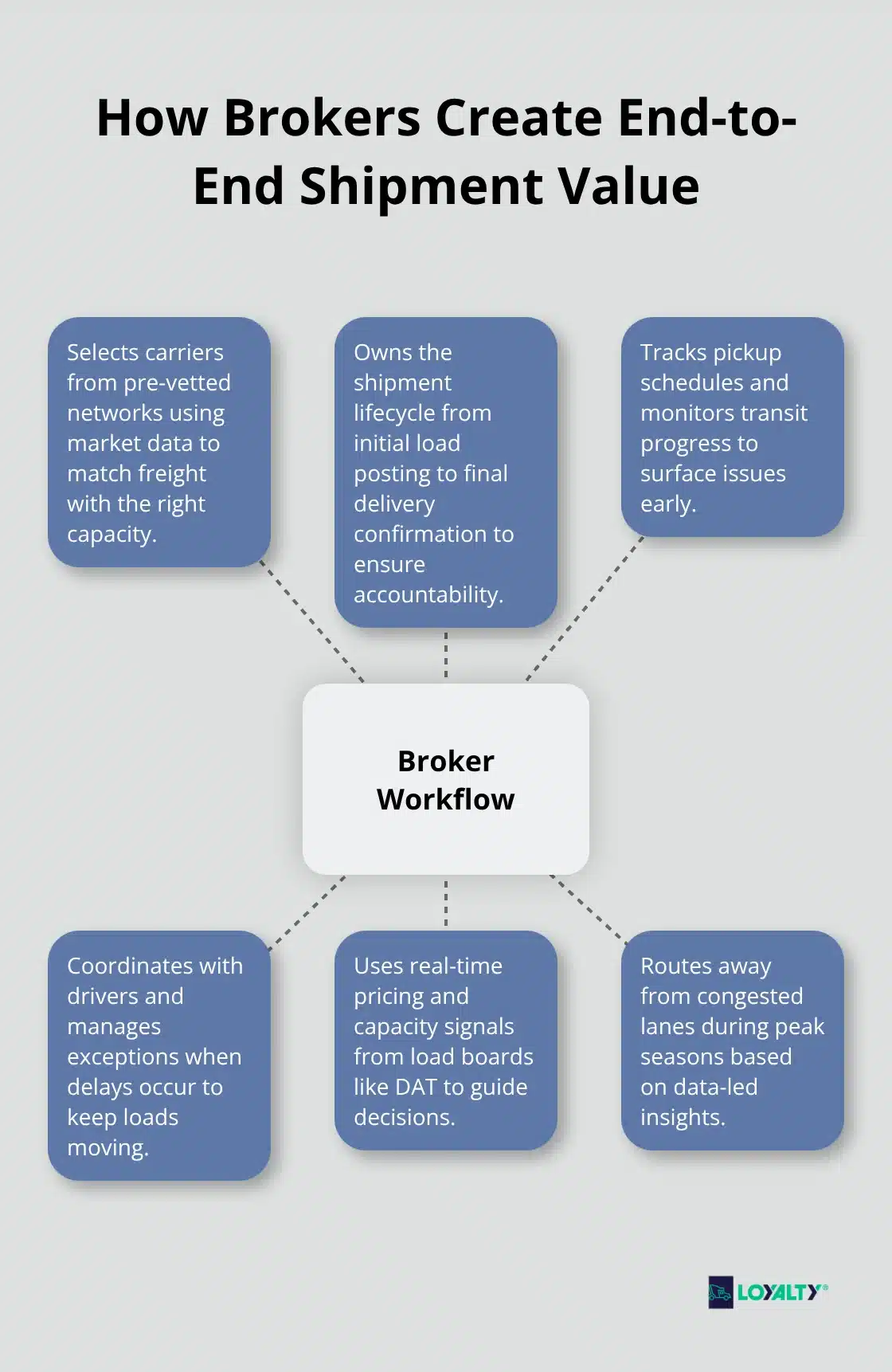
They track pickup schedules, monitor transit progress, coordinate with drivers, and handle exceptions when delays occur. The DAT load board posts over 284 million loads and trucks annually, which gives brokers real-time visibility into market pricing and carrier capacity. This data-driven approach lets them spot rate spikes before they hit your budget and route loads away from congested lanes during peak seasons.
Documentation That Prevents Border Delays
Compliance paperwork is where many shippers stumble, especially in cross-border moves. Brokers manage bills of lading, proof of delivery, carrier certifications, and regulatory filings so errors don’t trigger holds or inspections at the border. They verify that carriers maintain current insurance, proper licensing, and safety ratings before accepting a load. For cross-border shipments, they coordinate with customs brokers to verify that commercial invoices, packing lists, and certificates of origin match your carrier’s requirements and customs systems. This coordination prevents the discrepancies that cause delays at crossings like the Ambassador Bridge, where congestion already adds unpredictable hours to transit times. Brokers also track regulatory changes across states and provinces, flagging new requirements that could affect your shipments. This proactive approach reduces your compliance risk and keeps goods moving without surprises.
Rate Negotiation Tied to Market Reality
Brokers don’t guess at pricing-they negotiate based on lane-specific data, seasonal demand, and carrier profitability. They understand that rates depend on distance, load size, delivery urgency, and current carrier utilization. During tight capacity periods, they identify which carriers have preferred routes that align with your shipment and secure better terms by matching load characteristics to carrier needs. This targeted approach minimizes deadheading (empty-trailer miles), which saves carriers fuel and wear while reducing costs passed to you. A broker’s established relationships with carriers also mean you avoid the premium rates that spot-market carriers charge when capacity tightens. The best freight brokerage services publish 90-day on-time performance and itemize fuel surcharges so you can compare apples to apples instead of trusting headline rate quotes. They monitor market fluctuations continuously and alert you when rates favor booking ahead versus waiting. This market intelligence translates into measurable savings on your transportation budget, especially for regular lanes where brokers can aggregate volume and negotiate annual agreements that lock in predictable pricing.
What Sets Brokers Apart From Your Next Decision
Understanding how brokers operate-their carrier networks, compliance expertise, and rate intelligence-positions you to evaluate whether a brokerage fits your supply chain. The next step is recognizing how brokers differ from other logistics providers you might consider, each with distinct strengths and limitations for different shipping scenarios.
Tired of brokers who talk fast and deliver slow?
Loyalty Logistics runs a vetted carrier network across the U.S., Canada, and Mexico with 90-day performance data, itemized pricing, and proactive communication during transit. Tell us your lanes and equipment mix.
When Should You Use a Broker Instead of Other Logistics Options
Freight brokers and carrier companies operate from fundamentally different business models, and this distinction matters when you decide who moves your freight. A carrier company owns and operates its own fleet of trucks, which means capacity stays fixed to their equipment inventory. If they run full lanes in one direction, they cannot help you when your shipment heads elsewhere. Brokers maintain networks of hundreds of independent carriers, so they match your load to whoever has available capacity on your route at any given time.
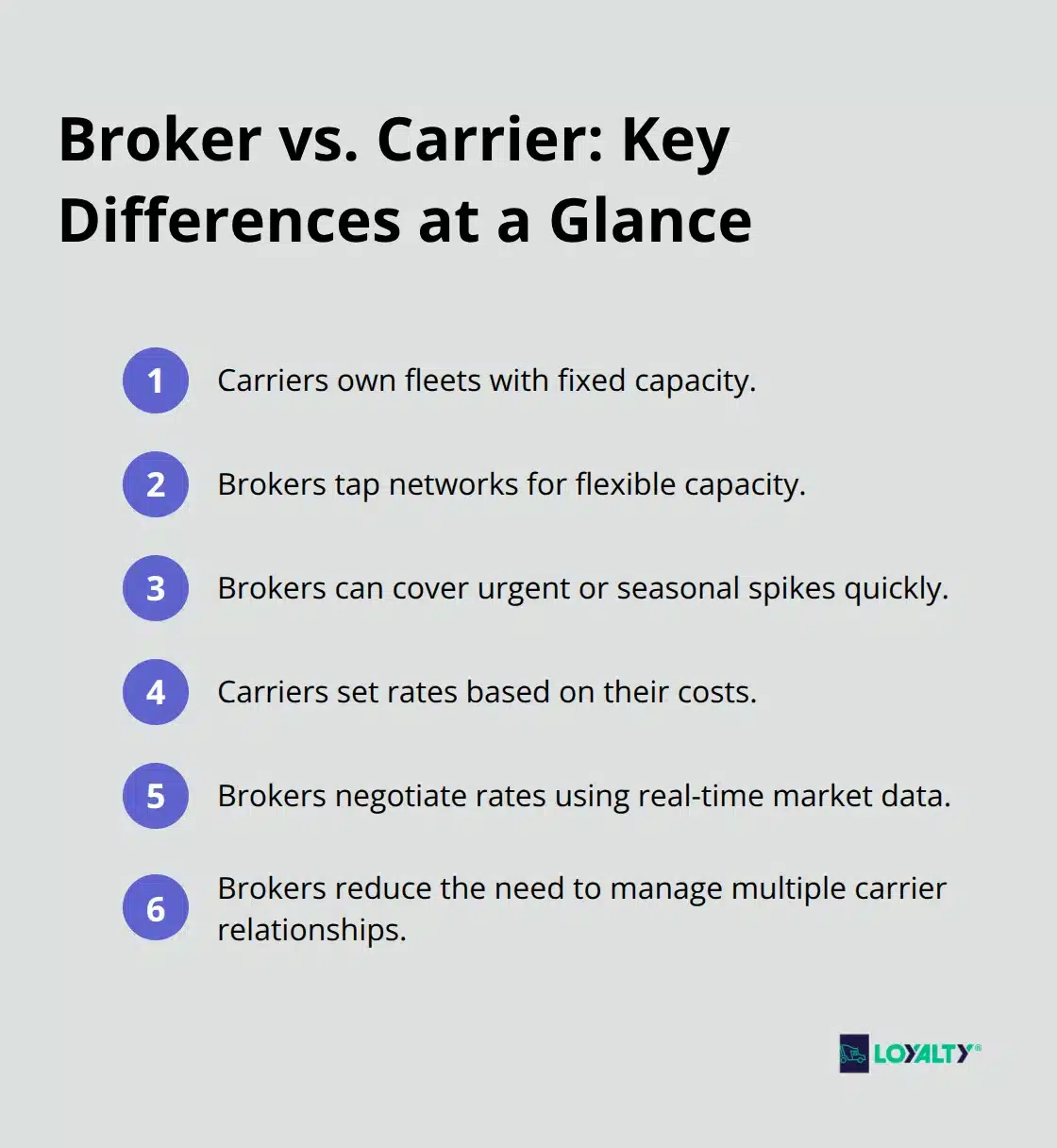
This flexibility lets brokers fill urgent shipments or handle seasonal spikes without forcing you to maintain contracts with multiple carriers. Carrier companies charge fixed rates based on their own cost structure, but brokers negotiate rates based on real-time market data and carrier utilization. When capacity loosens, brokers identify carriers with surplus trucks and secure better pricing. When capacity tightens, they leverage relationships to prioritize your shipments. You also avoid the overhead of vetting, insuring, and managing individual carrier relationships. Brokers handle compliance verification, insurance checks, and safety ratings before accepting any load, which reduces your administrative burden significantly.
How Brokers Differ From 3PL Providers
Third-party logistics (3PL) providers offer warehouse and fulfillment services that brokers typically do not. If your supply chain requires storage, inventory management, or value-added services like kitting or labeling, a 3PL fits your needs better. Brokers focus exclusively on transportation coordination and rate negotiation. However, many shippers confuse the two because large 3PLs sometimes offer brokerage services as an add-on. The critical difference is scope: 3PLs manage your entire logistics operation, including warehousing and inventory, while brokers move freight between fixed points. This means 3PLs charge management fees on top of transportation costs, which adds overhead if you only need freight movement. Brokers charge only on the shipments they move. For companies with stable warehousing needs and complex fulfillment requirements, a 3PL makes sense. For shippers focused on transportation efficiency and rate optimization, brokers deliver better value.
Brokers and Freight Forwarders Serve Different Trade Routes
The differences between freight brokers and freight forwarders matter most when your trade routes cross oceans or multiple continents. Forwarders specialize in international and cross-border shipments, holding their own operating authority and often maintaining overseas offices. They book cargo space directly with ocean and air carriers, negotiate global rates, and manage customs documentation as part of their core service. Brokers primarily handle domestic U.S. shipments, though some maintain limited cross-border capacity. For international moves that originate outside the U.S., a forwarder’s established relationships with global carriers and customs expertise become essential. Forwarders also handle consolidation services, assembling partial loads into full containers to optimize international shipping costs. Brokers do not typically provide this service. However, for domestic cross-border moves between the U.S. and Canada or Mexico, brokers often deliver faster service and lower costs than forwarders because they work with ground carriers instead of relying on ocean and air schedules. The toll costs at major crossings and border congestion times factor directly into broker pricing, whereas forwarders may not account for these specifics. If your cross-border freight stays within North America, brokers typically offer superior rate transparency and faster transit. For global shipments that cross oceans or multiple continents, forwarders become the necessary partner.
When Brokers Outperform Carriers on Flexibility
Carriers excel at high-volume, repetitive lanes where they can fill trucks consistently and operate efficiently. If you ship the same route weekly with predictable volumes, a direct carrier relationship often yields the lowest rates. Brokers shine when your shipping patterns shift seasonally, when you need coverage across multiple lanes, or when you face unexpected capacity gaps. A broker’s network absorbs demand fluctuations that would strain a single carrier’s resources. During peak seasons, brokers tap into their full network to secure capacity when carriers run tight. During slow periods, they negotiate volume discounts with carriers who have surplus trucks. This dynamic pricing model protects your budget from the rate spikes that hit shippers locked into single-carrier contracts. Brokers also reduce your risk by vetting carriers continuously, so you avoid the disruption that occurs when a carrier fails or reduces service.
Choosing Your Logistics Partner Based on Shipment Type
Your shipment characteristics determine which partner type serves you best. Standard domestic loads with flexible timelines favor brokers because their networks optimize pricing and capacity matching. Time-sensitive or specialized freight (refrigerated, hazmat, oversized) may benefit from a carrier with dedicated equipment and expertise in that category, though brokers can source these specialists from their networks. Cross-border North American shipments favor brokers who understand toll structures and border procedures. International ocean or air shipments require a forwarder’s global carrier relationships and customs knowledge. Many shippers work with multiple partners simultaneously-a carrier for core lanes, a broker for overflow and seasonal demand, and a forwarder for international moves. This hybrid approach balances cost, reliability, and service flexibility. The next section examines how to evaluate brokers specifically, so you can identify which one aligns with your operational priorities and supply chain complexity.
Want a broker quote that itemizes everything?
Tell us your lanes, equipment mix, and typical volumes. We’ll quote with itemized fuel surcharges, accessorial charges, and 90-day performance data so nothing surprises you on the invoice.
Selecting a Broker That Matches Your Supply Chain Reality
Verify Track Record and Operating Authority
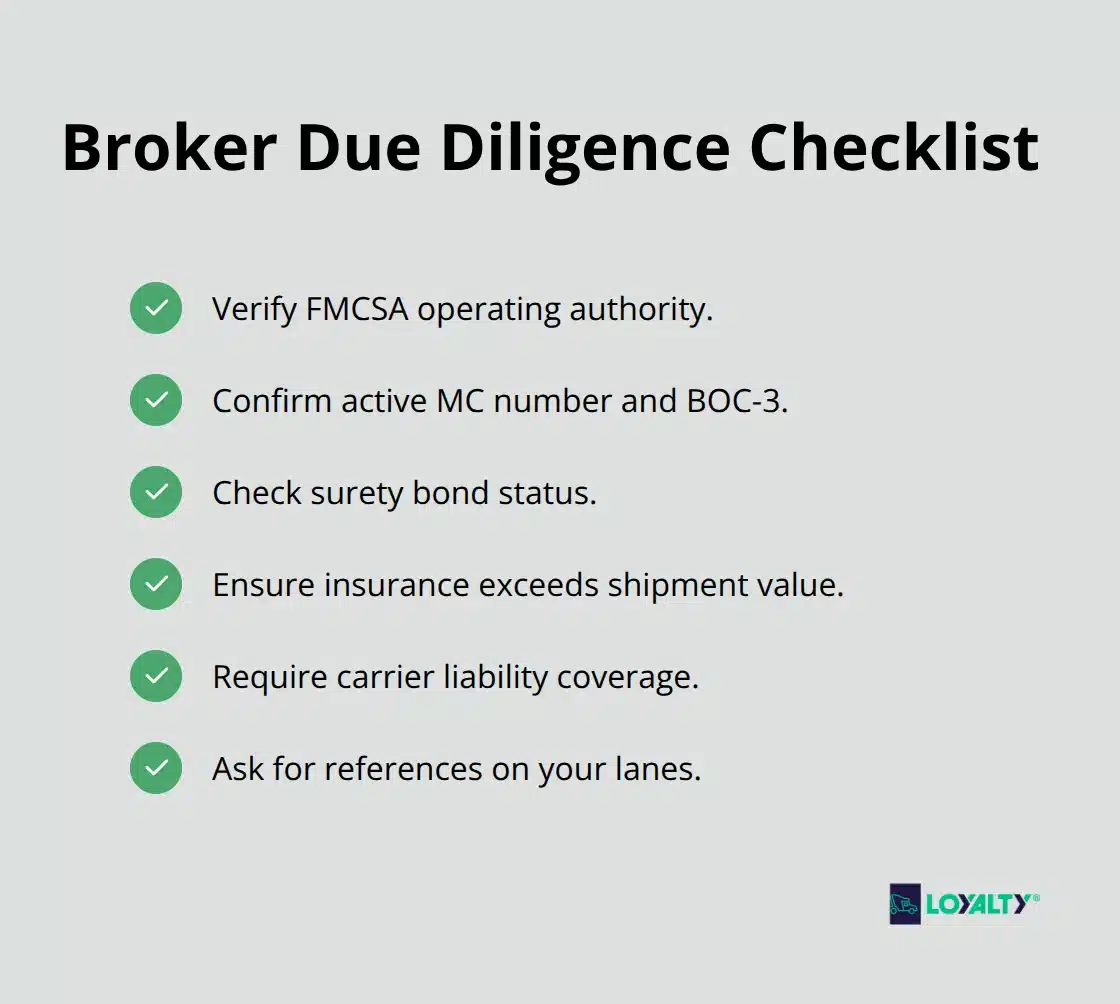
Start by asking brokers directly about their experience moving freight on your specific routes. A broker claiming expertise everywhere has expertise nowhere. Request references from shippers on lanes identical to yours, then contact those references and ask about on-time performance, rate consistency, and how the broker handled disruptions. Brokers operating since the 1980s or 1990s have survived multiple market cycles and understand regional variations that matter for your shipments. Knowing how to find the best broker for your freight is more about specific lane evidence than vague claims of national or international breadth.
Verify their operating authority through the FMCSA database and confirm they maintain a current MC number and BOC-3 appointment. Check their surety bond status, which protects you if they fail to pay carriers or handle your freight improperly. Insurance coverage should exceed your shipment values, and they should carry liability insurance for all carriers in their network.
Assess Technology and Compliance Infrastructure
Many brokers use Transportation Management Systems like DAT Broker TMS to track finances, monitor carrier rates, and flag compliance issues before they escalate. A broker using solid TMS infrastructure typically delivers better visibility and fewer surprises than one relying on spreadsheets and phone calls. This technology investment signals that the broker prioritizes operational efficiency and transparency.
Ask whether they provide real-time tracking and how they notify you of delays. The DAT load board and similar platforms enable brokers to offer shipment visibility, but not all do. Request a test shipment on a non-critical lane and observe whether they proactively update you or force you to chase them for status. During peak seasons or border congestion, communication gaps explode into missed deliveries.
Test Communication Standards Before Committing Volume
Contact their sales team with specific questions about your shipment requirements and measure response time. Brokers who reply within two hours typically maintain this speed during transit problems too. A broker’s willingness to discuss their carrier vetting process reveals how seriously they manage risk. If they cannot explain why they chose specific carriers for your freight or how often they audit carrier safety ratings, move to another option.
Communication standards separate reliable brokers from mediocre ones. During peak seasons, poor communication turns into operational chaos. Brokers that maintain consistent contact throughout transit demonstrate the reliability you need for your supply chain.
Prioritize Cross-Border Expertise for North American Moves
Ask about their approach to cross-border compliance if your shipments cross into Canada or Mexico. Brokers familiar with toll structures at the Ambassador Bridge, Peace Bridge, or Blue Water Bridge, along with customs coordination requirements, handle North American moves more efficiently than brokers treating cross-border as an afterthought. This specialized knowledge directly impacts your shipping costs and transit times.
Brokers with established relationships at border crossings navigate congestion and regulatory requirements faster than generalists. They understand how documentation errors trigger holds and know which carriers maintain the certifications required for cross-border moves. The questions you ask now determine whether your broker becomes a genuine supply chain partner or a recurring source of frustration.
Final Thoughts
Freight brokers operate as essential connectors in supply chains, handling the coordination work that keeps shipments moving across routes and borders. Understanding what a freight brokerage does reveals why they matter more than many shippers realize-brokers absorb the complexity of carrier vetting, rate negotiation, compliance verification, and real-time logistics management so your team can focus on core operations. They reduce administrative overhead, minimize transportation costs through market intelligence, and provide flexibility that fixed carrier relationships cannot match.
Finding the right broker requires more than comparing rates. You need a partner with proven experience on your specific lanes, current operating authority verified through the FMCSA, and technology infrastructure that delivers transparency throughout transit. A broker who responds quickly to questions and proactively updates you during transit demonstrates the reliability your supply chain demands, and for cross-border moves, specialized knowledge of toll structures, customs coordination, and border procedures separates competent brokers from those treating international logistics as an afterthought.
At Loyalty Logistics, we understand that reliable freight movement depends on partnerships built on transparency and performance. Explore our freight transportation services to see how we enhance your transportation strategy and reduce costs while maintaining the service quality your operations require. The right broker transforms freight management from a recurring headache into a competitive advantage.
Frequently Asked Questions
What is a freight brokerage?
A freight brokerage is a company that connects shippers with carriers, manages compliance paperwork, and negotiates rates on behalf of shippers without owning trucks or trailers. Freight brokerages maintain networks of pre-vetted carriers (sometimes hundreds or thousands), use real-time market data to match loads with available capacity, and handle bills of lading, proof of delivery, carrier insurance verification, and regulatory filings. They monitor shipments through transit and resolve exceptions when delays or issues occur.
How do freight brokers differ from carriers?
Carriers own and operate their own trucks, so their capacity is fixed to their equipment inventory and they specialize in specific lanes. Freight brokers do not own trucks; they match your load to whichever carrier in their network has the right capacity, equipment, and route. This flexibility lets brokers cover seasonal spikes and unusual lanes without forcing you to maintain contracts with multiple carriers, but direct carrier relationships often yield the lowest rates on high-volume, repetitive lanes.
What is the difference between a freight broker and a 3PL?
A freight broker focuses exclusively on transportation coordination and rate negotiation, charging only on the shipments they move. A third-party logistics (3PL) provider offers warehouse and fulfillment services on top of transportation, including storage, inventory management, kitting, and labeling. 3PLs charge management fees plus transportation costs, which adds overhead if you only need freight movement. Brokers fit shippers focused on transportation efficiency; 3PLs fit shippers with stable warehousing needs and complex fulfillment requirements.
How do you choose a freight brokerage?
Verify operating authority through the FMCSA database (current MC number, BOC-3 appointment, surety bond, and liability insurance). Request references from shippers on identical lanes and contact them about on-time performance, rate consistency, and how disruptions were handled. Assess the technology stack (TMS, real-time tracking, proactive delay notifications) and test communication standards with specific questions before committing volume. For cross-border moves, prioritize brokers with documented expertise at major U.S.-Canada and U.S.-Mexico crossings.
Ready for a Freight Brokerage That Matches Your Supply Chain Reality?
Freight brokerages earn their margin by preventing problems, not just finding trucks. Tell us your lanes, equipment mix, and typical volumes and we’ll quote with FMCSA-verified credentials, 90-day performance data, and itemized pricing so you know exactly what you’re paying for.
Related Articles
- Best Freight Brokerage Services: Comparative deep-dive on how to evaluate the top freight brokerage providers in 2026.
- Third Party Logistics Providers Guide: Broader playbook for the 3PL category that brokerages sometimes plug into.
- Cargo Insurance for Freight Brokers: What You Need to Know: How insurance coverage protects your shipments when you ship through a broker.
Loyalty Logistics: Connecting businesses with opportunities across North America.
Written by: Carlos Robayo, Marketing Director at Loyalty Logistics
With expertise in logistics marketing and international trade, Carlos specializes in connecting businesses with efficient and reliable transport solutions for the North American market.

