
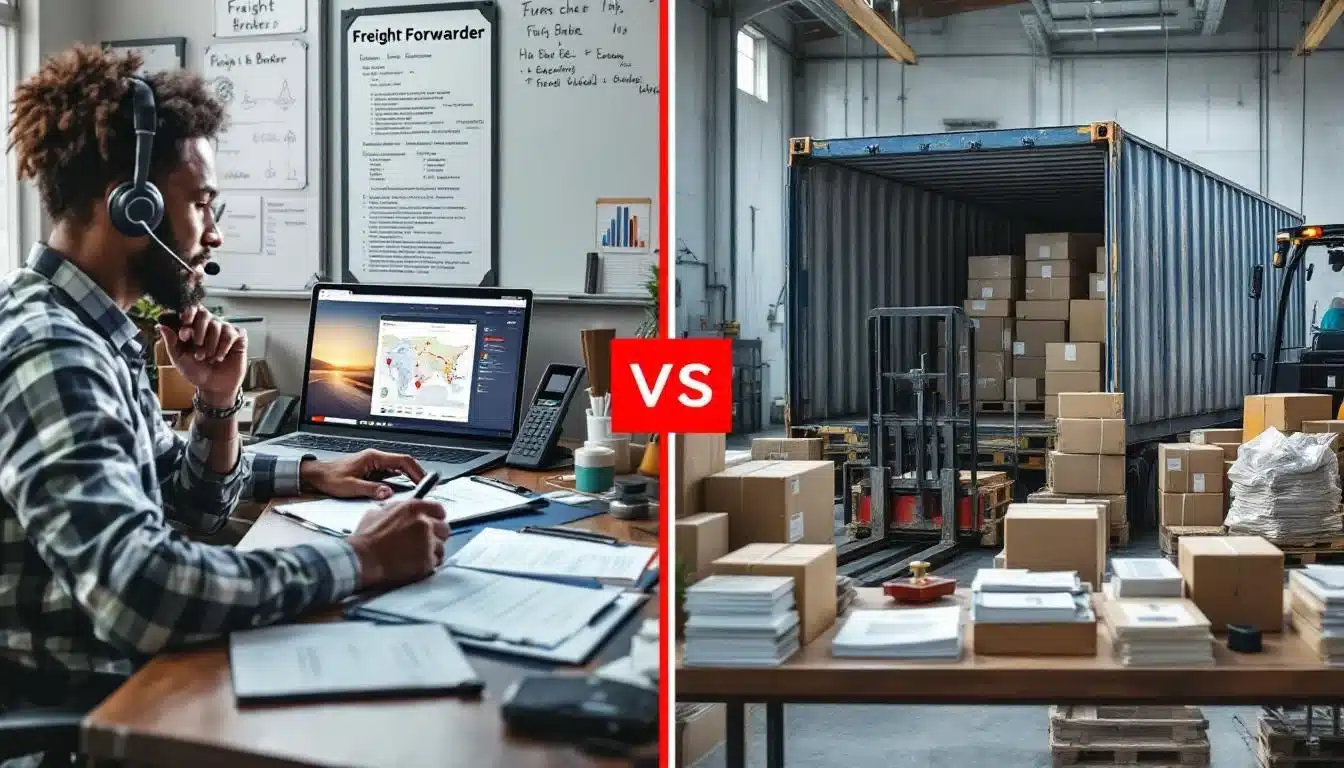
Choosing between a freight broker and a freight forwarder can make or break your shipping strategy. Both handle freight movement, but they operate differently-and that distinction matters when you’re managing costs and timelines.
At Loyalty Logistics, we’ve seen logistics managers waste thousands by picking the wrong partner for their needs. Whether you need cross-border freight services or domestic capacity, this guide breaks down exactly what separates these two options so you can make a decision that fits your operation.
What Brokers Actually Do
A freight broker is fundamentally a middleman who never touches your freight. The Federal Motor Carrier Safety Administration requires brokers to register for brokerage authority, but this registration doesn’t give them the right to own or operate trucks. Instead, brokers connect shippers like you with carriers who have the equipment and drivers to move goods. They negotiate rates, handle paperwork, manage scheduling, and track shipments from pickup to delivery. The cost structure works in your favor because brokers operate with minimal overhead-they don’t own warehouses, trucks, or facilities. This allows them to offer competitive pricing by leveraging their network of carriers rather than their own assets.
How Brokers Build Their Power
Brokers create value through relationships and volume. A broker with access to hundreds of carriers can match your shipment to the carrier best suited for your specific cargo type, destination, and timeline. If you ship perishables to Mexico, a broker knows which carriers specialize in temperature-controlled loads on that lane. If you need capacity during peak season when truck availability tightens, brokers with strong carrier relationships can still find options when direct negotiations fail. They also handle the administrative burden-they book pickups, coordinate delivery windows, manage bills of lading, and file compliance paperwork. This frees your team to focus on core operations instead of logistics coordination. Brokers earn a small commission on each transaction (typically 15 to 20 percent of the freight cost), which aligns their incentive with moving your freight efficiently and reliably.
Licensing and What It Actually Means
Brokers must register with the FMCSA for brokerage authority and obtain a Motor Carrier Number, but this is a registration process, not a licensing process like forwarders face. The barrier to entry is significantly lower than other logistics roles. Brokers also need surety bonds and liability insurance to protect shippers if a carrier fails to deliver or damages cargo. The National Cargo Security Council estimates global cargo loss exceeds 50 billion dollars annually, so this insurance requirement isn’t bureaucratic friction-it’s protection against real financial exposure. When you evaluate a broker, verify their current FMCSA registration, confirm their surety bond amount covers your typical shipment values, and ask about their insurance claims process. A broker with transparent insurance documentation and a clear process for handling claims will save you headaches if something goes wrong. Understanding how cargo insurance coverage works is essential before signing with any logistics partner.
What Sets Brokers Apart From Forwarders
Brokers differ fundamentally from forwarders in how they operate and what they control. A broker never takes possession of your cargo; they coordinate movement between you and a carrier. A forwarder, by contrast, takes physical possession of goods and often stores, packs, and ships under their own FMCSA-licensed authority. This distinction matters because it affects liability, cost, and the services available to you. Brokers focus on rate optimization and carrier matching, while forwarders handle end-to-end logistics including consolidation, storage, and customs clearance. For domestic shipments where you need capacity and competitive rates, a broker delivers results. For international moves where compliance and documentation complexity increase, a forwarder’s hands-on approach becomes more valuable. Understanding this difference helps you avoid overpaying for services you don’t need or underpaying for services that protect your operation.
Need a partner that does both?
Loyalty Logistics operates as both a carrier and freight broker across the U.S., Mexico, and Canada-giving you the flexibility to match the right solution to each shipment.
Explore Our Freight Services →What Forwarders Handle That Brokers Cannot
Physical Possession and Regulatory Authority
A freight forwarder operates under completely different authority than a broker. Where a broker coordinates without touching cargo, a forwarder takes physical possession and operates under FMCSA licensing for interstate and foreign commerce. This distinction means forwarders can store goods, consolidate shipments, handle customs clearance, and issue their own bills of lading. For international shipments, this matters significantly because forwarders manage the complexity that brokers typically cannot navigate alone.
International Documentation and Customs Expertise
Forwarders handle country-specific documentation requirements, tariff classification, duties calculation, and regulatory compliance across multiple jurisdictions. When you ship internationally, incomplete paperwork causes the majority of customs delays. The U.S. Customs and Border Protection agency emphasizes that the Big 3 documents-commercial invoice, bill of lading, and packing list-must be 100 percent accurate before submission. Forwarders prepare these documents correctly because they understand how customs officials interpret data and what mistakes trigger inspections. They also manage certificate of origin requirements, hazardous material declarations, and labeling compliance in destination countries. A forwarder with experience on your specific lane knows which ports move faster, which carriers handle cross-border transitions smoothly, and which documentation formats each country actually requires. This expertise prevents the costly delays that plague shippers relying solely on brokers for international moves.
Consolidation and Rate Negotiation Power
Forwarders excel at consolidation and cost optimization that brokers simply cannot execute. If you ship multiple small orders to the same region, a forwarder combines them into one ocean or air shipment, reducing your per-unit freight cost substantially. They negotiate directly with ocean and air carriers, leveraging their volume to secure rates individual shippers cannot access. They also perform assembly services, specialized packaging to reduce damage during transit, and final-mile coordination in destination countries. Forwarders manage the full landed cost calculation-line-haul charges, fuel surcharges, customs brokerage fees, duties, and cargo insurance-giving you transparent pricing before shipment moves.
Border-Specific Expertise and Trade Compliance
On the U.S.-Mexico border, the Laredo crossing handles over 50 percent of truck traffic with more than 109 billion dollars in annual trade value according to the Bureau of Transportation Statistics. Experienced forwarders on this lane know carrier performance metrics, inspection patterns, and timing windows that reduce wait times. For trade agreements like USMCA, forwarders verify that your goods qualify for reduced duties and ensure the certificate of origin is completed correctly to capture those savings. They also enroll clients in CBP security programs like CTPAT certification when it makes sense, which reduces inspections and improves predictability. The cost structure differs from brokers-forwarders charge service fees plus their margin on transportation-but for international shipments with consolidation potential, the savings from rate negotiation and duty optimization often exceed those fees.
When Forwarders Become Your Strategic Choice
Forwarders work best when you ship internationally regularly, need to consolidate smaller orders, or lack internal expertise in customs compliance and cross-border documentation. The decision between a broker and forwarder ultimately depends on your shipment profile and operational complexity. Understanding these service differences helps you identify which partner actually solves your specific logistics challenges rather than paying for capabilities you’ll never use.
Shipping across the U.S.-Mexico-Canada corridor?
Get a transparent quote that reflects your actual requirements-no hidden fees, no surprises.
Request a Free Quote →How Pricing and Liability Differ Between Brokers and Forwarders
Commission-Based Pricing vs. Service Fees
Broker pricing operates on a commission model that creates transparency around your actual freight costs. A broker charges a percentage of the carrier’s rate, typically 15 to 20 percent, which means you see the line-haul cost separately from the broker’s fee. This structure forces brokers to negotiate aggressively on your behalf because their earnings depend on moving volume efficiently. When you need a domestic shipment moved quickly, this commission-based model often delivers the lowest landed cost because brokers compete fiercely on rates and have no incentive to inflate transportation charges.
Forwarders use a different pricing approach: they charge service fees plus their margin on the actual transportation cost, which adds another layer to your invoice. For a Mexico shipment, a forwarder might charge $500 in brokerage fees, $200 in documentation fees, plus their margin on the ocean or trucking component. This structure means forwarders cost more upfront, but on high-value international consolidations where they negotiate ocean carrier rates directly, the savings from their volume often offset those additional fees.
The critical difference is that broker pricing works best for straightforward domestic moves where rate competition matters most, while forwarder pricing justifies itself through service complexity and consolidation savings on international shipments. Understanding how tariffs impact trade between the U.S. and Mexico also plays a role in calculating your true landed costs when choosing between partners.
Geographic Reach and Service Boundaries
Brokers primarily handle U.S.-based origins and destinations with limited international scope, relying on carrier networks within North America. A broker can move freight from Los Angeles to Dallas efficiently, but moving goods into Mexico requires coordination with a separate forwarder or a carrier experienced in cross-border moves. Forwarders specialize in international shipments and maintain relationships with customs brokers, ocean carriers, and foreign agents in destination countries.
If you ship regularly to Mexico, a forwarder with established operations in Monterrey or Mexico City handles every step from U.S. pickup through final delivery, whereas a broker would hand off responsibility at the border. This geographic limitation means brokers suit companies with primarily domestic networks, while forwarders become essential if your supply chain extends across borders regularly.
Liability: Who Answers When Things Go Wrong
When you work with a broker, the carrier remains legally responsible to you for the shipment’s condition and delivery. The broker facilitates the relationship but does not assume liability for loss or damage. If cargo arrives damaged, you file a claim against the carrier’s insurance, not the broker’s. The broker may assist with the claims process, but their role is facilitation, not responsibility. This arrangement protects you through carrier vetting because brokers maintain detailed performance metrics on carriers they work with, removing unreliable operators from their networks.
Forwarders assume full responsibility once they take possession of your goods. They become liable for the shipment’s condition, timely delivery, and safe handling throughout transit. This liability extends through their entire network, meaning if their customs broker makes an error that delays your shipment, the forwarder answers to you, not the customs broker. This responsibility structure costs more to operate because forwarders must carry higher insurance and maintain stricter quality controls, but it transfers risk away from you.
For high-value shipments or time-sensitive freight where delays create business disruption, this liability shift justifies the forwarder’s higher fees. For routine freight where carrier performance is predictable, a broker’s lower cost and your direct relationship with the carrier works fine.
Final Thoughts
The freight broker vs freight forwarder decision depends entirely on your shipping profile and operational complexity. If you move freight domestically with straightforward requirements, a broker delivers cost efficiency through carrier networks and rate competition. If you ship internationally, consolidate orders, or navigate customs compliance regularly, a forwarder’s hands-on approach prevents costly delays and compliance failures.
Start by mapping your shipment patterns for the next 12 months-document your typical origin-destination pairs, shipment frequency, cargo types, and whether international moves are occasional or routine. Evaluate potential partners on specific criteria: verify FMCSA registration and surety bond amounts for brokers, confirm customs brokerage credentials and CTPAT enrollment for forwarders, and request references from shippers on your exact lanes. Ask about their tracking systems, claims processes, and how they handle disruptions like port congestion or border delays.
Don’t choose based on price alone; a cheaper broker without carrier vetting or a forwarder without lane-specific experience will cost you far more through delays and damage claims.
Related Articles
• What Is a Freight Broker and Why Do You Need One? – The fundamentals of freight brokerage
• Mastering Cross-Border Shipping in North America – Complete guide to NA logistics corridors
• How to Find the Best Broker for Freight – Evaluation criteria for selecting the right partner
Ready to Find the Right Logistics Partner?
Loyalty Logistics operates as both an asset-based carrier and freight broker across the U.S., Mexico, and Canada. CTPAT certified, with real-time tracking, bilingual support, and 144+ trucks in our own fleet. Whether you need brokerage flexibility or full-service freight forwarding, we match the right solution to your shipment.
Loyalty Logistics: Connecting businesses with opportunities across North America.
Written by: Carlos Robayo, Marketing Director at Loyalty Logistics
With experience in logistics marketing strategy and international trade, Carlos specializes in connecting businesses with efficient and reliable transportation solutions across the North American market.

