
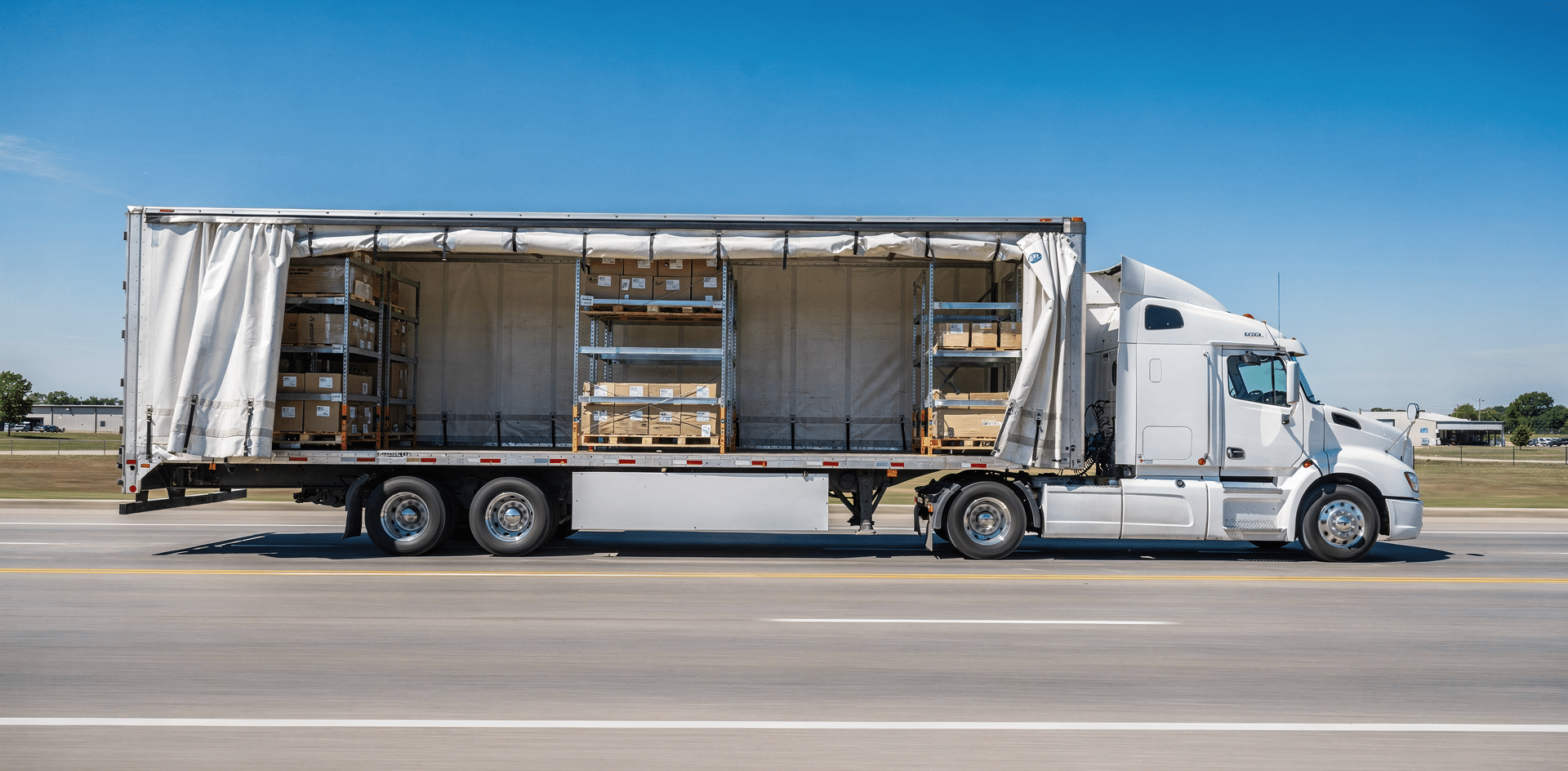
Conestoga trailers solve a problem that standard flatbeds can’t: protecting exposed cargo without slowing down your operation. The retractable tarp system opens and closes in minutes, cutting your loading times while keeping weather damage off your bottom line.
At Loyalty Logistics, we work with logistics managers who need freight solutions that actually work. This guide breaks down how conestoga trailers operate and why they’re worth considering for your next shipment.
What Makes a Conestoga Trailer Different
A Conestoga trailer is an open-deck flatbed equipped with a retractable rolling tarp system mounted on a metal frame. Standard flatbeds leave cargo exposed to weather, dust, and theft during transit. Conestoga trailers close that gap by combining the loading flexibility of a flatbed with weather protection that deploys in minutes rather than hours. The typical setup runs 48 or 53 feet long, 8 feet 4 inches wide, and accommodates loads up to 44,000 pounds on flatbed models. The tarp itself is non-contact, floating above your cargo on the frame rather than resting directly on it, which reduces damage risk for sensitive items like sheet metal, machinery, or electronics.
Speed Advantage Over Traditional Tarping
Manual tarping on traditional flatbeds takes 30 minutes to several hours, whereas the Conestoga system closes completely in minutes. For logistics managers moving time-sensitive shipments, that speed translates directly to reduced dock dwell time and faster turnaround. Your team spends less time at loading docks and more time on the road, which improves asset utilization across your fleet.
How the Retractable System Works
The tarp rolls along tracks on both sides of the trailer frame, opening from the rear or sides to allow access from multiple angles. You simply retract the tarp to load or unload, giving full access to your entire load without removing any covering. Once loading is complete, you roll the tarp back into place and lock it. The locking mechanism adds a security layer that basic tarped flatbeds cannot match, which matters for high-value cargo or shipments moving across state lines where theft risk increases. Proper cargo securing techniques remain essential even with the tarp protection, since load shifts during transit can cause damage regardless of weather coverage.
Variants for Specialized Cargo
Step-deck and double-drop Conestoga models handle taller freight. Step-deck variants reach 116 inches in height and carry up to 41,000 pounds, making them suitable for CNC machinery or robotics. If you’re evaluating whether a step deck trailer or Conestoga step deck best fits your operation, the key difference is weather protection-Conestoga adds it without sacrificing height. Double-drop configurations push interior height to 139 inches in the lower well but reduce weight capacity to 35,000 pounds-a trade-off worth considering if your cargo is tall but relatively light. These options mean you can match the trailer type to your specific load rather than forcing an oversized solution.
Need the right trailer for your cargo?
Loyalty Logistics operates flatbed, step deck, lowboy, and Conestoga equipment across the U.S., Mexico, and Canada-with expert load planning for every shipment.
Explore Our Freight Services →Why Conestoga Trailers Reduce Your Real Costs
Weather Protection Cuts Preventable Damage
Weather damage to exposed cargo costs U.S. shippers an estimated 5-7% of freight value annually across industries like automotive, construction, and electronics. A Conestoga trailer’s non-contact tarp system prevents water damage, dust contamination, and UV degradation that flatbeds cannot control. If you ship sheet metal worth $50,000, even a 2% loss to weather exposure translates to $1,000 in preventable damage.
The tarp deploys in minutes, so your cargo sits protected during dock delays rather than exposed to rain or temperature swings. For logistics managers handling weather-sensitive freight across multiple states or seasonal routes, this protection directly reduces claim rates and customer complaints.
Height Variants Eliminate Permit Delays and Costs
Step-deck variants reach 116 inches in height and carry up to 41,000 pounds, making them suitable for CNC machinery or robotics without oversized permits. This advantage saves weeks of approval time and eliminates the $500-$2,000 permit costs that oversized loads demand. Double-drop configurations push interior height to 139 inches in the lower well but reduce weight capacity to 35,000 pounds-a trade-off worth considering if your cargo is tall but relatively light. Understanding the common challenges of hauling oversized cargo helps you determine whether a Conestoga variant eliminates enough friction to justify the choice.
Loading Efficiency Recovers Hidden Labor Hours
Manual tarping on traditional flatbeds consumes 30 minutes to several hours per load, which multiplies across your annual volume. A Conestoga’s retractable system cuts that time to minutes, reducing dock dwell time by 80-90% and freeing your dock workers for other tasks. If your facility processes 20 shipments weekly and saves 45 minutes per load, you recover roughly 900 hours annually-equivalent to nearly half a full-time employee’s salary. Side access allows your team to load or unload from multiple angles without repositioning the trailer, which accelerates operations at congested loading docks.
Security and Asset Utilization Compound Your Savings
The locking tarp system eliminates the security risk of open flatbeds, which matters for high-value shipments moving through urban areas or overnight. Theft deterrence alone justifies the choice for automotive parts, electronics, or specialty equipment. These operational gains compound: faster turnaround reduces fuel costs through improved asset utilization, lower labor overhead, and fewer detention charges. The real question for your operation isn’t whether Conestoga trailers cost more upfront-it’s whether the efficiency gains and damage prevention offset that investment for your specific freight mix.
Where Conestoga Trailers Deliver Real Value
Automotive Parts: Eliminating Weather Damage Claims
Automotive parts distributors face a specific problem: components arrive damaged or delayed, and both outcomes cost money. Sheet metal stampings, door panels, and engine housings move through distribution networks where exposure to rain, dust, or temperature swings creates warranty claims and customer friction. A Conestoga trailer eliminates this exposure during the critical dock-to-dock window. Companies that need to optimize logistics for the automotive industry find that Conestoga trailers address their most persistent damage complaints.
Automotive shippers moving parts across the U.S. report that weather-related damage claims drop significantly when switching from open flatbeds to Conestoga solutions, particularly on routes through the Midwest and Southeast where seasonal rain is predictable. The non-contact tarp system matters here because it floats above your cargo rather than resting on it, preventing paint damage or surface contamination that direct contact would cause.
Construction Materials: Protecting High-Value Loads
Construction material suppliers face a different but equally pressing challenge. Lumber, drywall, insulation, and roofing materials deteriorate rapidly when exposed to moisture. A single rain event can render a $15,000 load of engineered lumber unusable, forcing complete replacement and schedule delays. Conestoga trailers solve this by protecting materials during transit while allowing side loading at job sites without repositioning the trailer.
The step-deck variant proves especially useful for construction equipment like press brakes or CNC machines that exceed standard height limits. These taller loads typically demand oversized permits costing $500-$2,000 and adding weeks of approval time. A step-deck Conestoga reaches 116 inches in height with a 41,000-pound capacity, eliminating the permit requirement entirely for most machinery shipments.
Food and Consumer Goods: Compliance and Freshness
Food and consumer goods shippers operate under tighter constraints because regulatory compliance and product integrity are non-negotiable. Fresh produce, packaged goods, and temperature-sensitive items require protection from contamination and weather exposure during cross-border shipments to Canada and Mexico. The Conestoga’s sealed tarp system prevents dust and debris intrusion while maintaining visibility into the load, a critical advantage for compliance documentation.
Logistics managers moving consumer goods across state or international borders appreciate the security layer the locking tarp provides, particularly for high-value shipments moving overnight or through high-theft corridors. Food distributors specifically benefit from the reduced dock dwell time because every hour a shipment sits exposed increases spoilage risk and regulatory liability.
Shipping weather-sensitive cargo across North America?
Our team matches the right equipment to your freight-Conestoga, flatbed, step deck, or enclosed-with real-time tracking on every load.
Get a Free Quote →Final Thoughts
Conestoga trailers address a real operational problem that logistics managers face daily: how to protect cargo without sacrificing speed or flexibility. Weather damage claims drop when sensitive freight stays protected during transit, loading times shrink by 80-90% and recover labor hours that compound into meaningful cost savings, height variants eliminate expensive oversized permits for machinery and equipment, and the locking tarp system deters theft on high-value shipments moving through vulnerable corridors.
The decision comes down to your specific freight mix: calculate your annual weather damage claims, permit costs, and dock labor hours, then compare that total against the Conestoga rental premium for your typical routes. For a broader look at how different trailer types compare for your operation, our complete guide to flatbed trucking covers the full range of open-deck options.
Related Articles
• What Is a Step Deck Trailer and How Is It Used? – Comparing step deck options for tall cargo
• How to Use a Double Drop Trailer Effectively – When you need maximum height clearance
• RGN vs Lowboy: A Comprehensive Comparison – Heavy haul alternatives for oversized equipment
Need the Right Trailer for Your Next Shipment?
At Loyalty Logistics, we match equipment to freight-not the other way around. Conestoga, flatbed, step deck, lowboy, and enclosed options across the U.S., Mexico, and Canada with 98% on-time delivery and real-time tracking on every load.
Loyalty Logistics: Connecting businesses with opportunities across North America.
Written by: Carlos Robayo, Marketing Director at Loyalty Logistics
With experience in logistics marketing strategy and international trade, Carlos specializes in connecting businesses with efficient and reliable transportation solutions across the North American market.

