

Supply chains face mounting pressure from rising costs, customer demands, and global disruptions. Companies lose an average of 6-10% of annual revenue due to supply chain inefficiencies.
We at Loyalty Logistics see businesses transform their operations through strategic optimization of supply chain processes. The right approach combines technology, data analytics, and proven methodologies to drive measurable results.
What Data Do You Need for Supply Chain Success
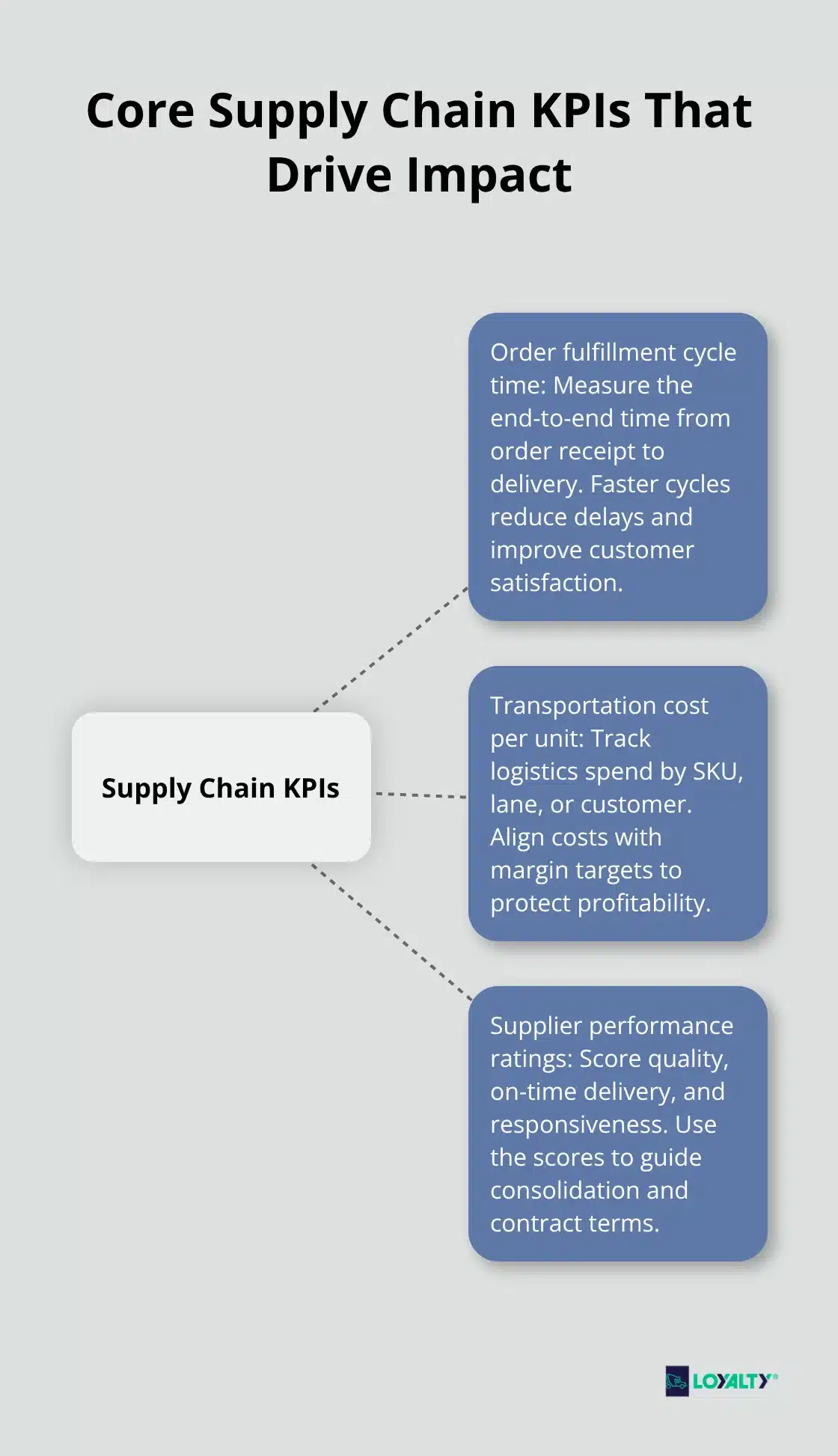
Supply chain visibility starts with the right data points tracked at the right frequency. Companies that use real-time tracking systems report 20% better inventory accuracy compared to those that rely on daily updates, according to Logistics Management research. The most impactful metrics focus on three areas: order fulfillment cycle time, transportation cost per unit, and supplier performance ratings. These KPIs connect directly to revenue impact rather than operational busy work.
Track What Matters Most
Order accuracy rates above 99.5% separate high-performers from average supply chains. Monitor these specific data points hourly: inventory levels at each location, shipment status updates, and supplier delivery performance. Transportation costs should represent no more than 8-12% of total product cost for most industries. Companies that track these metrics in real-time reduce supply chain costs by 10-15% within the first year (based on Institute for Supply Management research).
Make Decisions With Numbers
Data without action creates expensive dashboards that impress executives but change nothing. Set automatic alerts when inventory turnover drops below industry benchmarks or when supplier performance scores fall below 95%. The average inventory turnover rate across sectors reached 8.5 in 2024 according to CSI Market data. Use this benchmark to identify slow-movement inventory that ties up capital. Weekly performance reviews with suppliers that use concrete metrics improve delivery performance by 25% compared to monthly check-ins.
Build Your Analytics Foundation
Start with transportation management software that connects with your current systems rather than standalone solutions. Companies report 50% faster data access when they use cloud-based platforms compared to on-premise systems (Logistics Management). Focus implementation on the highest-cost routes first, which typically represent 20% of shipments but 60% of transportation spend. This targeted approach delivers measurable ROI within 90 days while it builds confidence for broader rollouts.
The foundation you create with data analytics sets the stage for the next level of optimization: advanced visibility technologies that automate these processes and amplify your results.
What Technology Actually Works for Supply Chain Optimization
Warehouse management systems deliver the highest ROI when they integrate with existing ERP platforms rather than replace them entirely. Companies that use integrated WMS report 40% faster order processing compared to standalone solutions (according to the Warehousing Education and Research Council).
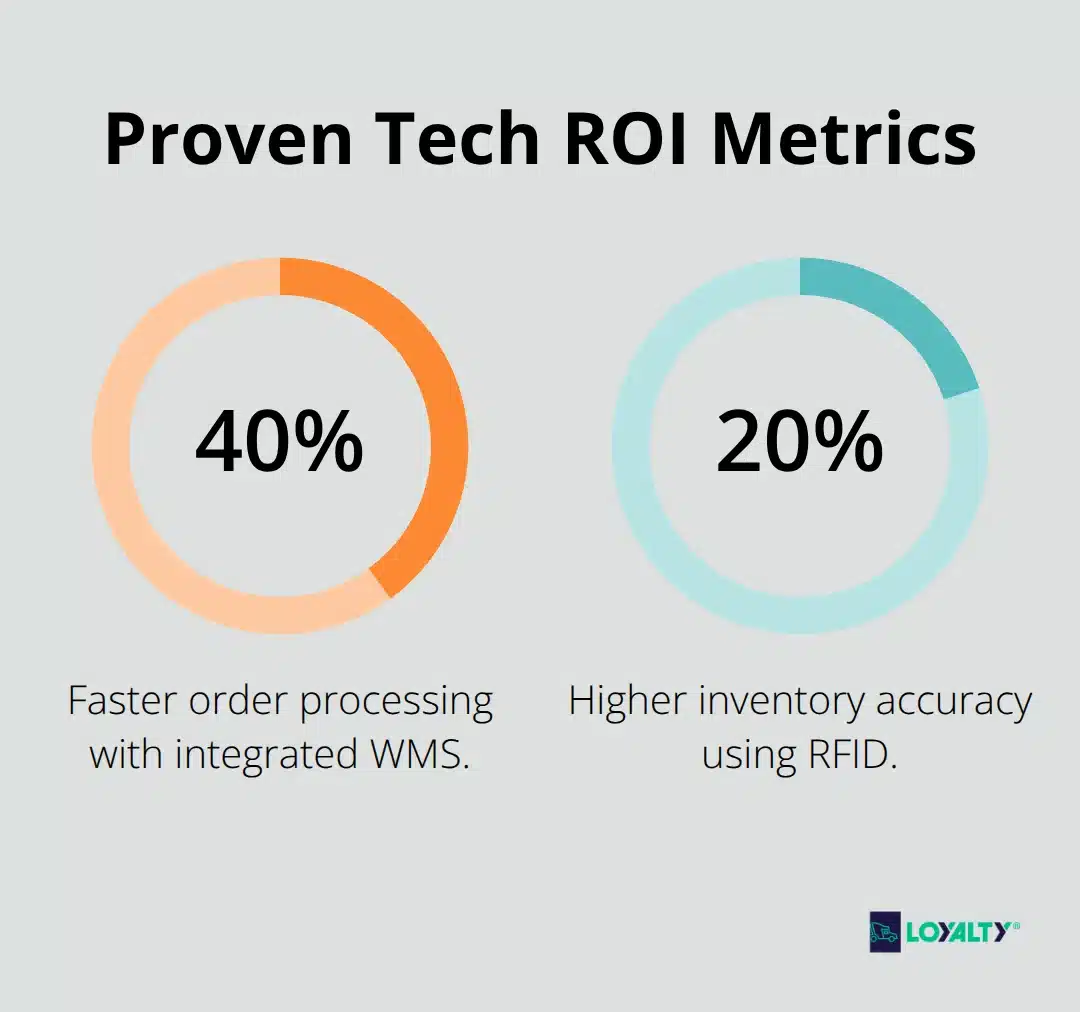
The key lies in automated inventory tracking through RFID technology, which improves accuracy by 20% while it reduces labor hours.
Start With High-Impact Areas
Focus implementation on high-velocity SKUs first, which typically represent 80% of order volume but only 20% of inventory items. Transportation management software becomes profitable when it handles route optimization for fleets above 15 vehicles. These systems generate average fuel savings of 12-18% within six months through better route planning and load optimization.
Smart Automation That Pays Off
Robotic process automation in warehouses works best for repetitive tasks like picking and packing, where companies achieve 35% productivity gains (McKinsey research shows). The sweet spot for automation investment starts at facilities that process 500+ orders daily. Voice-directed picking systems reduce error rates to below 0.1% compared to 2-3% with paper-based methods.
AI Applications That Drive Results
AI-powered demand forecasting improves accuracy by 25% when it analyzes three years of historical data combined with external factors like weather patterns and economic indicators. Machine learning algorithms excel at identification of supplier performance trends. These systems flag potential disruptions 2-3 weeks before they impact operations. For a deeper look at emerging innovations, explore the technologies reshaping logistics operations. Transportation route optimization through AI reduces empty miles by 15-20% while it improves delivery windows, which creates compound savings that justify technology investments within 12-18 months.
These technology foundations work best when they support broader operational strategies that focus on cost reduction and efficiency improvements across your entire supply chain network.
Which Costs Can You Cut Without Hurting Performance
Inventory optimization starts with the 80/20 rule applied ruthlessly to your SKU portfolio. Companies that focus optimization efforts on their top 20% of products achieve 15-20% reduction in carrying costs while they maintain service levels above 98% (Council of Supply Chain Management Professionals). The key lies in demand variability analysis rather than historical averages. Products with coefficient of variation above 1.0 require safety stock calculations that account for lead time uncertainty. ABC analysis combined with XYZ classification creates nine categories where AX items get daily attention while CZ items move to quarterly reviews.
Target the Biggest Cost Drivers First
Transportation represents 60% of total logistics costs for most companies, which makes carrier relationship management your highest-impact opportunity. Negotiate volume commitments with 3-5 core carriers rather than spread shipments across dozens of providers. This concentration delivers 12-18% rate reductions through committed capacity agreements. Consolidating shipments into full truckloads can reduce per-unit shipping costs by up to 20% compared to LTL alternatives. Supplier consolidation programs reduce administrative overhead when you move from 100+ vendors to 20-30 strategic partners. The pharmaceutical company case study from anyLogistix showed that end-to-end supply chain simulation enhanced resilience for global product launches while it identified specific cost reduction opportunities.
Apply Lean Principles That Generate Real Savings
Value stream maps identify non-value-added activities that consume 30-40% of total process time in most supply chains. Focus elimination efforts on excessive handling, redundant quality checks, and information delays between systems. Single-minute exchange of dies principles applied to warehouse changeovers reduce setup times from hours to minutes.
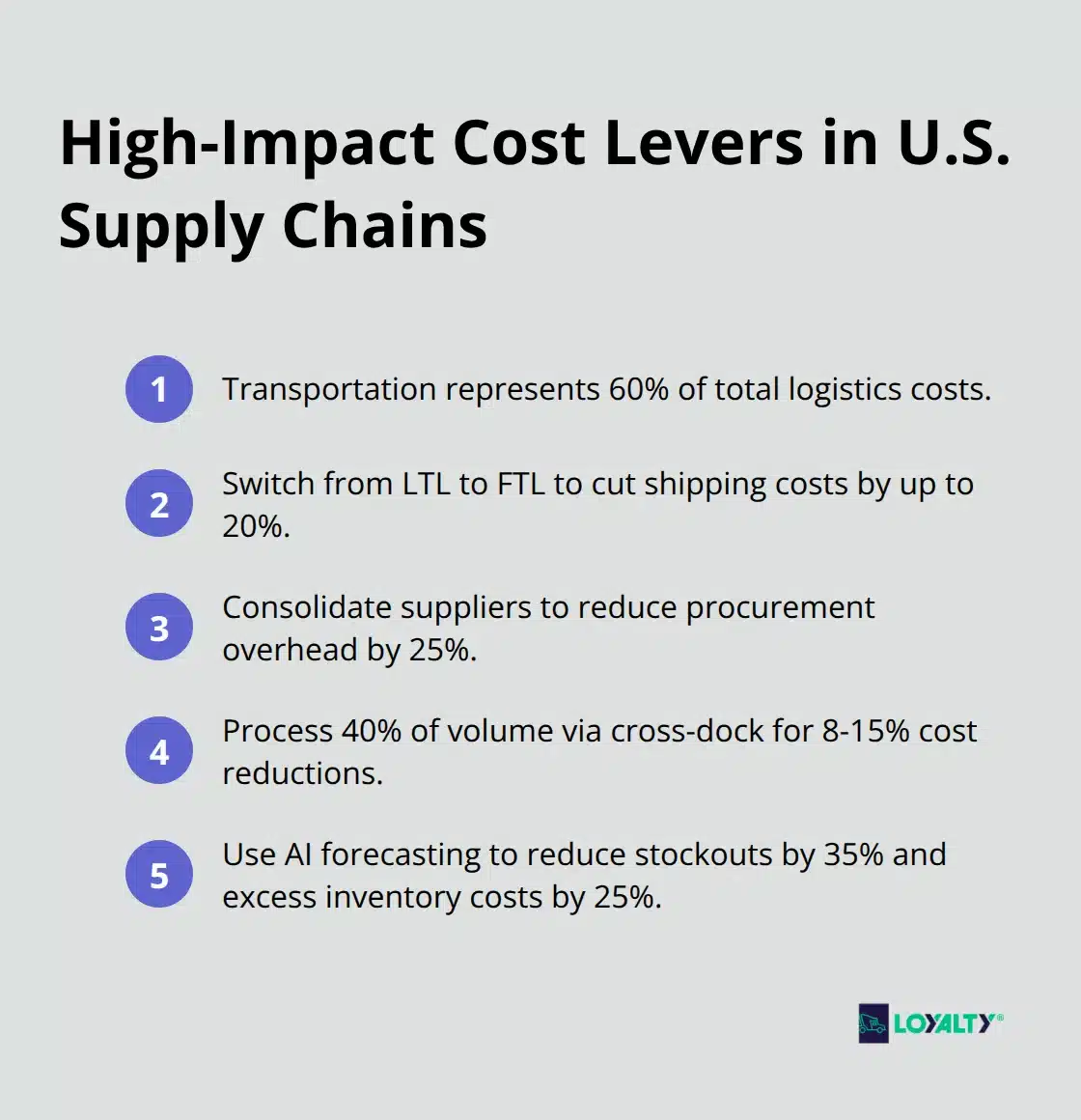
Cross-dock operations eliminate storage costs entirely for fast-moving items, with companies that achieve 8-15% cost reductions when they process 40% of volume through cross-dock facilities rather than traditional warehouses.
Optimize Supplier Relationships for Maximum Impact
Strategic partnerships with fewer suppliers create better negotiation power and reduce transaction costs. Companies that consolidate their supplier base to 20-30 key partners see 25% reduction in procurement overhead compared to those that manage 100+ vendor relationships. Performance-based contracts with suppliers improve delivery reliability while they reduce quality issues. Working with experienced third-party logistics providers can accelerate these improvements by providing established carrier networks and technology platforms. Danone-Waters in Mexico achieved a 13% increase in production capacity and a 5% cost reduction through digital optimization strategies that focused on supplier collaboration and performance management.
Final Thoughts
Supply chain optimization delivers measurable results when you combine data analytics, technology solutions, and cost reduction strategies. Companies that implement real-time systems achieve 20% better inventory accuracy, while integrated warehouse management systems boost order processing speed by 40%. The most successful optimization efforts focus on high-impact areas first: transportation costs that represent 60% of logistics expenses, inventory management for top-performing SKUs, and supplier consolidation that reduces procurement overhead by 25%.
Your implementation roadmap should prioritize quick wins that build momentum. Start with transportation management software for fleets above 15 vehicles, which generates 12-18% fuel savings within six months. Move to automated inventory systems through RFID technology, then expand to AI-powered demand forecasting that improves accuracy by 25%. The key lies in systematic execution rather than attempting everything simultaneously.
Related Articles
- How to Achieve Real-Time Visibility in Your Business – Implementation guide for tracking systems that improve inventory accuracy by 20%
- How to Enhance Supply Chain Visibility with Advanced Tech – Deep dive into GPS, IoT, and monitoring technologies
- The Future of Logistics Technology Is Here [Guide] – Emerging innovations in AI, automation, and predictive analytics
- How to Choose the Best 3PL Logistics Provider – Criteria for selecting logistics partners that enhance supply chain performance
Ready to Optimize Your Supply Chain?
At Loyalty Logistics, we help companies reduce transportation costs and improve delivery performance through reliable freight solutions across North America. Our integrated technology platform provides the real-time visibility and tracking capabilities that modern supply chains demand.
Whether you need full truckload optimization, temperature-controlled shipping, or cross-border logistics support, our team delivers the consistent service levels that keep your supply chain running efficiently.

