
Choosing the best 3PL logistics provider is a critical decision for businesses looking to streamline their supply chain operations.
At Loyalty Logistics, we understand the complexities involved in this selection process.
This guide will walk you through the key factors to consider, how to evaluate performance, and essential questions to ask potential partners.
What Makes a Top-Tier 3PL Provider?
Industry-Specific Expertise
When you select a 3PL logistics provider, several key factors can enhance or hinder your supply chain efficiency. Industry-specific expertise stands at the forefront. A provider with deep knowledge of your sector understands unique challenges and regulations, which can prevent costly mistakes.
Service Breadth and Flexibility
The range of services offered plays a vital role. You should look for providers that offer end-to-end solutions (from warehousing to last-mile delivery). A recent study by Gartner found that companies using 3PLs with comprehensive service offerings report a 15% increase in operational efficiency.
Flexibility holds equal importance. Your chosen 3PL should adapt to your changing needs, whether it involves scaling operations during peak seasons or adjusting to market shifts. This adaptability can transform operations for businesses experiencing rapid growth or facing unpredictable market conditions.
Technological Edge
In today’s digital landscape, a 3PL’s technological capabilities significantly impact your operations. Advanced warehouse management systems (WMS) and transportation management systems (TMS) are now essential, not optional. These systems provide real-time visibility into inventory and shipments, which allows for proactive problem-solving and improved decision-making.
You should seek providers that invest in cutting-edge technologies like AI-driven predictive analytics and IoT-enabled tracking. These tools can help forecast demand, optimize routes, and reduce transit times. A report by DHL revealed that companies leveraging such advanced technologies in their logistics operations saw a 25% reduction in overall supply chain costs.

Strategic Network and Coverage
The geographic reach of a 3PL provider is critical, especially if you plan to expand into new markets. A provider with a robust network of warehouses and distribution centers can help you reduce shipping times and costs. For instance, Amazon’s success partly stems from its vast network of fulfillment centers, which allows for rapid delivery across the country.
Consider providers with strong partnerships across different modes of transportation. This multi-modal approach ensures you have options when faced with disruptions or when seeking the most cost-effective shipping methods.
The best 3PL provider for your business aligns with your specific needs and growth plans. While cost matters, it shouldn’t be the sole deciding factor. Focus on finding a partner that offers the right mix of expertise, services, technology, and network coverage to support your long-term success in the competitive logistics landscape.
As you weigh these factors, it’s important to also consider how a potential 3PL partner performs in real-world scenarios. Let’s explore how to evaluate 3PL performance and reliability in the next section.
How to Measure 3PL Performance Effectively
Track On-Time Delivery Rates
On-time delivery forms the backbone of logistics performance. Industry standards indicate that top-performing 3PLs maintain on-time delivery rates of 95% or higher. Monitor this metric closely, as even a 1% improvement can significantly impact customer satisfaction and reduce costs associated with late deliveries.
Measure Inventory Accuracy
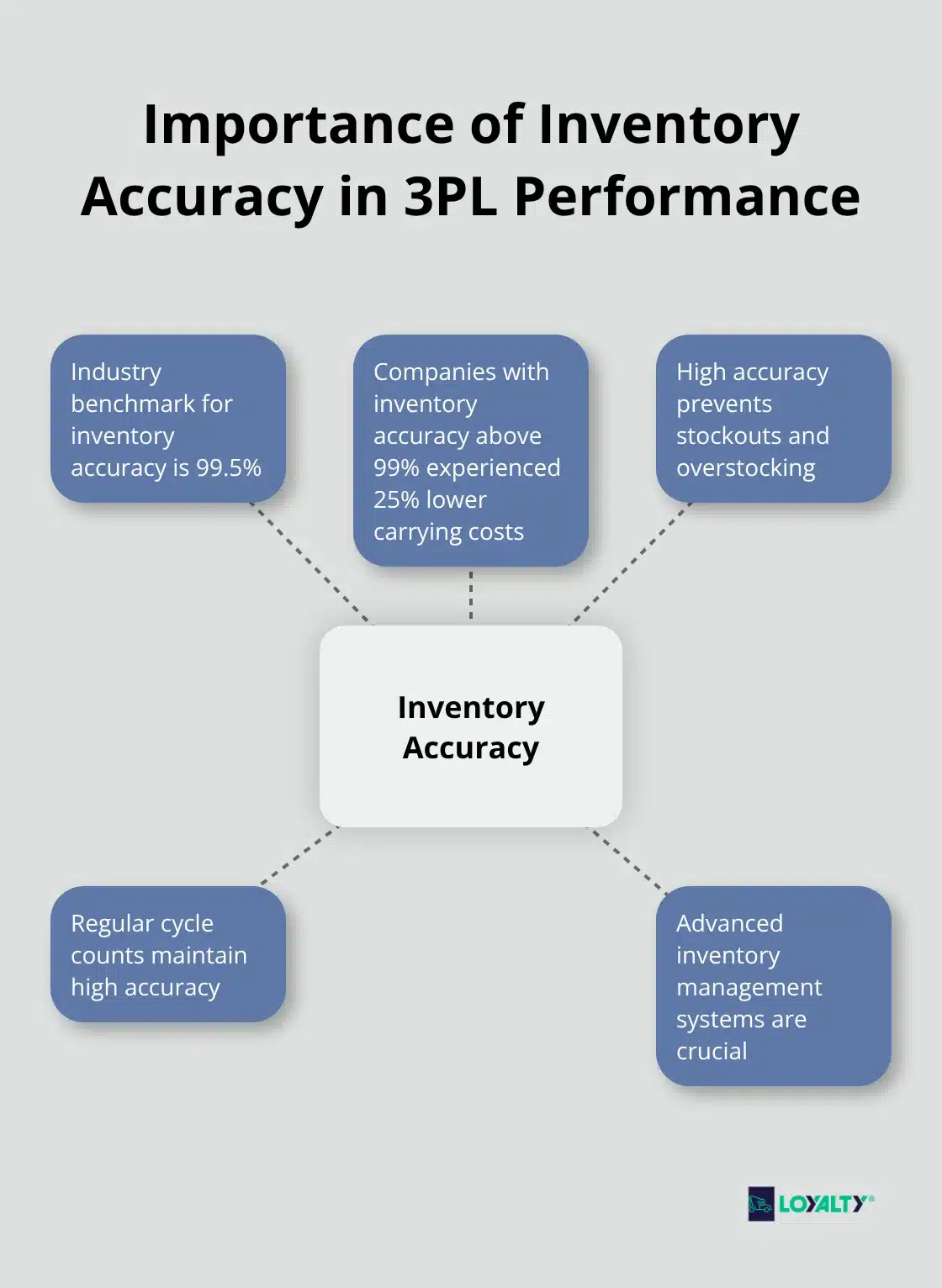
Inventory accuracy directly affects your bottom line. The industry benchmark for inventory accuracy stands at 99.5%. Anything less can lead to stockouts, overstocking, and lost sales. Regular cycle counts and advanced inventory management systems help maintain high accuracy. A study by the Warehouse Education and Research Council found that companies with inventory accuracy rates above 99% experienced 25% lower carrying costs.
Assess Customer Service Quality
The quality of customer service can make or break a 3PL partnership. Look beyond just response times. Evaluate the resolution rate of issues, the knowledge level of support staff, and the proactivity in addressing potential problems. Use Net Promoter Score (NPS) or Customer Satisfaction (CSAT) surveys to gather quantitative data. Top-performing 3PLs typically maintain an NPS of 50 or higher.
Test Flexibility and Scalability
Your 3PL should grow with you. During peak seasons or sudden demand spikes, assess how well they handle increased volume. Can they scale up operations by 30% without compromising quality? Do they have contingency plans for unexpected challenges? A truly flexible 3PL adapts to your needs without long lead times or significant cost increases.
Establish Clear KPIs
These metrics should be tailored to your specific business needs. What’s important is to establish clear Key Performance Indicators (KPIs) from the outset of your partnership and review them regularly. This approach ensures that your 3PL provider remains aligned with your business goals and continues to add value to your supply chain operations.
Now that you understand how to measure 3PL performance, it’s time to consider the critical questions you should ask potential 3PL partners before making your final decision.
Essential Questions for Potential 3PL Partners
When you select a 3PL logistics provider, asking the right questions can make all the difference. Here are some important questions to ask and why they matter:
How Do You Handle Supply Chain Disruptions?
In today’s volatile market, resilience is key. Ask about their contingency plans for various scenarios – from natural disasters to geopolitical events. A robust 3PL should have clear protocols for rerouting shipments, accessing alternative suppliers, and communicating with clients during crises. For example, during the 2021 Suez Canal blockage, agile 3PLs quickly switched to air freight and alternative sea routes, which minimized disruptions for their clients.
What Are Your Sustainability Practices?
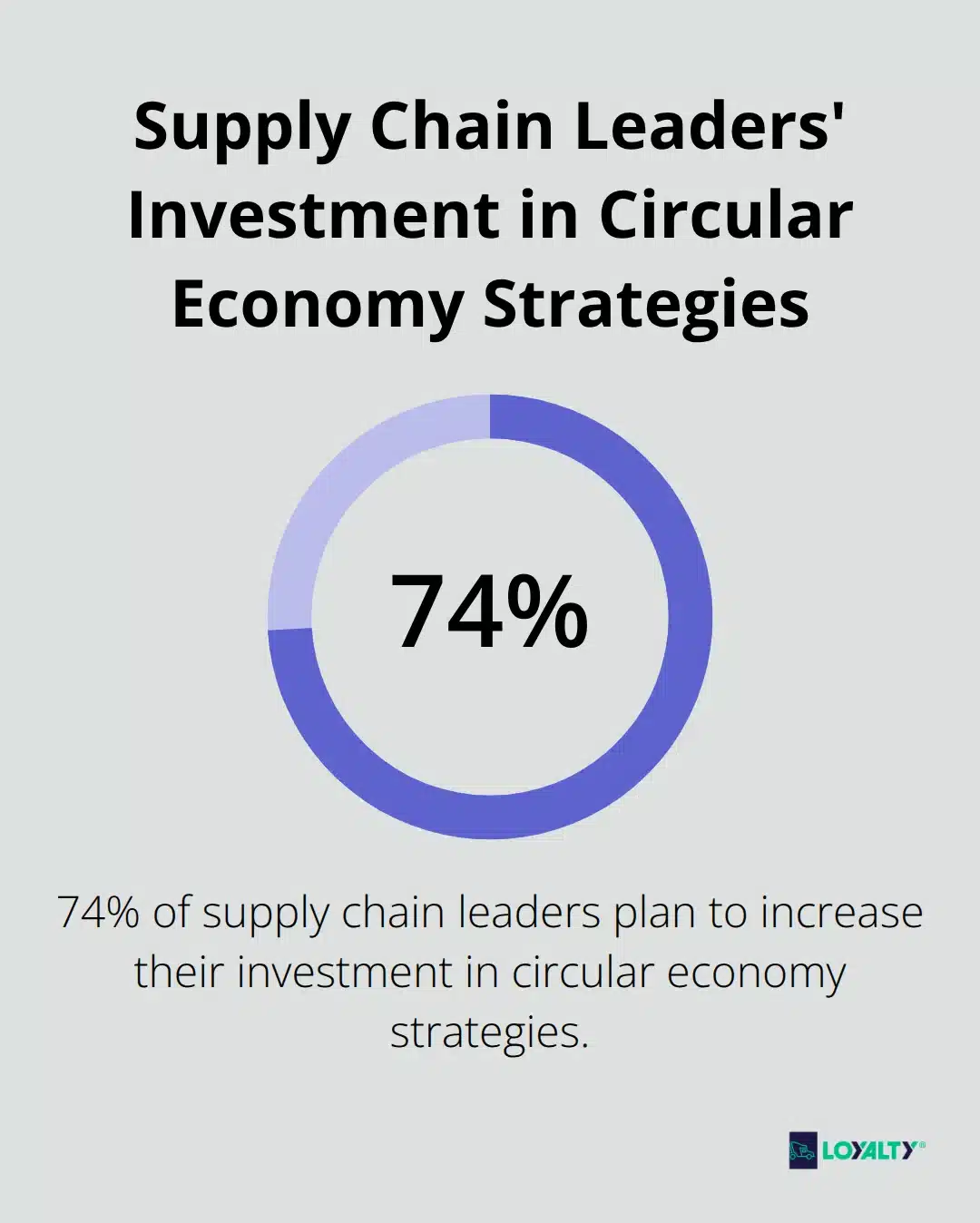
Sustainability is no longer optional in logistics. Ask about their green practices, from fuel-efficient vehicles to eco-friendly packaging. A 2022 Gartner survey found that 74% of supply chain leaders plan to increase their investment in circular economy strategies. Try to find 3PLs that align with this trend, offer carbon footprint reporting, and actively work to reduce emissions.
Can You Provide Case Studies or References?
Concrete examples speak volumes. Request case studies relevant to your industry or challenges. These should detail the problem, solution, and quantifiable results. A case study might show how the 3PL reduced a client’s shipping costs by 20% through route optimization or improved inventory turnover by 30% with advanced forecasting techniques.
How Do You Ensure Data Security and Compliance?
In an era of increasing cyber threats and stringent data protection laws, this question is vital. Ask about their cybersecurity measures, compliance with regulations like GDPR or CCPA, and any certifications they hold (e.g., ISO 27001 for information security). A reputable 3PL should be transparent about their data handling practices and have regular security audits.
What Sets Your Technology Apart?
Technology can significantly differentiate 3PLs. Ask about their IT infrastructure, integration capabilities with your systems, and any proprietary software they use. Does their WMS offer real-time inventory visibility? Can their TMS provide predictive analytics for route optimization? A recent McKinsey report states that companies that leverage advanced analytics in their supply chain can reduce inventory levels by up to 20%.
These pointed questions will give you valuable insights into a 3PL’s capabilities, values, and potential fit with your business. The right 3PL partner should not just meet your current needs but also support your future growth and adapt to evolving market conditions.
Final Thoughts
Selecting the best 3PL logistics provider impacts your business’s efficiency, growth, and customer satisfaction. Industry expertise, service range, technological capabilities, and geographic coverage play vital roles in this choice. Performance metrics such as on-time delivery rates, inventory accuracy, and customer service quality also hold significant importance.
The right 3PL partner should meet your current operational needs and align with your long-term business goals. They must demonstrate resilience in handling supply chain disruptions, commit to sustainability, and maintain robust data security measures. A thorough evaluation of potential partners will help you find a 3PL that adds value to your supply chain and supports your business growth.
Loyalty Logistics offers versatile transportation solutions across the U.S., Canada, and Mexico. Our advanced logistics systems and commitment to sustainability through our Loyalty Green Rewards program aim to enhance your supply chain efficiency. We invite you to explore how Loyalty Logistics can support your business objectives as your trusted logistics partner.