
In the world of logistics, choosing the right outsourcing partner can make or break your supply chain efficiency. The difference between 3PL and 4PL logistics is crucial for businesses looking to streamline their operations.
At Loyalty Logistics, we’ve seen firsthand how understanding these distinctions can lead to significant improvements in supply chain management. This guide will break down the key differences between 3PL and 4PL providers, helping you make an informed decision for your business needs.
What is 3PL Logistics?
Definition and Core Services
Third-Party Logistics (3PL) forms a fundamental part of modern supply chain management. 3PL involves the outsourcing of specific logistics functions to specialized providers. These functions typically include warehousing, transportation, and order fulfillment.
3PL providers offer a range of services to streamline logistics operations:
- Inventory Management: 3PLs handle storage and tracking of goods.
- Transportation Management: They coordinate shipments and often leverage their network to secure better rates.
- Order Fulfillment: This encompasses picking, packing, and shipping customer orders.
Key Features of 3PL Providers
3PL providers stand out due to their focus on execution. They excel in handling day-to-day logistics tasks, which allows businesses to concentrate on their core competencies. 3PLs often own or lease physical assets (such as warehouses and transportation fleets), providing tangible resources to support their clients’ needs.
Flexibility characterizes 3PL services. Businesses can scale their logistics operations based on demand, without the need for significant capital investments. This scalability proves particularly valuable for seasonal businesses or those experiencing rapid growth.
Common Industries Using 3PL
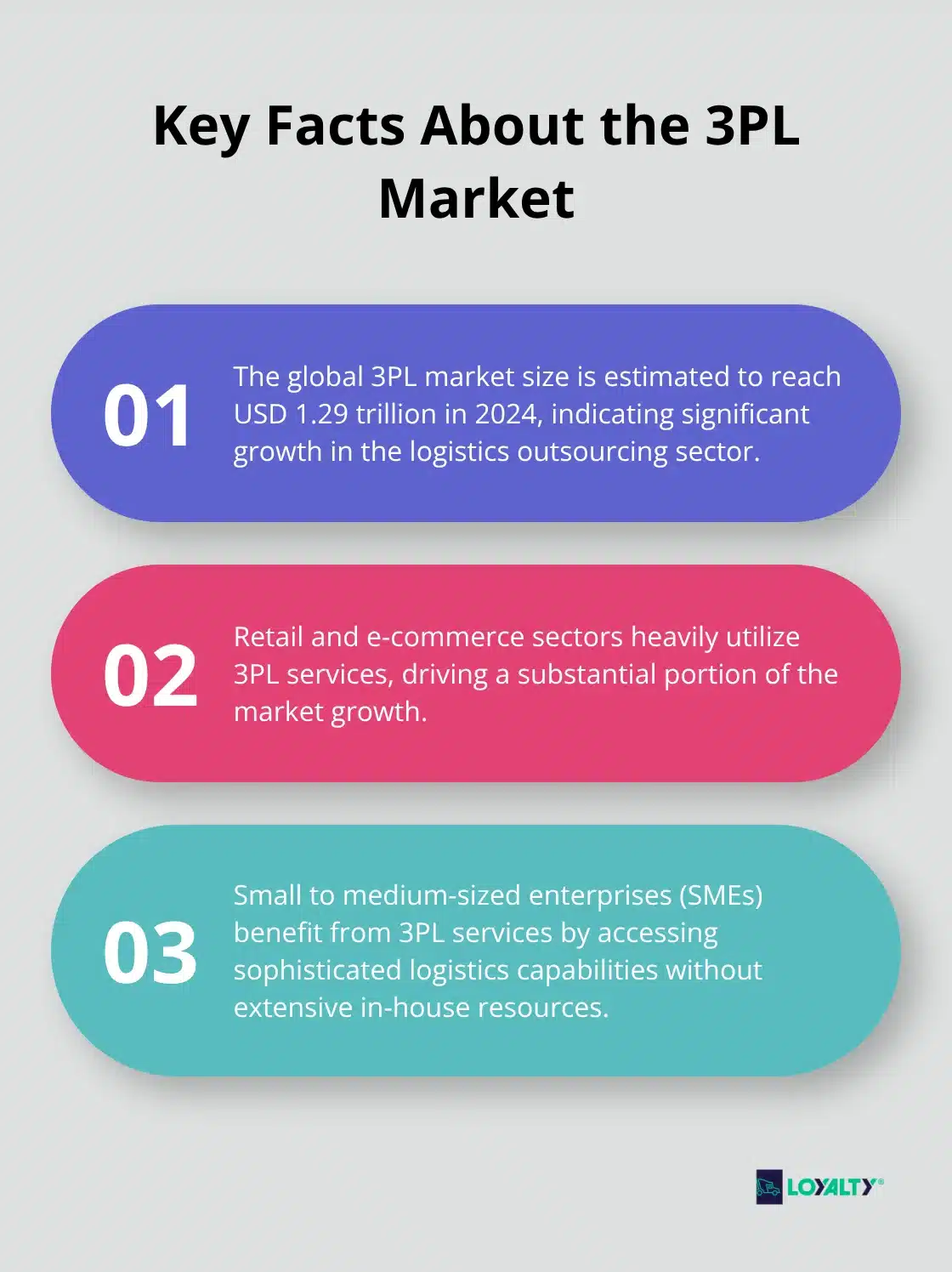
The retail and e-commerce sectors heavily utilize 3PL services. A report by Armstrong & Associates estimates the global 3PL market size will reach USD 1.29 trillion in 2024, with these industries driving a significant portion of this growth. Manufacturers also frequently turn to 3PLs to manage their distribution networks efficiently.
Small to medium-sized enterprises (SMEs) find 3PL services particularly beneficial. These businesses can access sophisticated logistics capabilities without extensive in-house resources. For instance, a growing online retailer might partner with a 3PL to handle order fulfillment, allowing them to focus on product development and marketing.
Businesses across various sectors benefit from 3PL services. The food and beverage industry, for example, relies on refrigerated and reefer trucks to maintain product integrity throughout the supply chain. This specialized capability exemplifies how 3PLs provide industry-specific solutions that enhance operational efficiency.
As we move forward, it’s important to understand how 4PL logistics builds upon these foundations to offer even more comprehensive supply chain solutions.
What is 4PL Logistics?
Definition and Scope
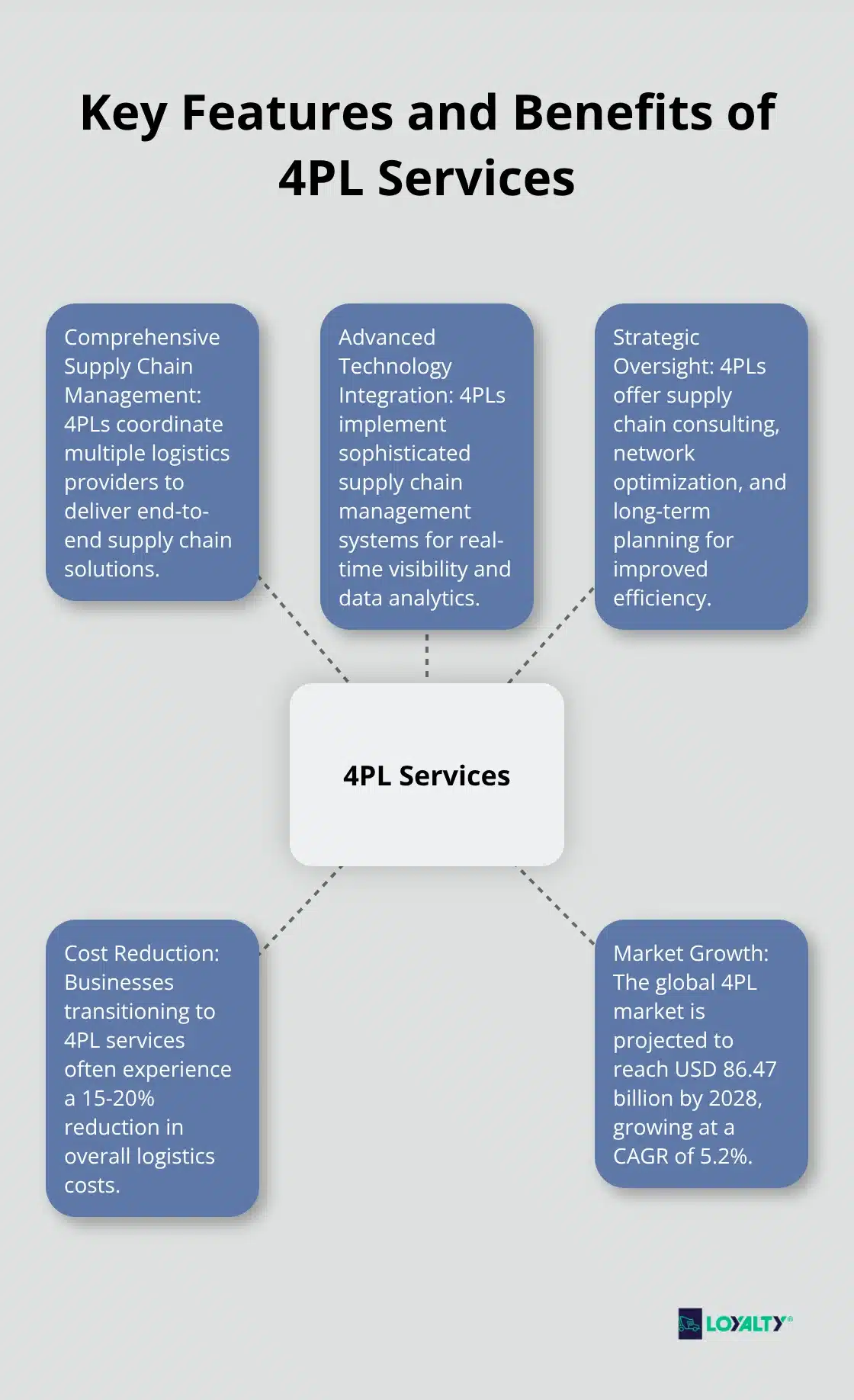
Fourth-Party Logistics (4PL) represents a comprehensive approach to supply chain management. Unlike 3PL providers, 4PLs do not typically own physical assets. Instead, they coordinate and manage multiple logistics providers, including 3PLs, to deliver end-to-end supply chain solutions.
Expanded Services and Strategic Oversight
4PL providers offer a range of services that extend beyond traditional logistics operations. These include:
- Supply chain consulting
- Network optimization
- Technology integration
For example, a 4PL might analyze a company’s entire supply chain, identify inefficiencies, and implement solutions that span multiple logistics providers and technologies.
A report by Grand View Research projects the global 4PL market to reach USD 86.47 billion by 2028, growing at a CAGR of 5.2% from 2021 to 2028. This growth stems from the increasing complexity of global supply chains and the need for more sophisticated logistics management.
Technology Integration and Data Analytics
4PL providers focus heavily on technology and data analytics. They often implement advanced supply chain management systems that provide real-time visibility across the entire logistics network. This level of insight allows for:
- More accurate forecasting
- Better inventory management
- Faster response to supply chain disruptions
A 4PL might use artificial intelligence and machine learning algorithms to optimize routing and predict potential delays (a proactive approach that can lead to significant cost savings and improved customer satisfaction).
Industries Benefiting from 4PL
While 4PL services can benefit various industries, they prove particularly valuable for sectors with complex, global supply chains. Examples include:
- Automotive Industry: 4PL providers manage the intricate network of suppliers, manufacturers, and distributors involved in vehicle production.
- Pharmaceutical Industry: With strict regulatory requirements and the need for temperature-controlled logistics, 4PL services ensure compliance across the entire supply chain while optimizing costs and delivery times.
- E-commerce Giants: Companies like Amazon have developed their own 4PL capabilities to coordinate vast networks of fulfillment centers, delivery partners, and transportation providers.
Businesses transitioning from 3PL to 4PL services often experience a 15-20% reduction in overall logistics costs due to improved efficiency and strategic planning. However, this transition requires careful consideration and a clear understanding of business needs.
As we move forward, it’s essential to understand the key differences between 3PL and 4PL logistics to make an informed decision for your supply chain strategy.
How Do 3PL and 4PL Services Compare?
Scope and Integration
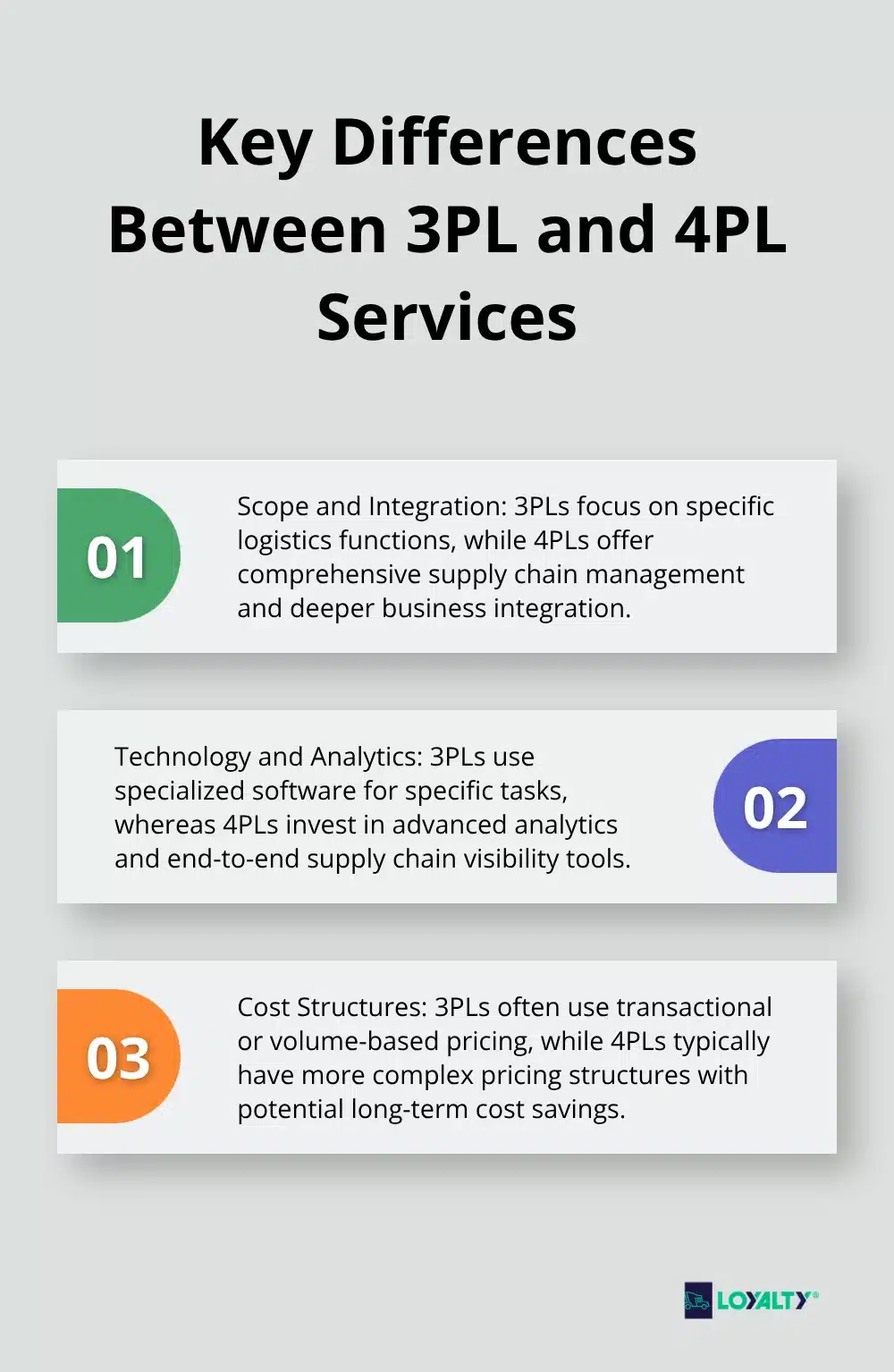
3PL providers focus on specific logistics functions, such as warehousing or transportation. They integrate with your business on a transactional level, handling day-to-day operations. A 3PL might manage your inventory and fulfill orders, but they won’t typically engage in strategic planning for your entire supply chain.
4PL providers offer a more comprehensive approach. They integrate deeply with your business, often acting as an extension of your logistics department. A 4PL might oversee your entire supply chain, from sourcing raw materials to delivering finished products to customers. This level of integration allows for more strategic decision-making and long-term planning.
Control and Management
With 3PL services, you retain more direct control over your logistics operations. You’ll work closely with the 3PL provider to set performance metrics and manage day-to-day activities. This hands-on approach can benefit businesses that want to maintain a high level of involvement in their logistics processes.
4PL providers take on a greater management role, overseeing multiple logistics partners and coordinating complex supply chain activities. While this can free up your internal resources, it also means relinquishing some control over operational details. Companies using 4PL services report a 25% reduction in time spent on logistics management tasks (according to a study by Gartner).
Technology and Analytics
Both 3PL and 4PL providers leverage technology, but the scope and sophistication differ significantly. 3PLs typically use specialized software for tasks like warehouse management or transportation routing. These systems provide valuable data on specific logistics functions.
4PLs invest heavily in advanced analytics and supply chain visibility tools. They often implement end-to-end supply chain management platforms that offer real-time insights across the entire logistics network. Companies using advanced supply chain analytics can reduce inventory levels by up to 20% while improving service levels (as reported by McKinsey).
Cost Structures
3PL services often operate on a transactional or volume-based pricing model. You pay for specific services used (e.g., per pallet stored or per shipment). This model provides flexibility and can be cost-effective for businesses with predictable logistics needs.
4PL providers typically use a more complex pricing structure. It might include a combination of fixed fees and performance-based incentives. While potentially more expensive upfront, 4PL services aim to deliver long-term cost savings through optimization and efficiency gains.
Industry Specialization
3PLs often specialize in specific industries or logistics functions. For example, a 3PL might excel in cold chain logistics for the food industry or specialize in automotive parts distribution.
4PLs take a broader approach, managing logistics across multiple industries. They bring cross-industry best practices and can adapt strategies from one sector to another. This wide-ranging expertise can lead to innovative solutions for your supply chain challenges.
Final Thoughts
The difference between 3PL and 4PL logistics offers unique advantages for businesses seeking to optimize their supply chain operations. 3PL providers execute specific logistics functions with flexibility and cost-effectiveness for companies with straightforward needs. 4PL services provide comprehensive supply chain management, using advanced technology and strategic oversight to deliver end-to-end solutions.
Companies must consider their size, complexity, and long-term goals when choosing between 3PL and 4PL. Smaller companies or those with specific logistics requirements may find 3PL services more suitable. Larger enterprises with complex, global supply chains might benefit from the strategic approach of a 4PL provider.
At Loyalty Logistics, we understand the nuances of both 3PL and 4PL models. Our transportation solutions across North America (combined with our logistics capabilities) position us to meet diverse supply chain needs. We strive to enhance your supply chain efficiency while maintaining our high on-time rate.