Last mile logistics is the final step in the supply chain that delivers products directly to customers. At Loyalty Logistics, we understand the critical role this process plays in shaping customer satisfaction and business success.
The last mile logistics meaning encompasses more than just transportation – it’s about meeting evolving consumer expectations and overcoming unique challenges. This blog post explores the complexities of last mile delivery and offers strategies to optimize your operations.
What Is Last Mile Logistics?
The Final Step in the Supply Chain
Last mile logistics represents the final stage of the delivery process. It involves the movement of products from a distribution center or warehouse to their final destination – typically the customer’s doorstep. This step can significantly impact customer satisfaction and business success.
Key Components of Last Mile Delivery
The last mile delivery process consists of several essential elements:
- Order Processing: This initial step involves receiving and preparing orders for shipment.
- Route Planning: Efficient route planning optimizes delivery times and reduces costs.
- Transportation: Various vehicles (trucks, vans, bicycles) transport packages depending on the delivery area and package size.
- Customer Handoff: The final step includes real-time tracking and proof of delivery.
The Growing Importance of Last Mile Logistics
In today’s e-commerce-driven market, last mile logistics has become a critical differentiator. Companies must deliver products quickly, cost-effectively, and with a personal touch to stay competitive. A study by Capgemini reveals that 55% of consumers would switch to a competitor offering faster delivery services.
Financial Impact on Businesses
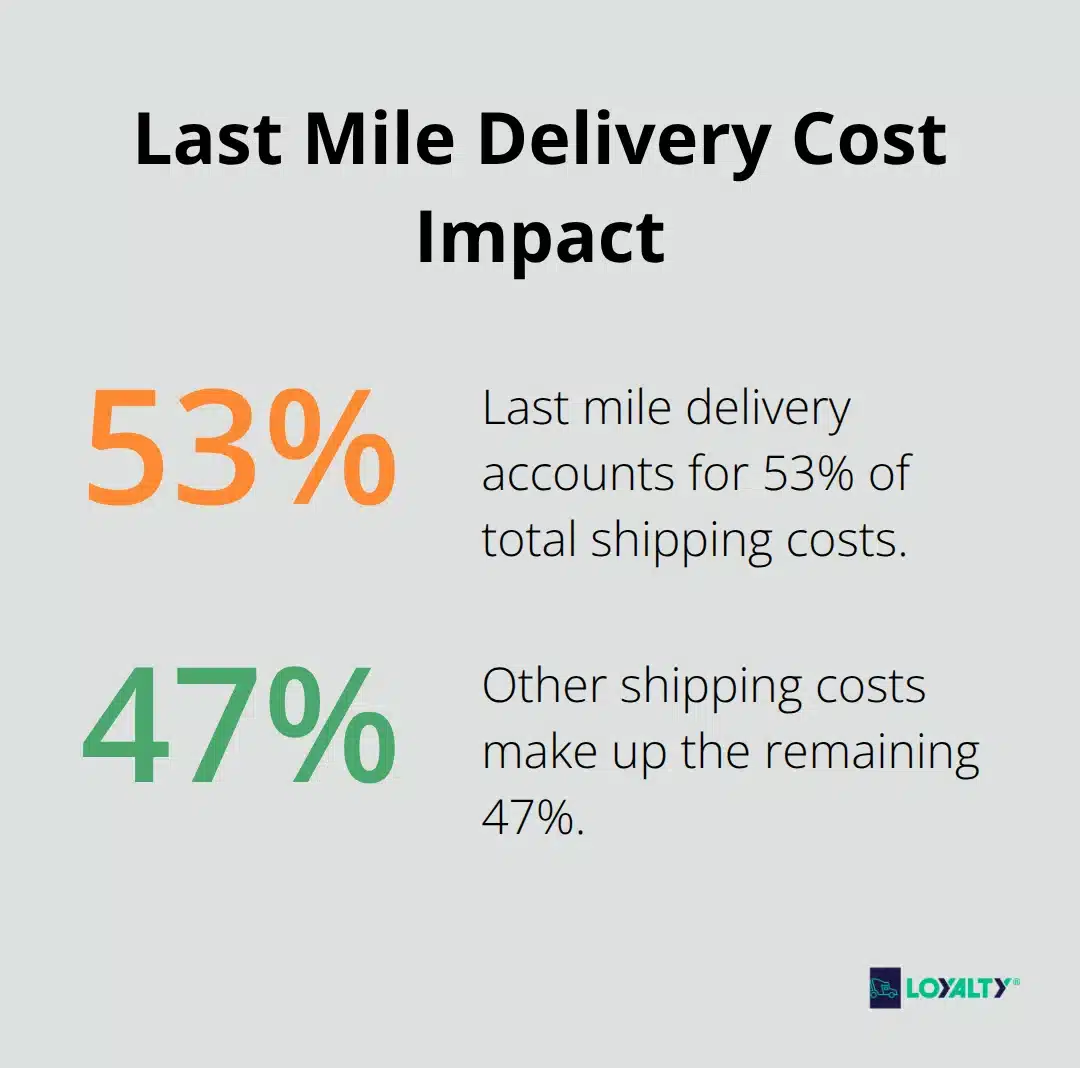
Last mile delivery can account for up to 53% of total shipping costs (Business Insider). This significant expense makes the optimization of last mile operations a top priority for businesses aiming to improve their profit margins.
Customer Satisfaction and Brand Loyalty
Effective last mile logistics doesn’t just cut costs – it boosts customer satisfaction. A survey by Convey found that 98% of customers consider delivery a crucial part of their brand loyalty. This statistic underscores the importance of perfecting last mile logistics as a key factor in building lasting customer relationships.
As we explore the challenges faced in last-mile delivery, it becomes clear why this final step in the supply chain demands so much attention from businesses across industries.
Why Is Last Mile Delivery So Challenging?
Last mile delivery presents a unique set of challenges that can make or break a company’s logistics strategy. Several key hurdles must be overcome to succeed in this critical area.
The Cost Conundrum
Last mile delivery is expensive. It accounts for a staggering 53% of total shipping costs (Business Insider). This high cost stems from the inefficiencies inherent in delivering small packages to individual addresses, often in urban areas with traffic congestion and parking difficulties.
A truck delivering to 50 different addresses in a city might spend more time navigating traffic and finding parking than actually delivering packages. This inefficiency drives up labor costs and reduces the number of deliveries a driver can make in a day.
Urban Delivery Nightmares
Cities present a particular challenge for last mile logistics. Narrow streets, lack of parking, and traffic congestion can turn what should be a simple delivery into a time-consuming ordeal. A study by the World Economic Forum found that in the top 100 cities worldwide, the number of delivery vehicles on the streets will increase by 36% by 2030.
This increase in delivery vehicles will likely exacerbate existing urban traffic problems, potentially leading to longer delivery times and increased costs. Companies must find innovative solutions to navigate these urban challenges efficiently.
Sky-High Customer Expectations
Modern consumers demand fast, flexible, and free delivery options. A survey by Capgemini revealed that 55% of consumers would switch to a competitor if they offered faster delivery services. This puts immense pressure on businesses to meet these expectations while managing costs.
Customers now expect real-time tracking, specific delivery time slots, and even same-day delivery in some cases. Meeting these demands requires significant investment in technology and logistics infrastructure, further adding to the cost and complexity of last mile delivery.
The Environmental Impact
Last mile delivery has a significant environmental footprint. The World Economic Forum estimates that without intervention, urban last mile delivery emissions will increase by over 30% by 2030 in the top 100 cities globally.
This environmental impact is not just a concern for eco-conscious consumers; it’s becoming a regulatory issue as well. Many cities implement low-emission zones and other regulations that will force companies to adopt more sustainable delivery practices.
As the challenges of last mile delivery continue to evolve, companies must adapt and innovate to stay competitive. The next section will explore some of the strategies that forward-thinking businesses use to improve their last mile logistics operations and overcome these obstacles.
How Can Businesses Optimize Last Mile Logistics?
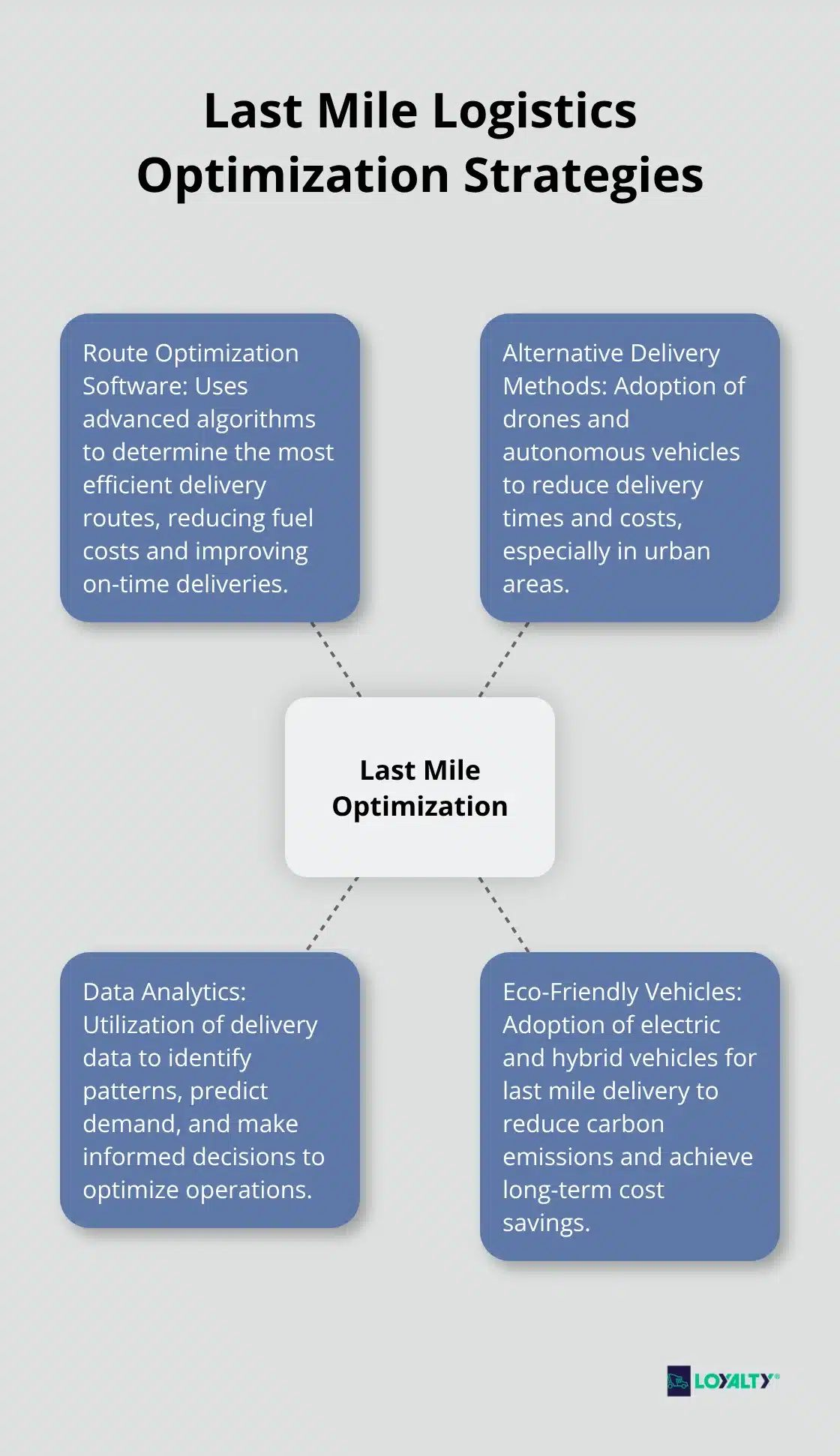
At Loyalty Logistics, we observe how last mile delivery optimization transforms company operations. Let’s explore effective strategies businesses can implement to enhance their last mile logistics.
Route Optimization Software Implementation
Route optimization software revolutionizes last mile logistics. These tools use advanced algorithms to determine the most efficient delivery routes, considering factors like traffic patterns, delivery windows, and vehicle capacity. The route optimization software market is expected to grow by $8.19 billion from 2020 to 2025 (Technavio).
A mid-sized e-commerce company implemented route optimization software and reduced fuel costs by 25% while increasing on-time deliveries by 20%. This technology cuts costs and improves customer satisfaction through more accurate delivery estimates.
Alternative Delivery Methods Adoption
Traditional delivery vehicles still dominate, but alternative methods gain traction. Drones and autonomous vehicles are now reality. Amazon has completed successful drone deliveries in select areas, while companies like Nuro test autonomous delivery vehicles in several U.S. cities.
These methods can reduce delivery times and costs significantly, especially in urban areas where traffic congestion is a major issue. However, they also present regulatory challenges that businesses need to navigate carefully.
Data Analytics Utilization
Data fuels the logistics industry. Businesses can identify patterns, predict demand, and make informed decisions to optimize their operations by analyzing delivery data. UPS uses data analytics to optimize its ORION (On-Road Integrated Optimization and Navigation) system, saving an estimated $300 to $400 million annually.
Small and medium-sized businesses can also benefit from data analytics. Tools like heat maps help identify high-density delivery areas, allowing companies to strategically locate distribution centers or plan routes more efficiently.
Eco-Friendly Vehicle Adoption
Sustainability is a business imperative. Companies increasingly adopt electric and hybrid vehicles for last mile delivery. This approach reduces carbon emissions and can lead to long-term cost savings.
DHL has committed to using 80,000 e-vehicles for last mile deliveries by 2030, potentially reducing emissions by 16 tons per vehicle annually. While the initial investment might be higher, the long-term benefits in reduced fuel costs and positive brand image are significant.
These strategies can significantly improve last mile logistics operations. However, it’s important to note that there’s no one-size-fits-all solution. The key is to analyze specific needs and challenges, then tailor these strategies to fit your business model.
Final Thoughts
Last mile logistics has become a cornerstone of modern business success. The last mile logistics meaning extends beyond simple product delivery to meeting evolving consumer expectations and overcoming complex challenges. High costs, urban congestion, demanding customer expectations, and environmental concerns all pose formidable challenges in this final step of the supply chain.
Companies use cutting-edge strategies to optimize their last mile operations. Route optimization software, alternative delivery methods, data analytics, and eco-friendly vehicles help businesses stay ahead in this competitive landscape. The future of last mile logistics will likely include more autonomous deliveries, increased use of AI for predictive analytics, and a greater focus on sustainable practices.
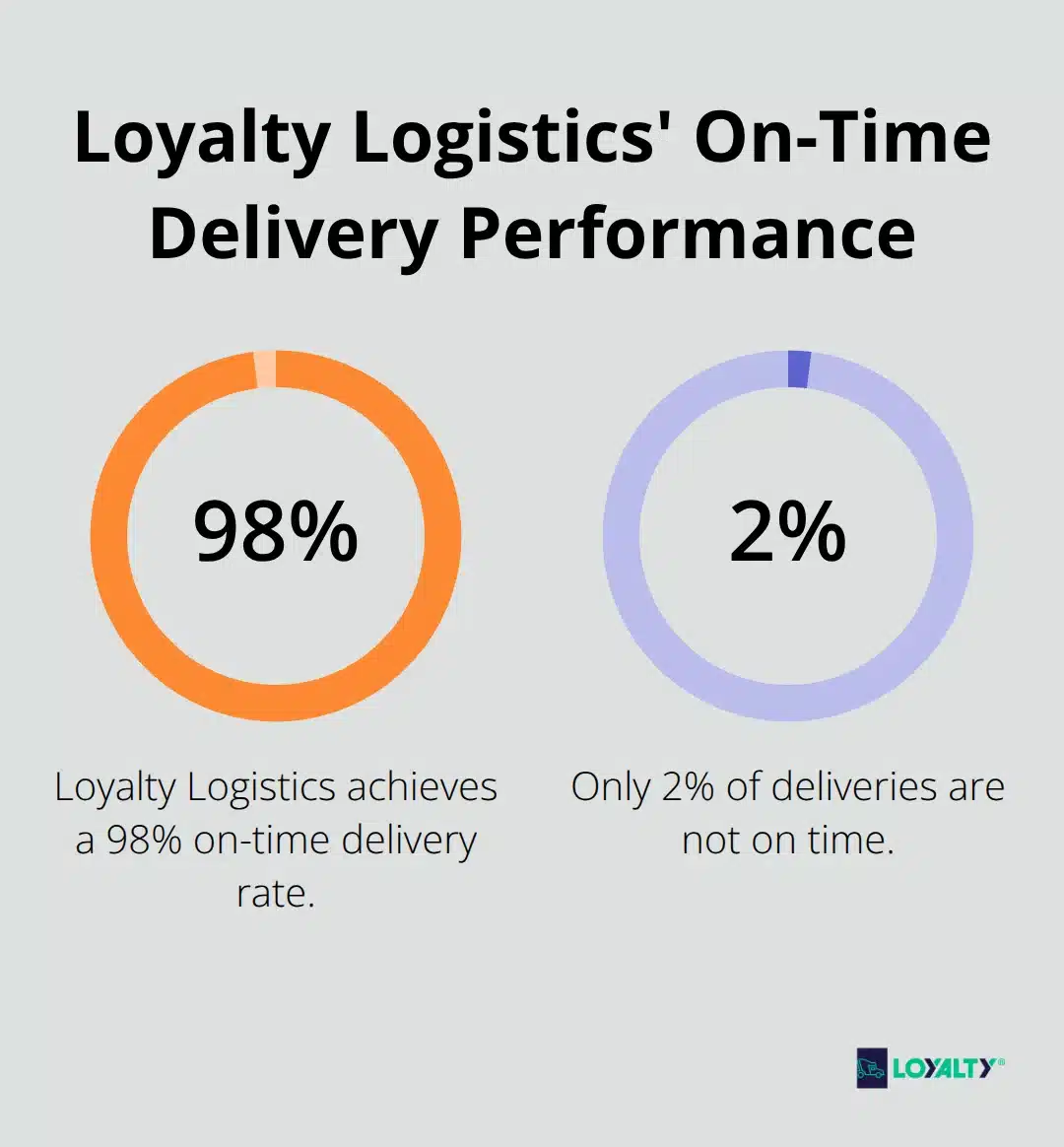
Loyalty Logistics understands the complexities of last mile delivery. Our transportation solutions, logistics capabilities, and commitment to sustainability help businesses navigate these challenges effectively (with a 98% on-time rate). We enhance supply chain efficiency while contributing to a greener future, positioning businesses for success in the ever-changing world of last mile delivery.