
The logistics industry faces a monumental challenge: achieving carbon neutrality by 2025. At Loyalty Logistics, we’ve seen firsthand how this goal is reshaping our sector.
Carbon emissions from transportation and warehousing continue to be a major concern. However, innovative strategies and technologies are emerging to help companies reduce their environmental impact.
This post explores practical steps logistics firms can take to reach their carbon neutral objectives, overcome common hurdles, and lead the way in sustainable shipping.
The Carbon Footprint of Logistics: A Closer Look
Transportation: The Primary Culprit
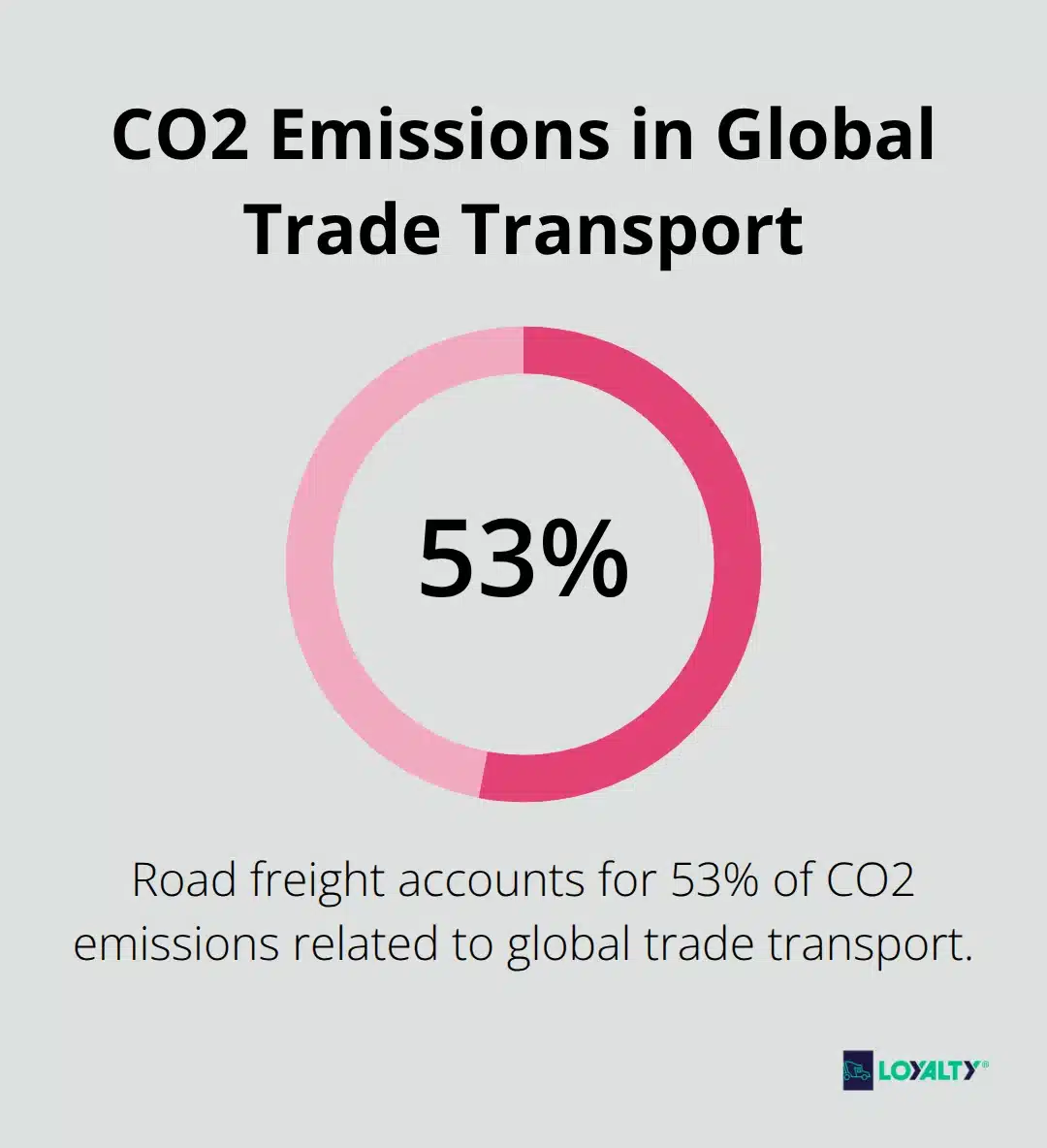
The logistics industry significantly impacts global carbon emissions. The International Energy Agency reports that the transport sector contributed about 24% of global CO2 emissions in 2023, with freight transport playing a major role. Road freight stands out as the largest emitter, accounting for 53% of CO2 emissions related to global trade transport (McKinsey). Last-mile delivery alone generates 41% of global emissions in the logistics sector (World Economic Forum).
Air freight, though less common, has a disproportionate effect. A single international air shipment can produce more CO2 than dozens of truck deliveries. Sea freight, while more efficient per ton-mile, still adds substantially to emissions due to the vast volume of goods transported globally.
Warehousing: The Hidden Contributor
While transportation often takes center stage, warehousing operations also add to the industry’s carbon footprint. Energy consumption for lighting, heating, cooling, and operating material handling equipment accumulates quickly. Many warehouses still depend on fossil fuels for energy, although this trend is shifting as companies (including those in the logistics sector) adopt renewable energy sources.
Industry Trends and Benchmarks
The logistics industry is making strides towards sustainability. Many companies set ambitious targets for carbon reduction. DHL, for example, has pledged €7 billion to achieve carbon-neutral logistics by 2050, aiming to electrify 60% of their last-mile delivery fleet by 2030.
Electric vehicles (EVs) are rapidly gaining traction in logistics. Studies indicate that EV implementation in logistics can cut last-mile carbon emissions by up to 50% by 2030. This shift aligns with regulations like the EU’s mandate for a 30% reduction in truck carbon emissions by 2030.
Alternative fuels present another promising avenue. Hydrogen emerges as a potential game-changer, capable of generating electricity without CO2 emissions (emitting only water vapor). Some logistics companies already experiment with hydrogen-powered trucks for long-haul transport.
The Road Ahead: Challenges and Opportunities
As the industry moves towards carbon neutrality, several challenges lie ahead. Infrastructure limitations for alternative fuel vehicles, the initial costs of sustainable technologies, and navigating complex regulatory landscapes all present hurdles. However, these challenges also create opportunities for innovation and leadership in sustainable logistics.
Companies that invest in green technologies and practices now will likely gain a competitive edge in the future. As consumers become more environmentally conscious, businesses that prioritize sustainability in their supply chains will attract more customers and potentially command premium prices.
The path to carbon-neutral logistics requires a multifaceted approach. From optimizing route planning to implementing green warehousing practices, every aspect of the supply chain offers potential for improvement. The next section will explore specific strategies companies can employ to reduce their carbon footprint and move closer to the goal of carbon neutrality by 2025.
How Logistics Companies Can Slash Their Carbon Footprint
At Loyalty Logistics, we’ve identified key strategies that logistics companies can implement to significantly reduce their carbon emissions. These approaches not only cut down on environmental impact but also often lead to improved efficiency and cost savings.
Smart Route Planning and Load Optimization
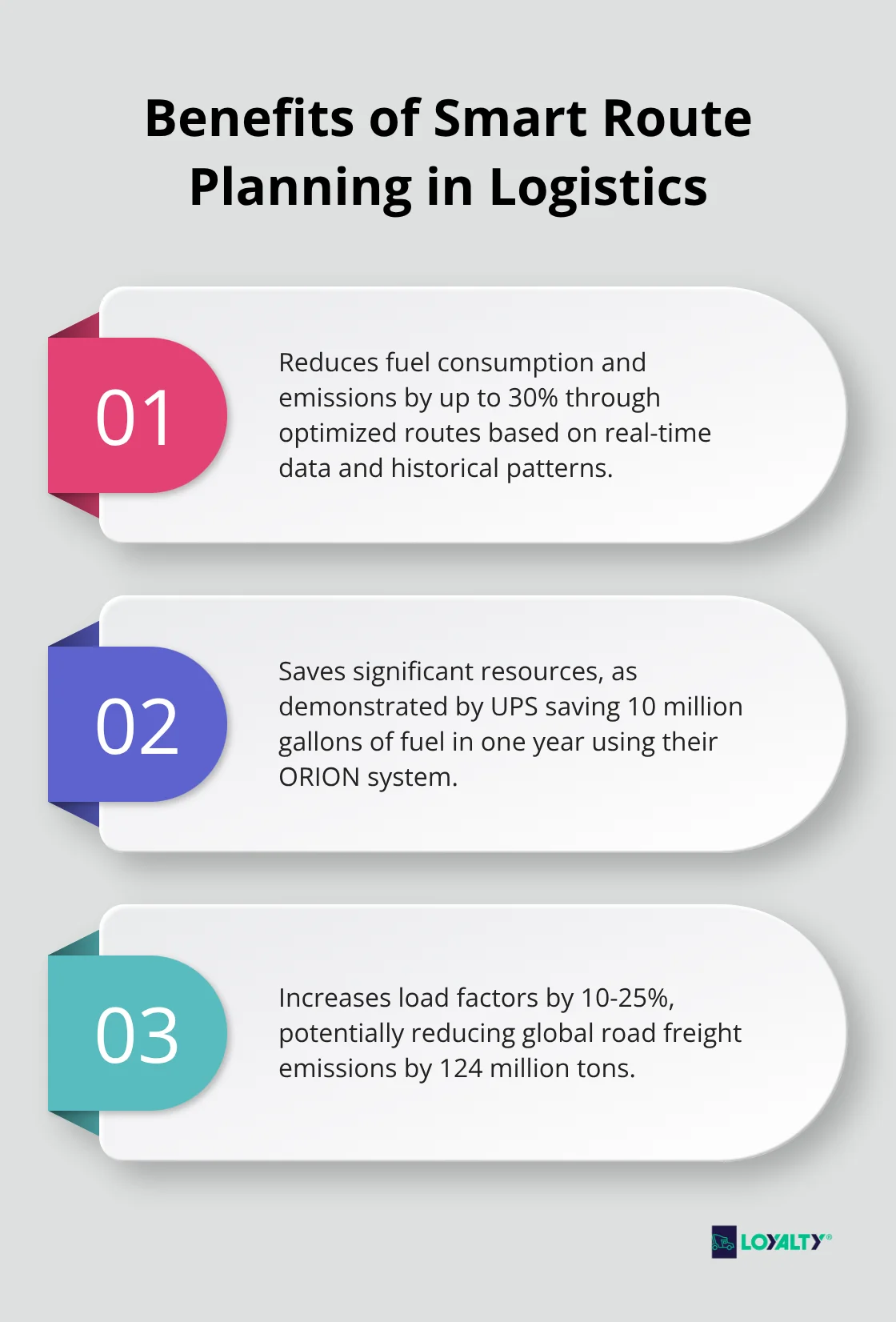
Advanced route planning software can slash fuel consumption and emissions by up to 30%. These tools use real-time traffic data, weather conditions, and historical patterns to determine the most efficient routes. UPS saved 10 million gallons of fuel in one year by using their ORION system to optimize delivery routes.
Load optimization is equally important. Companies can reduce the number of trips needed by maximizing the use of available space in trucks and containers. This cuts emissions and lowers operational costs. A study by the World Economic Forum found that increasing load factors by just 10-25% could reduce road freight emissions by 124 million tons globally.
The Electric Vehicle Revolution
The transition to electric vehicles (EVs) is a game-changer for reducing emissions in logistics. While the initial investment can be high, the long-term benefits are substantial. EVs produce zero tailpipe emissions and have lower maintenance costs. Amazon plans to have 100,000 electric delivery vans on the road by 2030, which could save millions of metric tons of carbon per year.
For long-haul routes where electric trucks aren’t yet feasible, alternative fuels like biodiesel or hydrogen offer promising solutions. Hydrogen fuel cell trucks, in particular, are gaining traction. They offer longer range than battery-electric vehicles and can refuel quickly, making them suitable for heavy-duty, long-distance transport.
Green Warehousing: Beyond Energy Efficiency
Warehouses consume significant energy for lighting, heating, cooling, and powering equipment. The implementation of energy-efficient LED lighting can reduce energy consumption by up to 80% compared to traditional lighting systems. The installation of solar panels on warehouse roofs can further slash emissions and energy costs. Walmart aims to power 50% of its operations with renewable energy by 2025.
But green warehousing goes beyond energy. Smart inventory management systems can reduce waste and optimize storage space. The use of recyclable packaging materials and minimization of single-use plastics in warehousing operations also contributes to sustainability goals.
Logistics companies should also consider the location of their warehouses. Strategically placed distribution centers can significantly reduce the distance goods need to travel, cutting both costs and emissions. Loyalty Logistics’ network of strategically located warehouses across North America exemplifies this approach, enabling more efficient and eco-friendly distribution.
The implementation of these sustainable warehousing practices can help logistics companies make significant strides towards carbon neutrality. However, the transition to sustainable practices often comes with its own set of challenges. In the next section, we’ll explore how companies can overcome these hurdles and ensure that eco-friendly practices become the norm in the logistics industry.
Tackling Roadblocks to Carbon Neutral Logistics
The path to carbon neutral logistics presents challenges, but these obstacles often spark innovative solutions. This chapter explores how companies can overcome common hurdles in their sustainability journey.
Infrastructure Gaps for Alternative Fuel Vehicles
The adoption of electric and hydrogen-powered vehicles faces a significant challenge: the lack of charging and refueling infrastructure. To address this, many logistics companies partner with energy providers to build their own charging networks. DHL, for example, has installed over 14,000 charging points across Europe. Companies can also collaborate with local governments to advocate for and invest in public charging infrastructure.
For long-haul routes where electric vehicles aren’t yet feasible, some companies adopt a hub-and-spoke model. This involves the use of alternative fuel vehicles for shorter routes and traditional vehicles for longer hauls until infrastructure catches up. UPS implements this strategy, using electric vehicles for urban deliveries and conventional trucks for interstate transport.
Managing the Cost of Green Tech
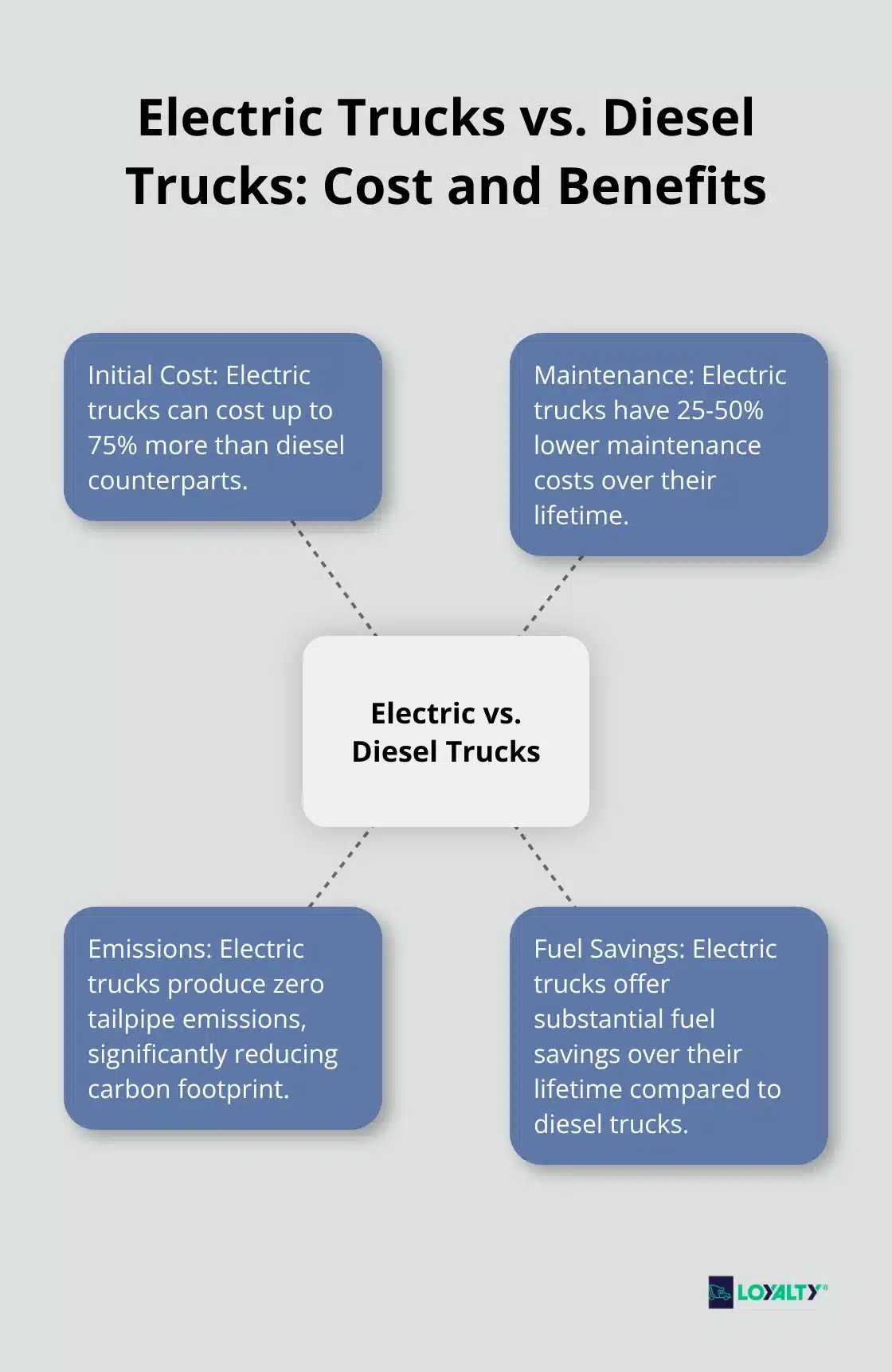
The initial investment in sustainable technologies can be substantial. However, the long-term savings often outweigh the upfront costs. Electric trucks can cost up to 75% more than diesel counterparts, but they have 25-50% lower maintenance costs and significant fuel savings over their lifetime.
To manage these costs, companies can:
- Start small: Begin with pilot programs to test technologies before full-scale implementation.
- Seek government incentives: Many countries offer tax breaks and grants for adopting green technologies (the U.S. Infrastructure Investment and Jobs Act allocates $7.5 billion for EV chargers alone).
- Consider leasing options: This can spread costs over time and allow for easier upgrades as technology improves.
Navigating the Regulatory Maze
Environmental regulations become increasingly complex and stringent. The EU’s mandate for a 55% reduction in carbon emissions by 2030 compared to 1990 levels exemplifies the regulatory pressure facing the logistics industry.
To stay compliant and ahead of the curve:
- Invest in compliance teams: Dedicate resources to understand and prepare for upcoming regulations.
- Engage with policymakers: Participate in industry associations to have a voice in shaping future regulations.
- Implement robust tracking systems: Use advanced software to monitor and report emissions accurately.
Stakeholder Education and Engagement
For carbon neutral initiatives to succeed, all stakeholders – from employees to customers – need to be on board. Transparency and education play key roles in this process.
Companies should educate employees through regular training sessions on sustainable practices. They can engage customers by clearly communicating the environmental benefits of their services. IKEA, for instance, now offers detailed carbon footprint information for each product, helping customers make informed choices.
The implementation of programs that incentivize sustainable choices can further engage stakeholders in the sustainability journey. Green reward programs (which contribute to reforestation efforts) serve as an example of how companies can involve stakeholders in their eco-friendly initiatives.
Final Thoughts
The journey towards carbon neutrality in logistics presents challenges but offers significant opportunities. Companies that implement smart route planning, transition to electric vehicles, and adopt green warehousing practices will reduce their carbon footprint and improve efficiency. Overcoming obstacles requires innovation, persistence, and a willingness to view challenges as growth opportunities.
Collaboration plays a vital role in achieving carbon neutrality goals across the logistics sector. Companies must share best practices, invest in joint infrastructure projects, and work together to influence policy for accelerated progress. The future of our industry and planet depends on collective action today.
Loyalty Logistics commits to sustainable practices and helps clients reduce their environmental impact. Our versatile transportation solutions across North America demonstrate our dedication to eco-friendly logistics. We encourage all logistics companies to set ambitious carbon reduction targets and take concrete steps towards achieving them (starting today).