

Heavy haul transportation demands specialized equipment and expertise that standard shipping simply cannot provide. When cargo exceeds typical weight and dimension limits, flatbed solutions become the backbone of successful logistics operations.
We at Loyalty Logistics understand that moving oversized freight requires more than just a bigger truck. Strategic planning, proper equipment selection, and regulatory compliance separate successful heavy haul operations from costly delays and safety risks.
What Equipment Do You Need for Heavy Haul Transportation
Standard Trailer Limitations Create Immediate Barriers
Standard dry van trailers reach maximum limits at 53 feet in length, 8.5 feet in width, and 13.5 feet in height with an 80,000-pound gross vehicle weight limit according to Federal Motor Carrier Safety Administration regulations. These constraints immediately disqualify standard equipment when your cargo weighs 120,000 pounds or measures 14 feet tall. The gap between standard capacity and heavy haul requirements creates a massive equipment challenge that demands specialized flatbed solutions.
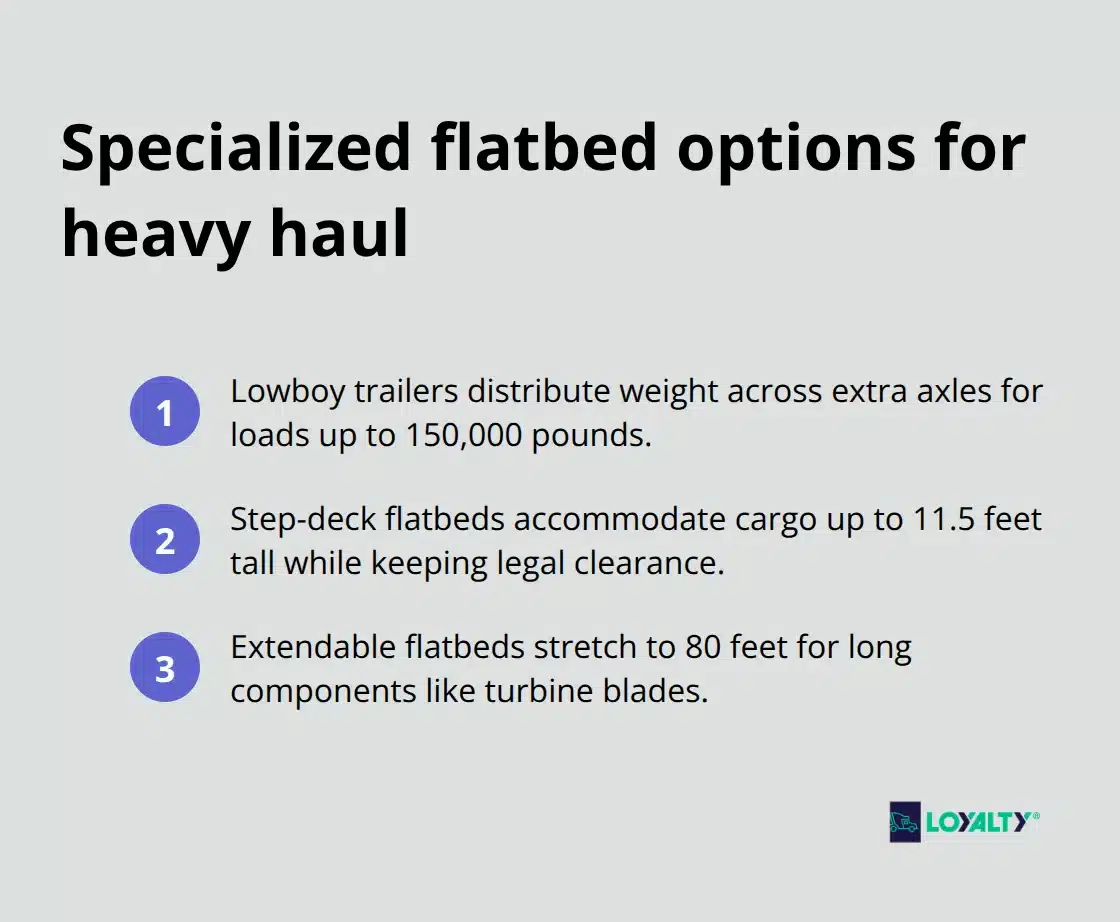
Multi-axle lowboy trailers distribute weight across additional axles and allow loads up to 150,000 pounds on specialized configurations. Step-deck flatbeds accommodate heights up to 11.5 feet on the lower deck while they maintain legal road clearance. Extendable flatbeds stretch to 80 feet for lengthy cargo like wind turbine blades or structural steel beams.
Proper Securement Methods Prevent Costly Damage
Chains rated for specific work load limits replace standard cargo straps for heavy equipment transport. The Federal Motor Carrier Safety Administration mandates minimum tie-down ratios based on cargo weight and requires one tie-down per 10,000 pounds plus additional securement for the first 10,000 pounds. Edge protectors prevent chain damage to cargo corners while they maintain securement integrity during transport.
Advanced Loading Systems Speed Up Operations
Winch systems integrated into specialized flatbed trailers provide controlled load placement for self-propelled equipment. Hydraulic ramps eliminate the need for external equipment at job sites (reducing setup time from hours to minutes). These mechanical advantages maintain safety standards that prevent the costly equipment damage we see with improper manual techniques.
The heavy haul truck market reached USD 34.5 billion in 2023 and projects growth at over 6% annually through 2032. This expansion reflects increased demand for specialized equipment, but success depends heavily on proper route planning and regulatory compliance.
What Regulatory Hurdles Block Heavy Haul Success
Permit Applications Demand Precise Planning
Heavy haul permits cost between $15 and $1,000 per state according to Federal Motor Carrier Safety Administration data, but permit fees represent only a fraction of total compliance costs. Each state maintains unique regulations for oversized loads and requires separate applications with specific documentation that includes load dimensions, route maps, and escort vehicle arrangements. Texas requires 72-hour advance notice for superloads that exceed 200,000 pounds, while California mandates an analysis for loads over 120,000 pounds. Permit processing delays of 7-14 business days force shippers to build significant buffer time into project schedules or face expensive expedited processing fees.
Bridge Weight Restrictions Create Route Limitations
Weight-restricted bridges force costly detours that add hundreds of miles to heavy haul routes. The National Bridge Inventory identifies over 45,000 structurally deficient bridges across American highways, with weight limits as low as 25 tons on rural routes. Michigan’s Mackinac Bridge restricts loads to 80,000 pounds total, while New York’s Tappan Zee Bridge prohibits vehicles that exceed 80,000 pounds during peak hours. Route planning software must account for seasonal weight restrictions that reduce allowable loads by 25-35% during spring thaw periods in northern states.
Weather Conditions Multiply Transportation Risks
Winter weather compounds these challenges as ice and snow reduce traction and extend stopping distances for heavy loads. Specialized tire chains become mandatory equipment, while reduced travel speeds can double transit times compared to normal conditions. High winds above 35 mph force carriers to halt operations with tall loads (creating schedule disruptions that ripple through entire project timelines). Rain and snow also reduce visibility and road grip, which makes precise maneuvering of oversized loads significantly more dangerous.
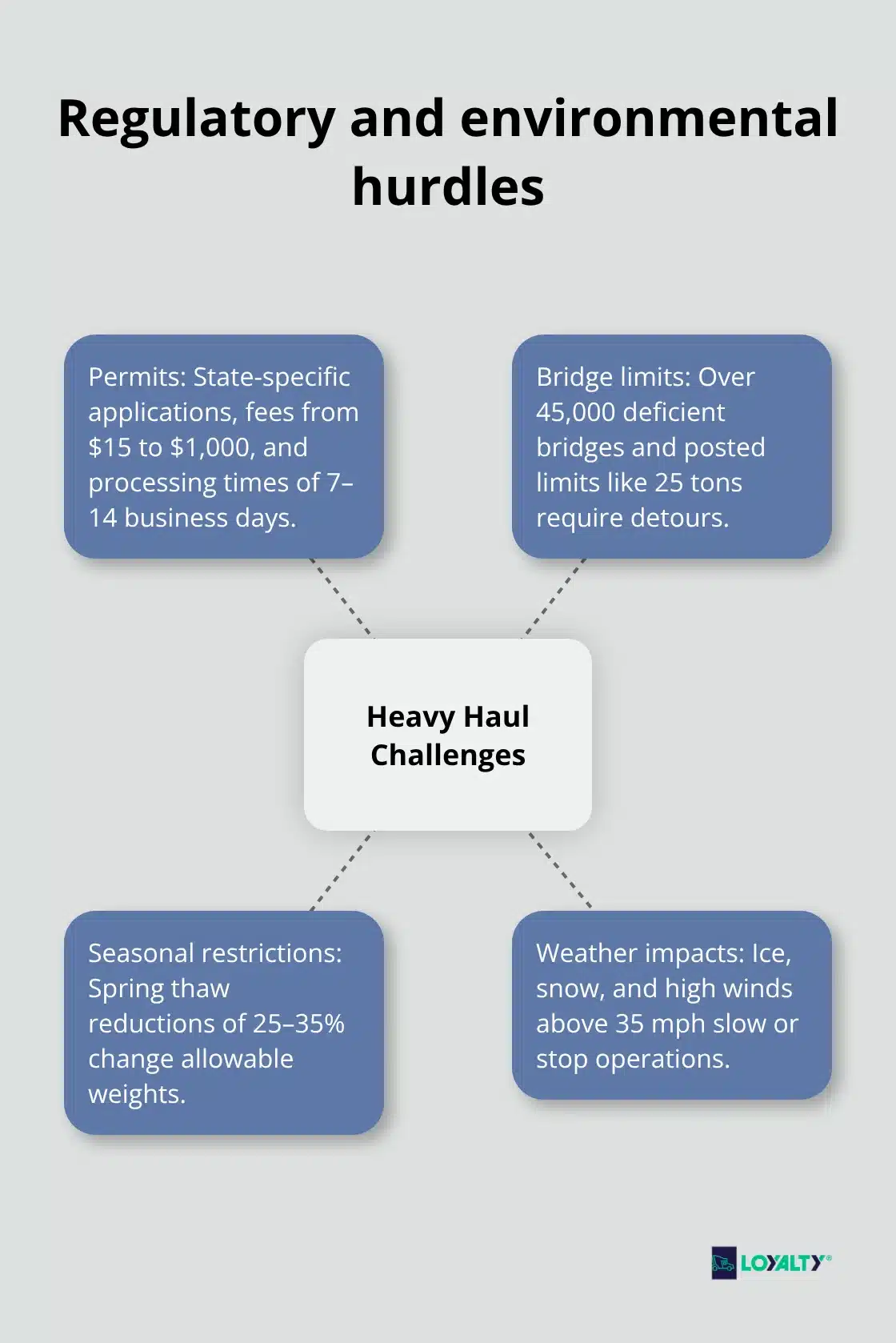
These regulatory and environmental obstacles make equipment selection even more critical for successful heavy haul operations.
Which Flatbed Configuration Fits Your Cargo
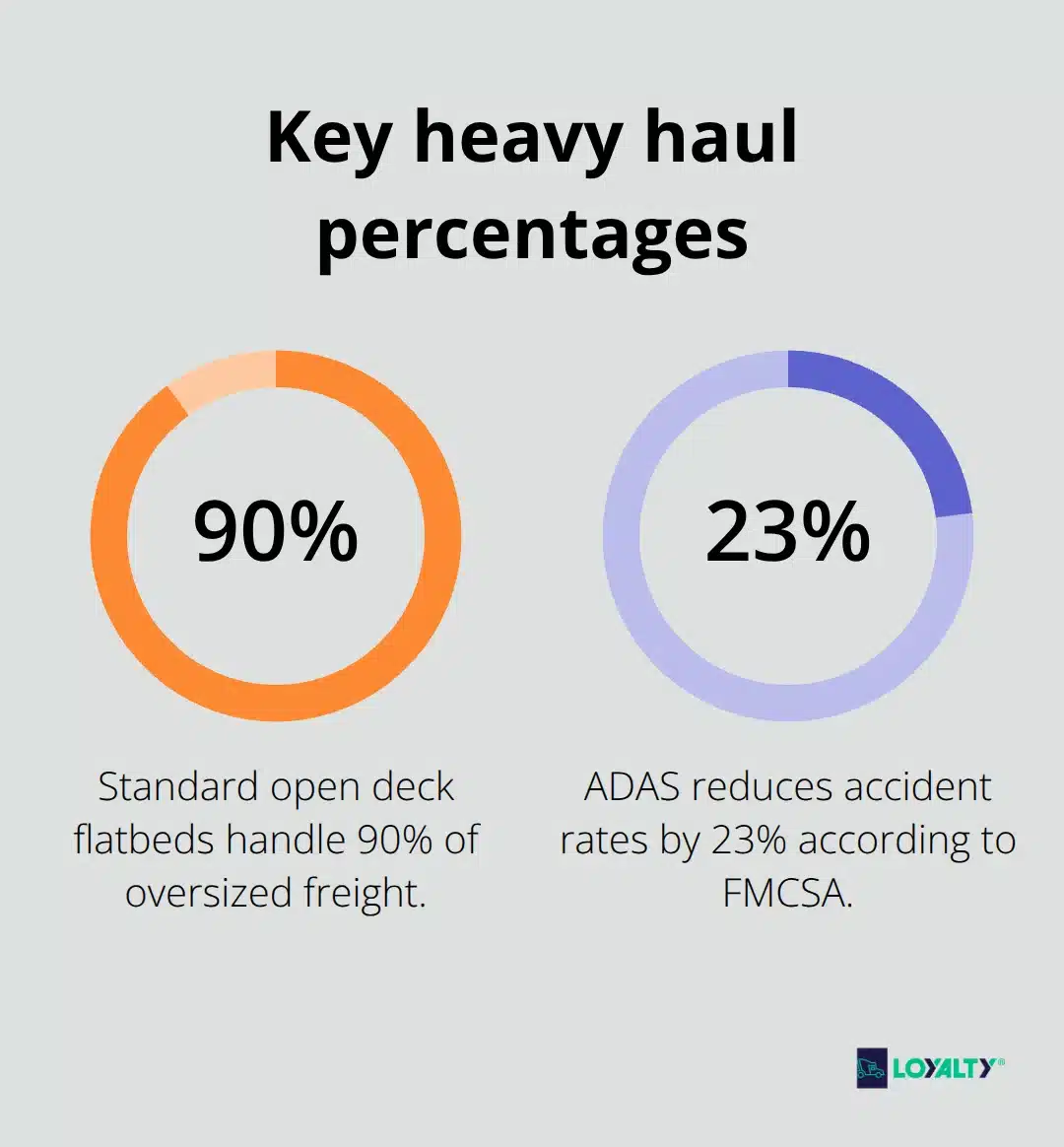
Standard open deck flatbeds handle 90% of oversized freight effectively, but specialized configurations become necessary when cargo dimensions or weight distribution create specific challenges. Open deck trailers excel at loads under 11 feet tall and 150,000 pounds with their straightforward process and lower transportation costs.
Step-deck configurations reduce deck height by 18-24 inches and accommodate cargo up to 11.5 feet tall while they maintain legal road clearance. Double-drop trailers lower the well section to just 18 inches above ground and transport equipment up to 11.5 feet tall with maximum stability. The Asia Pacific heavy haul truck market held over 60% of global market share in 2023, driven by infrastructure projects that demand these specialized configurations.
Equipment Specifications Must Match Cargo Characteristics
Construction equipment that weighs 80,000-120,000 pounds requires multi-axle lowboy trailers with hydraulic detachable goosenecks for ground-level access. Wind energy components like turbine blades that measure 150-200 feet need extendable flatbeds with axles and specialized cradle systems.
Steel coils and pipe loads demand flatbeds with built-in stake pockets and coil racks that prevent movement during transport. Manufacturing machinery with irregular shapes benefits from flatbeds equipped with multiple tie-down points and adjustable securement systems (which provide flexibility for unique cargo shapes).
Safety Systems Prevent Accidents and Violations
Advanced Driver Assistance Systems now standard on heavy haul trucks include collision avoidance, lane departure warnings, and electronic stability control that reduces accident rates by 23% according to Federal Motor Carrier Safety Administration data. Load sensors detect cargo movement during transport and alert drivers to retighten securement before problems develop.
GPS systems provide real-time location updates and route compliance verification for permit authorities. These safety technologies have become mandatory requirements rather than optional upgrades as regulatory oversight intensifies across all states (particularly for loads that exceed standard dimensions).
Final Thoughts
Flatbed solutions deliver the specialized capabilities that heavy haul operations require when standard equipment proves inadequate. Open deck configurations, step-decks, and lowboys address the unique challenges of oversized freight transport. These solutions handle weight distributions and dimensional requirements that would otherwise create insurmountable logistics barriers.
The right transportation partner must possess proper equipment fleets, regulatory compliance expertise, and proven safety records. Carriers must demonstrate proficiency with permit applications, route plans around bridge restrictions, and securement techniques that meet Federal Motor Carrier Safety Administration standards. Experience with weather-related delays and contingency plans separates reliable partners from those who create project disruptions.
We at Loyalty Logistics specialize in heavy haul transportation challenges across North America. Our team understands the complexities of oversized freight logistics and provides the specialized equipment your projects need (along with the regulatory expertise that keeps shipments compliant). Contact us today to discuss your heavy haul requirements and experience the difference that specialized flatbed expertise makes.

