

Supply chain disruptions cost businesses an average of $184 million annually, making speed a competitive advantage rather than a luxury.
Expedited FTL services cut standard shipping times by 30-50%, transforming how companies handle urgent deliveries. We at Loyalty Logistics understand that every hour counts when production lines depend on timely arrivals or customer satisfaction hangs in the balance.
Expedited Full Truckload vs Standard Shipping
Speed Differences That Transform Operations
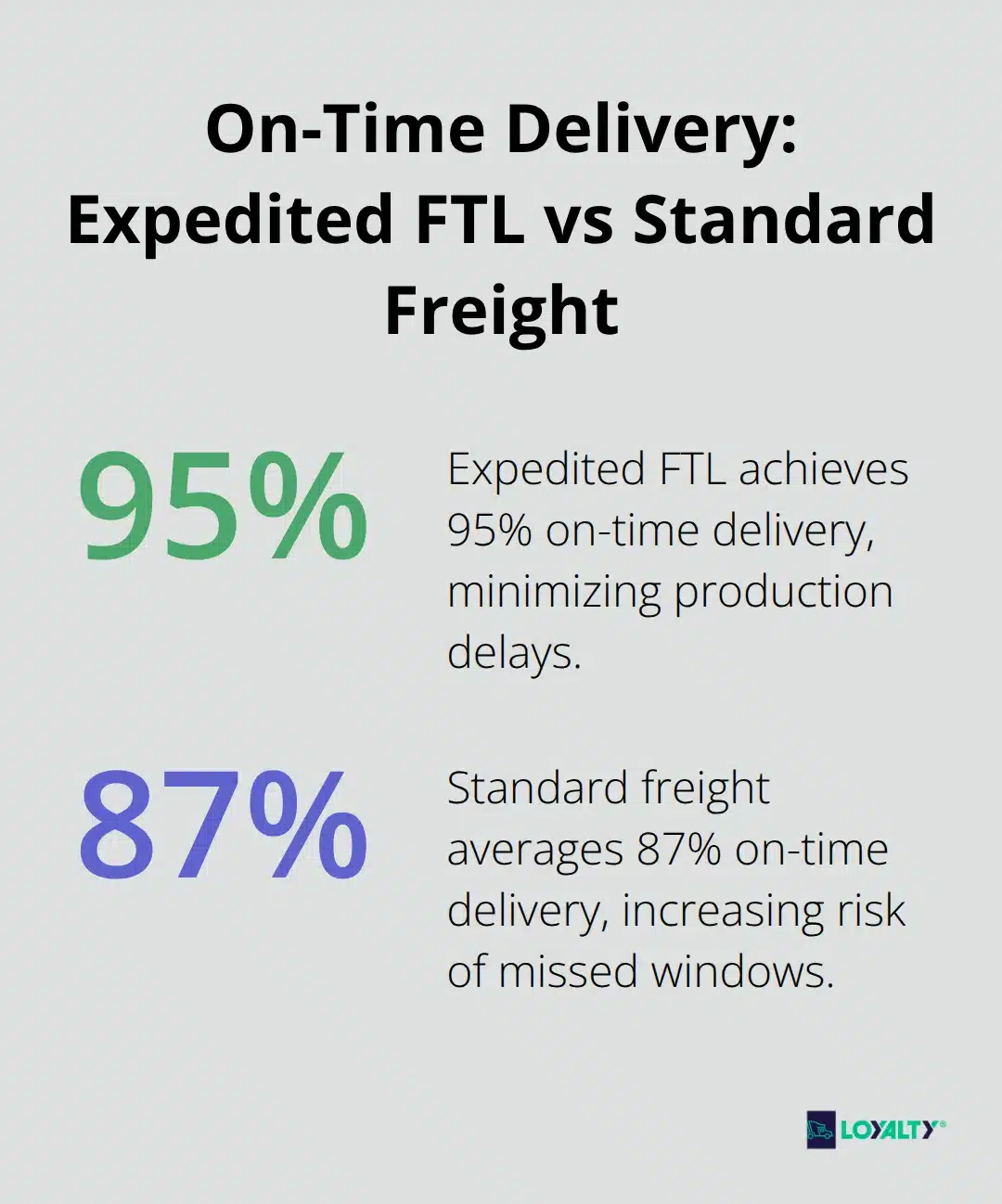
Standard ground freight takes 3-5 business days for cross-country shipments, while expedited FTL delivers in 24-48 hours. The National Motor Freight Transportation Association reports that expedited services achieve 95% on-time delivery rates compared to 87% for standard freight. This 8-percentage-point difference prevents production delays and missed sales opportunities.
Team drivers operate around the clock and cover 1,100-1,300 miles per day versus 500-600 miles with single drivers and mandatory rest periods.
Cost Analysis Reveals Clear ROI Patterns
Expedited FTL costs 2-5 times more than standard freight, but ROI calculations favor speed in specific scenarios. Aberdeen Research shows that downtime costs manufacturers an average of $50,000 per hour, which makes a $3,000 premium for expedited delivery insignificant against potential losses. Retailers face 20-30% revenue drops during stockouts in peak seasons, while expedited FTL prevents these gaps for roughly 15% additional freight costs. Healthcare facilities report that expedited services prevent patient care delays worth thousands in liability exposure.
Service Guarantees Set Performance Standards
Premium expedited carriers offer money-back guarantees with strict delivery windows (typically within 2-hour windows for same-day service and 6-hour windows for next-day delivery). Standard freight rarely provides such commitments. Real-time GPS tracking becomes standard with expedited services and offers 15-minute location updates versus daily check-ins for regular freight. Dedicated equipment eliminates cross-dock delays and mixed loads that complicate standard freight operations.
These performance advantages become even more valuable when you consider which industries depend most heavily on time-sensitive deliveries.
Industries That Benefit from Expedited FTL
Manufacturing and Just-in-Time Production
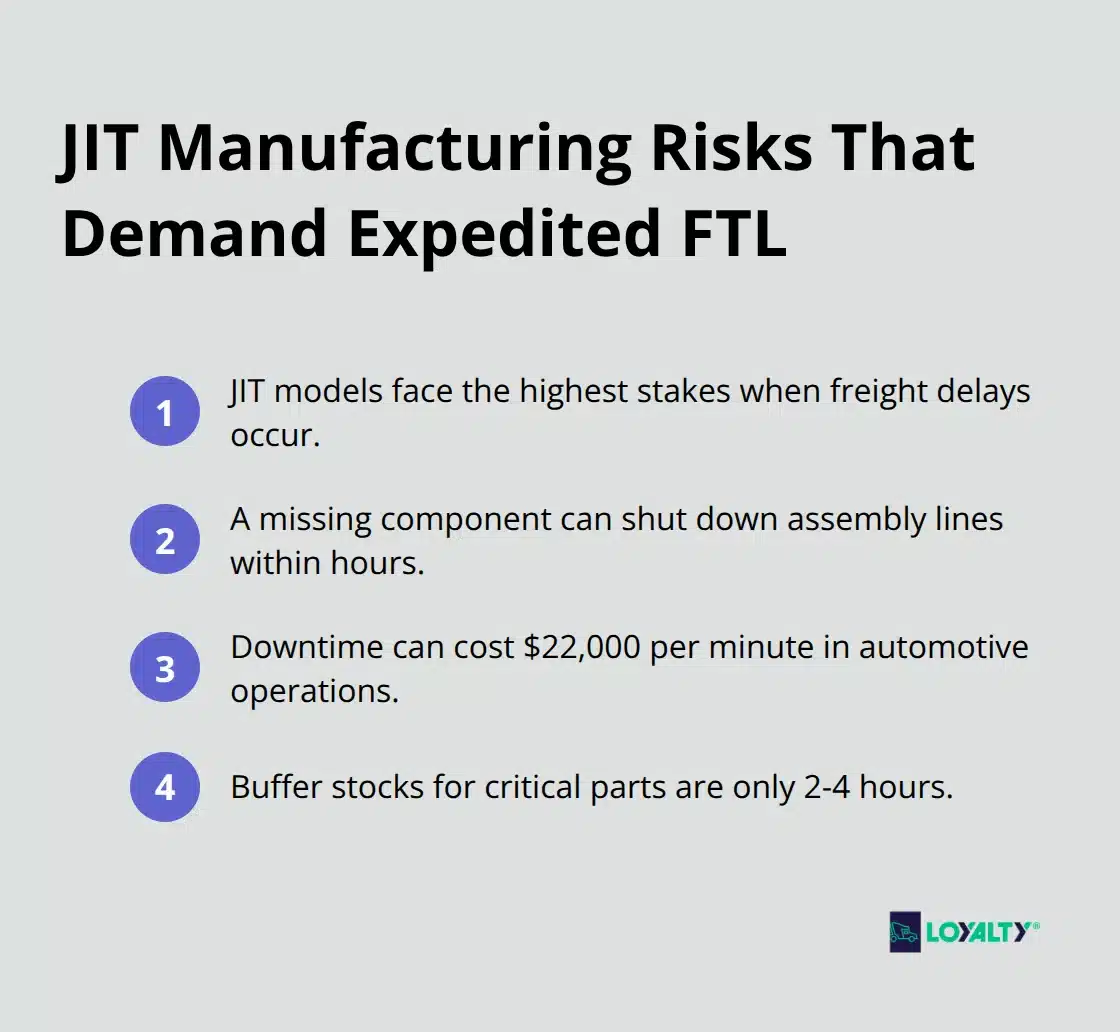
Manufacturing operations that run just-in-time production models face the highest stakes when freight delays occur. Toyota’s production system demonstrates that a single missing component can shut down entire assembly lines within hours, costing $22,000 per minute according to Harbor Research. Automotive manufacturers maintain buffer stocks of only 2-4 hours for critical parts, which makes standard 3-5 day freight completely inadequate.
Electronics manufacturers face similar pressures with semiconductor shortages already costing the industry $500 billion annually. When production schedules compress and supplier delays mount, expedited FTL becomes the difference between meeting delivery commitments and losing major contracts. Assembly lines cannot wait for standard freight when components arrive late.
Retail and E-commerce Rush Orders
E-commerce retailers lose 20-30% of potential revenue during stockouts, particularly devastating during Black Friday and holiday seasons when consumer spending peaks. Amazon’s same-day delivery promises force competitors to match speed expectations, which drives expedited freight demand up 40% during Q4 according to the American Trucking Associations.
Fashion retailers face even tighter windows with trend-based inventory that loses 15-25% value weekly once styles peak. Big box retailers implement strict vendor compliance programs with penalties reaching $10,000 per late delivery (making expedited FTL a cost-effective insurance policy against chargebacks). Standard freight simply cannot meet these compressed timelines.
Healthcare and Medical Equipment Transport
Medical equipment transport operates under FDA regulations that require temperature documentation and chain-of-custody protocols that standard freight cannot accommodate. Hospital systems report that delayed medical device deliveries cost $50,000-$75,000 per day in postponed surgeries and extended patient stays.
Pharmaceutical cold chain shipments worth millions require dedicated reefer trucks with backup power systems and 24/7 monitoring. Blood banks and organ transport services rely exclusively on expedited carriers because standard freight lacks the speed and specialized equipment these life-critical shipments demand. Temperature deviations or delays can render entire shipments worthless.
These specialized requirements highlight why quality expedited services must offer more than just speed-they need advanced features that standard carriers cannot provide.
Key Features of Quality Expedited Services
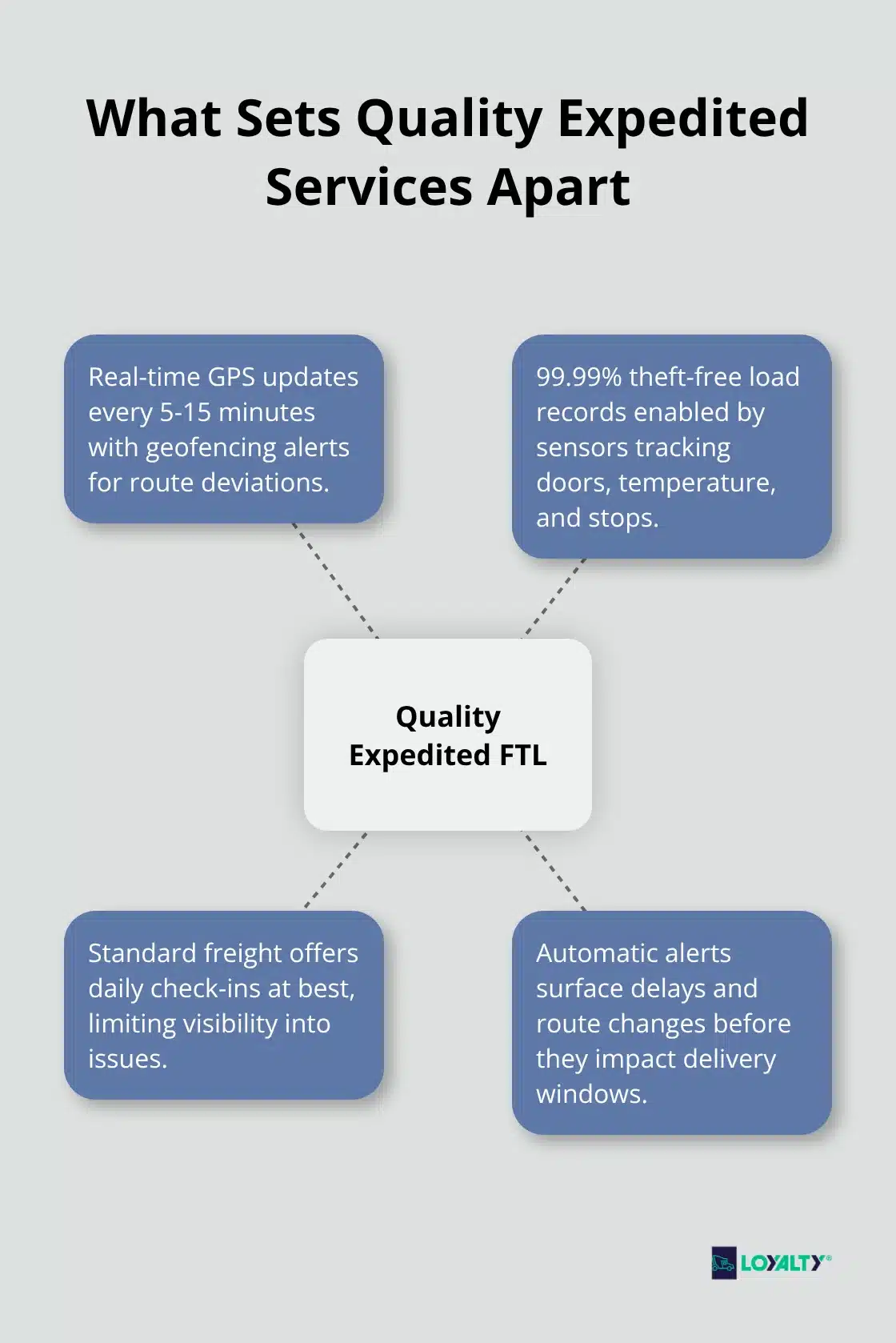
Advanced tracking technology separates quality expedited carriers from budget options that promise speed but deliver headaches. Top-tier providers offer GPS updates every 5-15 minutes with geofencing alerts that notify shippers when trucks deviate from planned routes or encounter delays. Schneider reports that their customers achieve 99.99% theft-free load records through real-time monitoring systems that track door openings, temperature fluctuations, and unauthorized stops. Standard carriers provide daily check-ins at best, which leaves shippers blind to potential problems until damage occurs.
Real-Time Visibility Prevents Costly Surprises
Premium expedited services provide continuous shipment visibility through mobile apps and web portals that update location data every 5-15 minutes. Shippers receive automatic alerts for route deviations, weather delays, or mechanical issues before problems escalate into missed deliveries. Temperature-sensitive shipments require continuous monitoring with data loggers that record conditions every 30 seconds (compared to manual checks twice daily for standard freight). This level of transparency allows supply chain managers to proactively communicate delays to customers and adjust production schedules accordingly.
Dedicated Teams Eliminate Cross-Dock Delays
Premium expedited services assign dedicated driver teams and equipment to single shipments, which removes the cross-dock transfers that add 6-12 hours to standard freight movements. Team drivers rotate every 5 hours to maintain legal compliance while covering 1,100-1,300 miles daily versus 500-600 miles for single-driver operations. Aberdeen Research data shows dedicated equipment reduces handling damage by 85% compared to mixed loads that require multiple transfers.
Specialized Equipment Commands Higher Rates
Quality expedited carriers invest in specialized trailers with air-ride suspension, GPS tracking, and temperature monitoring systems that cost 40-60% more than standard equipment. White glove services include liftgate delivery, inside placement, and assembly services that retail and healthcare clients demand but standard freight cannot provide. Medical device transport requires FDA-compliant documentation and chain-of-custody protocols that add operational complexity but prevent regulatory violations worth millions in fines.
Temperature Control Protects High-Value Cargo
Temperature-controlled expedited services maintain pharmaceutical-grade cold chains with backup power systems and continuous data recording that standard reefer services cannot match. Multi-temperature zones allow carriers to transport frozen, refrigerated, and ambient products in single loads while maintaining strict temperature requirements for each zone. Pharmaceutical shipments require temperature validation studies and calibrated sensors that document compliance throughout transit, which adds operational costs but prevents product spoilage worth thousands per load.
Final Thoughts
Expedited FTL services transform supply chain operations through 30-50% faster transit times and 95% on-time delivery rates that standard freight cannot match. Manufacturing operations avoid $50,000 hourly downtime costs while retailers prevent 20-30% revenue losses during critical stockouts. Healthcare facilities maintain temperature-controlled supply chains with continuous monitoring systems that protect life-critical shipments.
Quality expedited partners provide GPS updates every 5-15 minutes and maintain 99.99% theft-free records through advanced tracking technology. Dedicated driver teams eliminate cross-dock delays and cover 1,100-1,300 miles daily compared to 500-600 miles for single-driver operations. Specialized equipment includes air-ride suspension, temperature monitoring, and backup power systems that justify premium rates through superior protection.
Smart businesses evaluate expedited carriers based on real-time visibility, dedicated equipment, and proven performance metrics rather than price alone. Companies that invest in quality expedited FTL services gain competitive advantages through faster response times and reduced supply chain risks (particularly during peak seasons and emergency situations). Loyalty Logistics specializes in time-sensitive shipments across North America with advanced tracking technology and damage-free delivery standards.

