
Selecting the right Mexico freight forwarder can make or break your supply chain. The wrong partner leads to delays, hidden costs, and customs headaches that disrupt your cross-border operations.
At Loyalty Logistics, we’ve seen businesses waste thousands on forwarders who lack local expertise or fail to communicate. The good news is that choosing well is straightforward once you know what to evaluate.
What to Look for in a Mexico Freight Forwarder
Customs Clearance Expertise That Prevents Costly Delays
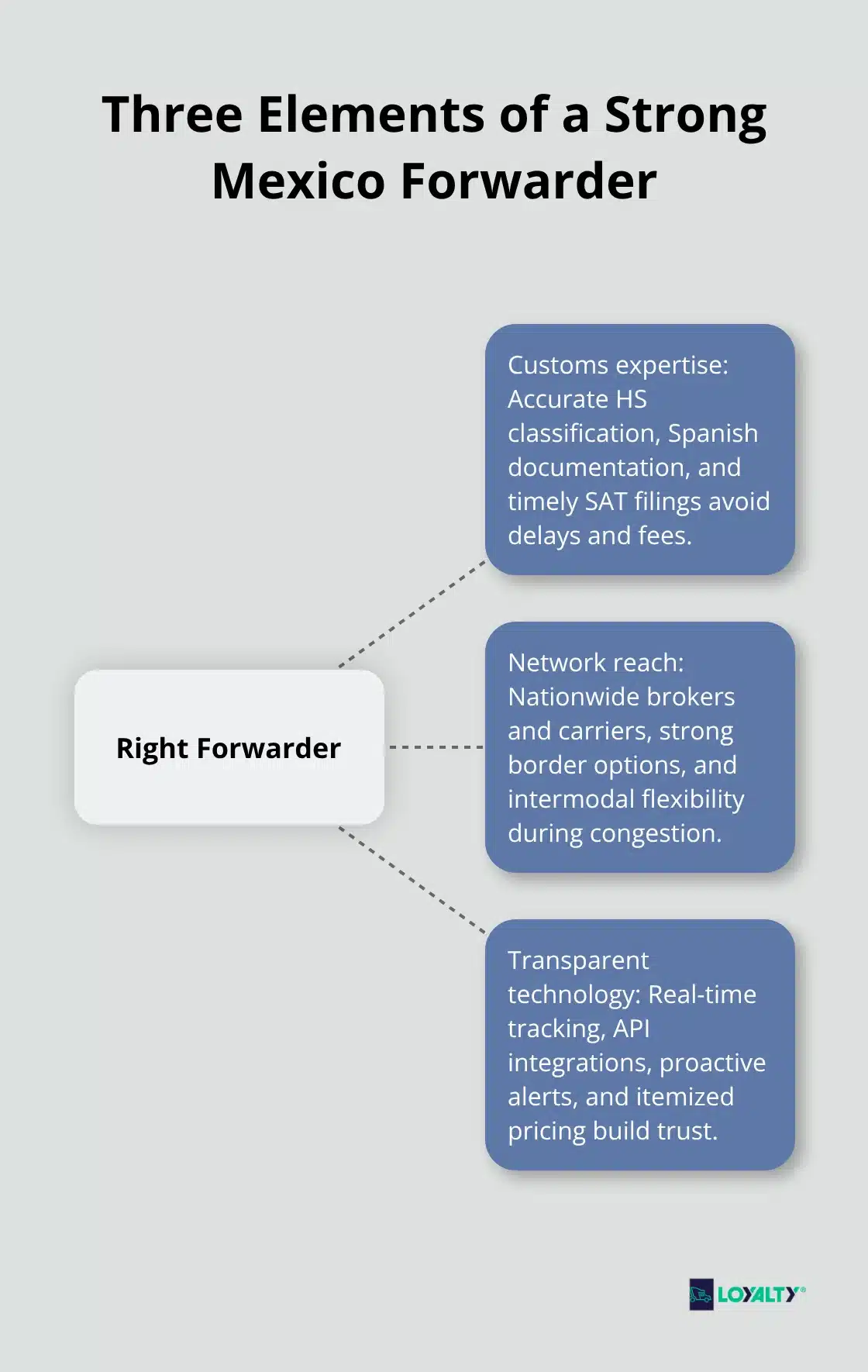
Customs knowledge separates reliable forwarders from costly mistakes. Mexico’s import system requires precise classification of goods under the Harmonized System, correct documentation in Spanish, and timely filing with SAT (the Mexican tax authority). A forwarder without deep expertise here will cost you money. Mexico’s merchandise imports reached USD 625.3 billion in 2024, up 4.5% from the previous year according to INEGI, which means the system operates under constant pressure. Misclassification or incomplete paperwork can stretch clearance from days into weeks, triggering storage fees and demurrage charges that dwarf any savings from a cheaper quote. Look for forwarders who understand Previo en Origen, a pre-clearance inspection process that verifies compliance before customs declaration. When executed properly, this approach cuts lead times to 24–48 hours after arrival. A licensed customs broker in Mexico remains essential for this process, working alongside the forwarder to file documents correctly the first time. Ask prospective forwarders how many shipments they clear monthly and what percentage face delays at the border. Vague answers signal weak expertise.
Geographic Reach and Carrier Relationships That Drive Results
A forwarder’s network determines whether your shipment moves smoothly or gets stuck. Mexico’s freight forwarding market reached USD 114.50 billion in 2025 according to Statista, and major global players like DHL Supply Chain, Kuehne + Nagel, and DB Schenker dominate because they maintain relationships with customs brokers, trucking carriers, and warehouse operators across the country. Verify that your forwarder has boots on the ground in your origin region and at your destination, not just a phone number. Ask about their preferred border crossings and what happens when congestion forces a reroute. The Mexico-US trade corridor moves USD 677 billion annually, so disruptions occur regularly. A forwarder with intermodal capabilities-the ability to switch between truck and rail-provides options when road congestion or security concerns arise. Also confirm their insurance coverage includes Mexican operations and their liability limits match your cargo value. Real-time tracking via API integration into your systems beats email updates and phone calls. Container port traffic in Mexico reaches 10.29 million TEU in 2025, underscoring the importance of a partner with strong port relationships and handling capacity.
What Questions to Ask About Network Strength
Test a forwarder’s network depth with specific questions. Ask them to name their top three carriers in your origin state and their preferred customs brokers at your target border crossing. Request details on their warehouse partnerships and whether they offer consolidation services (which help smaller shippers access container space at better rates). Find out how they handle peak season capacity constraints and whether they maintain backup routing options. A strong forwarder answers with specifics, not generalities. They should also explain their approach to cargo security, given that theft risk remains real when shipping into Mexico.

Real-time GPS tracking, secure containers, and established relationships with local authorities all reduce exposure. The forwarder’s willingness to discuss these details signals confidence in their operations.
Technology and Transparency as Operational Foundations
Modern freight forwarding demands digital integration. Your forwarder should offer real-time shipment visibility, automated documentation management, and analytics dashboards that show performance trends. API connections to your systems eliminate manual data entry and reduce errors. Ask whether they provide proactive alerts when delays occur or when documentation issues surface, rather than waiting for you to call. Transparency on pricing matters equally-request itemized quotes that break down freight charges, customs clearance fees, documentation costs, terminal handling, insurance, and any surcharges. Hidden fees destroy trust and inflate your total landed cost. A forwarder who explains their pricing structure upfront and shows how consolidation or intermodal options can reduce costs demonstrates genuine partnership thinking.
Moving Forward With Confidence
The right forwarder combines deep customs expertise, a proven network across Mexico and the US border, and transparent technology that keeps you informed. These three elements work together to prevent delays, control costs, and reduce supply chain risk. With these criteria in mind, you’re ready to evaluate specific candidates and compare their capabilities against your actual shipping needs.
Tired of Mexico forwarders who fail at customs every other shipment?
Loyalty Logistics runs cross-border freight across U.S.-Mexico lanes with CBSA and SAT compliance built in, real-time tracking, and CTPAT-aware documentation that clears customs in 24-48 hours.
Common Pitfalls When Selecting a Mexico Freight Forwarder
Price-Focused Selection Destroys Your Bottom Line
Chasing the lowest quote is the most expensive decision you can make when selecting a Mexico freight forwarder. A forwarder quoting 20% below market rate either cuts corners on customs expertise, maintains minimal carrier relationships, or plans to hit you with hidden fees once you’re locked in. Mexico’s customs system doesn’t reward budget operators-it punishes them.
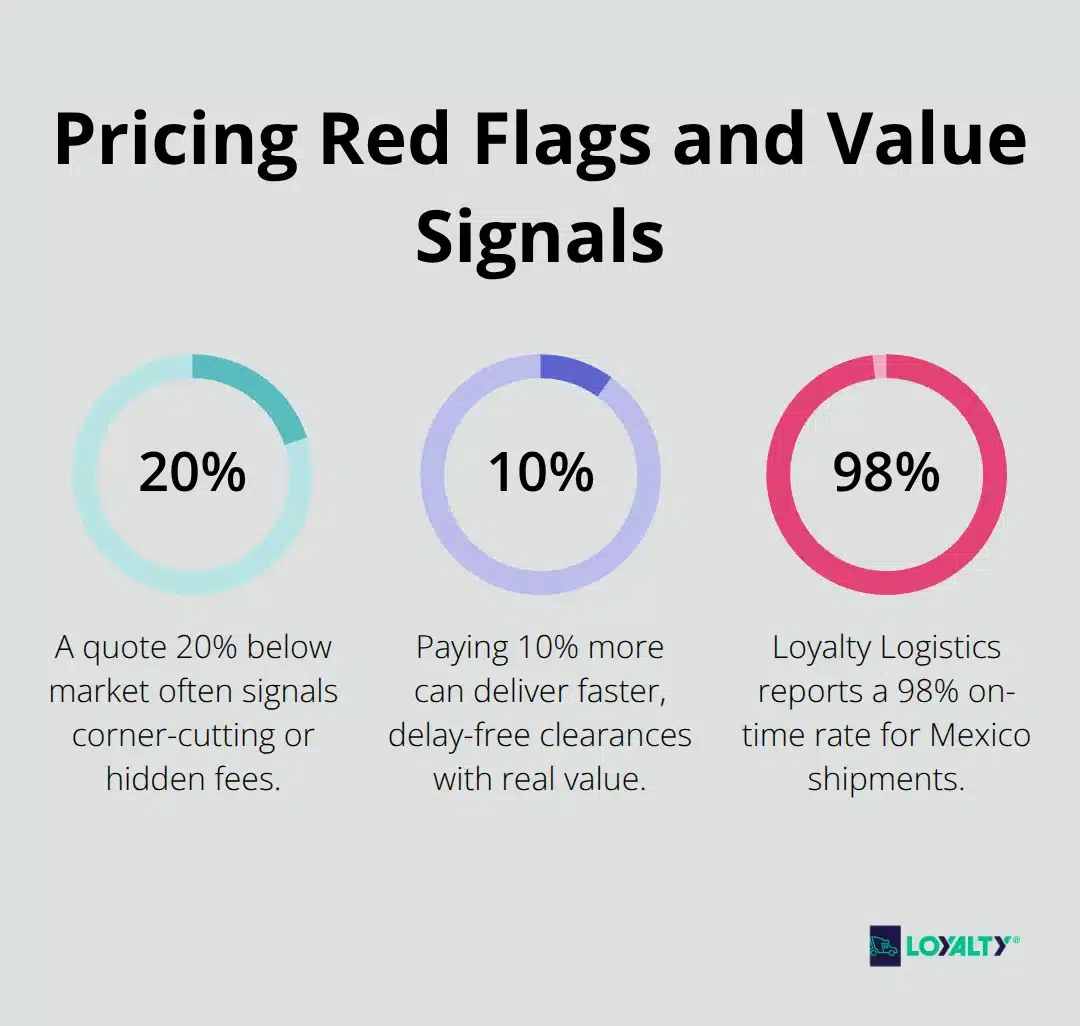
Misclassification costs compound fast. A single incorrect HS code triggers re-examination, storage fees running USD 50–100 per day, and demurrage charges that erase any savings from a cheaper initial quote within a week. Mexico tariffs further compound costs when classifications fall under regulated categories, so getting the HS code right the first time matters more than chasing the lowest line-item rate. Businesses save USD 500 on a shipment only to spend USD 3,000 fixing delays caused by incomplete documentation or a broker relationship too weak to navigate SAT’s requirements. Price-focused selection also ignores the real cost of your time. When a forwarder lacks expertise, you spend hours chasing status updates, coordinating with multiple vendors, and troubleshooting problems that shouldn’t exist. That labor cost exceeds freight savings every time. A forwarder charging 10% more but clearing shipments in 48 hours without delays delivers genuine value.
Generic Forwarders Fail on Mexico’s Complexity
Selecting a generalist forwarder without Mexico-specific experience compounds these mistakes. Generic freight providers handle standard containerized cargo between major hubs but stumble on Mexico’s regulatory complexity, regional variations, and security challenges. Knowing how to navigate freight shipping to Mexico successfully requires forwarders with these specific competencies, not generalists who learned Mexico on the fly. They don’t understand that intermediate goods made up USD 472.8 billion of Mexico’s 2024 imports according to INEGI, or that each product category carries different compliance requirements. They lack established relationships with the customs brokers, carriers, and warehouse operators who actually move shipments efficiently.
A forwarder without Mexico expertise also misses opportunities to reduce your costs. Consolidation services, intermodal routing options, and Previo en Origen pre-clearance processes all require local knowledge and carrier relationships that generalists simply don’t maintain. You end up paying more while receiving worse service-the worst possible outcome.
Slow Communication Turns Problems Into Crises
Poor communication reveals itself slowly but costs constantly. A forwarder who responds to emails within 24 hours instead of 2 hours, provides weekly updates instead of proactive alerts, or requires you to call for basic status information creates friction that multiplies across dozens of shipments. When delays occur-and they will, given that the Mexico-US trade corridor handles USD 677 billion in annual bilateral trade-slow communication turns a manageable problem into a crisis.
Insist on a dedicated account manager, defined response times for urgent issues, and bilingual capability so nothing gets lost in translation. Test this before committing by submitting questions during your evaluation and timing how quickly you receive substantive answers. A good forwarder serious about your business responds fast and thoroughly, not with templated delays. Understanding the key differences between freight brokers and forwarders also helps you set expectations correctly when evaluating Mexico partners.
These three mistakes-prioritizing price, accepting generic expertise, and tolerating poor communication-eliminate most forwarders from consideration. The candidates who remain share a common trait: they combine transparent pricing, Mexico-specific knowledge, and responsive service. Your next step involves evaluating these qualified candidates against your actual shipping requirements and comparing their capabilities side by side.
Watching $50-100 daily storage fees pile up at Mexican ports?
Tell us your Mexico lanes, products, and HS codes. We’ll quote with itemized customs clearance fees, vetted broker relationships, and Previo en Origen handling so shipments clear in 24-48 hours.
How to Evaluate Mexico Freight Forwarders With Concrete Evidence
Evaluating a Mexico freight forwarder demands more than reading their website. You need concrete evidence that they deliver results under Mexico’s demanding conditions. Start by verifying certifications that signal regulatory compliance and operational discipline.
Certifications That Reduce Border Processing Time
C-TPAT certification from U.S. Customs and Border Protection cuts processing time at crossings like Laredo, El Paso, and Nogales by flagging your shipments as lower-risk. Mexican forwarders holding CTPAT-Mexico status or FAST credentials demonstrate they’ve passed official vetting and maintain relationships with government authorities. Ask forwarders to provide copies of these certifications and verify them independently through CBP’s online directory rather than accepting their claims at face value. This step takes 15 minutes and prevents costly mistakes.
Broker Networks Determine Clearance Speed
Mexico requires a licensed customs broker (agente aduanal) for nearly all imports, and the quality of that broker determines whether your shipment clears in 24 hours or sits for two weeks. Request the names of the three customs brokers they work with most frequently, then contact those brokers directly to ask how responsive the forwarder is and whether they handle documentation accurately. A broker will tell you immediately if a forwarder consistently submits incomplete paperwork or misclassifies goods. This direct validation costs you 30 minutes and prevents months of regret.
Customer References Reveal Real Performance
Customer testimonials from actual businesses similar to yours reveal how forwarders perform when problems occur, not just during smooth operations. Avoid generic five-star reviews and instead request specific case studies showing how they handled delays, resolved customs issues, or managed peak-season volume spikes. Ask the forwarder for three references from companies in your industry who shipped similar cargo volumes in the past 12 months, then call those references and ask pointed questions: Did shipments arrive on schedule? Were there customs delays, and how did the forwarder respond? Did hidden fees appear on invoices? How responsive was their team when issues arose? Listen for hesitation or vague answers-they indicate problems.
Itemized Quotes Expose Cost Differences
Detailed quotes separate serious forwarders from tire-kickers. Request itemized proposals that break down freight charges, customs clearance fees, documentation costs, terminal handling charges, insurance, fuel surcharges, and storage fees separately. Compare these line-by-line across three candidates to spot where one forwarder inflates certain costs. Some charge USD 150 for customs clearance while others charge USD 350 for identical services. Pricing transparency also reveals whether a forwarder uses consolidation to reduce your costs or pockets savings themselves. Ask each forwarder to quote the same shipment three ways: full truckload, consolidated LCL, and intermodal rail if applicable. The forwarder who shows you cost differences across modes and explains when each makes sense demonstrates they optimize for your economics, not just their margin. Mexico’s freight forwarding market moves 757.90 billion TKM annually according to Statista, meaning pricing pressure exists and strong forwarders compete on service quality and expertise, not just discounts. Comparing options against the broader market of freight forwarding in Mexico options reveals which providers deliver consistent value.
Trial Shipments Validate Technology and Execution
Test their technology before committing. Request API documentation showing how their tracking system integrates with your systems, and ask for a demo of their documentation management platform. Request a trial shipment with one container before expanding to larger volumes. This trial reveals whether their real-time tracking actually provides visibility, whether alerts arrive before problems escalate, and whether their team executes with the precision you observed during your evaluation. A forwarder confident in their operations welcomes trial shipments because they know they’ll perform.
Final Thoughts
Choosing the right Mexico freight forwarders comes down to three non-negotiable factors: customs expertise that prevents delays and hidden costs, a network with real relationships across Mexico and the US border backed by certified customs brokers, and transparent technology that keeps you informed when problems arise. Verify certifications independently, contact broker references directly, request itemized quotes that expose cost differences, and run a trial shipment before committing volume. These steps take time but eliminate costly mistakes that price-focused or generic forwarders create.
List three to five Mexico freight forwarders who meet these criteria and request detailed proposals for your actual shipping needs. Ask each forwarder how they handle peak season constraints, what happens during border congestion, and how quickly they respond to urgent issues. The answers reveal who takes your business seriously and understands the complexity of cross-border operations.
We at Loyalty Logistics understand that Mexico shipments demand more than standard freight service. We offer versatile transportation solutions across Mexico with advanced logistics, a 98% on-time rate, and exceptional customer service backed by more than 10,000 successful deliveries. Explore our freight transportation services to discuss how we can strengthen your Mexico supply chain and reduce your total landed costs.
Frequently Asked Questions
What is a Mexico freight forwarder?
A Mexico freight forwarder is a logistics partner that arranges international shipping into and out of Mexico, handling carrier selection, customs documentation in Spanish, SAT filings, and Previo en Origen pre-clearance processes. They coordinate with licensed Mexican customs brokers (agente aduanal), manage HS code classification, and maintain relationships with truck carriers, rail operators, port terminals, and warehouse operators across the country.
What certifications should a Mexico freight forwarder have?
Look for C-TPAT certification from U.S. Customs and Border Protection, CTPAT-Mexico status, and FAST credentials. C-TPAT cuts processing time at crossings like Laredo, El Paso, and Nogales by flagging shipments as lower-risk. CTPAT-Mexico and FAST demonstrate the forwarder has passed official Mexican vetting. Verify all certifications independently through CBP’s online directory rather than accepting claims at face value.
How long does customs clearance in Mexico take?
With proper documentation, a licensed customs broker, and Previo en Origen pre-clearance, customs clearance in Mexico typically takes 24 to 48 hours after arrival. Without these elements, misclassification or incomplete paperwork can stretch clearance from days into weeks, triggering storage fees of USD 50-100 per day plus demurrage charges. The Mexico-US trade corridor moves USD 677 billion annually, so border congestion can add unpredictable hours regardless of preparation.
What is the difference between a Mexico freight forwarder and a customs broker?
A Mexico freight forwarder coordinates the entire shipping process: carrier selection, routing, documentation, tracking, and end-to-end logistics across modes. A licensed customs broker (agente aduanal) is required by Mexican law for nearly all imports and handles only the customs declaration, classification, and SAT filing. Forwarders typically work with multiple customs brokers to clear shipments at different border crossings; the quality of those broker relationships determines clearance speed.
Ready to Pick a Mexico Freight Forwarder That Actually Performs?
Mexico freight forwarders earn their margin by preventing customs delays, not just booking carriers. Tell us your Mexico lanes, products, HS codes, and typical volumes and we’ll quote with itemized customs clearance, CTPAT-aware documentation, vetted broker relationships, and routing that clears the border in 24-48 hours.
Related Articles
- Freight Forwarder in Mexico: Best Logistics Guide [2026]: Sibling guide to Mexico freight forwarding selection criteria.
- Customs Broker in Mexico: Deep dive on the licensed broker partner that determines clearance speed.
- How to Navigate Freight Shipping to Mexico Successfully: Operational playbook for U.S. shippers moving freight into Mexico.
Loyalty Logistics: Connecting businesses with opportunities across North America.
Written by: Carlos Robayo, Marketing Director at Loyalty Logistics
With expertise in logistics marketing and international trade, Carlos specializes in connecting businesses with efficient and reliable transport solutions for the North American market.

