
Freight shipping to Canada involves navigating tariffs, customs requirements, and border delays that can derail your supply chain. At Loyalty Logistics, we’ve seen firsthand how unprepared shippers face unexpected costs and shipment holds.
This guide walks you through the regulations, logistics challenges, and carrier selection process you need to master for successful cross-border operations.
What Documentation and Compliance Rules Actually Apply to Canada Shipments
The difference between domestic U.S. freight and Canada shipments comes down to paperwork and border clearance. Incomplete or inaccurate data submitted to customs causes the majority of delays-not regulatory complexity itself. USMCA replaced NAFTA in 2020 and enables duty-free treatment for eligible goods, with faster border clearance and reduced paperwork, but only if your documentation is correct from the start.
For shipments exceeding $2,500 in value, you must submit Electronic Export Information (EEI) for statistical reporting and export control compliance. The Canada Customs Invoice is non-negotiable; it contains more detailed information than a standard commercial invoice and directly determines how customs assesses duties and taxes. Shippers unfamiliar with cross-border shipping from the U.S. to Canada often miss this form entirely and stall their first shipments by days. Inconsistencies between your Bill of Lading, commercial invoice, packing list, and customs broker submission create bottlenecks at the border that cost days and hundreds of dollars.
Accurate Harmonized System (HS) codes prevent misclassification, which can trigger inspections, penalties, or duty reassessments. Include complete shipper and consignee information with correct Canadian postal codes using the letter-number-letter pattern (A1B2C3)-incorrect postal codes cause misrouting. Your product descriptions must be specific and match across all documents because duties and taxes depend on commodity type, origin, and HS classification. GST in Canada is 5% on most imports, with potential provincial taxes applying in certain scenarios, so landed cost calculations must account for both federal and provincial obligations.
Regulated Goods Require Specific Permits and Documentation
Controlled or regulated goods require export permits that you must verify before shipment. Food products crossing the border require FDA registration and prior notice to comply with U.S. food safety requirements. Plant materials need phytosanitary certificates that verify plant health and pest-free status. Animal products require USDA permits and inspections. Chemicals require safety data sheets (SDS) and hazmat documentation. Pharmaceuticals require FDA import licenses. Dangerous goods demand special packaging, labeling, and handling protocols that meet international hazmat rules.
The cost of incorrect classification extends beyond duties and penalties-your shipment sits while customs investigates. Customs brokers file paperwork and assess duties, but their accuracy depends entirely on your upstream data quality. Work with a licensed customs broker verified on the Canada Border Services Agency directory, which lists names, websites, and contact emails for all licensed providers. Many brokers operate under multiple brand names, so confirm licensure directly. Specify whether you need DDP (duties prepaid) or DDU (duties collected at clearance) to align with your Incoterms, because this affects cash flow and liability.
Border Processing Timelines and Realistic Expectations
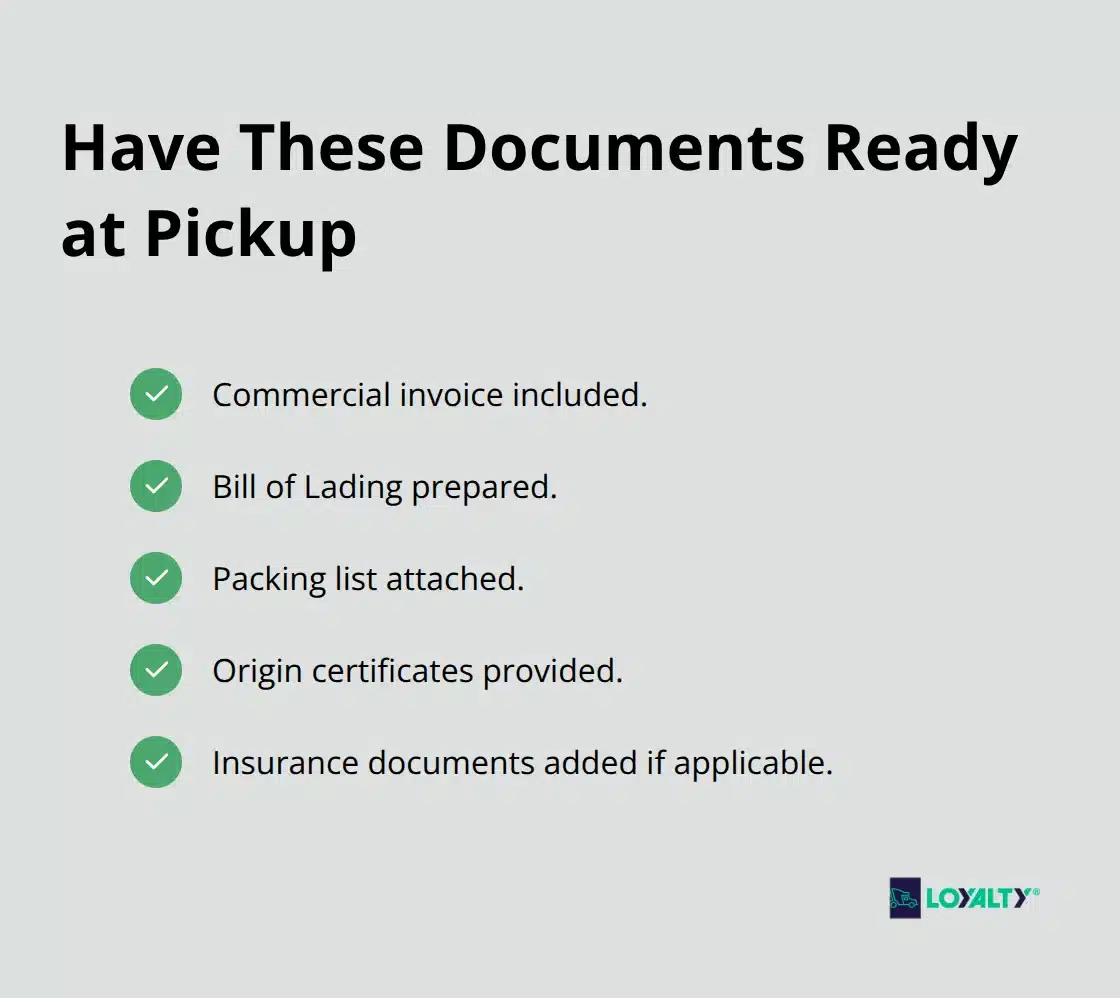
Border delays stem from incomplete documentation, incorrect HS codes, missing customs broker information, or unclear commodity descriptions. Transit times to major Canadian cities run 2–3 days, regional areas 3–5 days, and remote locations 5–7 days, but these windows exclude border clearance time. Weather and seasonal conditions cause additional delays; border crossing times vary by port and volume.
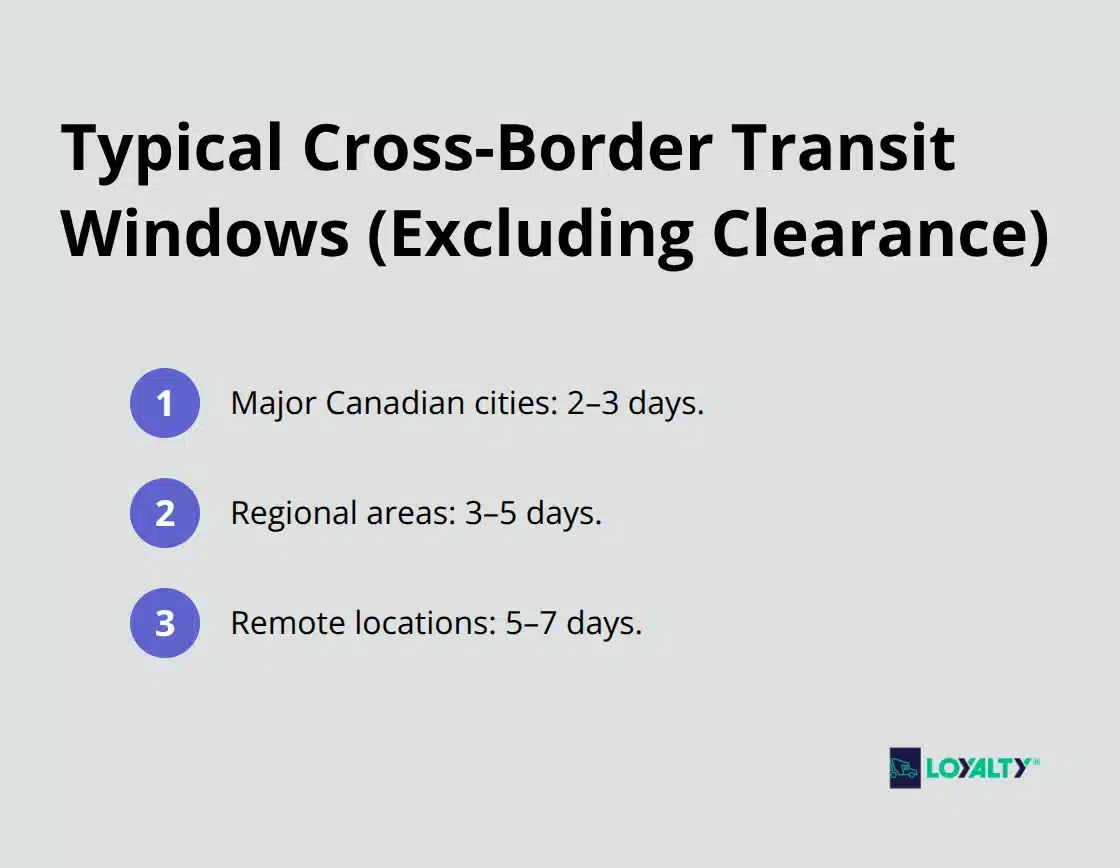
Have all required paperwork ready at pickup: commercial invoice, Bill of Lading, packing list, origin certificates, and insurance documents if applicable. Submit accurate documentation, declare all items with correct values, use proper packaging, label packages clearly, and follow safety regulations to avoid holds and penalties. For LTL shipments to Canada, precise weights, dimensions, freight class, and documentation are essential because LTL changes hands multiple times and data errors compound at each handoff. FTL shipments typically move faster with fewer handoffs, making them ideal for larger or time-sensitive loads.
Maintain valuation-support documentation to back up calculations and stay compliant with customs requirements. Refresh landed cost assumptions quarterly to reflect rate changes, new tariffs, and evolving tax rules. Once you understand what documentation customs requires and how to classify your goods correctly, the next challenge becomes selecting a carrier that actually knows how to navigate these requirements without creating delays.
Tired of documentation mistakes stalling your Canada shipments?
Loyalty Logistics submits USMCA paperwork 24 hours before pickup, uses CBSA-verified brokers, and runs integrated clearance across Laredo, Detroit, and Blaine so your freight actually crosses on time.
The Real Bottlenecks Holding Up Your Canada Shipments
Data Mismatches Trigger Automatic Customs Holds
Border delays rarely stem from regulations themselves-they result from incomplete or mismatched data submitted to Canadian customs. A packing list weight that doesn’t align with the Bill of Lading, or conflicting product descriptions sent to your customs broker, can halt your shipment for days. The Canada Border Services Agency processes thousands of entries daily, and electronic submissions with errors get flagged automatically, pulling your freight into manual review. A single discrepancy between your commercial invoice, HS code classification, and product description triggers inspection holds that cost $200 to $500 per day in storage and demurrage fees.
Submit your documentation 24 hours before pickup, not at the dock. Have your customs broker review your shipment data in advance, verify postal codes match Canadian address formatting (A1B2C3), and confirm HS codes align with your product specifications. This advance review catches errors before they reach the border.
Seasonal Volume and Weather Create Unpredictable Delays
Peak shipping periods in Q4 and spring see border crossing times stretch from 4 hours to 12+ hours depending on the port. Seasonal volume spikes compound delays because customs staff and carrier capacity both tighten during high-demand windows. Winter storms at Blaine, Washington or Detroit, Michigan back up truck queues for hours, and you won’t know the impact until your driver sits in line. Weather disruptions add unpredictability that no shipper can fully control, but advance documentation submission reduces the time your freight spends waiting for clearance once it reaches the border.
Fuel Surcharges and Carrier Handoffs Inflate Costs
Diesel prices in Canada currently run 15 to 25 cents higher per gallon than U.S. rates, and carriers pass these costs to shippers through fuel surcharges that fluctuate weekly. Route optimization matters because cross-border lanes have limited carrier options-many U.S. LTL carriers lack Canadian licensing or customs broker partnerships, forcing you to hand off freight to a Canadian partner at the border. That handoff means your shipment changes carriers, which introduces a second point of failure for data accuracy and increases transit variability.
FTL shipments avoid this problem because a single carrier maintains control from pickup to delivery, but FTL requires minimum loads of 20,000 to 24,000 pounds to be cost-effective. For smaller or irregular shipments, LTL becomes unavoidable, which means you must select a carrier with established Canadian partnerships and pre-cleared customs broker relationships.
Demand Concrete Performance Data Before Committing
Don’t accept vague promises about transit times-ask carriers for their last 90 days of actual border crossing performance data and their average clearance time by port. Carriers that can’t provide concrete numbers are guessing, and guessing costs you money when your retail partner or production line waits for inventory. Carriers with integrated customs broker relationships and Canadian licensing eliminate the handoff delays that plague fragmented logistics networks. Once you understand which carriers actually perform at the border and which ones create bottlenecks, you can evaluate the specific freight modes that fit your shipment size and timeline.
Paying $200-500 a day in customs holds or watching fuel surcharges creep up weekly?
Tell us your lanes, volumes, and commodity. We’ll quote itemized rates with fuel surcharge caps, Canadian licensing, and broker relationships pre-vetted. No handoffs, no guessing.
Selecting Carriers That Deliver on Canada Commitments
Carrier selection for Canada shipments demands more scrutiny than domestic U.S. freight because border performance directly impacts your landed costs and supply chain reliability. Most carriers operating in the U.S. lack the customs broker partnerships, Canadian licensing, or operational infrastructure to move freight across the border without creating delays. Ask potential carriers for their last 90 days of actual border crossing performance data broken down by port and their average clearance time before you commit. Carriers unable to provide concrete numbers operate blind, and that blindness costs you money when your shipment sits at customs while they figure out what went wrong.
Verify Licensing and Customs Broker Integration Before Booking
Canadian licensing separates carriers that actually operate across the border from those that only claim to serve Canada. U.S.-based LTL carriers frequently lack Canadian operating authority, which means they hand off your freight to a Canadian partner at the border. That handoff introduces a second failure point because your shipment now moves under a different carrier with different tracking systems and different data quality standards. The CBSA directory lists licensed customs brokers, but you need a carrier that has already vetted and integrated with multiple brokers across major border crossings.
Ask whether the carrier handles DDP or DDU clearance, because this determines whether duties get prepaid or collected at clearance, affecting your cash flow and liability exposure. Carriers with integrated clearance processes submit your documentation 24 hours before pickup, allowing brokers to catch data mismatches before they trigger automatic customs holds. This advance submission prevents the $200 to $500 per day storage and demurrage charges that accumulate when freight sits under customs review.
Match Freight Mode to Shipment Requirements and Cost Reality
FTL shipments require minimum loads of 20,000 to 24,000 pounds to justify the cost, but they eliminate carrier handoffs and reduce border processing variability because a single carrier maintains control throughout transit. FTL works for regular shipments with predictable volumes or time-sensitive inventory where a 2–3 day transit window to major Canadian cities justifies the higher per-pound cost. LTL becomes unavoidable for smaller or irregular shipments, but LTL pricing depends on freight class and cubic capacity, so use density calculators to avoid billing surprises when the carrier reassesses your shipment at pickup.
Refrigerated and flatbed options carry additional costs because they require specialized equipment and carrier certification. Refrigerated freight demands temperature monitoring and compliance with food safety regulations, adding 20 to 40 percent to base LTL rates depending on your origin and destination. Flatbed shipments for oversized or heavy goods require permits and specialized handling, increasing complexity and timelines.
Request Itemized Quotes That Expose Hidden Costs
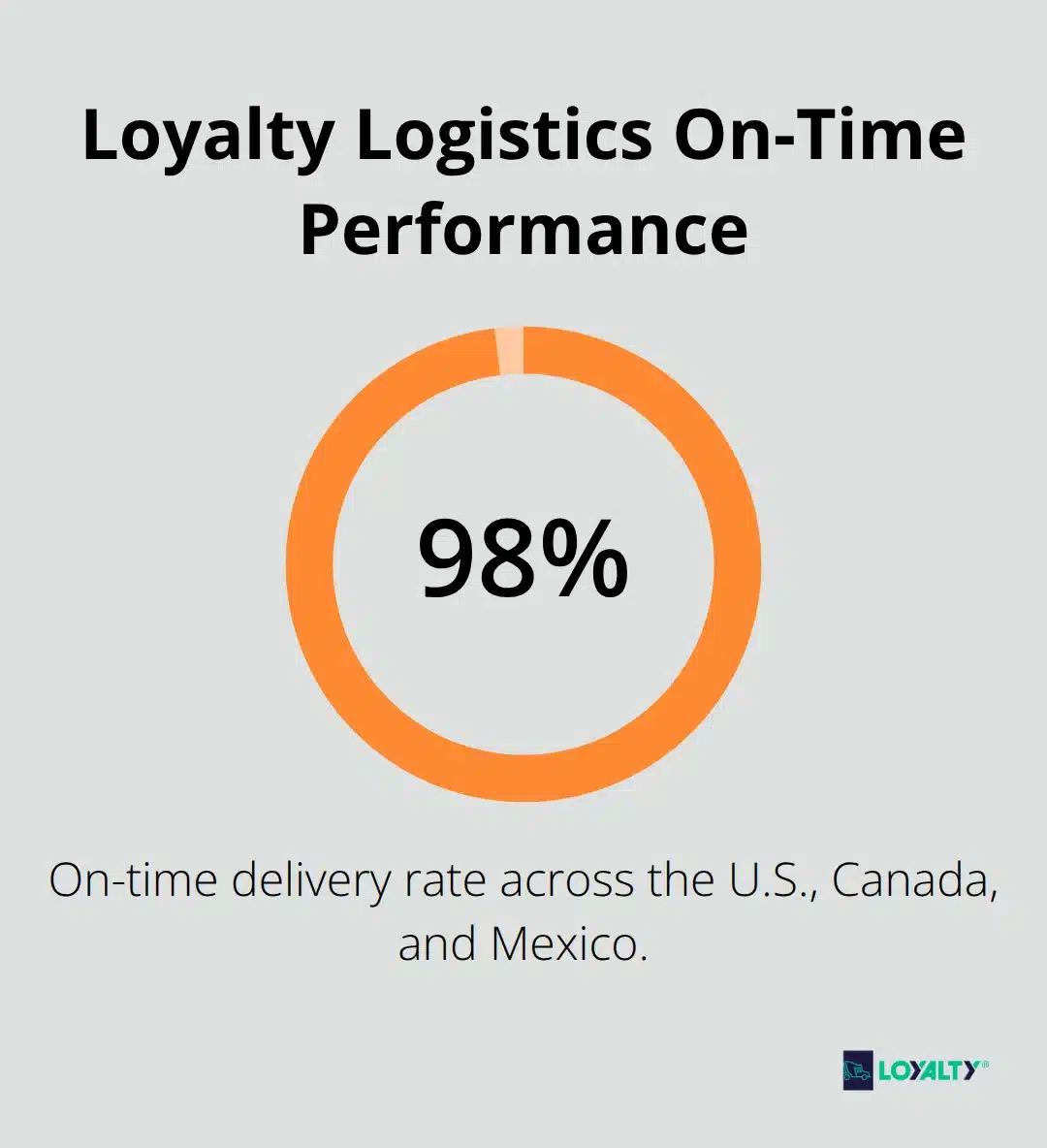
Request itemized quotes that break out base freight, fuel surcharges, border fees, and accessorial charges so you understand exactly where your money goes. Carriers that bundle fees or refuse to itemize hide cost volatility that will surprise you later. Loyalty Logistics provides refrigerated, reefer, and flatbed trucks alongside LTL shipping, with a 98% on-time rate and more than 10,000 successful deliveries across the U.S., Canada, and Mexico. Transparent pricing and concrete performance data separate carriers worth your business from those that create uncertainty and cost overruns.
Final Thoughts
Freight shipping to Canada succeeds when you submit accurate documentation 24 hours before pickup, select carriers with proven border performance data, and demand transparent pricing that accounts for fuel surcharges and accessorial charges. Most delays and cost overruns stem from preventable data mismatches and carrier handoffs, not regulatory complexity. You control these outcomes by working with customs brokers who review your shipment details in advance and selecting carriers with Canadian licensing and integrated clearance processes.
Experienced logistics providers eliminate the operational complexity that costs you money and time. They maintain established partnerships with licensed customs brokers across major border crossings, handle DDP or DDU clearance according to your Incoterms, and provide real-time tracking visibility throughout transit. They also absorb the burden of managing multiple carriers, seasonal volume spikes, and weather disruptions that would otherwise cascade into your supply chain.
Loyalty Logistics completes thousands of successful cross-border shipments annually with a 98% on-time rate and transparent pricing built into every quote. Connect with our team to discuss your freight shipping to Canada requirements and explore our freight transportation services with no hidden fees.
Frequently Asked Questions
What documents do you need to ship freight to Canada?
To ship freight from the U.S. to Canada, you need a commercial invoice, Bill of Lading, packing list, Canada Customs Invoice, certificate of origin (for USMCA duty-free treatment), and accurate Harmonized System (HS) codes. For shipments exceeding $2,500 in value, you must also submit Electronic Export Information (EEI). Controlled goods like food, plant materials, animal products, chemicals, or pharmaceuticals require additional permits and certifications.
How long does freight shipping from the U.S. to Canada take?
Transit times to major Canadian cities run 2 to 3 days, regional areas 3 to 5 days, and remote locations 5 to 7 days. These windows exclude border clearance time, which varies from 4 hours in low-volume windows to over 12 hours during Q4 or spring peak seasons. Weather, seasonal volume, and documentation errors can add unpredictable delays on top of base transit windows.
Do I have to pay duties when shipping freight to Canada?
Duties depend on the commodity type, origin, and HS classification. USMCA (which replaced NAFTA in 2020) enables duty-free treatment for eligible U.S.-origin goods if your documentation proves origin. GST is 5% on most imports, and provincial taxes may apply depending on the province of delivery. You can specify DDP (duties prepaid) or DDU (duties collected at clearance) based on your Incoterms, which affects cash flow and liability.
Should I use FTL or LTL for freight shipping to Canada?
Use FTL when you have 20,000 to 24,000 pounds or more, need predictable transit (2 to 3 days to major cities), or ship time-sensitive loads. FTL avoids carrier handoffs at the border because one carrier controls the shipment end-to-end. Use LTL for smaller or irregular shipments, but plan for multiple handoffs, stricter documentation, and carriers with Canadian licensing and pre-cleared customs broker relationships.
Ready to Ship Freight to Canada Without Border Delays?
Freight shipping to Canada pays off when documentation, carrier selection, and clearance processes work together. Tell us your lanes, commodities, and timelines and we’ll build a plan with USMCA paperwork submitted in advance, CBSA-verified brokers, and itemized pricing so you know exactly where every dollar goes.
Related Articles
- Trucking Costs in Canada: Complete Guide: Complementary breakdown of operating costs inside the Canadian lane.
- Understanding Tariffs on Canada and Mexico: USMCA-focused view on tariffs affecting cross-border freight.
- Shipping Freight From Canada: Complete Guide: The reverse-direction playbook for Canadian exports into the U.S.
Loyalty Logistics: Connecting businesses with opportunities across North America.
Written by: Carlos Robayo, Marketing Director at Loyalty Logistics
With expertise in logistics marketing and international trade, Carlos specializes in connecting businesses with efficient and reliable transport solutions for the North American market.

