
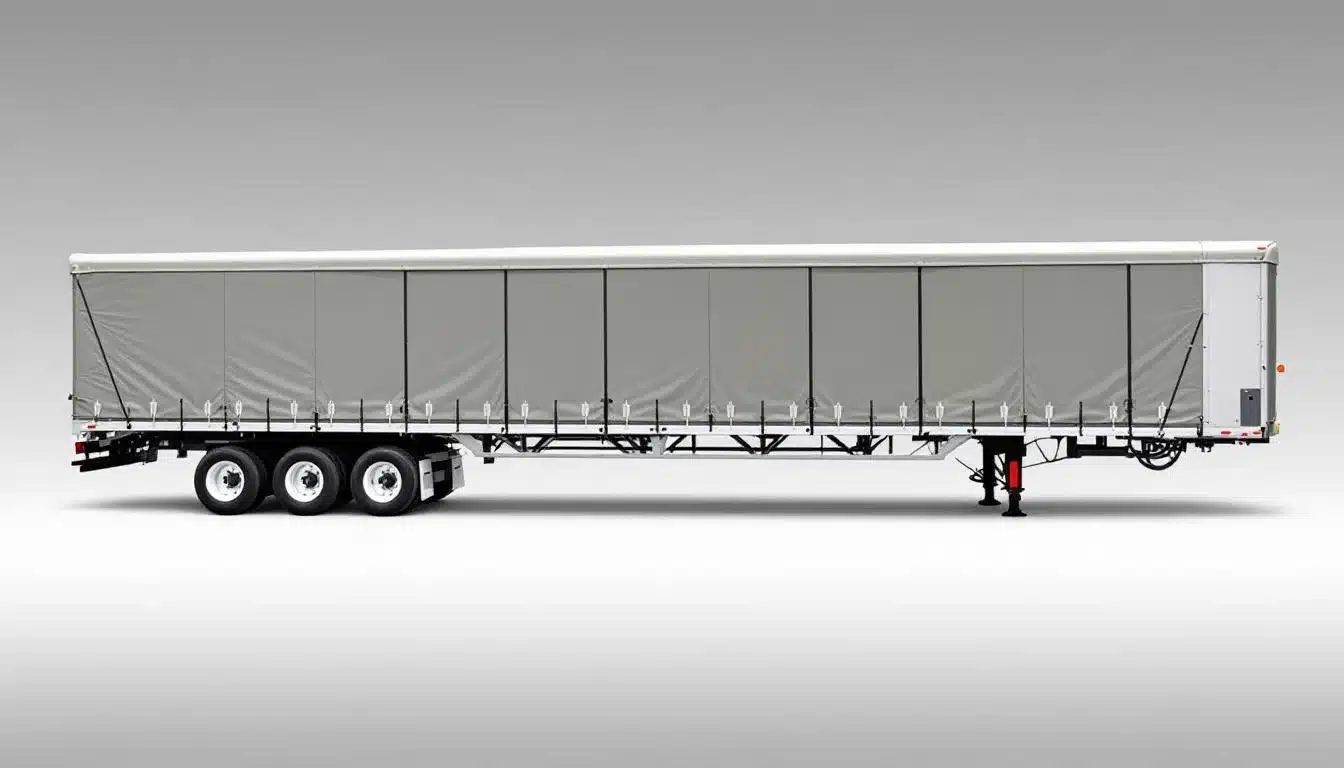
Flatbed trailers handle the toughest freight, but standard designs leave cargo exposed to weather and shifting. Conestoga flatbeds solve this problem with retractable covers that protect loads while maintaining the flexibility you need for oversized shipments.
At Loyalty Logistics, we’ve seen firsthand how the right trailer choice cuts damage claims and speeds up delivery timelines. This guide breaks down why conestoga flatbeds outperform standard options for most cross-border operations.
What Makes a Conestoga Flatbed Different
How Conestoga Design Works
A Conestoga flatbed combines an open-deck trailer frame with a retractable curtain-side tarp system mounted on a metal frame. The design gives you the loading flexibility of a standard flatbed trailer while adding weather protection that standard open decks cannot match. The tarp retracts fully to the front, allowing side and top loading access without manual tarp removal. Your crew loads from multiple angles using forklifts or cranes, which cuts labor time significantly compared to traditional tarping methods. The retractable system sits on a metal frame that floats above cargo, so the tarp never contacts sensitive finishes, paint, or delicate surfaces-a critical advantage when hauling high-value equipment.
Payload and Weight Considerations
Weight capacity typically runs 40,500 to 44,000 pounds depending on the configuration, compared to standard flatbeds that carry 48,000 to 52,000 pounds. You lose payload capacity because the curtain system and frame add weight, but that tradeoff pays off when cargo damage costs exceed fuel and equipment expenses. Standard tarps often scrape or pinch freight during placement and removal, but Conestoga trailers eliminate that contact risk entirely. This protection translates directly to fewer damage claims and faster delivery timelines.
Three Configurations for Different Loads
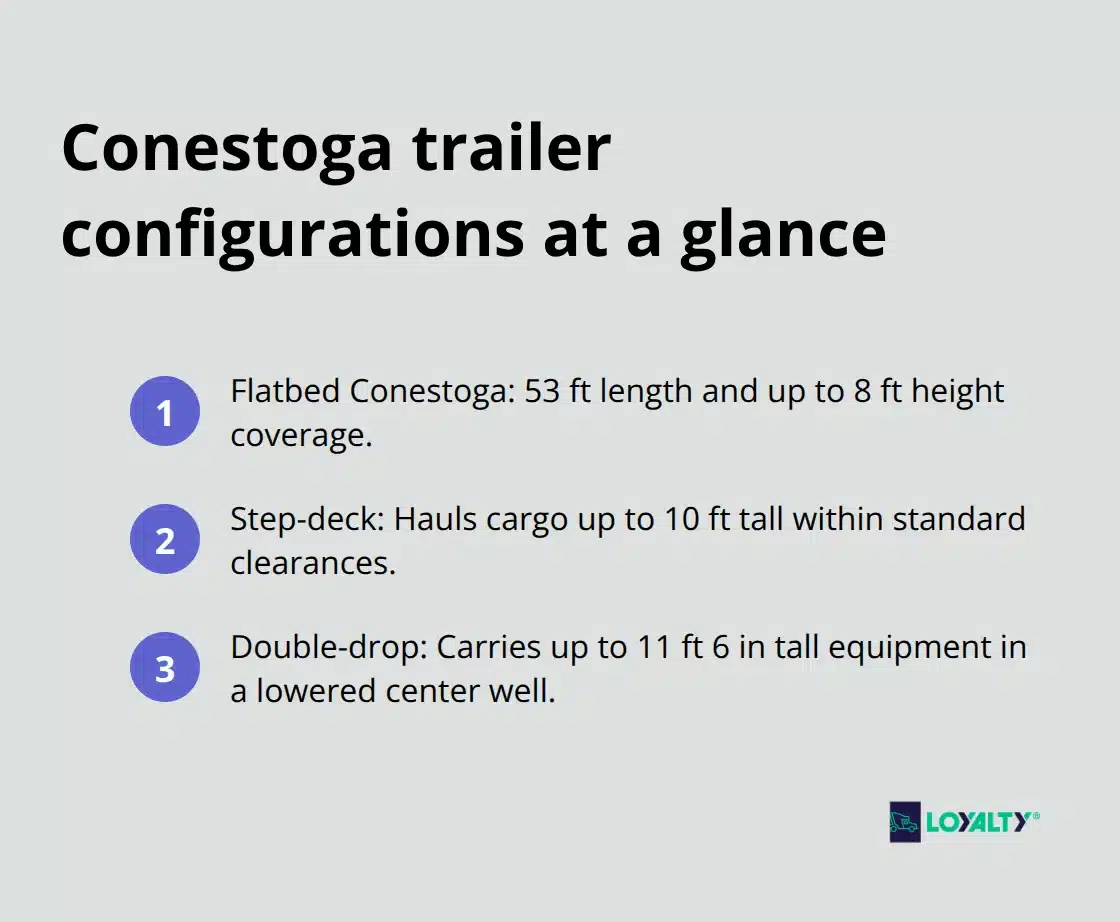
Conestoga trailers come in three main configurations. The flatbed Conestoga runs 53 feet long with heights up to 8 feet, handling standard oversized freight that needs weather shielding. The step-deck version features a lower rear deck and higher front deck, allowing you to transport items up to 10 feet tall without exceeding clearance limits on standard routes. The double-drop configuration dips the center well below the axles, accommodating cargo up to 11 feet 6 inches tall, making it the choice for exceptionally tall equipment and machinery.
All models include standard securement gear: straps, chains, and wood dunnage. The locking tarp system adds security against theft, which matters when hauling high-value industrial equipment or sheet metal.
Best and Worst Use Cases
Conestoga trailers work best for loads that don’t fit in a dry van but need weather protection. Steel products, lumber, CNC machinery, indoor equipment, and palletized goods all move efficiently in Conestogas. They perform poorly for extremely heavy freight exceeding 45,000 pounds or cargo requiring complete enclosed protection like electronics or sensitive fabrics. Regional availability affects your options significantly. DAT data shows flatbed load-to-truck ratios vary across regions, with Alabama, Mississippi, and Arkansas reporting higher demand, while Illinois, California, and the Northeast see lower utilization. This regional variation impacts pricing and booking lead times in your area, so understanding your local market matters before committing to Conestoga equipment.
Not sure if Conestoga equipment fits your lanes and freight mix?
Loyalty Logistics positions Conestoga flatbeds alongside dry van and reefer capacity so you only pay premium rates when damage exposure and loading complexity justify them.
Why Conestoga Trailers Cut Damage and Speed Up Loading
The Non-Contact Advantage
Conestoga flatbeds eliminate the physical damage that kills your margins on high-value freight. When you load sheet metal, CNC machinery, or finished equipment on a standard flatbed, manual tarping creates contact points where rope and canvas scrape paint, dent surfaces, and pinch corners. Conestoga trailers solve this with a non-contact tarp system that floats above cargo on a metal frame-nothing touches your load during weather protection. This design prevents the scratches, dents, and surface damage that standard tarps inflict during placement and removal.
Multi-Angle Access Cuts Labor Time
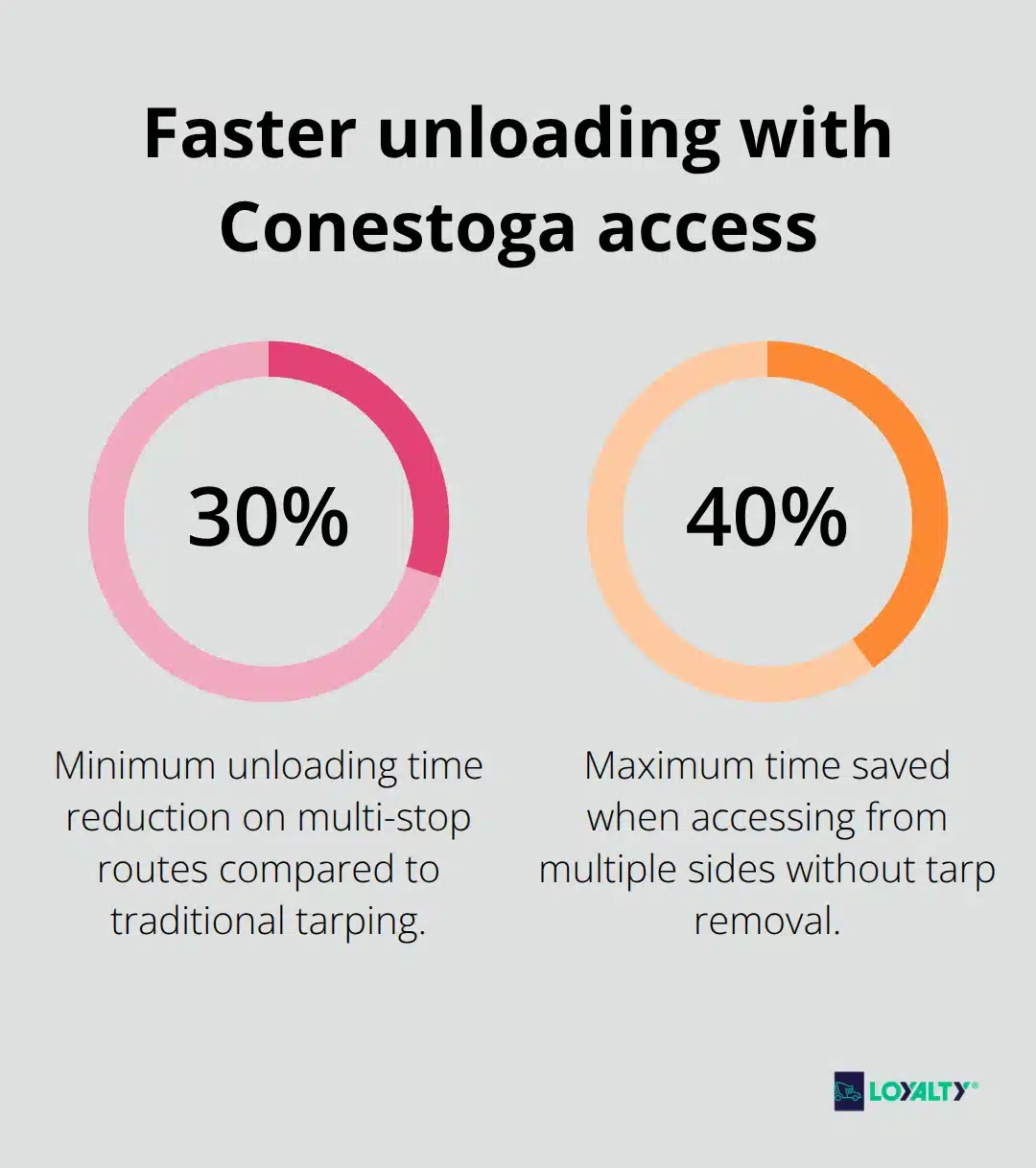
You gain immediate access from multiple sides without removing tarps between stops, which cuts unloading time by 30 to 40 percent compared to traditional methods. Forklifts and cranes operate from any angle, reducing labor costs and speeding multi-stop routes where you’d normally spend hours repositioning tarps manually. The locking curtain system adds security for high-value industrial equipment and sheet metal, protecting against opportunistic theft during overnight parking at truck stops or distribution centers.
Where Conestogas Outperform Standard Flatbeds
The real advantage emerges across industries where weather sensitivity and oversized dimensions collide. Steel products, lumber, and indoor machinery all benefit from protection without the damage risk of manual tarps. Regional availability matters significantly-areas with higher flatbed utilization like Alabama and Mississippi offer better Conestoga pricing than regions with lower demand like the Northeast and California. You lose roughly 4,000 to 8,000 pounds of payload capacity compared to standard flatbeds, but this tradeoff proves worthwhile when a single damage claim runs $2,000 to $5,000 in repair costs or customer penalties.
The Financial Case for Switching
If your freight typically incurs tarping labor costs exceeding $300 per load or damage claims happen more than twice annually, a Conestoga assignment pays for itself within six months of regular use. The question isn’t whether Conestogas cost more per mile-they do-but whether your current damage rates and labor expenses justify switching to equipment that prevents both problems simultaneously. Logistics managers across cross-border routes choose Conestogas specifically because weather exposure and handling complexity increase damage risk in those operations. Understanding your regional market and damage history determines whether this equipment premium makes financial sense for your operation, which leads directly into identifying the specific freight types that benefit most from Conestoga protection.
Paying tarping labor costs over $300 per load or losing cargo to weather?
Tell us your lanes and cargo mix. We’ll quote Conestoga capacity where it pays off and standard flatbed where it doesn’t. No guesswork, no padded rates.
Common Applications and Load Types
Steel and Metal Products Demand Weather Protection
Steel coils, sheet metal, and structural beams move constantly across North American supply chains, and Conestoga trailers handle these loads better than standard flatbeds because metal products require both weather protection and damage prevention. Steel coils weigh 20,000 to 40,000 pounds each and sit exposed on standard flatbeds where moisture causes oxidation and rust that buyers reject at delivery. A Conestoga’s retractable tarp system shields metal from rain and humidity without manual tarping that scratches surfaces and dents edges during placement. Sheet metal fabricators shipping finished goods to automotive suppliers or construction companies specifically request Conestoga equipment because the non-contact design prevents the scratches that downgrade product quality and trigger customer complaints.
Lumber and Building Materials Require Moisture Control
Lumber and building materials present different challenges-wood absorbs moisture from rain and fog, warping during transit and arriving at job sites unusable. A standard flatbed covered with tarps allows water to pool under canvas, trapping moisture against wood for hours or days. Conestoga trailers keep lumber dry while allowing side access for quick unloading at multiple construction sites without repositioning tarps between stops. Building material suppliers shipping construction materials across regions with high humidity benefit significantly from this protection.
Industrial Machinery Commands Premium Equipment
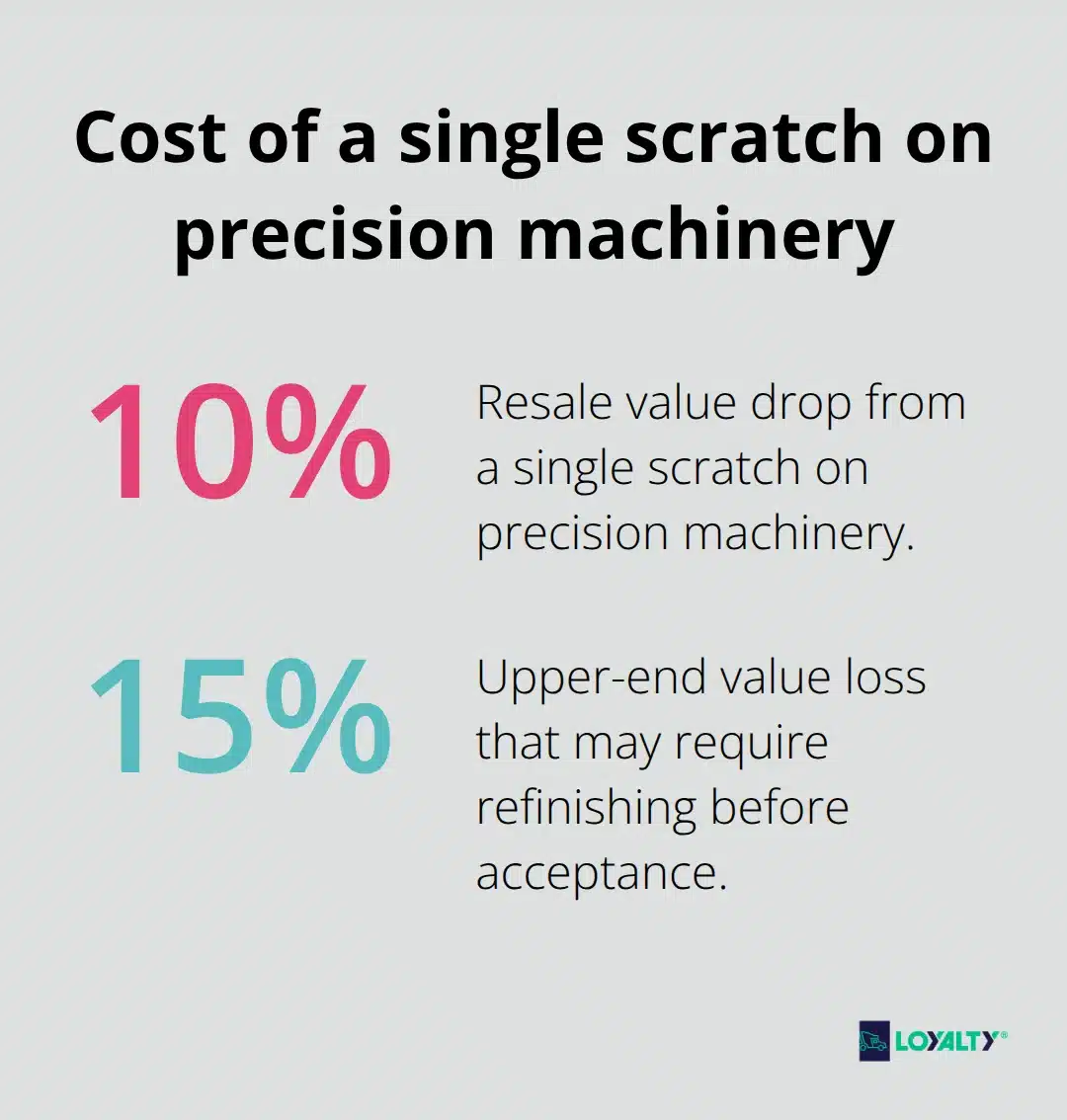
Industrial machinery and CNC equipment represent the highest-value cargo where damage prevention directly impacts your bottom line. A single scratch on precision machinery can reduce resale value by 10 to 15 percent or require expensive refinishing before customer acceptance. Factories shipping equipment across state lines or into Mexico choose Conestogas specifically because the floating tarp system eliminates contact damage while allowing side loading that reduces equipment handling time by 30 to 40 percent compared to standard flatbed operations. Understanding the nuances of heavy haul transportation helps logistics teams match Conestoga capacity to the oversized machinery shipments that benefit most from this equipment.
Agricultural Equipment Fits Specialized Configurations
Agricultural equipment like tractors, combines, and hay balers move frequently during harvest season and off-season sales, and these machines cannot fit in dry vans due to height and width constraints. A Conestoga step-deck configuration accommodates equipment up to 10 feet tall while protecting paint and chrome from weather and road debris. Regional factors affect your freight mix significantly-areas with active agricultural operations like the Midwest benefit from Conestoga availability year-round, while regions with lower flatbed utilization like the Northeast and California experience longer booking lead times and higher per-mile rates.
Regional Availability Shapes Your Equipment Decisions
The decision to assign Conestoga equipment depends on whether your freight incurs damage claims exceeding $2,000 to $5,000 per incident or requires frequent multi-stop unloading that manual tarping complicates unnecessarily. Your local market conditions determine pricing and availability, so understanding regional demand patterns helps you plan equipment assignments and budget for premium rates when Conestoga trailers become scarce in your area.
Final Thoughts
Conestoga flatbed trailers solve a problem that standard equipment cannot address: protecting high-value freight while maintaining the loading flexibility your operation demands. The non-contact tarp system prevents the damage that manual tarping inflicts, while side access cuts labor time on multi-stop routes. If your current damage claims exceed $2,000 to $5,000 annually or your crew spends hours repositioning tarps between deliveries, switching to Conestoga equipment pays for itself within months.
Steel products, lumber, industrial machinery, and agricultural equipment all benefit from weather protection without contact damage. Areas with higher flatbed utilization like Alabama and Mississippi offer better pricing and availability than regions with lower demand. Your local market determines whether premium Conestoga flatbed rates align with your damage prevention savings and labor cost reductions.
Explore our freight transportation services to discuss whether Conestoga equipment fits your freight profile and regional operations. Our team matches your specific loads with the right equipment and routing to eliminate guesswork from your transportation decisions.
Frequently Asked Questions
What is a Conestoga flatbed trailer?
A Conestoga flatbed trailer is an open-deck flatbed with a retractable curtain-side tarp system mounted on a metal frame. The tarp slides fully to the front for side and top loading access, and it floats above the cargo so it never touches sensitive finishes or paint. It gives you the loading flexibility of a standard flatbed with weather protection that standard open decks cannot match.
What is the weight capacity of a Conestoga flatbed?
Weight capacity typically runs 40,500 to 44,000 pounds depending on the configuration, compared to 48,000 to 52,000 pounds for a standard flatbed. The curtain system and metal frame add weight, so you lose payload capacity, but that tradeoff usually pays off when cargo damage costs exceed the fuel and equipment premium.
When should you choose a Conestoga over a standard flatbed?
Choose a Conestoga when your cargo needs weather protection but does not fit in a dry van, or when manual tarping creates damage risk on high-value freight like CNC machinery, sheet metal, or lumber. If your tarping labor costs run over $300 per load or damage claims happen more than twice a year, Conestoga equipment typically pays for itself within six months of regular use.
What freight types work best in Conestoga trailers?
Conestoga trailers work best for steel coils and sheet metal, lumber and building materials, industrial and CNC machinery, agricultural equipment like tractors and combines, and palletized goods that do not fit in a dry van. They perform poorly for cargo exceeding 45,000 pounds or freight that needs completely enclosed protection like electronics or sensitive fabrics.
Ready to Upgrade Your Freight to Conestoga Equipment?
Conestoga flatbeds pay for themselves on lanes where weather exposure, high-value cargo, or multi-stop unloading drive damage claims and labor costs. Tell us about your routes and cargo profile and we’ll build a plan that balances Conestoga premium capacity with standard flatbed rates where they still make sense.
Related Articles
- What Is a Conestoga Trailer?: Primer on Conestoga design, features, and use cases.
- Step Deck Trailer Dimensions: Planning for Height, Weight, and Compliance: How to plan loads for step-deck equipment, including Conestoga variants.
- How to Use a Double Drop Trailer Effectively: When double-drop beats flatbed and step-deck for oversized cargo.
Loyalty Logistics: Connecting businesses with opportunities across North America.
Written by: Carlos Robayo, Marketing Director at Loyalty Logistics
With expertise in logistics marketing and international trade, Carlos specializes in connecting businesses with efficient and reliable transport solutions for the North American market.

