

Choosing the wrong perishable freight forwarder can cost your business thousands in spoiled inventory and damaged customer relationships. Temperature-sensitive goods require specialized handling that standard logistics providers simply cannot deliver.
We at Loyalty Logistics understand the stakes involved in cold chain transportation. The right partner protects your products, reputation, and bottom line through every mile of the journey.
Essential Requirements for Perishable Freight Forwarding
Temperature-Controlled Transportation Capabilities
Your perishable freight forwarder must operate refrigerated trailers that maintain precise temperature ranges between -10°F to 70°F with accuracy within ±2 degrees. Food Safety Modernization Act regulations require detailed temperature records throughout transport, and carriers must pre-cool trailers to required temperatures before they load products. The USDA reports that approximately 7-15% of food waste occurs during transport (representing 130 million pounds annually).
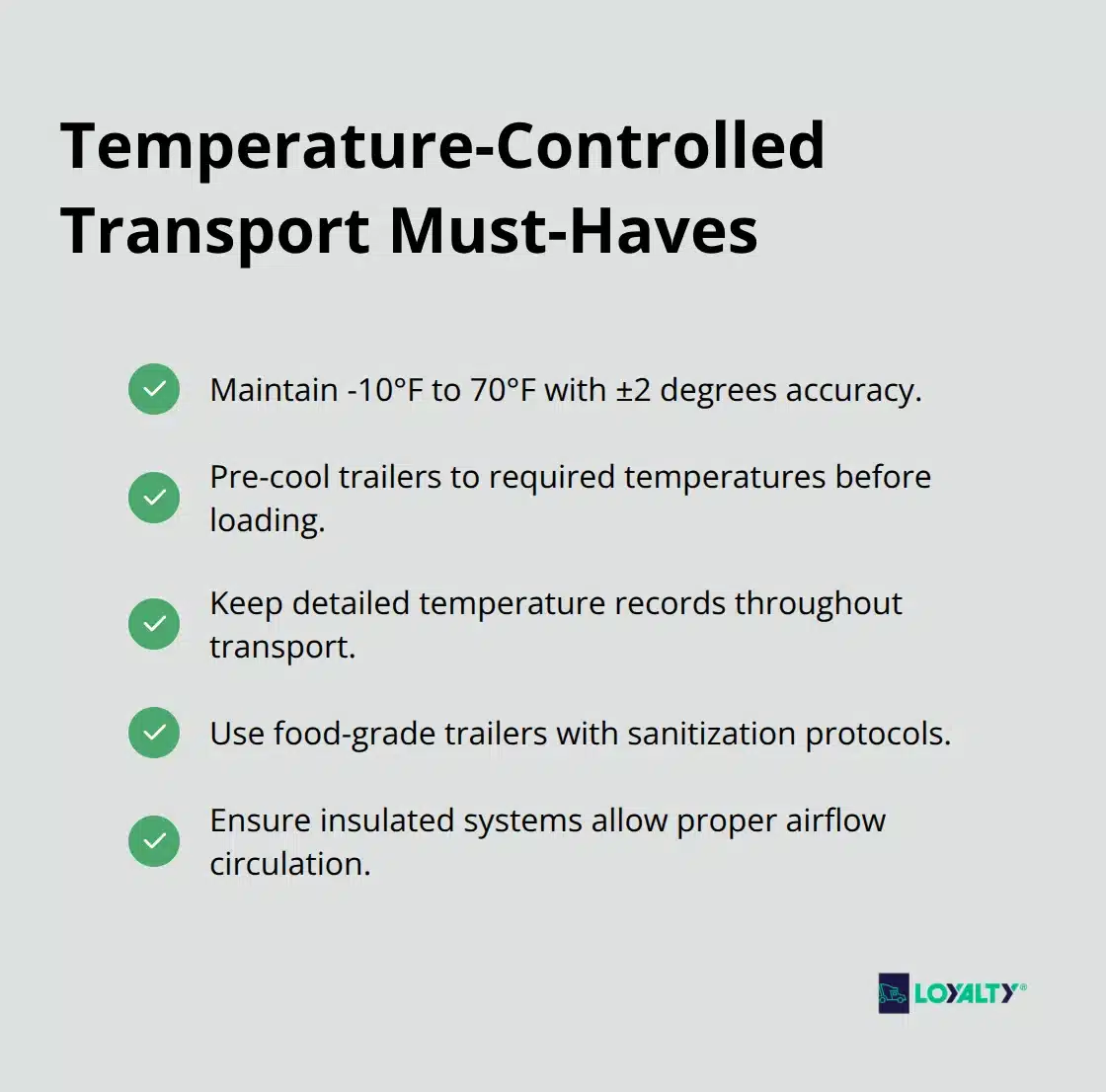
Professional forwarders use food-grade trailers with proper sanitization protocols and insulated systems that allow airflow circulation around products.
Real-Time Temperature Monitoring Systems
Advanced technology identifies temperature deviations within minutes, not hours. GPS-enabled sensors provide continuous data streams that alert both you and the carrier to potential issues before spoilage occurs. Quality forwarders offer customer portals that show live temperature readings, humidity levels, and location updates every 15 minutes. This technology prevented over 500 million COVID-19 vaccine doses from temperature damage during distribution. Without real-time monitoring, you risk the discovery of spoiled inventory only after delivery, when recovery becomes impossible. Carriers that maintain cold chain product integrity document every excursion in audit-ready logs that satisfy FDA reviews.
FDA and FSMA Compliance Standards
Professional perishable freight partners maintain current certifications for food, pharmaceuticals, and medical devices under strict regulatory oversight. They document chain of custody records, temperature logs, and schedules as federal agencies mandate. Carriers must follow hours of service regulations to prevent delays that compromise product integrity. Non-compliant forwarders expose your business to regulatory fines, product recalls, and liability claims that can reach millions of dollars (verify certifications directly with regulatory bodies rather than accept copies from potential partners). For pharmaceutical shipments specifically, evaluating pharma cold chain logistics companies against your validation requirements is the next step.
These technical requirements form the foundation of reliable perishable transport, but equipment alone doesn’t guarantee success. The next step involves evaluating how well potential partners understand your specific business needs.
Spending thousands on spoiled inventory because your current forwarder cuts corners on temperature?
Loyalty Logistics runs FSMA-compliant reefer capacity with continuous logging at ±2°F tolerance, FDA-aware documentation, and food and beverage transport experience across U.S., Canada, and Mexico.
Key Factors to Evaluate When Selecting a Provider
The right perishable freight forwarder requires evaluation across three critical areas that directly impact your product quality and business success. Start with their track record handling your specific product category – pharmaceutical companies need partners experienced with temperature ranges between 36-46°F, while frozen food distributors require expertise maintaining -10°F to 0°F consistently. Phase V documented a 37% reduction in spoilage complaints after they partnered with specialized logistics providers, proving that category expertise translates into measurable results.
Experience with Your Specific Product Categories
Examine actual case studies from potential partners rather than accept general claims about perishable handling. Ask for references from companies that ship similar products within the past 12 months and verify their temperature control success rates. Specialized forwarders understand that fresh produce requires different handling protocols than medical devices or dairy products. They know that pharmaceuticals often need validated shipping lanes with documented temperature mapping, while fresh seafood demands expedited routing to prevent quality degradation. Request detailed procedures for your specific product type and compare response quality across providers.
Network Coverage and Route Optimization
Evaluate geographic coverage based on your current and planned shipping lanes rather than overall network size. A forwarder with strong West Coast operations provides little value if you primarily ship from Midwest facilities to Southeast markets. Calculate actual transit times between your key origin and destination pairs, then compare these against standard shipping schedules.
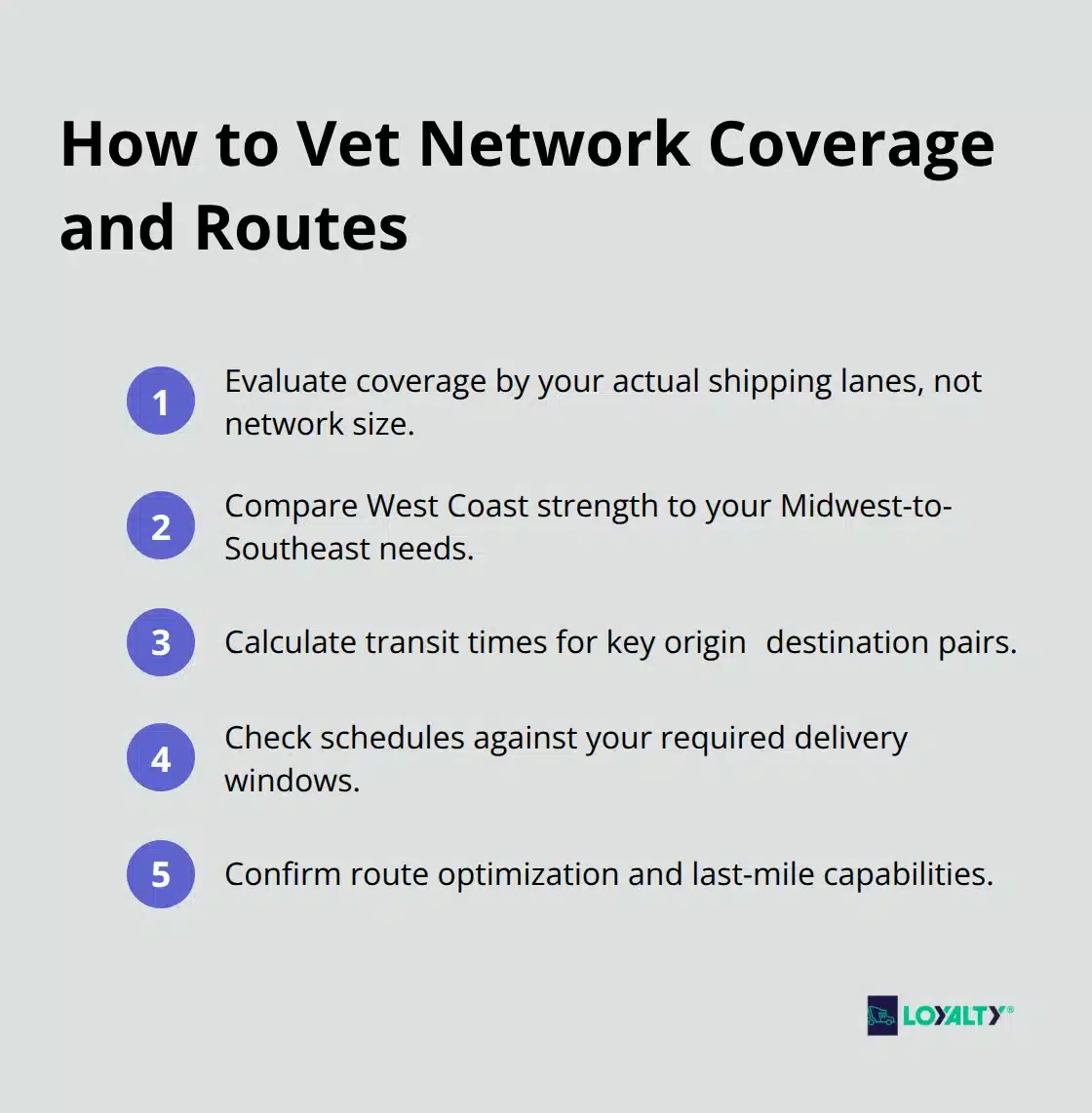
Quality providers offer route optimization that reduces transit time by 15-25% through strategic hub placement and carrier partnerships (verify their ability to handle last-mile delivery requirements, especially for temperature-sensitive products requiring white glove service or specific delivery windows). For perishable LTL specifically, evaluating reefer LTL carriers against your consolidation needs is a related decision.
Insurance Coverage and Damage Protection Policies
Standard freight insurance covers only $0.60 per pound, which falls far short of protecting high-value perishable inventory. Demand full replacement value coverage that includes spoilage, contamination, and temperature excursion damages. Review their claims processing procedures and average settlement timeframes – delays in claim resolution can severely impact your cash flow. Professional forwarders maintain additional liability coverage beyond basic requirements and provide clear documentation of their financial stability through surety bonds or credit ratings. Consider evaluating cargo insurance coverage options that specifically address perishable goods risks.
Even providers with excellent credentials can hide serious operational problems that only surface after you commit to their services.
Red Flags to Avoid in Perishable Freight Partners
Unqualified perishable freight partners reveal themselves through specific operational failures that cost businesses millions annually. The Federal Motor Carrier Safety Administration reports that 15% of freight forwarders operate without proper temperature control certifications, yet continue to accept perishable shipments. You must reject any provider that cannot produce current HACCP certification, FDA registration numbers, or temperature validation documentation within 24 hours of your request.
Legitimate operators maintain these credentials prominently and update them regularly. Check certification dates directly with issuing agencies rather than accept photocopies, as expired or fraudulent documents appear frequently in this industry. The same scrutiny applies when evaluating refrigerated transport partners for any temperature-sensitive lane.
Lack of Proper Certifications and Licenses
Professional perishable freight partners display current certifications from multiple regulatory bodies and provide verification numbers you can check independently. Avoid providers who hesitate to share certification details or claim their documents are “in process” for renewal. Valid operators maintain HACCP compliance, DOT authority, and specialized endorsements for temperature-controlled transport without gaps in coverage.
Request copies of insurance certificates, surety bonds, and safety ratings from the Federal Motor Carrier Safety Administration database. Companies that operate legally provide this information immediately and encourage verification through official channels.
Poor Communication and Customer Service
Professional perishable freight partners respond to inquiries within two hours during business operations and provide detailed shipment updates every four hours minimum. You should avoid providers that use generic email responses, fail to assign dedicated account representatives, or cannot explain their emergency response protocols clearly.
Poor communication directly correlates with shipment failures (companies with response times exceeding eight hours show 40% higher spoilage rates according to Cold Chain Technologies data). Test their communication standards during the evaluation process by requesting temperature reports, route modifications, and delivery confirmations. Providers who struggle with simple information requests will fail during actual emergencies when your perishable inventory hangs in the balance.
Inconsistent On-Time Delivery Performance
Demand specific on-time delivery metrics for the past 12 months, broken down by product category and route. Reliable perishable freight partners maintain 95% or higher on-time performance with temperature compliance rates above 98%.

Request customer references from the past six months and contact them directly about delivery consistency, temperature maintenance, and problem resolution speed.
You must avoid providers who cannot supply detailed performance data or whose references report delivery delays exceeding 10% of scheduled arrivals. Inconsistent performance with perishable goods creates problems including inventory shortages, customer complaints, and regulatory compliance issues that damage your business reputation permanently.
Want a perishable freight forwarder that produces certifications, references, and 90-day on-time data on request?
Tell us your products, temperature bands, and lanes. We’ll quote reefer capacity with HACCP/FSMA documentation, continuous logging, and 95%+ on-time performance backed by audit-ready records.
Final Thoughts
The right perishable freight forwarder protects your temperature-sensitive inventory through specialized equipment, regulatory compliance, and proven performance metrics. Companies that partner with experienced providers report 37% fewer spoilage complaints and measurable cost savings through optimized routes and damage prevention. You must verify certifications through official channels and contact recent references to validate delivery consistency claims.
Professional evaluation requires you to document specific temperature requirements, assess network coverage for your routes, and compare insurance protection levels across potential partners. Temperature control capabilities, real-time monitoring systems, and regulatory compliance form the foundation of successful cold chain partnerships. Poor communication standards or inconsistent delivery performance can destroy your perishable inventory and damage customer relationships permanently.
Start your selection process today by requesting detailed performance data from qualified providers and testing their communication responsiveness during initial consultations. The stakes remain too high to accept anything less than specialized expertise in temperature-controlled transportation (companies lose millions annually through improper cold chain management). Explore our freight transportation services to see how Loyalty Logistics protects your perishable products throughout North America.
Frequently Asked Questions
What is a perishable freight forwarder?
A perishable freight forwarder is a logistics provider specialized in temperature-controlled transportation for food, pharmaceuticals, medical devices, and other temperature-sensitive cargo. They operate refrigerated trailers maintaining ranges from -10°F to 70°F at ±2°F tolerance, comply with FSMA, FDA, and HACCP regulations, document temperature records throughout transit, and maintain food-grade trailer sanitization protocols. They differ from standard freight forwarders by their specialized equipment, certifications, and continuous monitoring systems.
How do you verify a perishable freight forwarder is legitimate?
Verify HACCP certification, FDA registration numbers, and DOT authority directly with the issuing agencies (not photocopies provided by the forwarder). Pull their FMCSA Safety Measurement System record for out-of-service rates and violations. Request 12-month on-time performance data broken down by product category and lane (target 95% on-time, 98% temperature compliance). Contact 3 references from companies shipping similar products in the past 12 months. The FMCSA reports 15% of freight forwarders operate without proper temperature certifications.
What insurance coverage should a perishable freight forwarder carry?
Standard freight insurance covers only $0.60 per pound, which falls short for perishable inventory. Demand full replacement value coverage that includes spoilage, contamination, and temperature excursion damages. Professional forwarders maintain liability coverage beyond basic requirements plus surety bonds or documented financial stability through credit ratings. Review their claims processing procedures and average settlement timeframes; delays in resolution affect your cash flow when product loss occurs.
How much does perishable freight cost compared to standard freight?
Perishable freight typically costs 15-25% more per mile than standard dry van freight due to refrigerated equipment, fuel for cooling units, sanitization protocols, and certification overhead. The premium pays back through avoided spoilage; the USDA reports 7-15% of food waste occurs during transport, which translates to far more cost than the equipment premium when applied to your specific shipment value. Reefer LTL consolidation can reduce per-unit costs for smaller shipments.
Ready for a Perishable Freight Forwarder That Actually Performs?
Perishable freight rewards shippers who pick partners with documented certifications, audit-ready temperature logs, and 95%+ on-time records. Tell us your products, temperature bands, lanes, and volumes and we’ll quote reefer capacity with HACCP/FSMA documentation and continuous logging.
Related Articles
- Reefer Truck Guide: Keep Food Fresh in Transit: Reefer fundamentals that anchor every perishable freight decision.
- How to Choose the Right Refrigerated Transport Partner: Sibling guide for the broader refrigerated transport selection process.
- Pharma Cold Chain Logistics Companies: Specialized angle when your perishables include pharmaceuticals or biologics.
Loyalty Logistics: Connecting businesses with opportunities across North America.
Written by: Carlos Robayo, Marketing Director at Loyalty Logistics
With expertise in logistics marketing and international trade, Carlos specializes in connecting businesses with efficient and reliable transport solutions for the North American market.

