
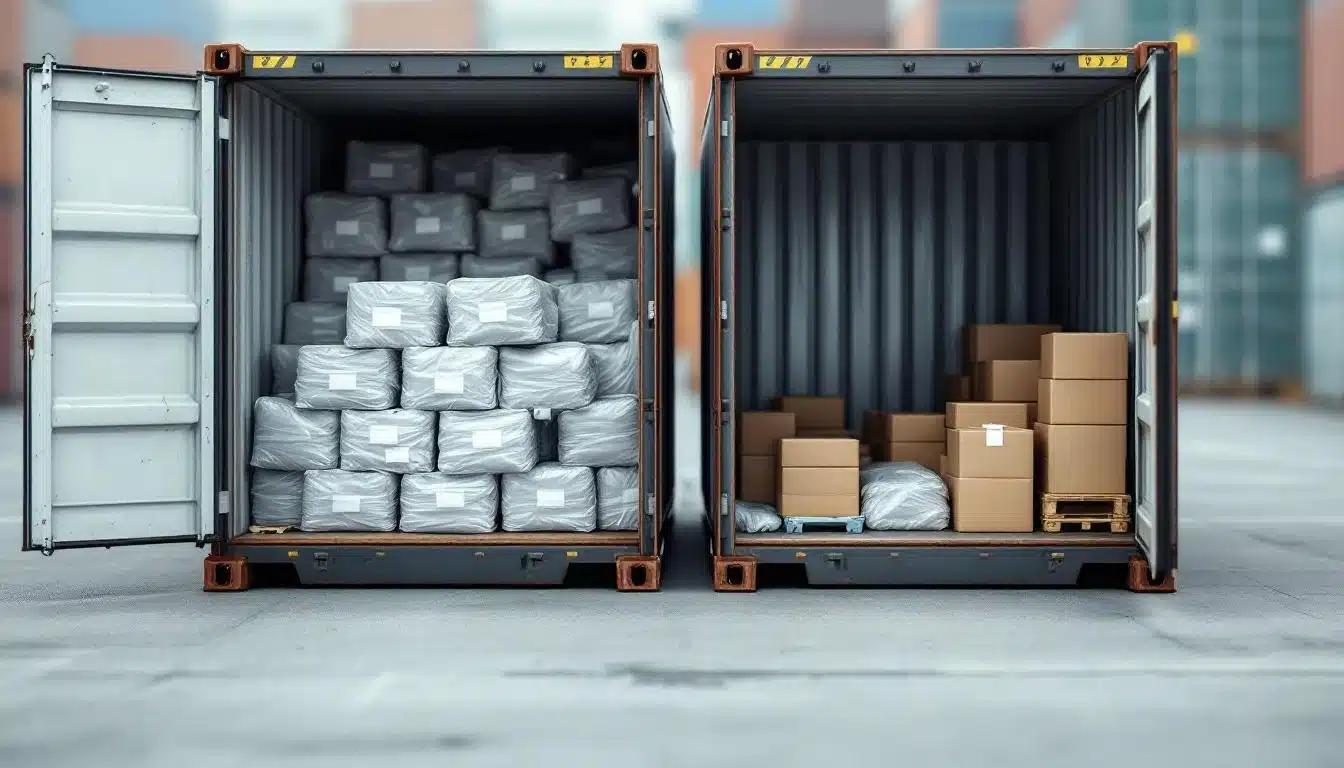
Choosing between Full Container Load (FCL) and Less than Container Load (LCL) shipping can significantly impact your supply chain efficiency and costs.
At Loyalty Logistics, we often help businesses navigate this crucial decision.
This guide will break down the key differences between FCL and LCL, helping you make the best choice for your shipping needs.
What is Full Container Load Shipping?
Full Container Load (FCL) shipping allows a single shipper to use an entire container for their goods. This method offers several advantages for businesses with large shipment volumes or specific logistical needs.
Exclusive Use and Control
FCL shipping provides exclusive use of a 20-foot or 40-foot container. Your goods are the only cargo in the container from origin to destination. You control how the container is packed, which proves vital for fragile or high-value items.
Faster Transit Times
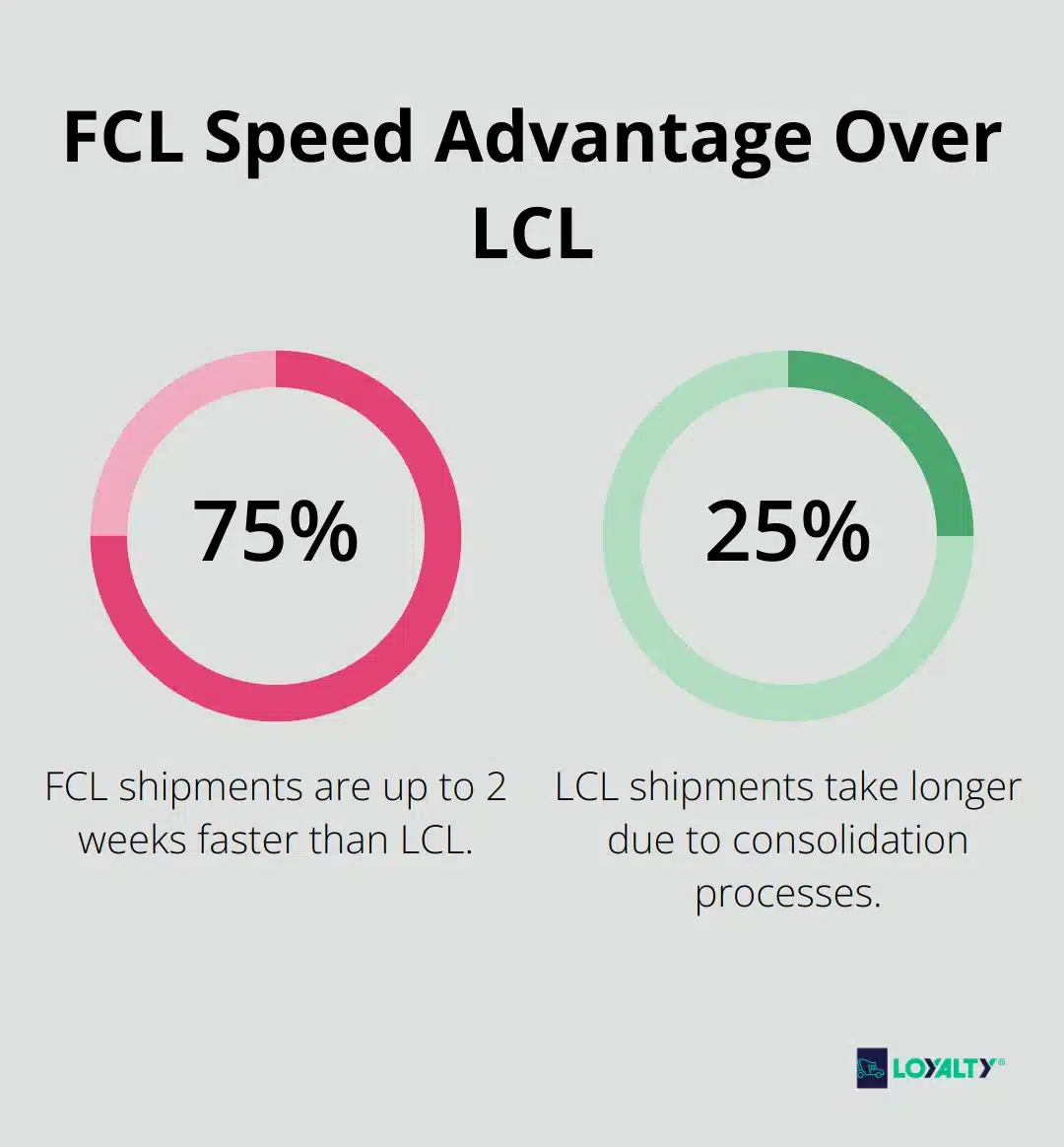
FCL shipments move faster than LCL. A study by Freightos shows FCL shipments are often one to two weeks quicker than LCL. This speed results from FCL containers not requiring consolidation or deconsolidation at ports, which reduces handling time and potential delays.
Cost-Effectiveness for Large Volumes
For shipments over 15 cubic meters (CBM), FCL often becomes more economical than LCL. The flat rate structure of FCL can lead to significant savings as volume increases. A report from Drewry Maritime Research indicates that for shipments filling 75% or more of a container, FCL is usually the more cost-effective option.
Enhanced Security and Reduced Risk
FCL shipments face less risk of damage or loss. The container remains sealed throughout transit, which minimizes handling and the chance of misplacement. This proves particularly important for high-value or sensitive goods. Insurance premiums for FCL shipments are often lower due to this reduced risk profile.
Simplified Documentation
FCL shipping involves simpler paperwork compared to LCL. You deal with a single Bill of Lading for the entire container, which streamlines the documentation process and reduces the chance of errors.
While FCL offers these benefits, it’s not always the best choice for every shipment. Businesses must carefully consider their specific needs, shipment volume, and frequency when deciding between FCL and LCL. To provide a comprehensive comparison, let’s explore LCL shipping in the next section.
What is LCL Shipping?
Definition and Concept
Less than Container Load (LCL) shipping allows multiple shippers to share space in a single container. This method optimizes costs for businesses with smaller shipment volumes, as they pay only for the space their goods occupy.
Ideal for Small Shipments
LCL shipping excels when cargo doesn’t fill an entire container. It suits shipments between 2 and 13 cubic meters perfectly. This option enables businesses to ship on-demand without accumulating enough goods for a full container.
Cost-Effective for Low Volumes
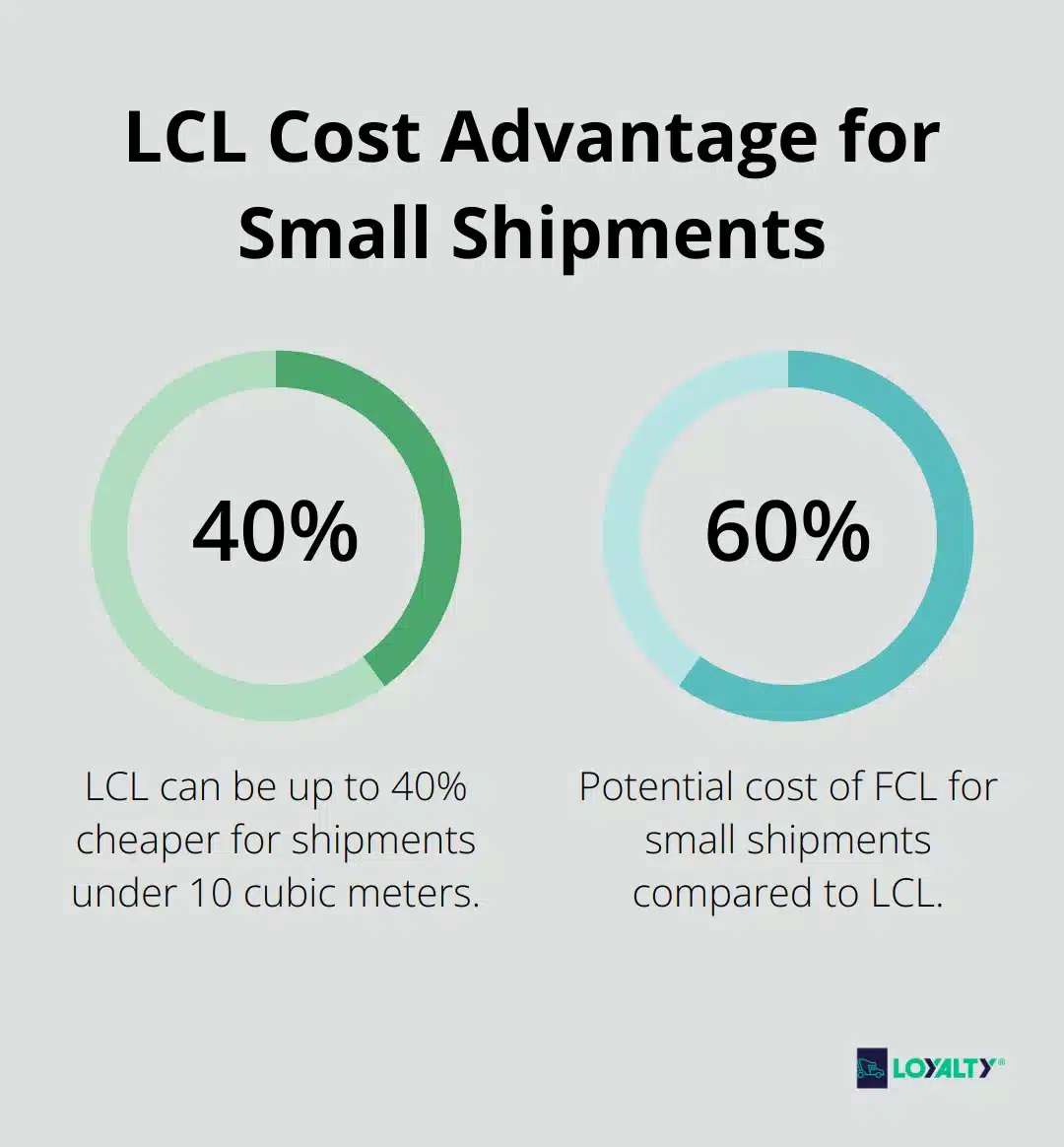
For smaller shipments, LCL often proves more economical than FCL. Research indicates that LCL can be up to 40% cheaper than FCL for shipments under 10 cubic meters. This cost advantage makes LCL attractive for small businesses or those exploring new markets.
Pricing Structure Explained
LCL rates typically follow a “per weight or measure” (W/M) calculation, based on the cargo’s weight or volume (whichever is greater). For instance, a rate of $50 per W/M for a 500 kg shipment occupying 2 cubic meters would result in a charge for 2 W/M.
Additional LCL fees include:
- Container Freight Station (CFS) charges
- Documentation fees
- Port and terminal handling charges
These fees can accumulate, so obtaining a comprehensive quote becomes essential. Transparent pricing helps shippers understand the total cost of their LCL shipment.
Considerations and Trade-offs
While LCL offers benefits for smaller shipments, it comes with certain trade-offs. Transit times generally increase due to consolidation processes, and a slightly higher risk of damage or loss exists. However, many businesses find that the cost savings and flexibility outweigh these concerns.
To make an informed decision between FCL and LCL, it’s important to compare them directly. The next section will provide a detailed comparison, helping you determine which option best suits your specific shipping needs.
How to Choose Between FCL and LCL
Choosing between Full Container Load (FCL) and Less than Container Load (LCL) shipping involves considering several key factors. Let’s explore these factors to help you make an informed decision for your shipping needs.

Shipment Size: A Key Determinant
The volume and weight of your cargo significantly influence the choice between Full Container Load (FCL) and Less than Container Load (LCL) shipping. FCL becomes more cost-effective for shipments exceeding 15 cubic meters (CBM) or weighing more than 10 tons. A Drewry Maritime Research study reveals that FCL can reduce shipping costs by up to 20% for volumes above this threshold.
For smaller shipments (between 2 and 13 CBM), LCL often proves more economical. This option allows you to pay only for the space you use, potentially cutting costs by up to 40% compared to FCL for these smaller volumes.
Time-Sensitive Deliveries: Speed vs. Cost
Transit time is another critical factor in the FCL vs. LCL decision. FCL shipments typically move faster, often one to two weeks quicker than LCL (according to Freightos data). This speed advantage results from FCL containers bypassing consolidation and deconsolidation processes at ports.
Businesses with tight delivery schedules or time-sensitive products might prefer FCL. However, if you have more flexible timelines and smaller shipments, the potential cost savings of LCL could outweigh the longer transit times.
Security and Damage Risk: Balancing Protection and Expense
FCL provides enhanced security and a lower risk of damage. Your goods are the only cargo in the container, which remains sealed throughout transit. This exclusivity reduces the chances of mishandling, theft, or contamination from other shippers’ goods.
LCL, while generally safe, involves more handling as goods are consolidated and deconsolidated. This increased handling can slightly elevate the risk of damage or loss. However, reputable freight forwarders implement stringent measures to minimize these risks in LCL shipments.
When shipping high-value or fragile items, the added security of FCL might justify the higher cost. For more robust goods or lower-value shipments, LCL’s cost savings could be more attractive.
Flexibility and Frequency: Adapting to Your Shipping Needs
LCL offers greater flexibility for businesses with fluctuating shipping volumes. You can ship smaller quantities more frequently, which can help manage inventory levels and cash flow more effectively. This option is particularly beneficial for companies entering new markets or dealing with seasonal demand fluctuations.
FCL, on the other hand, is ideal for businesses with consistent, large-volume shipments. It provides more predictable scheduling and can be more cost-effective for regular, substantial shipments.
Environmental Impact: Considering Sustainability
The environmental impact of shipping is an increasingly important consideration. FCL can be more eco-friendly for large shipments, as it maximizes container space utilization. However, for smaller shipments, LCL allows for the consolidation of multiple cargoes, potentially reducing the overall carbon footprint per unit shipped.
Final Thoughts
The choice between Full Container Load (FCL) and Less than Container Load (LCL) shipping impacts supply chain efficiency and costs significantly. FCL offers exclusive container use, faster transit, enhanced security, and cost-effectiveness for large volumes. LCL allows multiple shippers to share container space, proving more cost-effective for smaller shipments and providing flexibility for fluctuating volumes.
Factors to consider when deciding between FCL and LCL include shipment size, delivery timelines, security requirements, and shipping frequency. FCL often proves more economical for shipments exceeding 15 cubic meters or 10 tons, while smaller shipments (between 2 and 13 cubic meters) typically benefit from LCL’s cost structure. Time-sensitive or high-value goods might justify FCL’s faster transit and enhanced security.
Loyalty Logistics understands the complexities of choosing between full container load vs less than container load shipping. Our team of experts can help you navigate this decision, ensuring you select the most efficient and cost-effective option for your specific needs. We can optimize your supply chain regardless of your chosen shipping method.