

Ocean freight cargo is the backbone of global trade, moving massive volumes of goods across vast distances. At Loyalty Logistics, we understand the complexities and challenges that come with shipping by sea, which is why we offer comprehensive freight shipping services tailored to meet diverse logistics needs.
This guide will break down the essential types of ocean freight, key factors to consider, and strategies to optimize your shipping process. Whether you’re new to maritime logistics or looking to refine your approach, we’ve got you covered.
What Are the Main Types of Ocean Freight Cargo?
Ocean freight cargo forms the foundation of global trade, moving vast quantities of goods across oceans. Understanding the different types of cargo is essential for optimizing your shipping strategy, especially when dealing with cross-border shipping challenges that require careful planning and documentation.
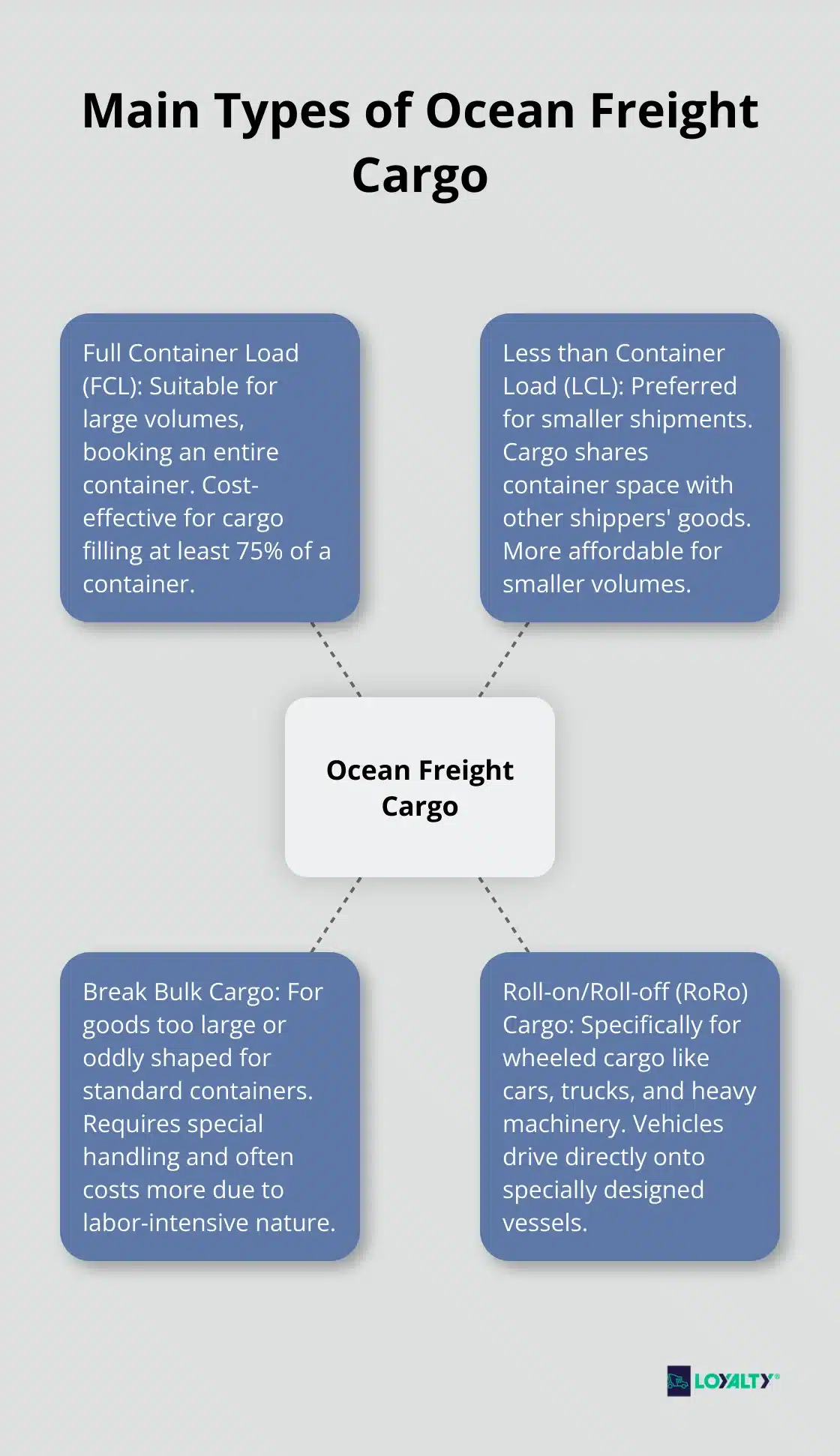
Full Container Load (FCL)
FCL shipping suits large volumes of goods. You book an entire container (20-foot or 40-foot) for your shipment. This method proves cost-effective for cargo that fills at least 75% of a container. FCL offers faster transit times because your goods don’t mix with others, which reduces handling time and potential delays.
Less than Container Load (LCL)
LCL is the preferred choice for smaller shipments. Your cargo shares container space with other shippers’ goods. While more affordable for smaller volumes, it typically takes longer due to consolidation and deconsolidation processes. LCL (Less than Container Load) shipping works well for testing new markets or managing cash flow when a full container isn’t justified.
Break Bulk Cargo
This method applies to goods too large or oddly shaped for standard containers (think industrial equipment, vehicles, or construction materials). Break bulk requires special handling and often costs more due to its labor-intensive nature. However, it sometimes remains the only option for oversized items.
Roll-on/Roll-off (RoRo) Cargo
RoRo shipping caters specifically to wheeled cargo like cars, trucks, and heavy machinery. Vehicles drive directly onto specially designed vessels, making loading and unloading efficient. It’s generally more cost-effective than container shipping for vehicles, but availability can be limited on some routes.
The choice of ocean freight cargo type significantly impacts your shipping costs and timelines. Each method has unique documentation requirements and handling procedures, so partnering with an experienced logistics provider is key. For businesses requiring reliable cross-border freight solutions, understanding these options becomes even more critical for successful international trade operations. While land-based transportation across North America remains our specialty at Loyalty Logistics, we often coordinate with ocean freight providers to ensure seamless door-to-door delivery for our clients’ international shipments.
As we move forward, let’s explore the key factors that influence ocean freight shipping, including transit times, routes, and freight rates.
What Drives Ocean Freight Shipping Costs and Timelines?
Ocean freight shipping involves complex processes influenced by various factors. Understanding these elements will help you plan effectively and manage costs. Let’s explore the key drivers that impact your ocean freight strategy.
Transit Times and Routes
Ocean freight transit times range from 20 to 60 days, depending on the route. The Asia-Europe route typically takes 30-40 days, while trans-Pacific shipments require 14-20 days. These timelines can change due to port congestion, weather conditions, and geopolitical events.
Sea Intelligence reported global schedule reliability at 40% as of June 2022, highlighting the need for buffer time in your supply chain. To reduce risks, you should diversify your shipping routes and carriers. Some shippers choose multi-modal solutions (combining ocean and air freight) to balance cost and speed. For businesses managing complex logistics operations, working with a freight broker can provide valuable expertise in navigating these route decisions and carrier relationships.
Freight Rates and Surcharges
Ocean freight rates fluctuate based on supply and demand, fuel costs, and seasonal trends. As of July 2025, Drewry’s World Container Index reports a rate of $2,602 per 40ft container (a 2.6% decrease from the previous week). Rates vary significantly by route. For example, Shanghai to Los Angeles rates stand at $2,817 per FEU, while Shanghai to New York costs $4,539 per FEU.
Additional surcharges can impact your total shipping cost:
- Bunker Adjustment Factor (BAF): Covers fuel price fluctuations
- Peak Season Surcharge (PSS): Applied during high-demand periods
- Emergency Bunker Surcharge (EBS): Addresses sudden fuel price spikes
- Terminal Handling Charge (THC): Covers cargo handling at ports
To optimize costs, you should book during off-peak seasons and negotiate long-term contracts with carriers for more stable rates.

Documentation Requirements
Proper documentation ensures smooth ocean freight operations. Key documents include:
- Bill of Lading (B/L): Contract of carriage between shipper and carrier
- Commercial Invoice: Details the goods being shipped and their value
- Packing List: Itemized list of package contents
- Certificate of Origin: Specifies where goods were manufactured
Customs Clearance Procedures
Customs clearance can significantly impact transit times. To expedite this process:
- Ensure all documentation is accurate and complete
- Work with a customs broker familiar with local regulations
- Consider obtaining AEO (Authorized Economic Operator) status for faster clearance
- Use digital platforms for document submission to reduce processing time
Modern logistics technology has revolutionized how businesses track their shipments throughout these complex processes. Implementing real-time cargo tracking systems can help you monitor your ocean freight shipments and proactively address any delays or issues that arise during transit.
These key factors will help you make informed decisions to optimize your ocean freight strategy. You can balance cost, speed, and reliability to meet your specific business needs. In the next section, we’ll explore strategies to further enhance your ocean freight operations and maximize efficiency.
How to Optimize Your Ocean Freight Strategy
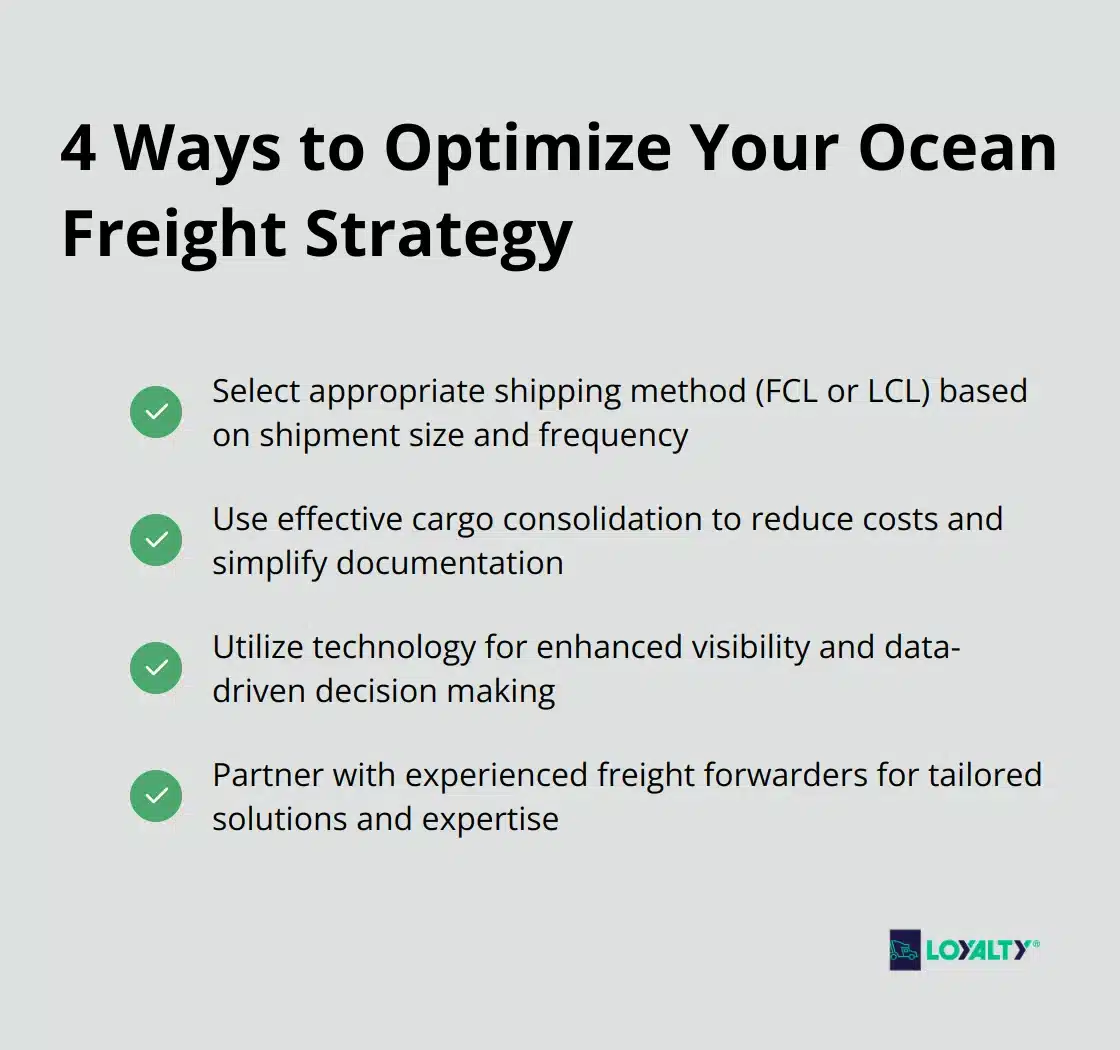
Select the Appropriate Shipping Method
Your choice of shipping method significantly affects your bottom line. Full Container Load (FCL) often proves most cost-effective for large shipments that fill at least 75% of a container. It minimizes handling and potential damage, thus speeding up transit times. For smaller shipments or when testing new markets, Less than Container Load (LCL) might be more economical.
A study by Drewry shows FCL rates can be up to 30% cheaper per cubic meter compared to LCL for larger shipments. However, LCL becomes more cost-effective for shipments under 15 cubic meters. You should analyze your shipping volume and frequency to determine the most suitable option.
Use Effective Cargo Consolidation
Cargo consolidation can dramatically reduce shipping costs, especially for smaller shipments. You can benefit from economies of scale by combining multiple LCL shipments into a single FCL. This approach not only cuts costs but also simplifies documentation and reduces the risk of damage or loss.
A report by the Journal of Commerce found that effective consolidation can lead to savings of up to 25% on ocean freight costs. You should work with your freight forwarder to identify consolidation opportunities, particularly if you have regular shipments to the same destination.
Utilize Technology for Enhanced Visibility
Modern logistics demands the use of technology. Real-time tracking systems, AI-powered analytics, and blockchain solutions offer unprecedented visibility into your supply chain. These tools help you anticipate delays, optimize routes, and make data-driven decisions.
The TradeLens platform (developed by Maersk and IBM) uses blockchain technology to provide end-to-end visibility across the supply chain. Early adopters report up to 40% reduction in transit times for shipments.
You should invest in a robust Transportation Management System (TMS) that integrates with your existing systems. This integration allows for better planning, forecasting, and risk management. Try to find solutions that offer predictive analytics to anticipate potential disruptions and suggest alternative routes or modes of transport.
Partner with Experienced Freight Forwarders
Collaborating with knowledgeable freight forwarders can significantly enhance your ocean freight strategy. These experts possess in-depth understanding of shipping routes, regulations, and market trends. They can provide valuable insights to optimize your shipments and navigate complex customs procedures.
When selecting a freight forwarder, consider their track record, network of partners, and technological capabilities. A reputable forwarder (like Loyalty Logistics) can offer tailored solutions that align with your specific business needs and help you achieve cost savings and improved efficiency. For businesses in manufacturing and heavy industry sectors, specialized industrial shipping solutions become particularly valuable for handling complex cargo requirements and ensuring compliance with industry-specific regulations.
Final Thoughts
Ocean freight cargo remains a cornerstone of global trade, offering cost-effective solutions for businesses of all sizes. Understanding various cargo types empowers you to make informed decisions that align with your shipping needs. Key factors like transit times, freight rates, and documentation requirements shape your ocean freight strategy.
Strategic planning in ocean freight optimizes your supply chain. You can reduce costs and improve efficiency by selecting the right shipping method, leveraging cargo consolidation, and embracing technology for enhanced visibility. These approaches also boost reliability in your shipping operations.
Loyalty Logistics recognizes the complexities of ocean freight cargo and its impact on your overall logistics strategy. We collaborate with ocean freight providers to ensure seamless door-to-door delivery for our clients’ international shipments. Our land-based transportation expertise across North America complements these services, helping you streamline your transportation needs and enhance supply chain efficiency.
Ready to streamline your ocean freight operations? Whether you’re shipping across borders or need specialized industrial transportation, our team of logistics experts is here to help you navigate the complexities of international shipping. Contact our freight specialists today to discuss your specific requirements and discover how we can optimize your supply chain for maximum efficiency and cost savings.