

LCL ocean freight is a vital shipping option for businesses that don’t have enough cargo to fill an entire container. At Loyalty Logistics, we understand the challenges of choosing the right LCL service provider.
This guide will help you navigate the key factors to consider when selecting an LCL ocean freight service. We’ll explore how to evaluate providers and make an informed decision that best suits your shipping needs.
What is LCL Ocean Freight?
Definition and Basics of LCL Shipping
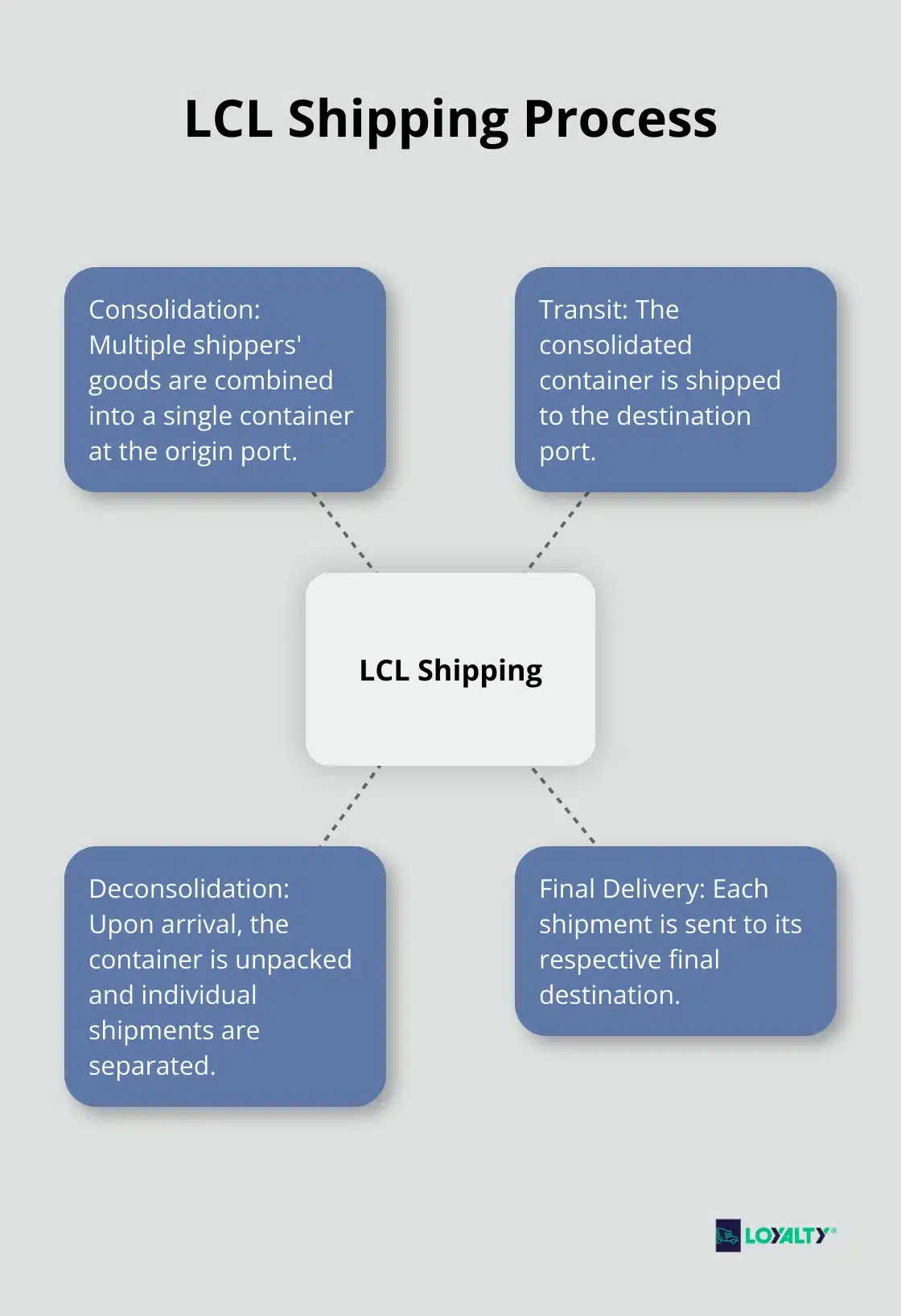
LCL, or Less than Container Load, is a shipping method where multiple shippers share space in a single container. This approach suits businesses that don’t have enough cargo to fill an entire container but need to ship goods internationally.
In LCL shipping, your goods are consolidated with other shippers’ cargo in a container at the origin port. Upon arrival at the destination port, the container is deconsolidated, and each shipment is sent to its final destination. This process allows for cost-effective shipping of smaller volumes (typically under 15 cubic meters or 2-3 pallets).
LCL vs FCL: Making the Right Choice
LCL offers several advantages over Full Container Load (FCL) shipping for certain scenarios. It’s more cost-effective for smaller shipments, as you only pay for the space you use. This makes it an excellent option for businesses with irregular shipping needs or those just starting in international trade.
However, LCL isn’t always the best choice. If your shipment exceeds 15 cubic meters, FCL might be more economical. FCL also offers faster transit times and reduced handling, which can be essential for time-sensitive or fragile cargo.
Debunking Common LCL Myths
Many shippers avoid LCL due to misconceptions. One common myth is that LCL is always slower than FCL. While consolidation can add some time, many LCL services now offer competitive transit times. Another misconception is that LCL is inherently riskier. In reality, reputable freight forwarders use advanced tracking systems and careful handling procedures to ensure the safety of your goods.
Optimizing Your LCL Shipments
To maximize LCL shipping efficiency, provide accurate cargo measurements. Precise dimensions and weight help avoid costly surprises and ensure fair charges. Understanding the right container sizes for your shipment is crucial for cost optimization. It’s also important to package your goods properly to withstand the additional handling involved in LCL shipping.
As we move forward, let’s explore the key factors you should consider when choosing an LCL ocean freight service provider. Understanding these elements will help you make an informed decision that aligns with your specific shipping needs and business goals.
What Matters Most in LCL Service Selection?
Transit Times and Route Optimization
The selection of an LCL service significantly impacts your supply chain efficiency and bottom line. Transit times play a crucial role in this decision. However, faster doesn’t always equate to better, especially if it comes with a premium cost that doesn’t align with your needs. The goal is to find an optimal balance between speed and affordability.
Providers offering direct routes to your destination typically result in shorter transit times. A study by Drewry Maritime Research found that direct services can reduce transit times by up to 20% compared to those with multiple stops. The frequency of sailings also matters. More frequent departures provide greater flexibility in inventory management and meeting customer demands. Some top carriers offer weekly LCL services on major trade lanes, allowing for more precise planning.
Understanding the True Cost of Shipping
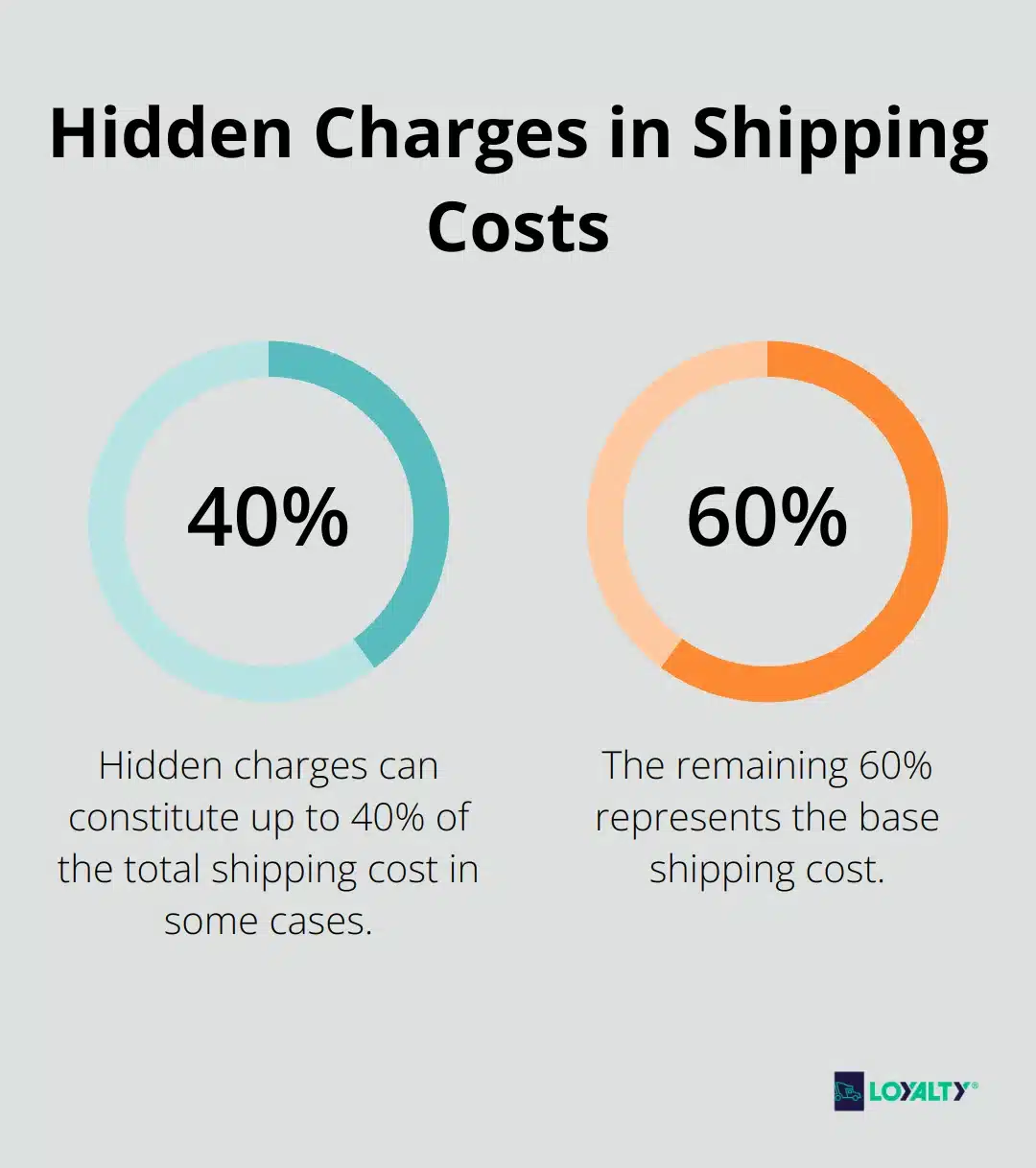
LCL shipping costs extend beyond the basic freight rate. Additional fees can significantly impact your total cost, including documentation fees, terminal handling charges, and customs clearance costs. A 2023 report by Freightos revealed that hidden charges can account for up to 40% of the total shipping cost in some cases. To avoid surprises, request a comprehensive breakdown of all applicable fees from potential providers.
The pricing structure varies among providers. Some charge by weight, others by volume, and some use a combination. Understanding how your cargo will be measured and charged allows for more accurate budgeting and comparison between providers.
Reliability and Performance Metrics
The reliability of your chosen LCL service provider directly affects your supply chain performance. Carriers with a strong track record of on-time deliveries and minimal cargo damage should be prioritized. Industry reports, such as the Sea-Intelligence Global Liner Performance Report, offer insights into carrier reliability. As of 2023, the average on-time performance for global carriers was around 75%, but top performers consistently achieve rates above 85%.
Don’t hesitate to ask potential providers for their performance metrics and track record. A reputable company should be transparent about their on-time delivery rates, cargo handling procedures, and claims resolution process. Consider working with experienced freight brokers who can connect you with reliable LCL carriers that match your specific requirements.
Visibility and Customer Support
Real-time tracking capabilities are no longer a luxury but a necessity in today’s digital age. Look for providers offering advanced tracking systems that allow you to monitor your shipment’s progress from origin to destination. According to a survey by American Shipper, 94% of shippers consider visibility a critical factor in carrier selection. Ensure your chosen provider offers detailed tracking information, including estimated arrival times and any potential delays.
The quality of customer support is equally important. Opt for providers with dedicated account managers and 24/7 customer service. This becomes crucial when dealing with time-sensitive shipments or unexpected issues.
As you evaluate these key factors, you’ll be well-equipped to choose an LCL ocean freight service that not only meets your immediate shipping needs but also supports your long-term business goals. The next step is to learn how to effectively evaluate LCL service providers to ensure you’re making the best choice for your business.
How to Evaluate LCL Service Providers
Research Potential Providers Thoroughly
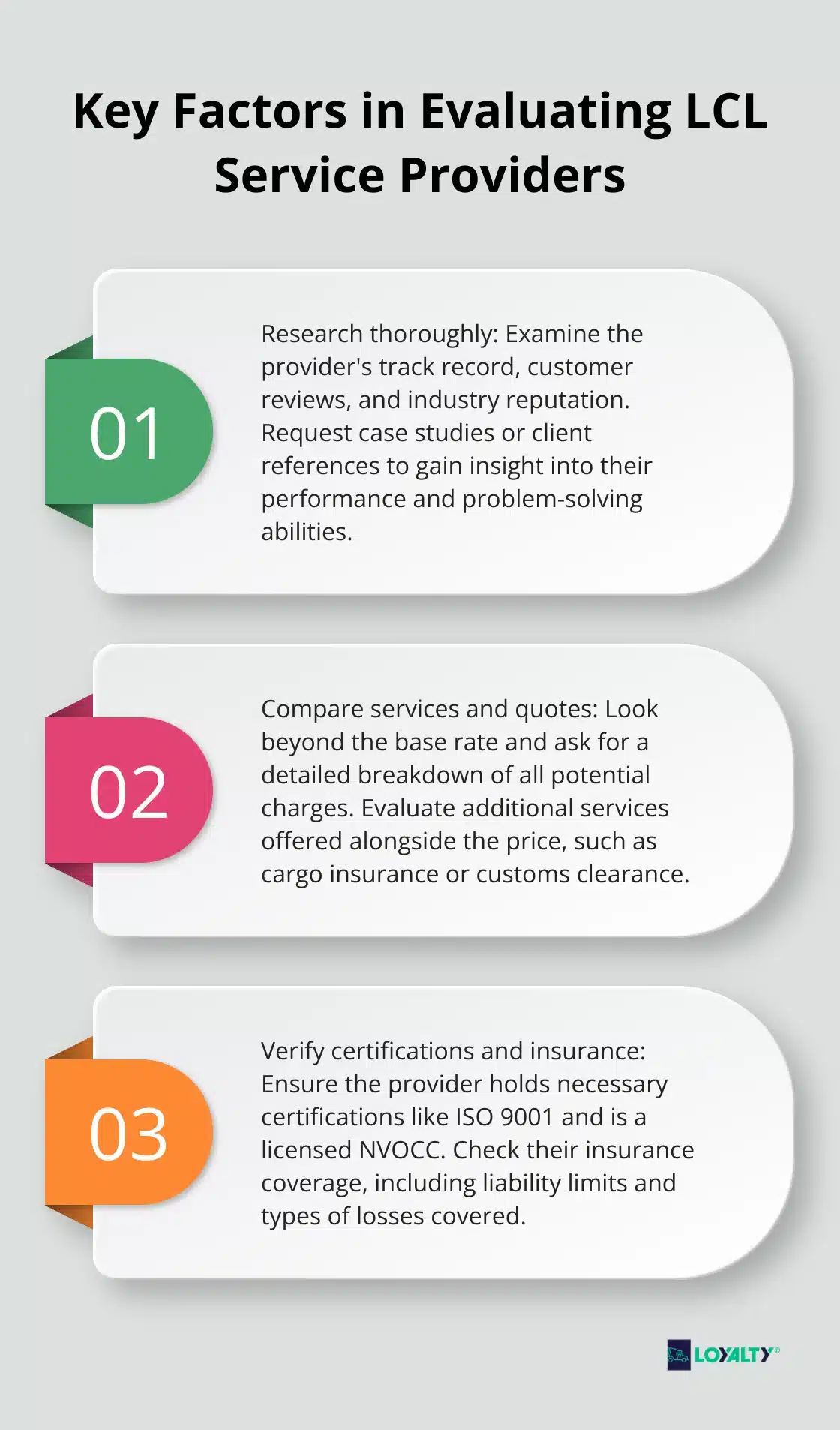
The selection of the right LCL service provider requires comprehensive research. Create a shortlist of potential partners and investigate beyond their marketing materials. Examine their track record, customer reviews, and industry reputation. The Journal of Commerce offers annual rankings of top ocean freight forwarders, which serves as a valuable resource. Check if the provider has experience in your specific industry or with similar cargo types.
Request case studies or client references from potential providers. A reputable company will share success stories willingly. Pay attention to how they’ve handled challenges or unexpected situations. This insight predicts how they’ll manage your shipments.
Compare Services and Quotes Effectively
When you analyze quotes, look beyond the base rate. Ask for a detailed breakdown of all potential charges, including documentation fees, terminal handling charges, and peak season surcharges. A recent Drewry report indicates these additional fees can constitute up to 40% of the total shipping cost.
Evaluate the services offered alongside the price. Some providers offer value-added services (like cargo insurance, customs clearance, or last-mile delivery). These services can simplify your logistics process and potentially reduce costs in the long term.
Verify Certifications and Insurance Coverage
Ensure your chosen provider holds necessary certifications. Look for ISO 9001 certification, which indicates a commitment to quality management. For international shipments, check if they’re a licensed NVOCC (Non-Vessel Operating Common Carrier) with the Federal Maritime Commission.
Insurance coverage holds equal importance. Ask about their liability limits and covered loss types. Some providers offer additional all-risk cargo insurance. While this incurs an extra cost, it provides peace of mind for high-value or sensitive shipments. Learn more about choosing the right cargo insurance coverage for your needs.
Assess Network Strength and Partnerships
A provider’s network strength directly impacts their ability to offer competitive rates and reliable service. Look for providers with strong relationships with major ocean carriers. This often translates to better rates and more sailing options.
A provider with offices or strong partnerships in your key markets can offer more seamless service and local expertise. This becomes particularly important when dealing with customs clearance and cross-border shipping challenges in foreign countries.
Consider Technology and Innovation
In today’s digital age, advanced technology plays a key role in efficient LCL shipping. Try to find providers that offer robust tracking systems, allowing real-time visibility of your shipments. Real-time visibility in your supply chain helps you make better decisions and respond quickly to potential issues. Some providers (like Loyalty Logistics) even offer advanced analytics and reporting tools, which can help you optimize your supply chain further.
Innovative solutions, such as AI-powered route optimization or blockchain for enhanced security, can set a provider apart. These technologies not only improve efficiency but also reduce the risk of errors and delays.
Final Thoughts
Selecting the right LCL ocean freight service requires careful consideration of transit times, pricing structures, provider reliability, and technological capabilities. A thorough research of potential providers will help you compare prices and the full range of services offered. Prioritize providers that offer transparent pricing, strong customer support, and advanced tracking capabilities to maintain better control over your supply chain.
Ocean freight cargo shipping involves many complexities, but Loyalty Logistics understands these challenges. Our team of experts provides tailored solutions to meet your unique needs, with advanced tracking systems and competitive rates. We offer efficient and cost-effective handling of your LCL shipments, ensuring prompt delivery and perfect condition of your goods.
Loyalty Logistics values your success as much as you do. We can help you navigate international shipping complexities, reduce costs, and enhance your overall logistics efficiency. Let us partner with you to optimize your supply chain and provide reliable LCL ocean freight services that meet your business goals.
Related Articles
- How to Ship Less Than Container Load Freight – A comprehensive beginner’s guide to understanding LCL shipping fundamentals and best practices.
- Full Container Load vs LCL: Which Should You Choose? – Detailed comparison to help you make the right decision for your business needs.
- Sea Freight Container Sizes: Which One Should You Choose? – Essential guide to selecting the optimal container size for your cargo.
- Ocean Freight Cargo: What You Need to Know – Everything you need to understand about ocean freight logistics and operations.
Ready to Optimize Your LCL Ocean Freight?
Choosing the right LCL service provider can transform your international shipping operations. At Loyalty Logistics, we combine competitive rates, advanced tracking technology, and dedicated customer support to deliver exceptional LCL ocean freight services.
Our team of logistics experts is ready to analyze your unique shipping requirements and create a customized solution that reduces costs while improving delivery reliability.