
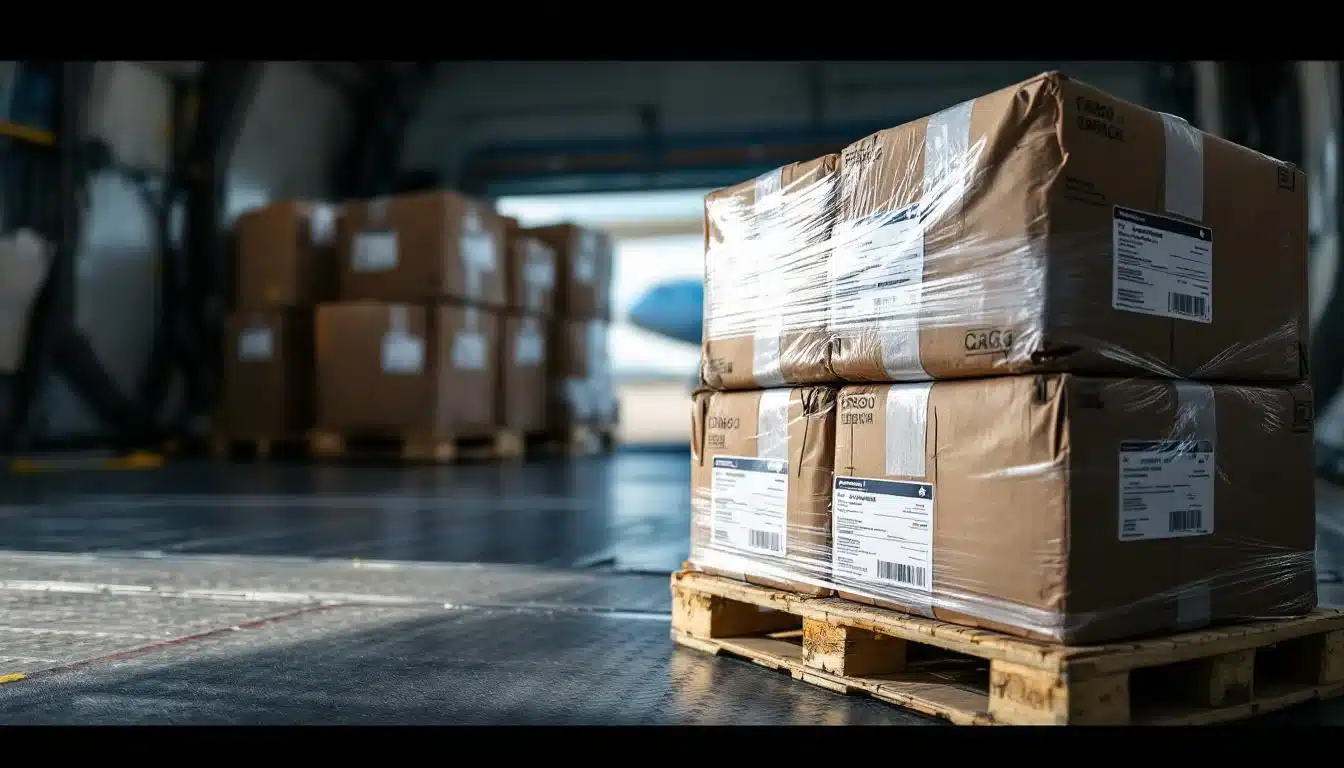
Air freight shipping is a game-changer for businesses needing swift, reliable transportation of goods across long distances. At Loyalty Logistics, we’ve seen firsthand how shipping freight by air can revolutionize supply chains and meet tight deadlines.
This comprehensive guide will walk you through the essentials of air freight, from preparation to execution. Whether you’re new to air shipping or looking to optimize your current processes, we’ll cover everything you need to know to make informed decisions and streamline your logistics operations.
What is Air Freight Shipping?
Air freight shipping stands out as the fastest method to transport goods across long distances. This approach involves sending cargo via aircraft, utilizing either passenger planes or dedicated freighters.
Speed and Reliability
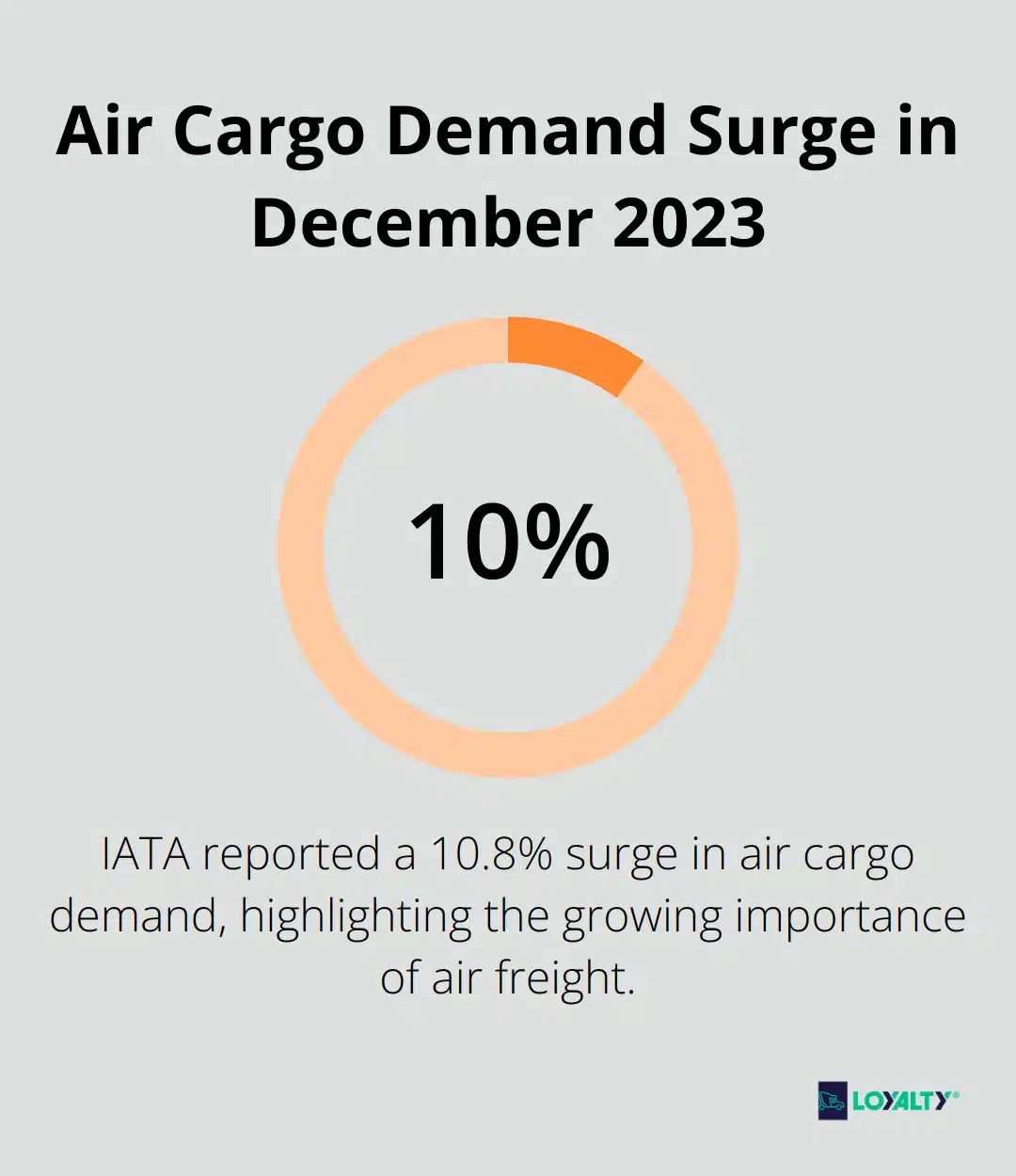
The primary advantage of air freight lies in its unmatched speed. A shipment that might take weeks by sea can arrive in just a few days by air. This rapid transit proves essential for industries like pharmaceuticals, where products often have short shelf lives. The International Air Transport Association (IATA) reported a 10.8% surge in air cargo demand in December 2023, underscoring the growing reliance on this swift shipping method.
Global Reach
Air freight unlocks a world of possibilities for businesses. With access to major airports worldwide, companies can reach almost any market quickly. This global connectivity holds particular value for e-commerce companies expanding internationally. IATA data shows that Asian carriers experienced an 18.5% increase in demand in December 2023, outpacing all other regions and demonstrating air freight’s power in connecting global markets.
Ideal Cargo Types
Not all goods suit air freight. The most common items shipped by air include:
- High-value electronics
- Fashion and luxury goods
- Perishable foods and flowers
- Urgent medical supplies
- Aerospace components
These items justify the higher cost of air shipping due to their value, urgency, or perishability. For instance, a shipment of 85 kg may cost around $600 by air (significantly more than ocean freight). However, for the right products, this cost is offset by the benefits of speed and reliability.
Cost Considerations
When evaluating air freight, businesses must weigh the cost against the value and urgency of their shipment. This decision requires careful analysis of specific needs and market demands. Air freight typically costs more than other shipping methods, but it can provide substantial value for time-sensitive or high-value goods.
Environmental Impact
Air freight has a higher carbon footprint compared to other shipping methods. However, the industry continues to make strides in reducing emissions. Many airlines now offer carbon offset programs and invest in more fuel-efficient aircraft. Businesses increasingly factor in environmental considerations when choosing their shipping methods.
As we move forward, let’s explore how to prepare your shipment for air transport, ensuring you maximize the benefits of this efficient shipping method.
How to Prepare Your Air Freight Shipment
Proper preparation prevents delays and ensures smooth transport in air freight shipping. This chapter outlines the essential steps for preparing your air freight shipment.
Robust Packaging for Air Transport
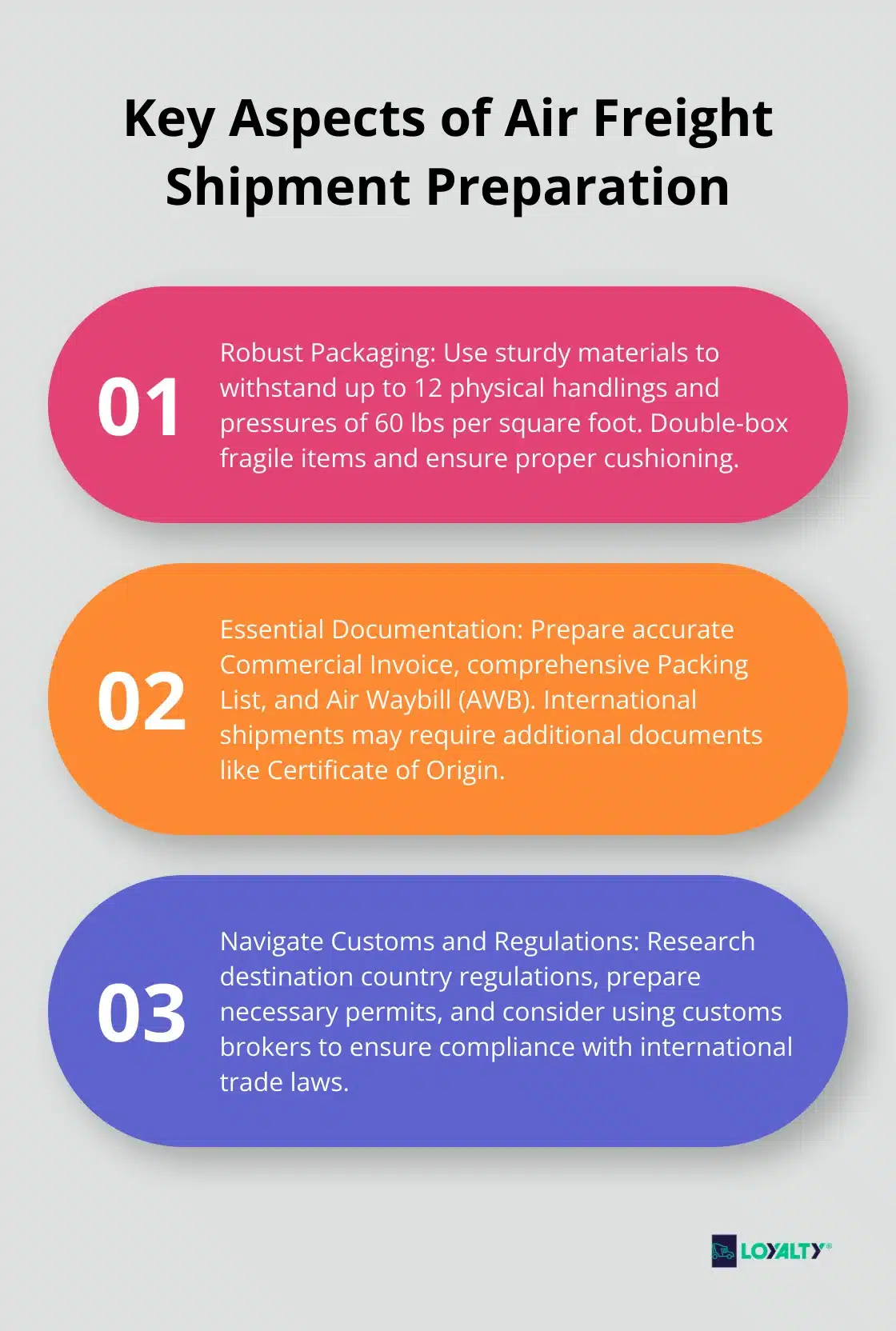
Air freight demands sturdy packaging to withstand flight rigors and multiple handlings. Your packages must endure up to 12 physical handlings and pressures of 60 lbs per square foot. Use strong materials like corrugated fiberboard boxes, but note weight limits (many airlines cap individual package weights at 100 lbs).
Double-boxing provides extra protection for fragile items. Use appropriate cushioning materials and fill empty spaces to prevent shifting. Avoid Styrofoam as outer packaging, as it’s generally not allowed in air freight.
For perishables, packaging must maintain freshness for at least 48 hours domestically and 72 hours internationally. This accounts for potential delays and varying environmental conditions during transit.
Essential Documentation
Accurate documentation facilitates smooth air freight operations. The Commercial Invoice acts as your shipment’s passport, detailing item specifics, commodity codes, and your EORI number for customs. A comprehensive Packing List speeds up handling and customs processing.
The Air Waybill (AWB) serves as the contract between you and the airline. It contains vital details like weight, value, and airport information. International shipments may require a Certificate of Origin to prove where goods were produced and to leverage trade agreements.
Navigating Customs and Regulations
Customs clearance can present challenges, but preparation minimizes issues. Research destination country regulations well in advance. Some goods may require special permits or face restrictions. Shipping dangerous goods requires a Declaration for Dangerous Goods and a Material Safety Data Sheet (MSDS).
Stay informed about changing regulations. The air freight market evolves constantly, with rules shifting frequently. In 2023, significant changes in global trade patterns affected customs procedures in many countries.
Customs brokers or logistics experts can help navigate complex regulations. Their expertise prevents costly delays and ensures compliance with ever-changing international trade laws.
Timing and Scheduling
Plan your shipment well in advance to secure optimal rates and space. Peak seasons (like holidays) often see increased demand and higher prices. Book your shipment at least a week before the intended departure date to allow for any unforeseen issues.
Consider time zones and business hours when scheduling pickups and deliveries. This foresight helps avoid delays and ensures smooth coordination with all parties involved in the shipping process.
The next chapter will explore how to choose the right air freight service for your specific needs, building on the foundation of proper shipment preparation.
How to Select the Best Air Freight Service
Service Types and Transit Times
Air freight services offer various options, each balancing speed and cost. Express services deliver within 1-3 days at a premium price. Standard air freight takes 3-6 days and provides a more economical option for less time-sensitive shipments. Deferred air freight, with transit times of 5-7 days, offers the most cost-effective solution for non-urgent cargo.
IATA reported a 13.6% increase in global cargo capacity for express air freight in December 2023, indicating growing demand for rapid shipping solutions. When you select a service type, consider your shipment’s urgency and value. A $1,000 shipment should not cost more than $200 to ship by air to maintain cost-effectiveness.
Provider Reliability and Network
The reliability of your chosen air freight provider directly impacts your supply chain efficiency. Search for providers with strong airline relationships and a robust global network. Check their on-time performance records and ask about their contingency plans for delays or disruptions.
A provider’s network strength proves crucial. Those with extensive connections can offer more routing options and competitive rates. Asian carriers experienced an 18.5% increase in demand in December 2023 (outpacing all other regions). This statistic highlights the importance of choosing a provider with a strong presence in key markets.
Technology and Visibility
Real-time visibility is non-negotiable in today’s fast-paced logistics environment. Search for providers that offer advanced tracking systems which allow you to monitor your shipments from pickup to delivery. Some providers offer APIs that integrate directly with your systems, providing seamless data flow and enhancing your supply chain visibility.
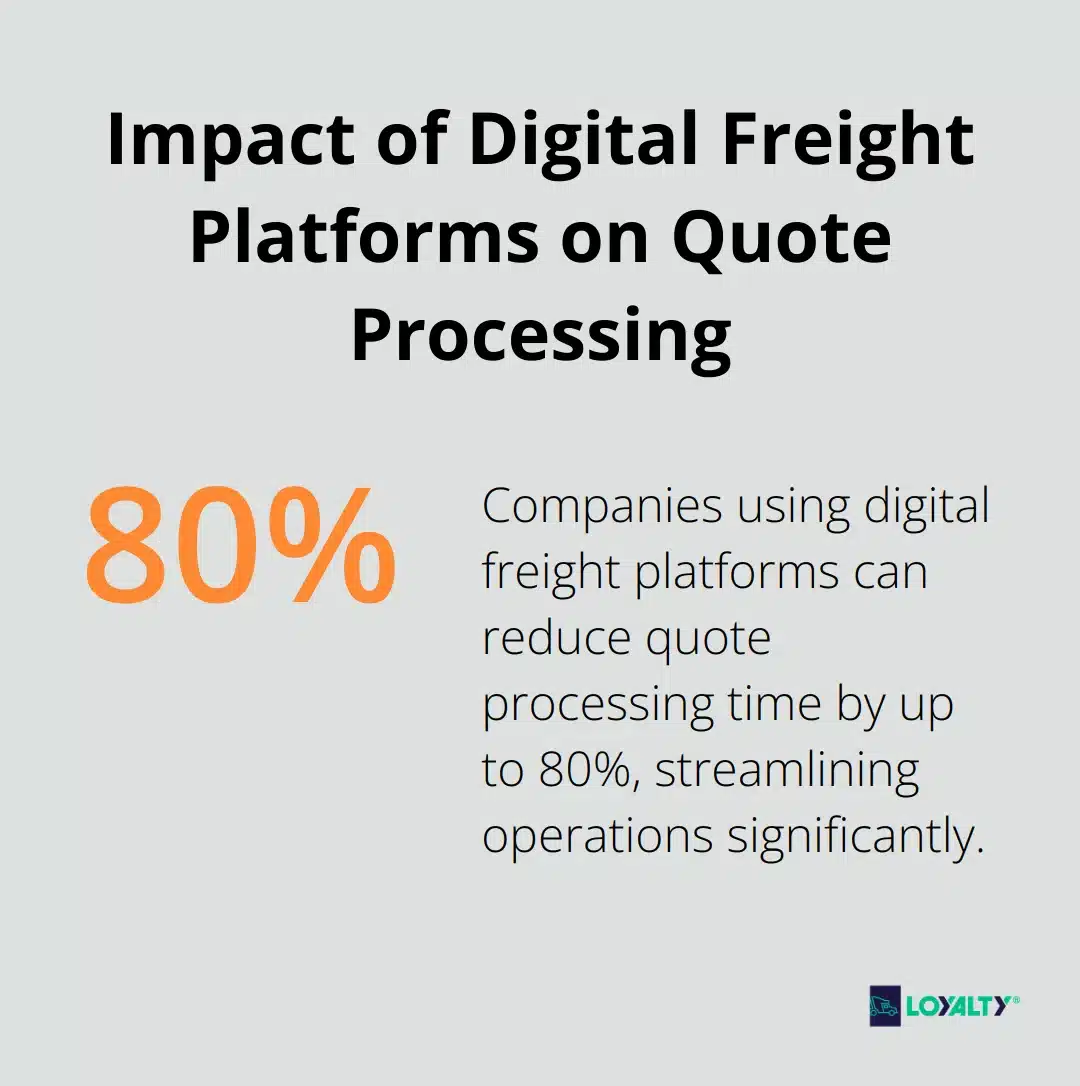
The ability to access instant pricing and booking through online portals can significantly streamline your operations. Industry reports suggest that companies using digital freight platforms can reduce quote processing time by up to 80%.
Cost Considerations
While speed often comes at a premium, it’s essential to balance cost with service quality. Compare quotes from multiple providers, but don’t automatically choose the cheapest option. Consider the total value, including reliability, transit times, and customer service.
Some providers offer volume discounts or preferred rates for regular customers. Ask about these options if you plan to ship frequently. Also, inquire about any additional fees (such as fuel surcharges or handling fees) that might not be included in the initial quote.
Customer Support
Excellent customer support can make a significant difference in your air freight experience. Choose a provider that offers responsive, knowledgeable support. They should be able to answer your questions promptly and provide solutions to any issues that arise during the shipping process.
Look for providers that offer dedicated account managers. These professionals can provide personalized service and develop a deep understanding of your specific shipping needs (which can lead to more efficient and cost-effective solutions over time).
Final Thoughts
Air freight shipping provides unmatched speed and reliability for businesses that need rapid transportation of goods across long distances. Companies can leverage this powerful logistics solution to their advantage by understanding the intricacies of freight by air, from proper packaging to documentation requirements. Successful air freight shipping depends on careful preparation, selection of the right service type, and partnership with a reliable provider.
Experienced logistics providers bring expertise in navigating complex customs regulations, optimizing routes, and managing unexpected challenges. They help streamline supply chains, reduce transit times, and enhance business competitiveness in the global marketplace. Loyalty Logistics specializes in providing versatile and sustainable transportation solutions across North America, offering a range of services including refrigerated, reefer, and flatbed trucks, as well as LTL shipping.
We invite you to explore how Loyalty Logistics can transform your air freight operations and drive your business forward. Our commitment to timely, damage-free delivery is supported by advanced logistics systems and a high on-time rate. Contact us today to discuss your specific needs and discover the benefits of partnering with true logistics experts for your air freight requirements.