

Selecting the right dedicated ground logistics partner can make or break your supply chain operations. Poor provider choices lead to delayed shipments, damaged goods, and frustrated customers.
We at Loyalty Logistics understand that logistics managers face mounting pressure to balance cost efficiency with service reliability. The key lies in evaluating providers systematically across multiple performance dimensions.
Key Factors to Consider When Selecting Ground Logistics Services
Service Coverage and Geographic Reach
Geographic coverage determines whether a provider can support your current operations and future expansion plans. Transport Topics data shows that the top dedicated carriers like J.B. Hunt operate 12,647 power units across North America, while regional players like Lazer Logistics manage 2,867 units in specific territories. Your provider must demonstrate active presence in your key markets with local terminals, maintenance facilities, and driver bases. Companies that operate across state lines need carriers with interstate authority and cross-border capabilities for Canadian and Mexican operations.
On-Time Delivery Performance and Reliability Metrics
On-time delivery rates above 95% separate professional carriers from mediocre ones. Knight-Swift Transportation, which generates $4.7 billion in revenue, maintains industry-leading performance through route optimization and driver scheduling systems. Request specific performance data for routes similar to yours, including average transit times, damage rates below 0.5%, and claims resolution timeframes under 30 days. Carriers should provide monthly scorecards with delivery windows, fuel efficiency metrics, and customer satisfaction scores. Temperature-controlled shipments require additional monitoring capabilities with real-time alerts and documentation.
Equipment Types and Specialized Capabilities
Fleet age directly impacts reliability and fuel efficiency. Modern fleets that average under five years reduce breakdown risks and maintenance delays. Ryder Dedicated operates 11,400 power units with comprehensive maintenance programs and backup equipment availability. Evaluate whether carriers offer specialized equipment for your products: refrigerated trailers for temperature-sensitive goods, flatbeds for oversized items, or liftgate trucks for locations without loading docks (these options expand your delivery capabilities significantly). For heavy or oversized loads, consider providers with lowboy trailers or step deck trailers for tall cargo. Driver certification levels, safety training programs, and equipment inspection schedules indicate operational quality standards that protect your freight and reputation.
These foundational elements establish the baseline for provider evaluation, but technology integration and operational capabilities reveal how effectively carriers execute their services.
Evaluating Logistics Provider Capabilities and Technology
Transportation Management Systems and Real-Time Tracking
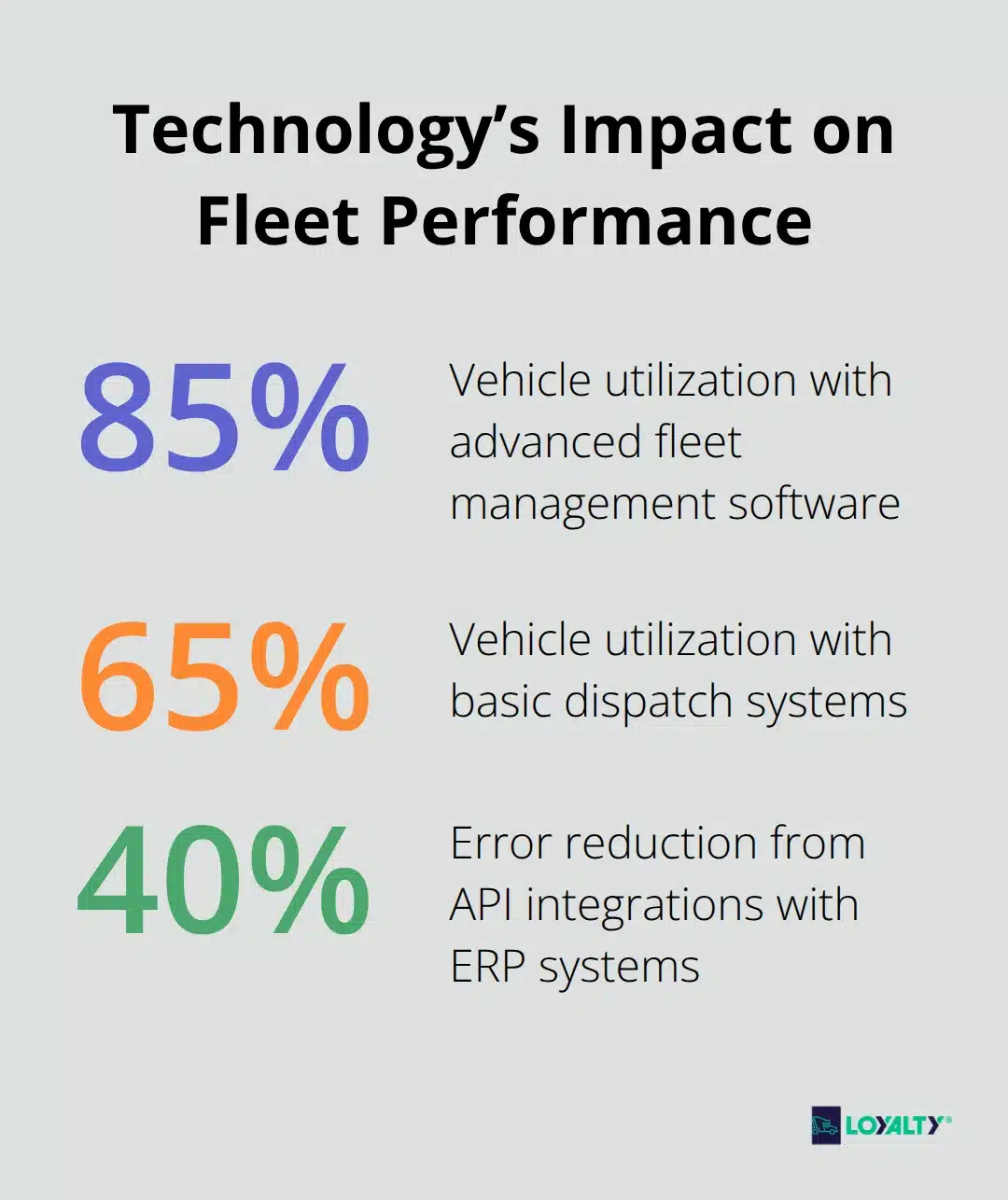
Modern transportation management systems separate industry leaders from outdated carriers that rely on phone calls and paper logs. Schneider and Penske Logistics, which operate 8,400 and 8,325 power units respectively, invest heavily in real-time tracking platforms that provide shipment visibility within 15-minute intervals. Your provider must offer API integration capabilities that connect directly with your ERP systems, which eliminates manual data entry and reduces errors by 40%. GPS tracking with geofencing alerts, electronic proof of delivery, and automated exception notifications should be standard features, not premium add-ons.
Fleet Management Technology Standards
Fleet telematics systems reveal operational efficiency levels that directly impact your service quality. Carriers that use advanced fleet management software maintain vehicle utilization rates above 85% compared to 65% for companies that use basic dispatch systems.
Electronic logging devices, predictive maintenance schedules, and driver performance monitors prevent delays caused by equipment failures and regulatory violations. Temperature monitoring systems for refrigerated trucking must provide continuous data logs with automated alerts when temperatures deviate beyond acceptable ranges (these systems protect product integrity throughout transit). Vehicle age matters significantly – fleets that average under four years experience 60% fewer breakdowns than older equipment.
Communication Infrastructure and Response Standards
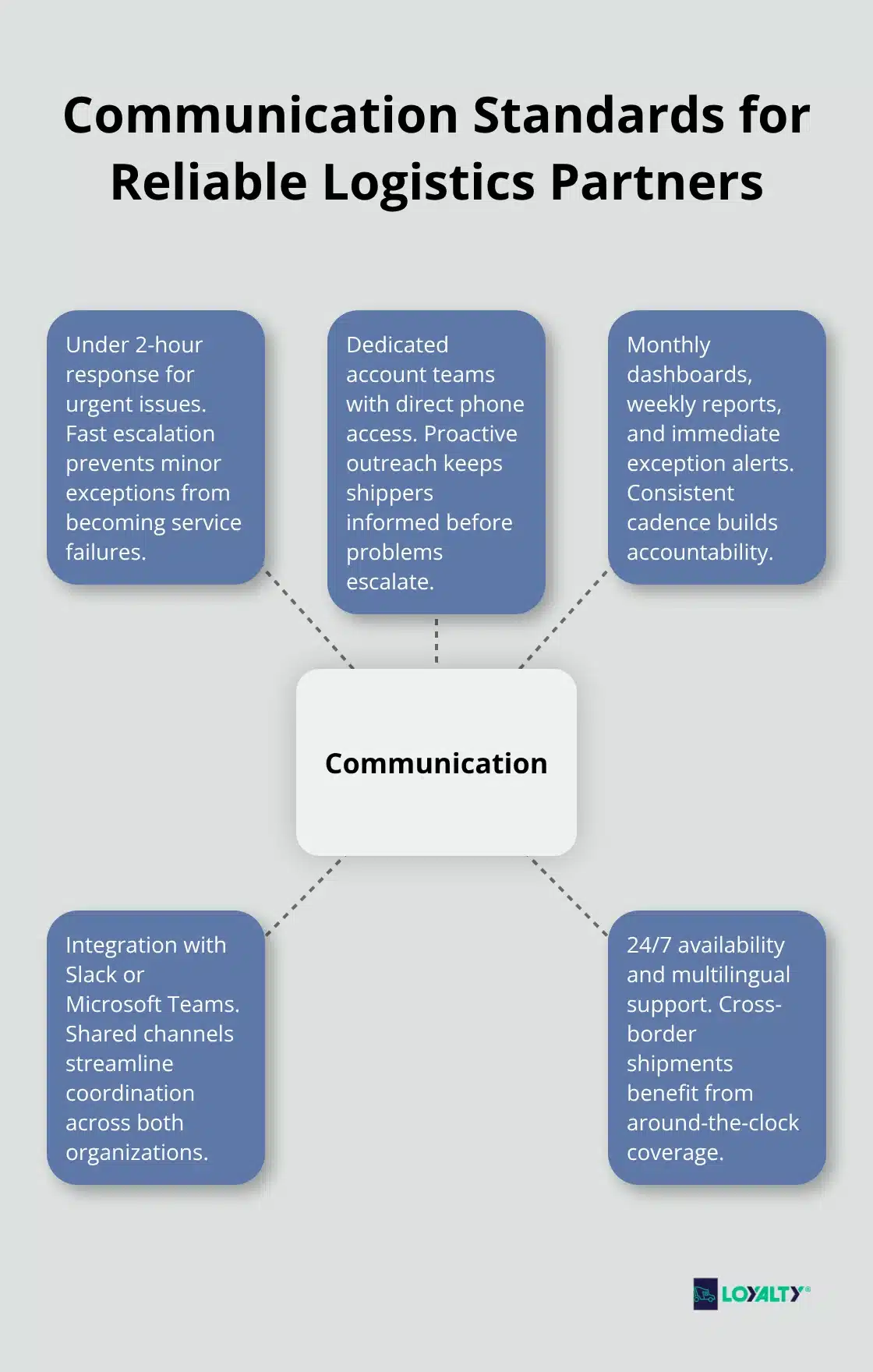
Customer service response times under two hours for urgent issues distinguish professional carriers from reactive ones. NFI and other top-tier providers maintain dedicated account management teams with direct phone access and proactive communication protocols. Your logistics partner should provide monthly performance dashboards, weekly status reports, and immediate notifications for delivery exceptions or route changes. Integration capabilities with your existing communication tools, such as Slack or Microsoft Teams, streamline coordination between your teams and theirs. Multilingual customer support becomes essential for cross-border operations (particularly for Canadian and Mexican shipments), while 24/7 availability supports time-sensitive shipments that cannot wait until business hours.
These technology capabilities form the foundation for operational excellence, but cost analysis reveals the true value proposition that determines long-term partnership success.
Cost Analysis and Service Comparison Methods
Understanding Hidden Fees and Pricing Structures
Dedicated ground logistics pricing structures reveal critical differences that can impact your budget by 20-30% annually. Base transportation rates represent only 60-70% of total logistics costs according to Transport Topics analysis. Fuel surcharges, detention fees for driver wait time beyond two hours, and accessorial charges for special handling services add substantial expenses that many logistics managers overlook during initial evaluations.

Knight-Swift Transportation and J.B. Hunt maintain transparent pricing models, but smaller carriers often bundle hidden fees into seemingly competitive base rates. Request detailed fee schedules that include lift gate charges from $75-150 per delivery, residential delivery fees that average $50-100, and redelivery costs that can reach $200 per attempt.
Service Level Performance Comparisons
Performance metrics comparison requires standardized measurement criteria across multiple providers. Delivery time commitments vary significantly between carriers – some guarantee next-day service within 150 miles while others require 48 hours for similar distances. Ryder Dedicated Transportation Solutions maintains 96% on-time performance compared to industry averages of 85-90% for regional carriers. Damage rates below 0.3% indicate superior handling procedures, while claims resolution timeframes under 15 days separate professional operations from problematic providers. Temperature deviation incidents for refrigerated shipments should remain below 2% annually with immediate notification systems (these metrics directly impact your product quality and customer satisfaction).
Total Cost Ownership Calculations
Annual logistics spend calculations must include operational efficiency impacts that extend beyond transportation fees. Providers that maintain 95% on-time delivery rates reduce your inventory costs by 15-25% compared to unreliable carriers that force safety stock increases. Technology integration capabilities save 3-5 hours weekly in administrative tasks when systems connect seamlessly with your ERP platforms. Fuel-efficient fleets that average 7.5 miles per gallon versus older equipment at 6.2 mpg translate to 8-12% cost differences that accumulate over contract periods. Insurance coverage levels, driver safety records, and equipment maintenance programs affect long-term partnership costs through reduced claims and service disruptions (these factors compound over multi-year contracts).
Final Thoughts
Dedicated ground logistics selection demands systematic evaluation across performance metrics, technology capabilities, and total cost structures. Geographic coverage, on-time delivery rates above 95%, and modern fleet management systems create the foundation for reliable partnerships. Transportation management systems with real-time tracking, API integration, and automated notifications separate industry leaders from outdated carriers that depend on manual processes.
Cost analysis must extend beyond base rates to include hidden fees, fuel surcharges, and operational efficiency impacts. Providers that maintain superior performance reduce your inventory costs by 15-25% while improving customer satisfaction through consistent delivery windows. Technology integration saves 3-5 hours weekly in administrative tasks when systems connect seamlessly with your existing platforms (these efficiencies compound over multi-year contracts).
The final provider decision should prioritize carriers that demonstrate measurable performance data, transparent pricing structures, and scalable technology solutions. We at Loyalty Logistics specialize in dedicated ground logistics with advanced tracking systems and specialized equipment options across North America. Contact our team to discuss how our transportation solutions can optimize your supply chain operations and reduce logistics costs through proven performance standards.

