
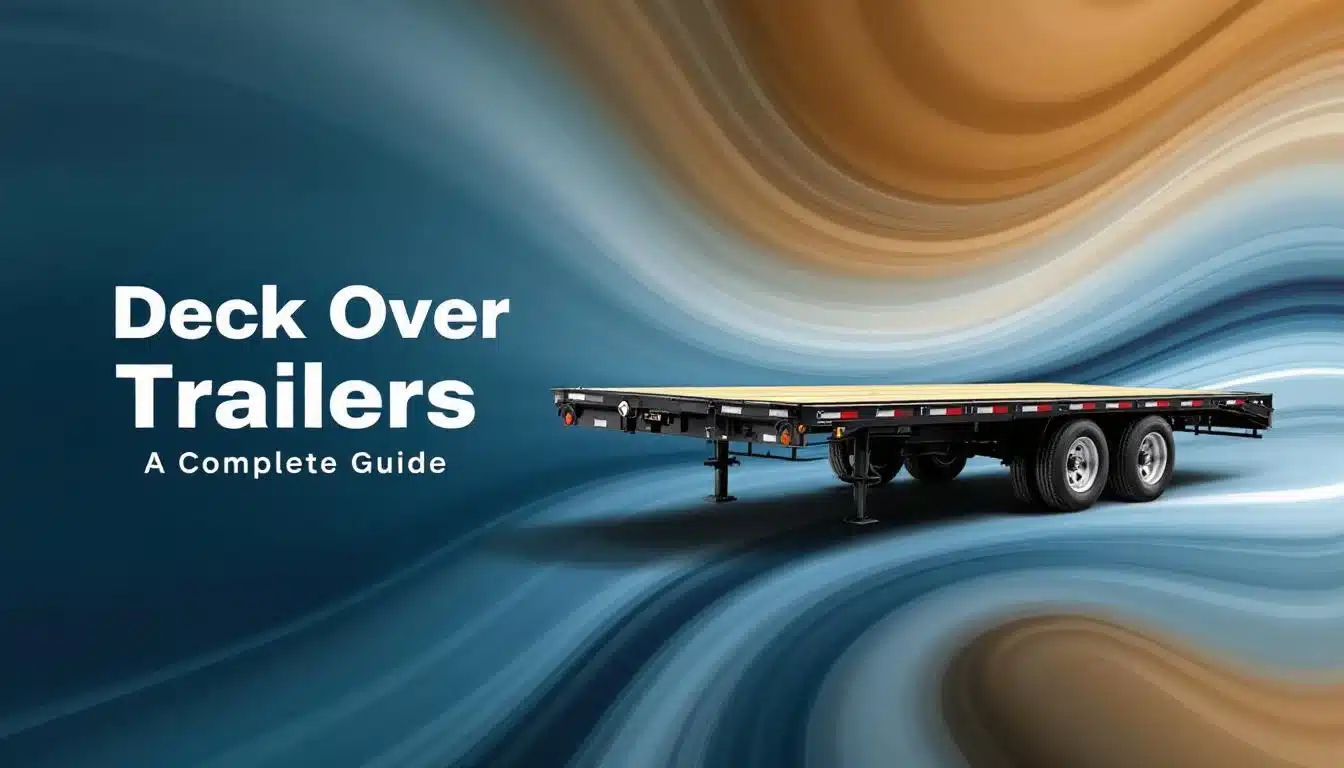
Deck over trailers move more freight per trip than standard flatbeds, which matters when your margins depend on efficiency. We at Loyalty Logistics see logistics managers constantly wrestling with capacity constraints and rising fuel costs on cross-border routes.
This guide covers what makes deck over trailers work, where they deliver real value, and how to know if they fit your operation.
What Deck Over Trailers Actually Are
A deck over trailer sits the cargo deck above the wheel wells rather than between them, which fundamentally changes how much weight you can haul and how safely you distribute it. The deck platform mounts on top of the chassis frame, positioning cargo higher and further back than a standard flatbed. This design delivers roughly 10-15% more usable deck space without stretching the trailer length-a genuine advantage when you move heavy equipment across North America. The structure consists of a reinforced steel or aluminum frame welded to the chassis, with the deck itself made from wood, steel, or aluminum depending on your load requirements and maintenance tolerance. Steel decks handle the heaviest machinery but add weight that cuts into your payload capacity; aluminum decks resist corrosion and weigh less but cost significantly more upfront. Wood decks offer the lowest price but require regular inspection for rot and splintering, especially on cross-border routes where weather exposure varies dramatically.
Why the Deck Position Matters for Your Operation
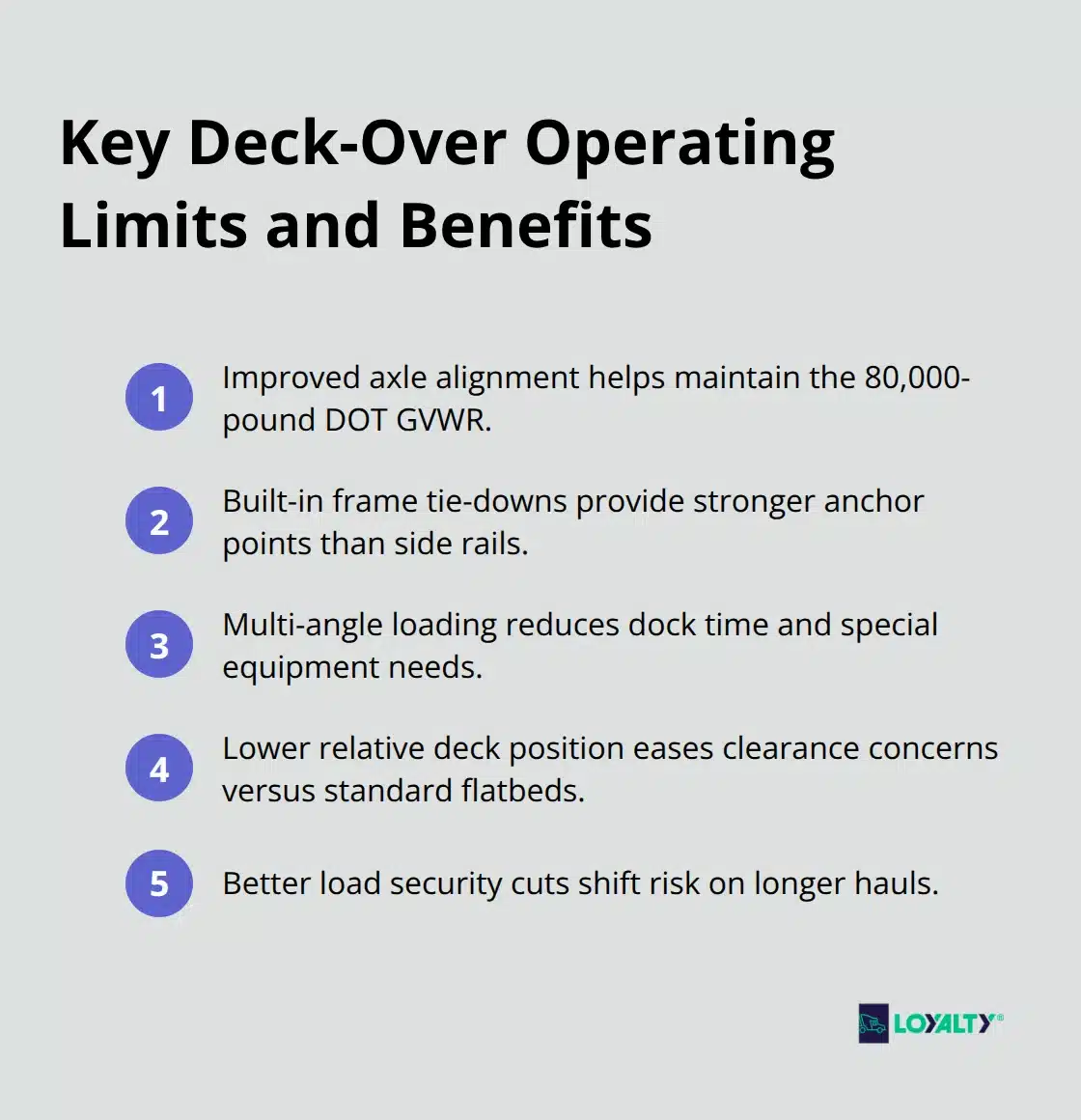
The elevated deck height changes everything about how you load, secure, and move freight. Standard flatbeds max out around 8 feet 6 inches in overall height before you hit clearance issues under bridges and overpasses, but deck over trailers sit lower relative to their cargo capacity because the wheels don’t take up deck space. This means you can stack heavier equipment without triggering the dimensional permits that slow down your cross-border shipments. Weight distribution improves because the deck sits directly over the axles, which helps you stay within the 80,000-pound gross vehicle weight rating that DOT enforces. Tie-down points built into the deck frame provide stronger anchor options than side rails alone, reducing the risk of load shift on longer hauls. The open design allows you to load from multiple angles without special equipment, cutting dock time compared to enclosed trailers.
How Deck Over Trailers Compare to Flatbeds and Step Decks
A standard flatbed carries cargo between the wheels, limiting your height advantage and forcing you to use the full deck length for anything tall or oddly shaped. Step deck trailers lower the rear section to gain height clearance for machinery, but they sacrifice deck space and add complexity to loading sequences. Deck over trailers deliver the cargo space of a flatbed with better weight distribution and no height penalty because the wheels sit underneath rather than consuming your usable deck. For cross-border operations, this matters because you avoid the escort vehicle requirements that activate when loads exceed 8 feet 6 inches wide. You also skip the permit delays that come with step decks on certain routes through Canada and Mexico, where dimensional regulations vary by province and state. The trade-off is that deck over trailers cost 5-10% more to purchase than equivalent flatbeds, but that premium pays back quickly when you factor in reduced permitting costs and faster border crossings.
What Makes Deck Over Trailers Work for Heavy Equipment
The structural advantages of deck over design extend beyond simple capacity gains. The wheels positioned underneath the cargo platform create a lower center of gravity, which improves stability on curves and reduces the risk of rollover on uneven terrain. This stability matters especially when you transport machinery worth hundreds of thousands of dollars across rough roads in Mexico or remote areas of Canada. The deck-above-wheels configuration also eliminates the side-rail limitations that restrict how you can secure odd-shaped loads on flatbeds. Heavy machinery like excavators, compressors, and industrial presses fit more securely because anchor points distribute across the entire deck surface rather than concentrating at the edges. Your drivers experience less fatigue on long hauls because the improved weight distribution reduces trailer sway and improves handling characteristics compared to standard flatbeds.
The advantages you gain from deck over trailers position them as the logical next step when your operation outgrows standard flatbed capacity. Understanding these structural and operational benefits sets the stage for examining where deck over trailers deliver the most value across different industries and cargo types.
Outgrowing standard flatbed capacity on cross-border heavy loads?
Loyalty Logistics matches deck over capacity to your specific machinery, dimensions, and lanes across the U.S., Canada, and Mexico. Tell us your equipment specs and we’ll position the right trailer for the move.
Advantages of Deck Over Trailers for Freight Transportation
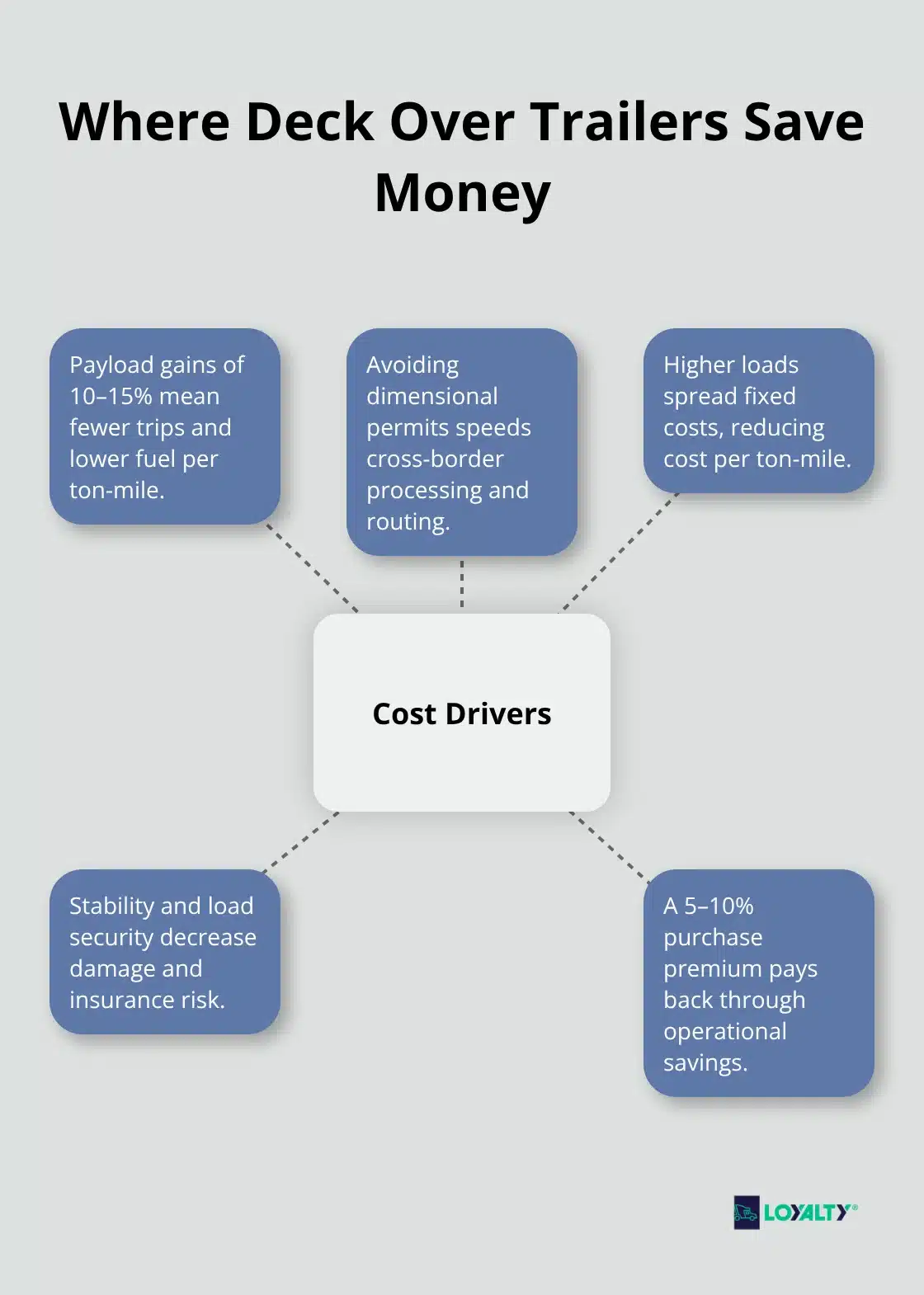
Deck over trailers generate measurable financial wins that extend far beyond the initial purchase price. The structural advantages translate directly into reduced operational costs because you move more weight per trip without exceeding the 80,000-pound DOT limit. Your payload capacity increases by 10-15% compared to standard flatbeds, which means fewer trips to haul the same tonnage across your cross-border routes. When you operate between the U.S., Canada, and Mexico, this efficiency compounds quickly. A logistics manager running weekly shipments of heavy machinery can eliminate one trip every 7-10 weeks simply by maximizing deck over capacity, which cuts fuel consumption, driver hours, and border crossing fees substantially.
Fuel Efficiency and Weight Distribution Advantages
Fuel efficiency improves because the improved weight distribution reduces rolling resistance and trailer sway. The lower center of gravity from the deck-above-wheels design minimizes the aerodynamic drag that plagues standard flatbeds, particularly on highway stretches where fuel costs dominate your per-mile expenses. Steel deck over trailers weigh slightly more than aluminum flatbeds, but the payload advantage offsets this penalty in nearly every real-world scenario. Your cost per ton-mile decreases because you spread fixed costs like fuel and tolls across higher load weights. The elevated deck position keeps cargo further from road spray and salt exposure during winter months, reducing corrosion damage to machinery and extending equipment life.
Permitting and Border Crossing Cost Reductions
Permitting and escort vehicle costs disappear when you avoid dimensional restrictions that trigger on standard flatbeds. A load that requires a pilot vehicle on a flatbed may fit within normal dimensional limits on a deck over trailer because the wheels sit underneath rather than consuming deck space. This matters enormously on cross-border routes where Mexican and Canadian regulations vary by jurisdiction. You eliminate delays at the border because your shipment clears dimensional inspection faster without requiring special routing or multi-authority approvals. Insurance costs often decrease as well because the improved stability and load security reduce the risk profile that underwriters assess. Heavy equipment worth $200,000 or more travels more safely on a deck over trailer, which insurers recognize through lower premiums on some policies.
Versatility Across Multiple Cargo Types
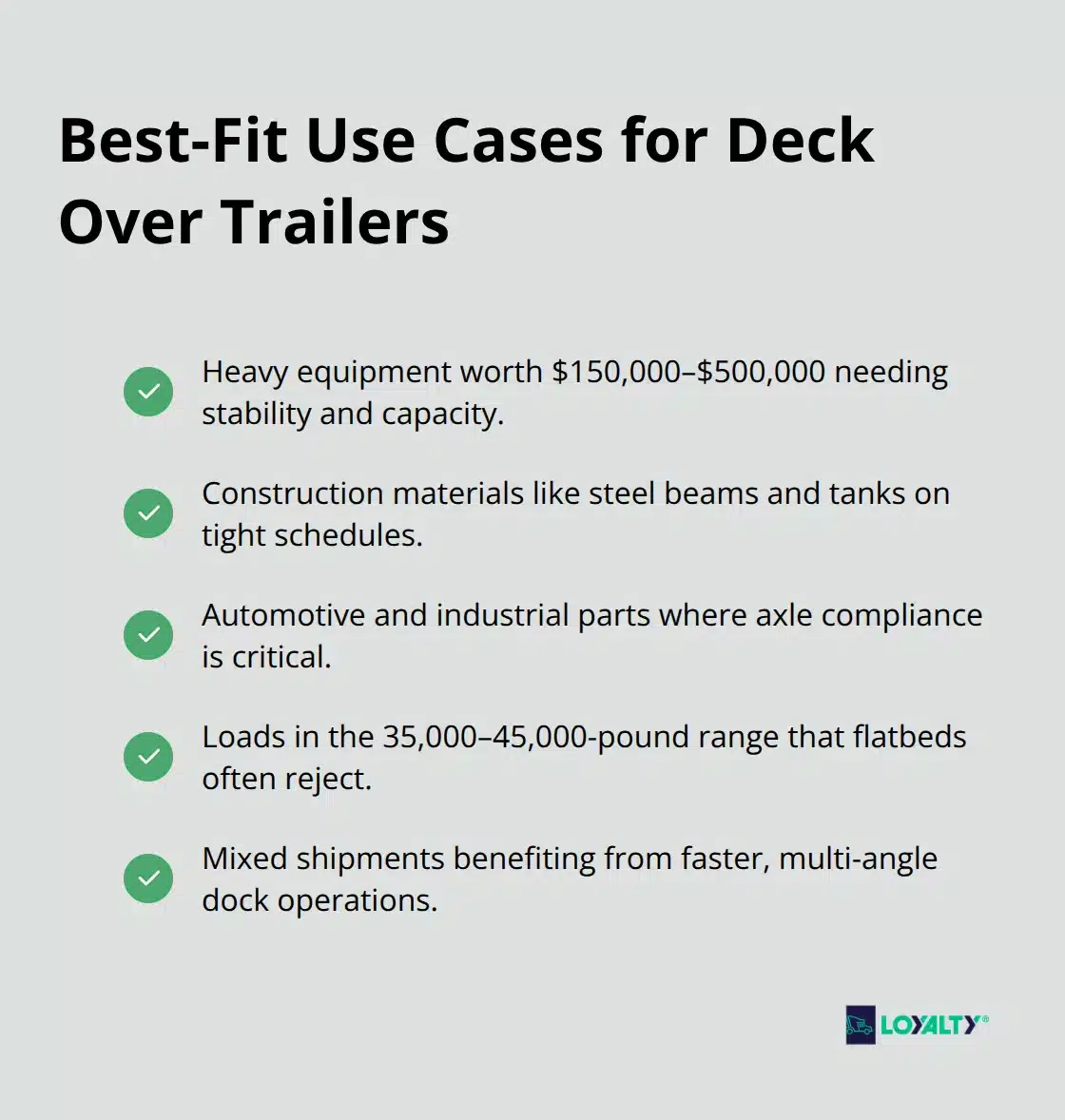
The versatility of deck over trailers means you stop paying premium rates for equipment you only use occasionally. Heavy machinery, industrial equipment, automotive parts, and construction materials all fit within the same trailer without requiring separate step deck or lowboy configurations. A logistics manager juggling mixed shipments no longer needs to maintain an inventory of specialized trailers for different cargo types. This consolidation reduces capital tied up in underutilized equipment and simplifies your fleet management. Deck over trailers accommodate loads that standard flatbeds reject outright because of weight or dimensional constraints. Compressors, generators, and industrial presses that weigh 35,000-45,000 pounds fit safely within the improved weight distribution, whereas flatbeds force you toward more expensive lowboy trailers for the same cargo. The cost difference between deck over and lowboy trailers reaches 15-20%, so shifting cargo to deck over equipment whenever possible protects your margins.
Load Security and Dock Operations
Odd-shaped loads secure more effectively because the full deck surface provides anchor points rather than forcing you to concentrate tie-downs at the edges. Machinery with protruding components or irregular dimensions sits more stably, which reduces the risk of damage claims and customer complaints. Your drivers experience faster turnarounds at customer sites because securing loads takes less time and repositioning during loading happens less frequently. The open design allows loading from multiple angles without repositioning the trailer multiple times, which reduces labor hours per shipment. These operational efficiencies compound across your entire fleet, transforming how you approach equipment selection and route planning for heavy freight. Understanding where deck over trailers deliver the most value sets the foundation for examining their real-world applications across construction, automotive, and industrial sectors.
Paying lowboy rates for cargo that fits on deck over capacity?
Tell us your machinery weights, dimensions, and routes. We’ll quote deck over capacity where it pays off and lowboy only when the cargo truly demands it. No premium rates for equipment you don’t need.
Common Applications and Industry Use Cases
Heavy Equipment and Machinery Transport
Deck over trailers dominate heavy equipment transport because machinery worth $150,000 to $500,000 requires the stability and weight capacity that standard flatbeds cannot provide. Mining operations, construction companies, and industrial manufacturers ship excavators, compressors, drilling rigs, and CNC machines on deck over trailers because the improved weight distribution prevents load shift that damages expensive equipment during transit. A single damaged compressor costs more to repair than you save on trailer rental over an entire year, which makes the structural advantages of deck over design non-negotiable for this sector. The wheels positioned underneath the cargo platform create a lower center of gravity that keeps machinery stable on curves and rough terrain, protecting assets worth hundreds of thousands of dollars across North American routes. For machinery exceeding deck over height limits, double drop trailers step up to handle the extreme cases without committing to premium lowboy rates.
Construction Material Delivery
Construction material delivery-steel beams, prefabricated components, industrial tanks-moves efficiently on deck over trailers because you pack 10-15% more tonnage per trip without triggering dimensional permits that delay cross-border shipments through Canada and Mexico. Contractors managing tight project schedules cannot afford the extra days that escort vehicle requirements add to standard flatbed shipments. Deck over trailers eliminate this friction entirely because the wheels sit underneath rather than consuming deck space, so loads that would be oversized on a flatbed fit within normal dimensional limits. Project timelines stay on track when you avoid the routing delays and multi-authority approvals that plague oversized load operations on standard equipment. For weather-sensitive construction loads where open-deck exposure becomes a liability, Conestoga flatbed trailers offer a complementary protected-deck option.
Automotive and Industrial Parts Shipping
Automotive parts suppliers and industrial equipment distributors rely on deck over trailers for regular shipments of transmissions, engines, hydraulic systems, and machinery components where weight concentration on standard flatbeds creates uneven axle loading and increases the risk of DOT violations. The improved weight distribution across all axles keeps you compliant with the 20,000-pound single-axle and 34,000-pound tandem-axle limits that enforcement officers scrutinize at border crossings and weigh stations. High-volume component shipments benefit from the dock efficiency that comes from the open design and multiple loading angles, which reduces labor hours and turnaround time at distribution centers.
Cost Advantages Across Industries
When you ship heavy equipment weekly or bi-weekly, the cumulative cost savings from fewer trips, eliminated permits, and faster border processing far exceed the 5-10% premium you pay upfront for deck over equipment compared to standard flatbeds. Construction material moving on regular schedules benefits from the predictable capacity that allows you to plan routes with certainty rather than scrambling to find oversized load specialists when loads exceed standard dimensions. Automotive suppliers moving high-volume shipments of components benefit from the operational simplicity that comes from standardized equipment across your fleet. The total cost of ownership-not just purchase price but permitting costs, border delays, fuel efficiency, and operational simplicity-shifts the economics decisively in favor of deck over trailers once your operation reaches consistent shipping volumes.
Final Thoughts
Deck over trailers solve the problem that standard flatbeds cannot address: moving heavy equipment safely while maximizing payload capacity and minimizing cross-border friction. The 10-15% capacity advantage translates directly into fewer trips, lower fuel costs per ton-mile, and eliminated permitting delays that plague oversized load operations on standard equipment. For logistics managers operating between the U.S., Canada, and Mexico, this efficiency compounds quickly across weekly or bi-weekly shipments.
You should select a deck over trailer when your operation ships heavy equipment regularly, when standard flatbeds force you toward more expensive lowboy alternatives, or when cross-border routes make permitting delays unacceptable. The improved weight distribution keeps you compliant with DOT axle limits, the elevated deck position avoids dimensional restrictions that trigger escort vehicle requirements, and the structural stability protects machinery worth hundreds of thousands of dollars. The upfront premium of 5-10% disappears within months when you factor in operational gains and reduced border processing time.
Starting implementation means assessing your current fleet utilization and identifying shipments that currently exceed standard flatbed capacity or trigger dimensional permits. Calculate your actual cost per ton-mile including all permitting, escort, and routing expenses, then compare that against deck over trailer economics. Explore our freight transportation services to evaluate whether a deck over trailer fits your supply chain and to plan your transition strategy.
Frequently Asked Questions
What is a deck over trailer?
A deck over trailer sits the cargo deck above the wheel wells rather than between them, providing roughly 10-15% more usable deck space without stretching trailer length. The deck platform mounts on top of the chassis frame, positioning cargo higher and further back than a standard flatbed. Deck over trailers handle heavy equipment, construction materials, and machinery up to the 80,000-pound DOT gross vehicle weight limit while maintaining stability through a lower center of gravity.
What is the difference between a deck over trailer and a flatbed?
A standard flatbed places cargo between the wheels, which limits height clearance and consumes deck space. A deck over trailer mounts the cargo deck above the wheels, gaining 10-15% more usable space without trailer length increases. Deck over trailers improve weight distribution because the deck sits directly over the axles, and they avoid escort vehicle requirements that activate on flatbeds when loads exceed 8 feet 6 inches wide. The trade-off: deck over trailers cost 5-10% more upfront but pay back through reduced permitting costs and faster border crossings.
How much weight can a deck over trailer carry?
Deck over trailers handle the same 80,000-pound DOT gross vehicle weight limit as standard flatbeds, but the improved weight distribution lets you maximize payload across all axles. Deck over trailers stay compliant with the 20,000-pound single-axle and 34,000-pound tandem-axle limits that DOT enforces at weigh stations. Heavy machinery weighing 35,000 to 45,000 pounds (compressors, generators, industrial presses) fits safely on deck over trailers, whereas flatbeds force you toward more expensive lowboy options for the same cargo.
What industries use deck over trailers?
Deck over trailers serve heavy equipment transport (mining, construction, industrial manufacturing), construction material delivery (steel beams, prefabricated components, industrial tanks), automotive parts shipping (transmissions, engines, hydraulic systems), and industrial component distribution. Any operation moving machinery worth $150,000 to $500,000 across cross-border routes benefits because the structural advantages prevent load shift that damages expensive equipment during transit.
Ready to Move Heavy Freight Without the Permit Headache?
Deck over trailers reward operations that ship heavy equipment regularly across U.S., Canada, and Mexico corridors. Tell us your machinery, lanes, and shipping cadence and we’ll match deck over capacity to your loads with itemized pricing, dimensional inspection cleared in advance, and routing that avoids the escort and permit delays that plague standard flatbeds.
Related Articles
- What Is a Step Deck Trailer and How Is It Used?: Sibling primer on the closest alternative to deck over for height-clearance loads.
- Conestoga Flatbed Trailers Explained: When weather protection matters more than open-deck flexibility.
- How to Use a Double Drop Trailer Effectively: For machinery beyond deck over height limits without committing to premium lowboy rates.
Loyalty Logistics: Connecting businesses with opportunities across North America.
Written by: Carlos Robayo, Marketing Director at Loyalty Logistics
With expertise in logistics marketing and international trade, Carlos specializes in connecting businesses with efficient and reliable transport solutions for the North American market.

