

Just in time cargo logistics transforms how businesses manage their supply chains by reducing inventory costs and improving efficiency. Companies using JIT strategies report inventory reductions of 20-50% while maintaining service levels.
We at Loyalty Logistics have seen businesses struggle with traditional cargo management approaches that tie up capital in excess inventory. The shift to JIT requires strategic planning and the right implementation framework.
What Makes JIT Cargo Logistics Different
Just in time cargo logistics operates on three fundamental principles that separate high-performing companies from their competitors. First, synchronization means your cargo arrives precisely when production needs it, not days or weeks early. Second, minimal inventory levels reduce storage costs by up to 75% according to Federal Reserve Bank of St. Louis data.
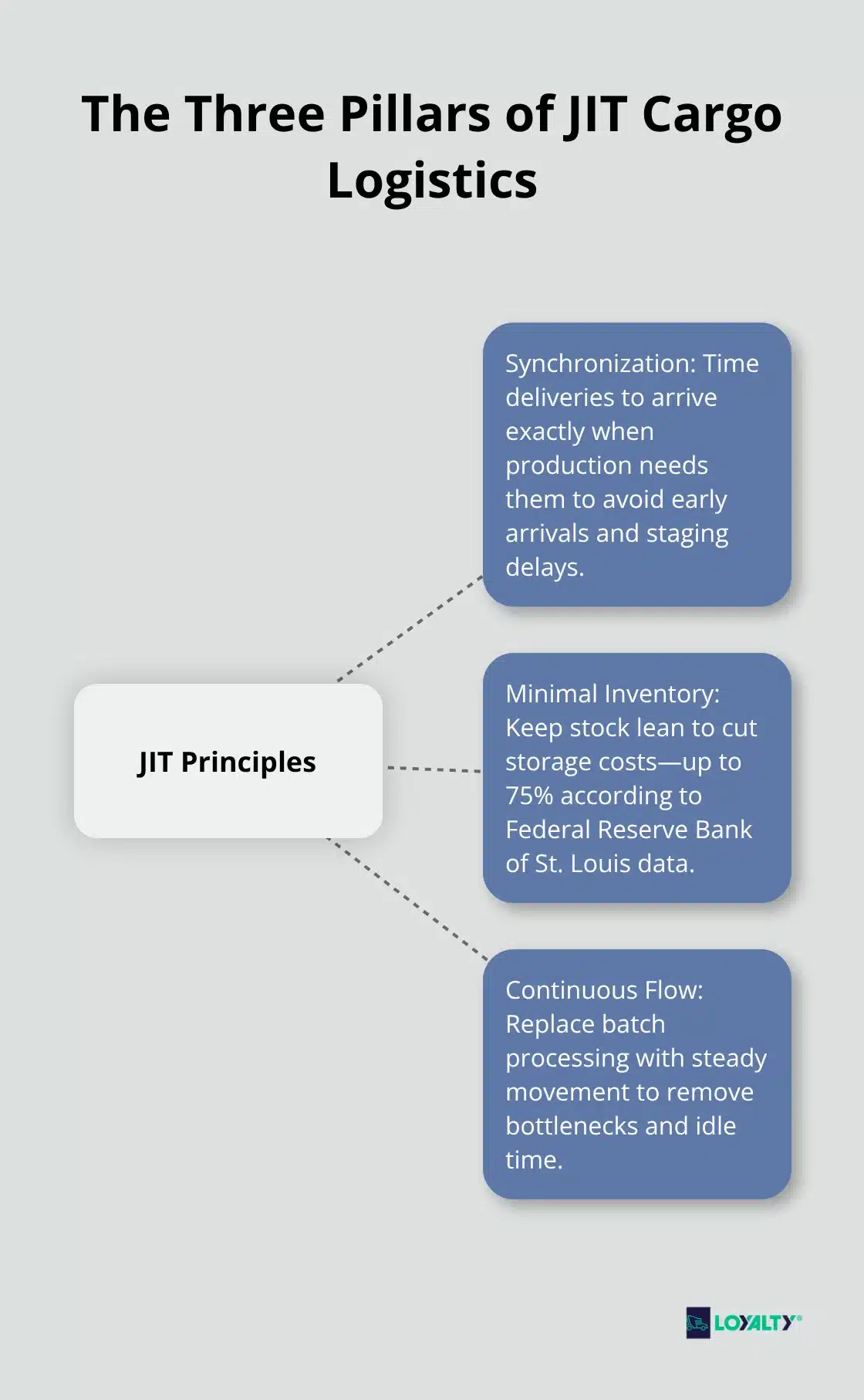
Third, continuous flow eliminates bottlenecks that traditional systems create through batch processing.
Traditional vs JIT Cargo Management
Traditional cargo management maintains large safety stocks that tie up working capital and increase storage costs. Companies that follow this approach often hold 30-90 days of inventory to buffer against supply disruptions. JIT cargo management flips this model and coordinates deliveries with actual production schedules. Toyota demonstrated this effectiveness in the 1970s when they reduced inventory costs by 50% while they maintained production output. The key difference lies in demand-driven orders versus forecast-driven stockpiles.
Performance Metrics That Matter
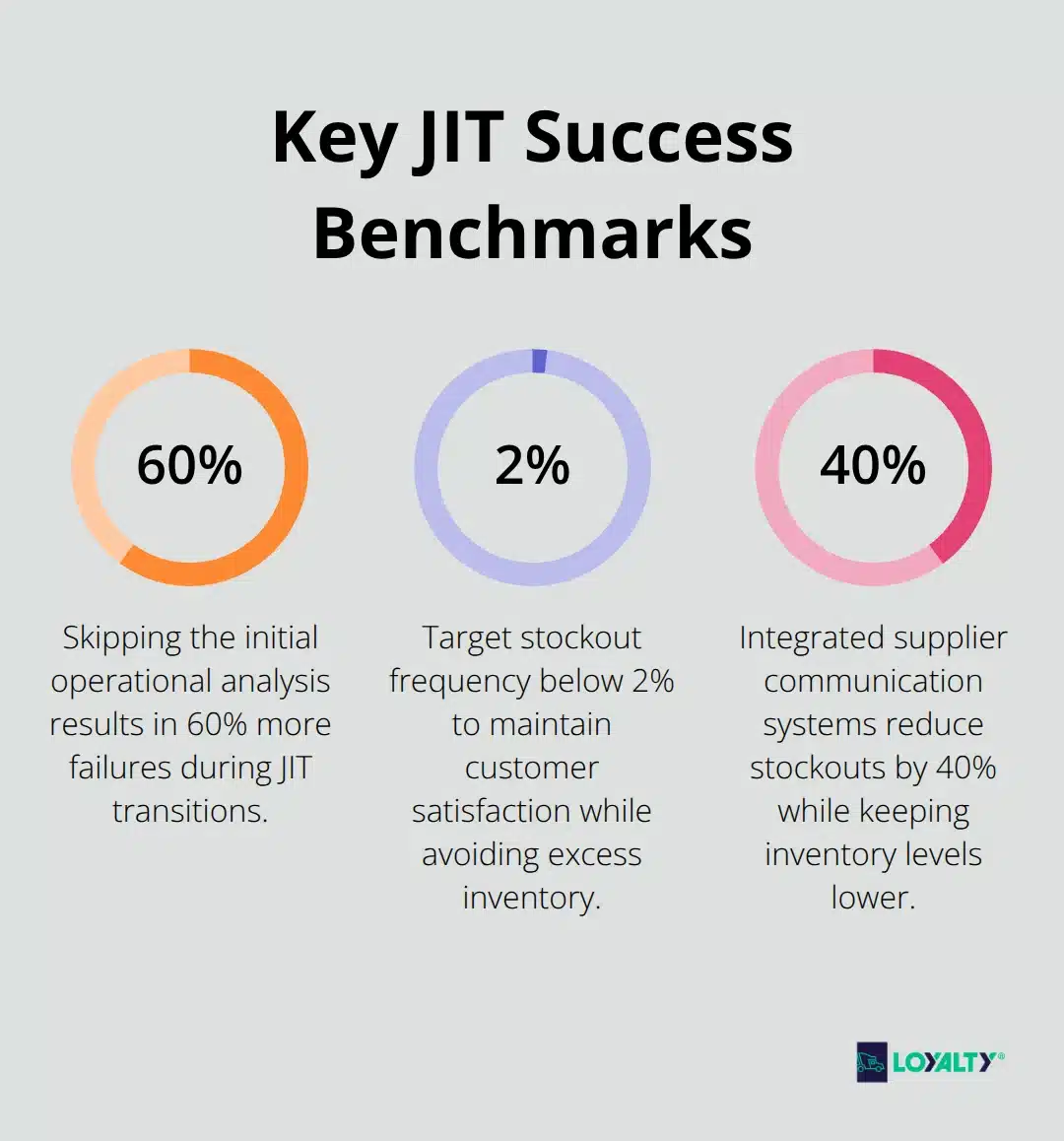
Inventory turnover ratio serves as the primary indicator of JIT success, with top performers who achieve 12-24 turns annually compared to 4-6 turns in traditional systems. Order cycle time measures how quickly you can respond to demand changes, with JIT systems that target 24-48 hour response times. Stockout frequency must stay below 2% to maintain customer satisfaction while you avoid excess inventory buildup. Cost per unit shipped decreases significantly when storage and handling expenses drop through reduced inventory levels (particularly in high-volume operations).
Risk Assessment Requirements
JIT systems demand comprehensive risk evaluation before implementation. Supply chain disruptions can halt production within hours when you maintain minimal buffer stock. Weather delays, supplier failures, and transportation breakdowns pose greater threats in JIT environments than traditional systems. Companies must identify single points of failure and develop contingency plans that maintain flow without excessive inventory buildup.
Your next step involves a thorough assessment of current operations to identify gaps between your existing processes and JIT requirements.
How Do You Transform Your Current Operations for JIT Success
Start with a comprehensive audit of your existing supply chain operations to identify specific gaps that prevent JIT implementation. Document current inventory levels, supplier lead times, and order frequencies across all product categories. Companies that skip this analysis fail 60% more often during JIT transitions according to Association for Supply Chain Management data.
Map your entire supply network including backup suppliers, transportation routes, and warehouse locations. Calculate your current inventory turnover ratios and compare them against industry benchmarks to establish improvement targets.
Supplier Partnership Development
Transform supplier relationships from transactional arrangements into strategic partnerships that support JIT delivery schedules. Evaluate each supplier’s capacity for frequent, smaller deliveries instead of large batch shipments. Establish performance agreements that specify delivery windows within 2-4 hours rather than daily ranges.
Share production forecasts and demand data with key suppliers to enable better planning coordination. Companies with integrated supplier communication systems reduce stockouts by 40% while maintaining lower inventory levels. Create backup supplier networks for critical components to prevent single-source dependencies that can halt production.
Technology Infrastructure Investment
Deploy real-time tracking systems that provide visibility across your entire supply chain from supplier facilities to final delivery points. Modern warehouse management systems integrate with supplier platforms to automate reorder triggers when inventory reaches predetermined levels.
Radio frequency identification tags and barcode scanning eliminate manual inventory counting errors that disrupt JIT timing. Cloud-based platforms enable instant communication between suppliers, carriers, and internal teams to coordinate delivery schedules (particularly during peak demand periods). Invest in predictive analytics tools that analyze demand patterns and adjust ordering schedules automatically.
These technology investments typically generate returns within 12-18 months through reduced labor costs and improved inventory accuracy. However, even the best technology systems face challenges when supply chain disruptions occur unexpectedly.
What Challenges Will Derail Your JIT Implementation
Supply chain disruptions pose the greatest threat to JIT success, with studies that show companies experience an average of 3-5 major disruptions annually that can halt production within 6 hours. Weather events, supplier bankruptcies, and transportation strikes create immediate inventory shortages when buffer stocks remain minimal. Develop a three-tier supplier network with primary, secondary, and emergency suppliers for critical components.

Establish contracts that guarantee 48-hour response times during disruptions and maintain safety stock levels of 3-5 days for essential items rather than zero inventory targets that many companies attempt.
Risk Mitigation Without Excess Inventory
Smart companies implement graduated response protocols that activate different supplier tiers based on disruption severity. Create pre-negotiated agreements with expedited carriers who can deliver critical components within 24 hours at premium rates during emergencies. Install automated alert systems that notify suppliers and internal teams when inventory drops below predetermined trigger points (typically when stock reaches 2-3 days of production needs). Dell Technologies successfully manages this balance through their direct supplier integration model that maintains 4-day inventory levels while achieves 95% on-time delivery rates.
Cost Control vs Service Quality Balance
JIT implementation creates tension between cost reduction goals and service level maintenance. Companies that cut inventory too aggressively experience stockout rates above 5%, which damages customer relationships and increases emergency procurement costs. Monitor your service level agreements closely and adjust inventory buffers when performance drops below acceptable thresholds. Track total cost of ownership rather than just inventory holding costs, since expedited shipping and rush orders can eliminate JIT savings quickly.
Staff Training and Cultural Transformation
JIT requires fundamental mindset shifts from traditional batch operations to continuous flow processes. Train warehouse staff to handle frequent, smaller deliveries rather than large monthly shipments, which increases labor efficiency by 25% according to Association for Supply Chain Management data. Implement cross-training programs so multiple employees can handle critical JIT processes when key personnel are unavailable. Establish performance metrics that reward inventory reduction and flow improvement rather than traditional measures like order size or processing volume. Companies that invest in comprehensive JIT training report 40% fewer implementation failures compared to organizations that rely solely on management directives without frontline employee engagement, particularly when building strong supplier relationships and reliable transportation in manufacturing environments.
Final Thoughts
Just in time cargo logistics delivers measurable results when companies implement it correctly. Organizations achieve inventory reductions of 20-75% while they maintain service levels above 95%. The key benefits include improved cash flow through reduced working capital requirements, lower storage costs, and enhanced responsiveness to market demand changes.
Success depends on three critical factors: comprehensive supply chain assessment, strong supplier partnerships with performance agreements, and robust technology systems for real-time visibility. Companies that invest in proper training and cultural transformation see 40% fewer implementation failures compared to those that skip employee engagement. Risk mitigation remains essential through multi-tier supplier networks and graduated response protocols that maintain 3-5 days of safety stock for critical components rather than pursue zero inventory targets.
We at Loyalty Logistics understand the complexities that companies face when they implement just in time cargo logistics systems. Our team helps businesses reduce costs while they maintain service quality through sustainable transportation solutions that include refrigerated, flatbed, and LTL options across the U.S., Canada, and Mexico. Contact us today to learn how we can support your JIT implementation with reliable delivery services (designed specifically for time-sensitive supply chains).

