
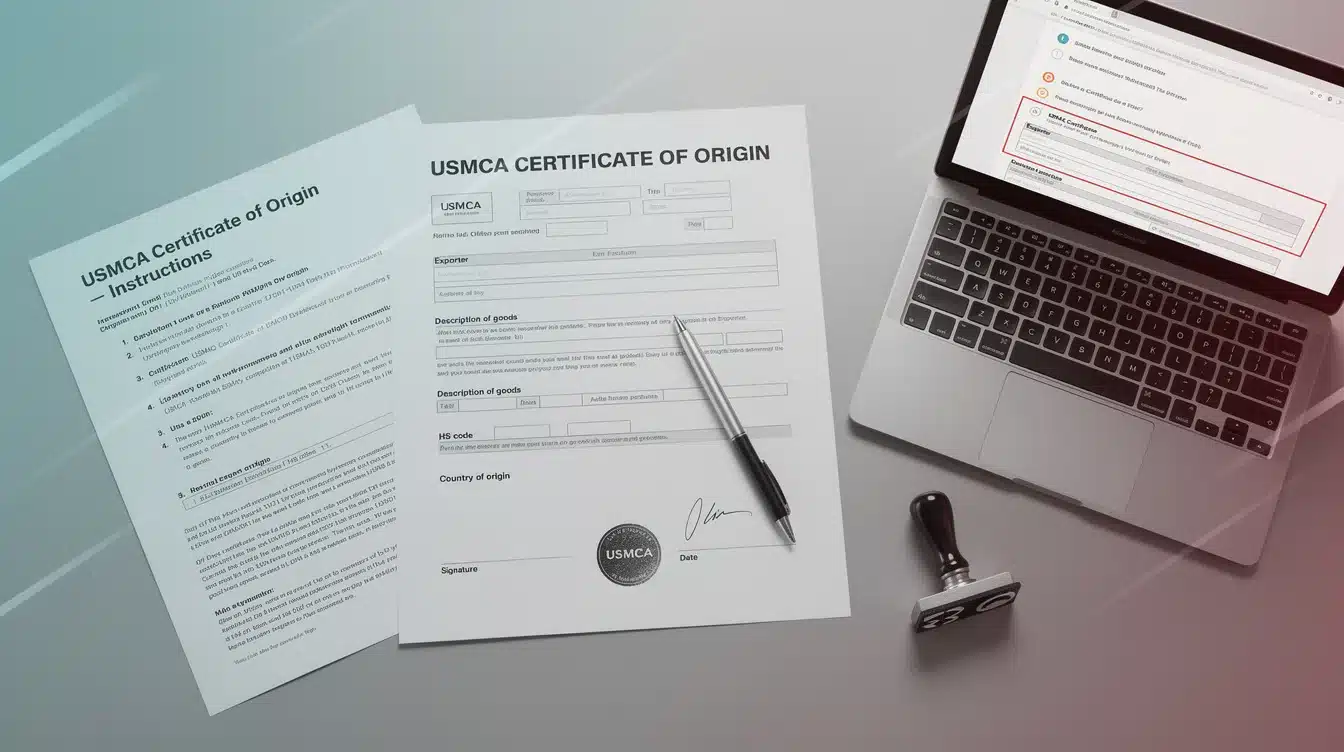
Getting a USMCA Certificate of Origin right is non-negotiable for cross-border trade. Mistakes cost time, money, and credibility with customs authorities.
At Loyalty Logistics, we’ve seen firsthand how proper USMCA certificate of origin instructions prevent delays and compliance headaches. This guide walks you through exactly what you need to know to complete it correctly.
What Makes a USMCA Certificate of Origin Actually Work
The USMCA Certificate of Origin is not a single government-issued form. Instead, it consists of nine minimum data elements that must appear somewhere in your shipment documentation-whether on an invoice, a separate document, or embedded in your customs filing. This distinction matters because many logistics managers still expect a formal certificate form like the old NAFTA CBP Form 434, which no longer exists. The U.S. Customs and Border Protection made this shift official when USMCA entered into force on July 1, 2020, and it fundamentally changed how origin claims work. Your importer must have these nine elements on file at the time of import to claim duty-free treatment, and customs authorities can request proof of origin at any point during a five-year audit window. Penalties for missing or incorrect data elements are steep: fines can reach twice the improperly claimed duty benefits, plus retroactive duties stretching back five years.
The Nine Non-Negotiable Data Elements
Your certification must include the certifier type (whether you are the exporter, producer, or importer), complete contact details for the certifier, exporter information, producer information, importer information, a precise product description tied to a six-digit Harmonized Tariff Schedule code, the origin criterion that applies (A, B, C, or D under USMCA Article 4.2), a blanket period if applicable (maximum 12 months), and an authorized signature with date. The product description must be specific enough that customs can trace it to the actual goods being shipped; vague descriptions like general widgets or parts trigger immediate red flags. The HS code must be accurate to six digits, and if you are uncertain about classification, a customs broker can help you avoid costly misclassifications that void your preferential tariff claim. The origin criterion selection is where most errors occur: Criterion A applies only to goods wholly obtained in North America, Criterion B covers goods produced with non-originating materials that meet specific tariff shifts, Criterion C means all materials originate in the USMCA region, and Criterion D involves regional value content calculations that often require a costed bill of materials to defend.
Documentation You Actually Need to Keep
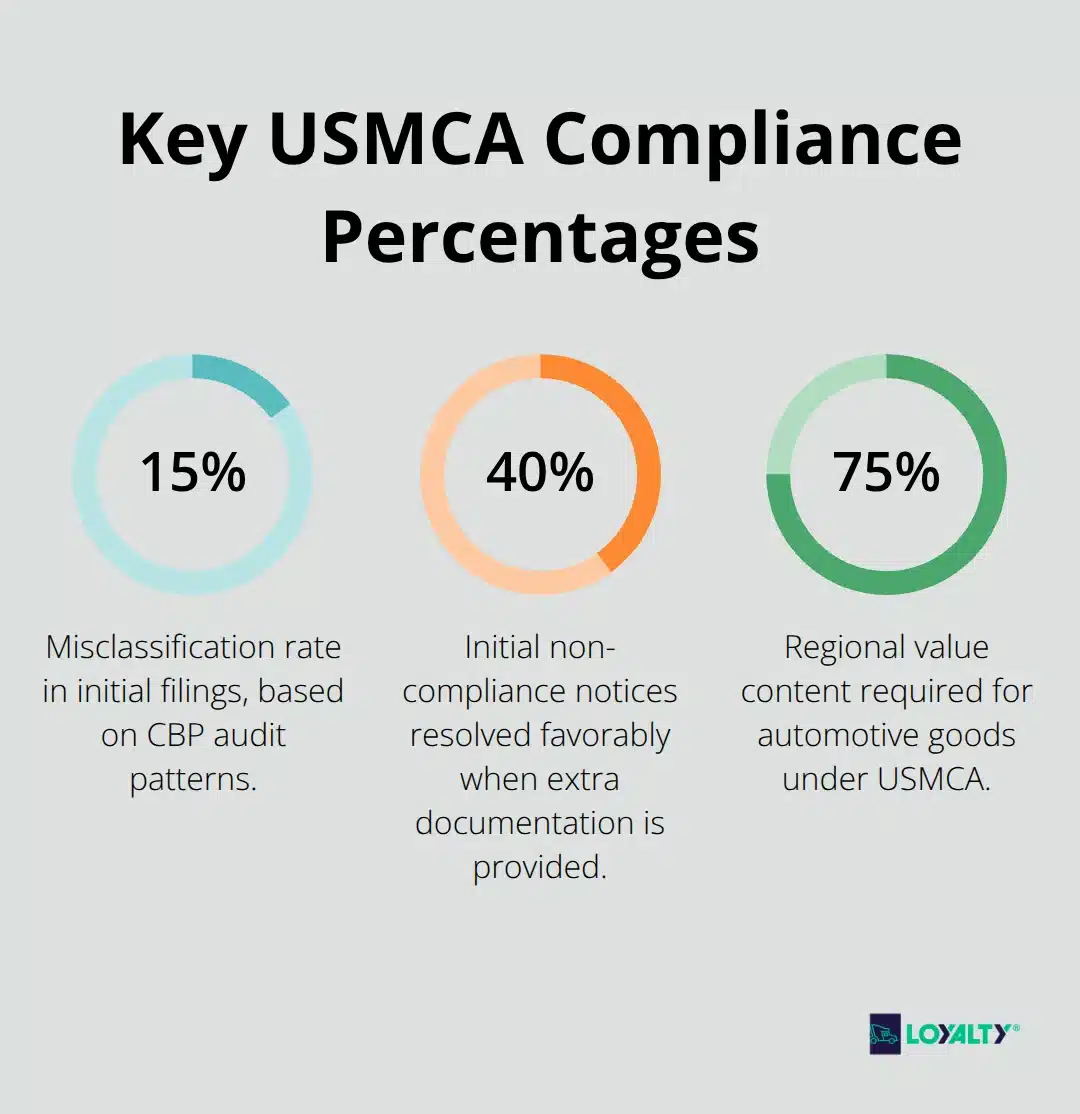
Customs authorities expect you to back up your certification with supporting documents: invoices from material suppliers, bills of lading, production records, and cost analyses showing how you calculated regional value content if Criterion D applies. The CBSA and CBP can request these materials during verification audits, and about 40% of initial non-compliance notices get resolved favorably when importers provide documentation beyond the original filing. Store these records for at least five years, organized by shipment and tied to your invoice numbers. If you claim Criterion D (regional value content), you need either a Net Cost or Transaction Value calculation method documented clearly; automotive goods face the toughest scrutiny because they require 75% regional value content plus a 40–45% labor value content threshold with a USD 16 per-hour wage floor.
Steel and aluminum in vehicles must be 70% North American origin.
Why Complexity Demands Expert Support
This complexity is why many supply chain directors work with customs brokers or trade compliance specialists rather than handling certifications internally. A broker helps you select the correct origin criterion, classify products accurately, and organize supporting documentation before customs requests it. When audits occur, you respond within 30 days with materials already in order, which significantly improves your chances of a favorable resolution. The stakes are high enough that investing in professional guidance now prevents costly penalties and operational delays later. With proper preparation and the right partners in place, you move forward to the next critical phase: actually implementing these requirements across your supply chain operations.
How to Complete the Nine Data Elements Correctly
Prepare Your Documentation First
Start by collecting everything you need before you touch any documentation. Gather your supplier invoices, bills of lading, production records, and cost analyses if you claim Criterion D regional value content. Pull the six-digit Harmonized Tariff Schedule code for your product from the HTSUS General Note 11 or work with a customs broker to confirm the correct classification; misclassifying a single product costs you preferential tariff treatment entirely. Identify who will sign the certification: the exporter, producer, or importer. The importer should hold the signed certification at the time of import because customs authorities will request it from the importer during verification. Next, determine which origin criterion applies by reviewing the product-specific rules in USMCA Annex 4-B.
Select the Correct Origin Criterion
Criterion A applies only when every material originates in North America-a rare scenario. Criterion B requires a tariff shift on non-originating inputs. Criterion C means all materials are originating.
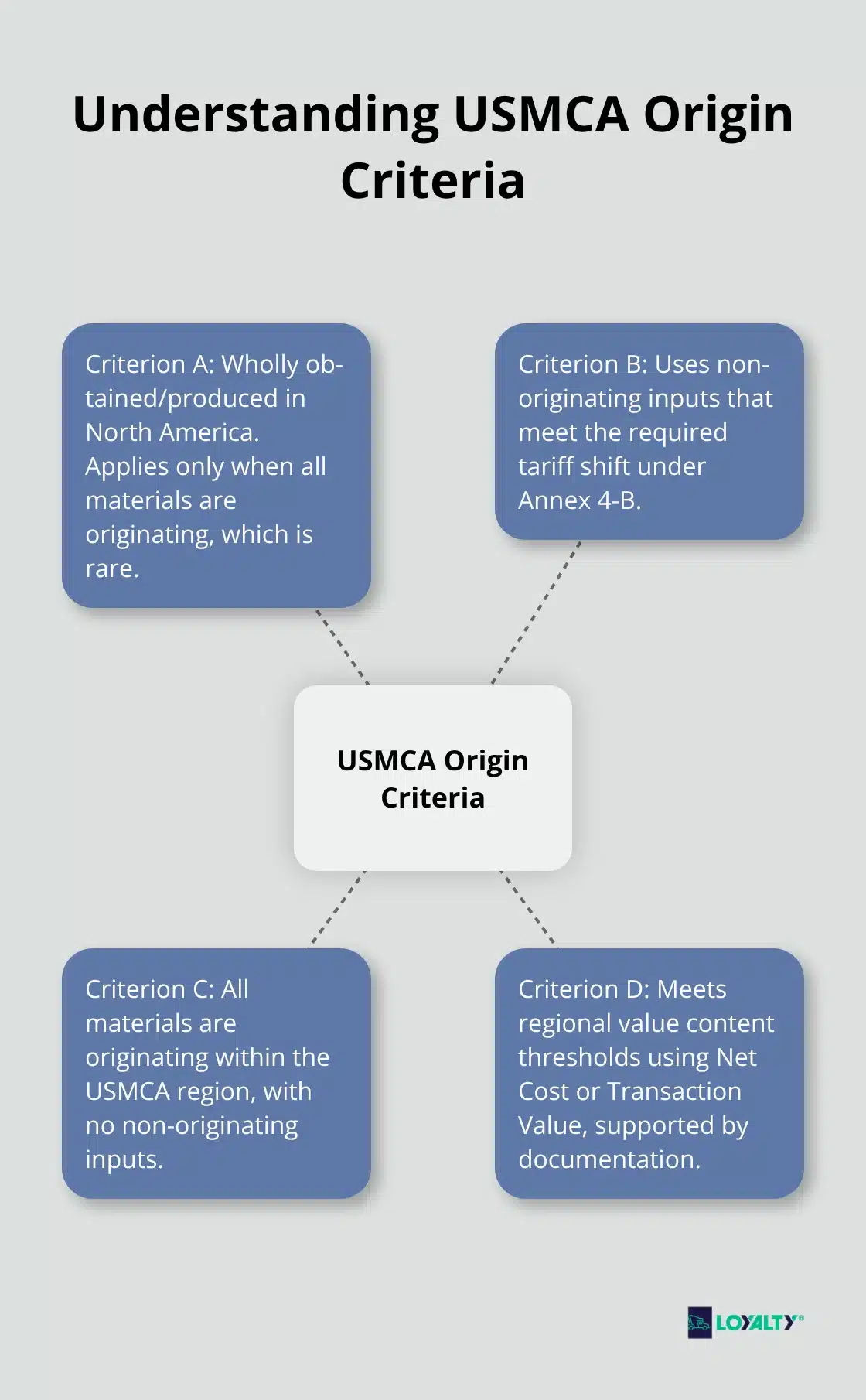
Criterion D demands a regional value content calculation, typically either 60% or 50% depending on the product, using either Net Cost or Transaction Value methodology. If you cannot determine the criterion confidently, stop and consult a trade advisor; guessing here triggers audit failures and penalties. Document the blanket period if you certify multiple shipments under one certificate; the period cannot exceed 12 months, and calendar-year dating prevents renewal confusion.
Fill in Each Field with Precision
Complete the nine data elements with accuracy. Field 1 requires your certifier type: mark whether you are the producer, exporter, or importer. Fields 2 through 5 demand complete contact information including name, title, company, full address with country code, phone, and email for the certifier, exporter, producer, and importer. If any party is unknown or if multiple producers exist, write Unknown or Various rather than leaving fields blank; CBP and CBSA guidance accepts these notations. Field 6 contains your product description and six-digit HS code; the description must be detailed enough that a customs officer could match it to the physical goods without ambiguity. For automotive parts, include the vehicle type and component function. For textiles, specify fiber content and product type. Field 7 specifies the origin criterion with a brief explanation of how the product qualifies. Field 8 covers the blanket period using the format YYYY-MM-DD. Field 9 is the signed certification statement confirming you have researched the origin, understand USMCA Article 4.2, and take responsibility for accuracy. The certifier must sign with a date and include their title and contact information.
Avoid the Most Common Errors
Misclassification happens in roughly 15% of initial filings according to CBP audit patterns, and selecting the wrong HS code voids your preferential tariff claim. Underestimating regional value content occurs when importers forget to include packaging materials and labor in RVC calculations. Another frequent error is leaving the origin criterion blank or marking it incorrectly without supporting documentation; CBP expects you to reference the specific tariff shift or regional value threshold that qualifies your good. Automotive manufacturers often fail to document the labor value content and wage thresholds required under USMCA, resulting in retroactive duty assessments. Textile importers miss the requirement that sewing thread, pocketing fabric, elastic bands, and coated fabric must originate in North America, which voids eligibility if sourced elsewhere.
Organize Records for Fast Retrieval
Store copies of the completed certification alongside your supporting invoices and production records in a system that lets you retrieve everything within 48 hours if customs requests it; response windows are typically 30 days, but internal delays compound compliance risk. A well-organized filing system becomes your defense during audits. When CBP or CBSA initiates verification, you respond with materials already in order, which significantly improves your chances of a favorable resolution. This preparation sets the stage for the next critical phase: implementing these requirements across your supply chain and maintaining compliance as your operations scale.
Building a Compliance System That Actually Works
USMCA compliance fails when companies treat it as a one-time filing task instead of an operational system. A single missed documentation deadline or misplaced invoice can trigger a five-year audit window with penalties reaching twice the duty benefits claimed. The difference between smooth operations and costly delays comes down to how you organize records, who you partner with, and how frequently you update your processes against regulatory shifts. Most logistics managers discover too late that their filing system cannot produce required documents within 48 hours, which means they miss CBP or CBSA response deadlines even when they have the materials on hand.
Assign Clear Ownership and Build Your System
A practical compliance system starts with assigning one person or team ownership of USMCA certification across all shipments, not distributing it among multiple departments where accountability disappears. That owner maintains a centralized repository tied to invoice numbers, supplier names, HS codes, and origin criteria selections. Digital systems work better than spreadsheets because they flag missing data elements before documents leave your facility. When you export a shipment, the system should automatically pull the product’s pre-verified HS code, documented origin criterion, and supplier information rather than requiring someone to hunt through email threads and old purchase orders. This approach reduces misclassification errors, which occur in roughly 15% of initial filings according to CBP audit patterns.
Organize Records for Rapid Retrieval
Your records must include the original certification, supporting invoices from suppliers showing material origin, bills of lading, production records if you manufacture goods, and cost analyses for any Criterion D claims involving regional value content calculations. Store these materials for a minimum of five years organized by shipment date, not alphabetically or by supplier, because audits move chronologically through your records and examiners expect fast retrieval by shipment. Test your retrieval system quarterly by pulling random shipments and timing how long it takes to assemble complete documentation; if you cannot do it in under two hours, your system will fail during an actual audit when response pressure is highest.
Partner with Trade Specialists
Working with the right trade partners transforms compliance from a burden into a competitive advantage. Customs brokers and trade compliance specialists catch errors before customs does, and they know which HS code classifications trigger heightened scrutiny for your product category. A broker reviews your origin criterion selection against Annex 4-B product-specific rules and questions assumptions that could unravel under audit. Automotive importers especially benefit from broker involvement because vehicle components face complex rules requiring 75% regional value content plus labor value content thresholds with USD 16 per-hour wage floors, and steel and aluminum must be 70% North American origin according to USMCA Chapter 4 guidance. When you receive a non-compliance notice from customs, you have approximately 30 to 45 days to respond with documentation and corrective proposals, and about 40% of initial notices get resolved favorably when additional materials beyond the original filing are submitted according to trade compliance data. A broker familiar with your product line knows which documents carry the most weight during these disputes and helps you frame responses that address examiner concerns directly.
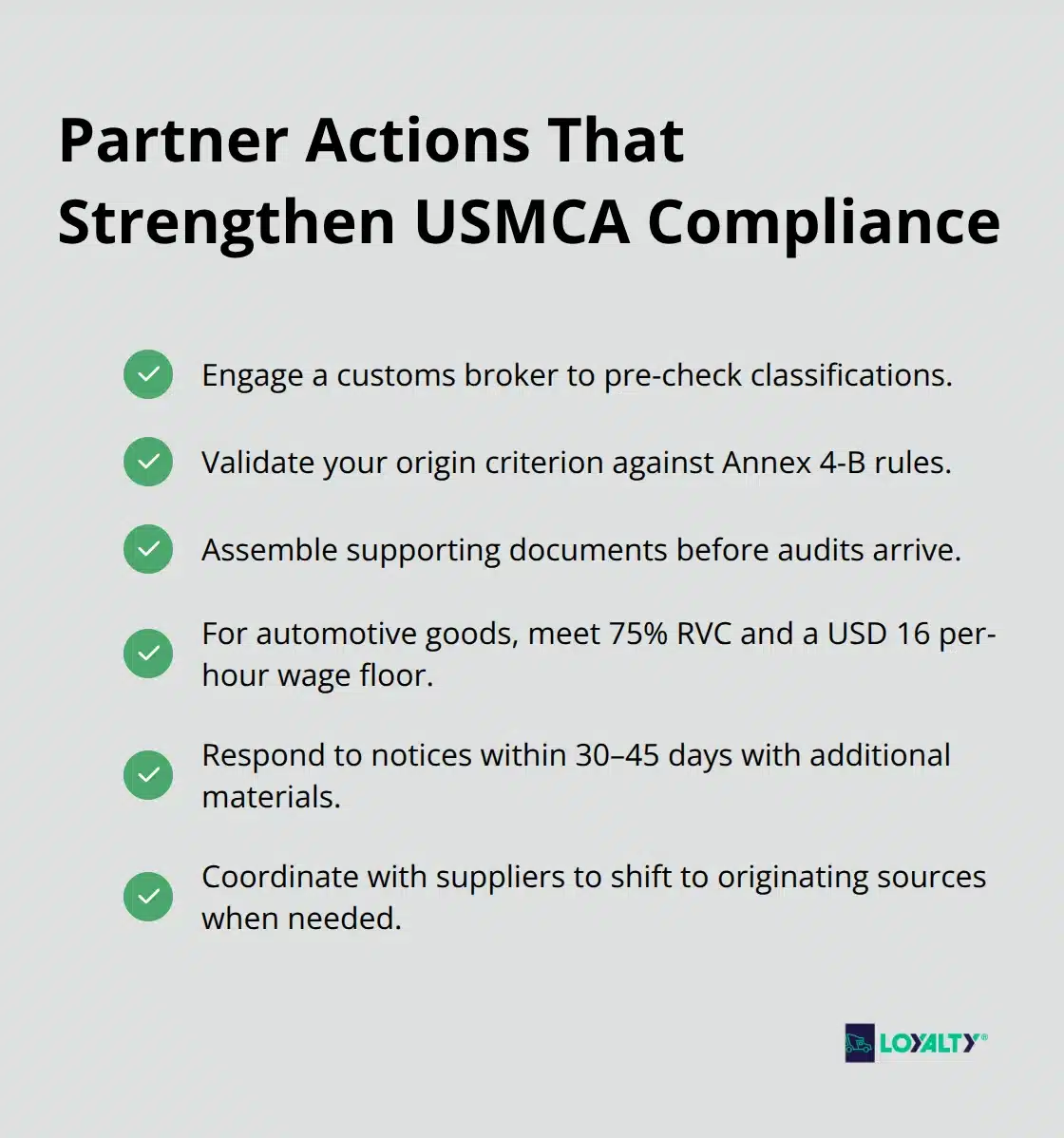
Beyond brokers, maintain regular communication with your suppliers and exporters about origin requirements because they control material sourcing and can shift procurement to originating suppliers if your RVC calculations fall short. Many supply chain directors overlook this partnership angle and blame importers for compliance failures that actually started upstream in sourcing decisions.
Monitor Regulatory Changes Actively
Regulation changes require active monitoring, not passive waiting. USMCA guidance evolves through CBP announcements, CBSA notices, and USTR clarifications, particularly around automotive rules, textile fiber sourcing, and labor verification protocols. Subscribe to CBP’s USMCA updates and monitor the Commercial Operations Advisory Council announcements where industry changes are often previewed before formal publication. Automotive rules included transitional options allowing certain manufacturers up to three years or five years under specific programs to meet the higher RVC requirements, and these windows close at different dates depending on your company’s fiscal year. Missing a transition deadline means you lose eligibility retroactively, affecting shipments you thought were compliant. Set calendar reminders for regulation review at least quarterly, and when changes occur, immediately assess which products are affected and which origin criteria need adjustment. This forward-looking approach prevents the compliance crisis that hits when you suddenly discover your standard certification process no longer qualifies goods for preferential treatment.
Conclusion
Your USMCA certificate of origin instructions determine whether customs clears your shipments smoothly or hits you with retroactive duties and compliance penalties. The nine data elements require accurate product classification, correct origin criterion selection backed by documentation, and organized records you can retrieve within 48 hours if customs requests them. Skipping any of these steps costs you preferential tariff treatment and forces you to pay full tariffs on goods that should have entered duty-free.
Compliance becomes routine when you assign clear ownership of USMCA certification, partner with customs brokers who understand your product category, and monitor regulatory changes actively. Automotive importers face the highest complexity with 75% regional value content requirements plus labor value content thresholds, but even simpler products fail when companies underestimate the documentation burden. The difference between smooth operations and costly delays comes down to whether you treat USMCA compliance as a one-time filing task or as an operational system embedded in your supply chain.
Start implementation immediately by auditing your current certification process against the nine data elements outlined in this guide. Identify which products need origin criterion review, which suppliers can provide material origin documentation, and which team member owns USMCA compliance going forward. Contact Loyalty Logistics to discuss how our transportation solutions integrate with your compliance strategy and keep your cross-border operations moving forward.